Ethics Quiz: The Fick Calls Loretta Lynch’s Bluff

bluffing

When I read that our Attorney General, Loretta Lynch, made this provocative statement—

“The fear that you have just mentioned is in fact my greatest fear as a prosecutor, as someone who is sworn to the protection of all of the American people, which is that the rhetoric will be accompanied by acts of violence. Now obviously this is a country that is based on free speech, but when it edges towards violence, when we see the potential for someone lifting that mantle of anti-Muslim rhetoric—or, as we saw after 9/11, violence directed at individuals who may not even be Muslims but perceived to be Muslims, and they will suffer just as much—when we see that we will take action…I think it’s important that as we again talk about the importance of free speech we make it clear that actions predicated on violent talk are not America. They are not who we are, they are not what we do, and they will be prosecuted.”

…my first thought was “oh-oh” and my second thought was, “Boy, Obama’s appointees are as careless with their rhetoric as he is, or Hillary.

For what really was she saying? It sounds like a threat, but is it?  What does “edges towards violence” mean? Violence? Calling for violence? Or rhetoric anti-gun progressives will blame if there is violence? What does…let me rephrase that…What the HELL does “the potential for someone lifting that mantle of anti-Muslim rhetoric” mean? For that matter, what are “actions predicated on violent talk”? Does an action that would not be a crime without violent talk become one based on the rhetoric that inspired it? You’re a lawyer, Ms Lynch, how about speaking precise English? What exactly are you trying to say?

So my third thought was, “Well, we better find out, since is this our top law enforcement official talking and if she is really saying, as one might reasonably interpret her vague and convoluted statement to mean, that she’ll be arresting anyone who dares to venture a harsh judgment of Muslims, it would be good to know.

Donald Trump, I’m sure, would like to know.

And  lo and behold, here comes former GOP tea party congressman turned radio talk show host Joe Walsh to settle the issue! He provides a rant on his Facebook page: Continue reading
Ethics Quiz: The Barefoot Bandit Cashes In, Sort Of…

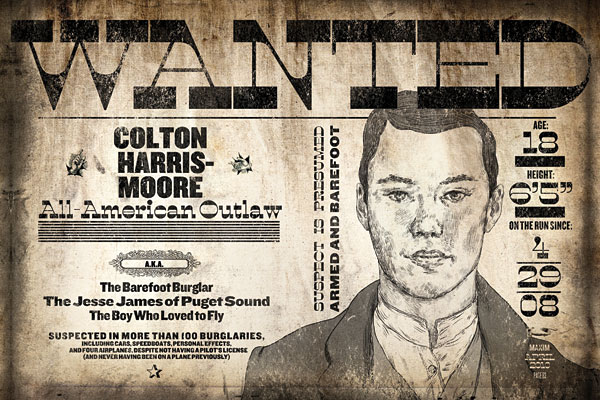
wanted_blog

You may remember Colton Harris-Moore, aka “The Barefoot Bandit,” who while still a teen in 2009 went on a wild, two-year crime spree involving more than a hundred burglaries, thefts, and destruction, costing hundreds of thousands of dollars in cash and property, including a plane, a boat, and automobiles.  When Harris-Moore was sentenced to six and a half years in prison in 2012 , U.S. Attorney Jenny Durkan said, “The plea agreement makes very clear that he will not profit directly or indirectly nor will he help anyone else to profit from these crimes.”

I’d like to see the agreement. For Harris-Moore has signed a movie deal with 20th Century Fox, “waiving” the rights to his life story in exchange for the film company paying up to $1.3 million toward the $1.4 million he owes as restitution to his victims. Now I’d call this “profiting.” If someone pays what I owe on my mortgage, I benefit. I profit.

I’m sure the argument for permitting this deal, which is the kind most states and the federal government regard as contrary to public policy and prohibit with so-called “Son of Sam laws,” is that Barefoot’s victims are needy and innocent  beneficiaries, since it is unlikely that they would ever get much, if anything, in payments from the imprisoned felon. Thus the usual objective of keeping criminals from turning their crimes into cash and celebrity should yield to the greater good.

Today’s Ethics Alarms Ethics Quiz of the Day is…

Should the Barefoot Bandit be allowed to make this deal?

I’ll leave this one to you.

But I’m dubious.

Ethics Quiz: “Don’t Eat The Daisies” Ethics

I’m trying to take a breather from the Syrian refugees, President Obama, Presidential candidates and rampaging college students, and an ethics issue from a 1960 Doris Day comedy is as far away as I can get.

In “Don’t Eat the Daisies,” a movie loosely (very loosely) based on the humorous mommy anecdote best seller by Jean Kerr, wife of then New York Times  theater critic Walter Kerr, newly appointed prime drama critic Larry McKay (David Niven), his lovely wife Kate (Doris), their four rambunctious kids, their sheep dog and their wise-cracking house-keeper (Patsy Kelly)—yes, this was essentially the “Brady Bunch” without the girls—move to the country. Doris gets roped into the annual musical (for charity, natch) of the very amateur Hooten Holler Players. They ask the Larry for a play they could use, and he isn’t very helpful, so Doris calls up Alfred North, an old friend of the couple and a successful novelist played by Richard Haydn, best known as the sneaky Max in “The Sound of Music,” who has just had his first Broadway play skewered by McKay (Integrity! Integrity!). He is secretly seething and seeking revenge. The betrayed playwright siezes his chance: he sends Doris an obscure, terrible Foriegn Legion melodrama by an unknown author, and the Hooten Holler players turn it into a musical spoof.

Days before its ready to open, after all the tickets have been sold, Doris asks David to watch a rehearsal. He immediately recognizes the plot and some particularly awful lines: he wrote the  play under a pseudonym! “BWAHAHAHAH!” laughs Max, or rather Alfred. Larry’s  onetime friend, now relentless foe, has set the critic up for humiliation and professional doom, for other New York critics have been tipped off that the play getting its world premiere by the Hooten Holler Players is in fact the creation of the hypercritical critic himself. Once this abysmal mess is seen and taken apart by the critic’s rivals, his judgment will never be taken seriously again.

Niven demands that the production be cancelled, and forbids the Players to perform his work. Doris, who stars in the play, begs him to reconsider: the humble theater group will be ruined, and the charity will lose much needed support. The critic explodes: why does she care more about the amateur theater group than her husband’s career? She tells him that his theatrical power and fame has made him petty and mean. Their marriage seems ready to disintegrate.

Your retro-Hollywood Ethics Alarms Ethics Quiz of the Day is..

What’s going on here, and what do you do about it?

Continue reading

Ethics Quiz: “Fixing” “Elf Ears”

ears

6-year-old Gage Berger was being bullied by his first grade classmates because he had protruding ears, and was often derided as “Elf  Ears.” His Salt Lake City parents decided to address the problem here and now, before, they say, his self-esteem (I almost wrote elf-esteem…) was  permanently damaged, so they had his ears de-elfed to look like everyone else’s.

Now he’s bullying other funny-looking kids.

Kidding.

I hope.

But seriously, folks, the story has aroused a controversy over societal and medical ethics. Did the parents choose plastic surgery too early and for the wrong reasons? Is that how we want society to be, where bullies and critics can pressure individuals to conform to a narrow standard of acceptible appearance? Doesn’t this give them power? Does it not encourage bullying? Is a first-grader old enough to meaningfully weigh these issues? Isn’t this a choice he should make, when he’s old enough to make it?

Your Ethics Alarms Ethics Quiz for today is…

Was it ethical to clip Gary’s ears?

Continue reading

Ethics Quiz: President Romney

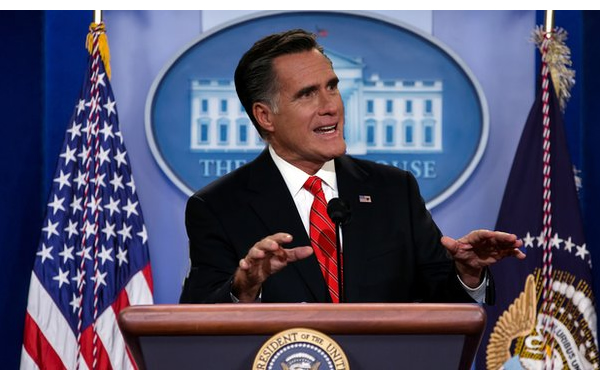
President-Mitt-Romney-mock-up

As Ethics Quizzes go, this one is a little different.

Conservative political writer Matthew DesOrmeaux has written essay titled “Here’s What Would Be Happening if President Romney Had Bombed a Hospital in Afghanistan…”.  Here is the key section:

If Romney had been elected in 2012 and in the year before his reelection campaign had bombed a hospital, decided to keep troops in Afghanistan, and had details of his robot assassin program leaked, things would probably look a little different today.

If Romney were president right now, the White House would be surrounded by protesters and candlelight peace vigils night and day. Some would wave American flags, some would wave signs calling for impeachment, some would have pictures caricaturing the president as Hitler or an animal. They would chant “Not in our name!”, or “Bring them home!”, or “Hey ho, hey ho, Romney has got to go!”

If Romney were president, nightly news reports on CBS, NBC, and ABC would have regular features on war crimes, quagmires, and collateral damage. CNN would be wall-to-wall with team coverage of protests, interviews of bombing witnesses, and Anderson Cooper walking through rubble in full body armor.

If Romney were president, every political analyst left of Judge Napolitano would be fretting over the war-weary public turning the upcoming election into a referendum against the president and his party. Vox and FiveThirtyEight would have maps showing how many Senate seats Republicans would lose because of the president’s sure-to-plummet approval rating. And then there’s MSNBC.

If Romney were president, MSNBC would be holding mock war crimes tribunals on Chris Hayes, explaining the ins and outs of the process with expert guests. Lena Dunham would be on Maddow every night aghast (but still giggling!) at this warmonger-in-chief. Chris Matthews would be yelling at Michael Moore, trying to find out when charges would be filed at the Hague.

If Romney were president, Democrats in Congress would be calling for hearings and investigations for each transgression: the bombing, troop levels, and drone policy. Chuck Schumer would hold daily press briefings scolding the reckless president from behind the glasses perched precariously down his nose. Someone would accurately quote Sheila Jackson-Lee condemning the terrible bombing of the “orphanage in Pakistan”.

But Mitt Romney isn’t president, Barack Obama is, so no one cares.

Your Ethics Alarms Ethics Quiz of the Day is….

Are these fair assumptions?

Continue reading

Ethics Quiz: The Memories Pizza Stunt

Memories Pizza, you will recall, rushed to let everyone know that it supported Indiana’s short-lived “Let’s discriminate against gays” law, which Pope Francis would have approved of, apparently.  The poor, naive little establishment, which was about as likely to cater a gay wedding as a White House state dinner, became the immediate target of social justice warrior bullies, who nearly succeeded in running them out of business.

On September 25, 2015, comic Robin Trevino, a member of the gay theatrical ensemble GayCo, drove to Walkerton, Indiana, bought pizzas at  Memories Pizza, , and served Memories Pizza to all the guests at his September 26, 2015 same-sex wedding reception, then released a video to alert the world that Memories Pizza had unknowingly catered a gay wedding  after all.

Your Ethics Alarms Ethics Quiz of the Day:

Was it ethical to do this?

Continue reading

Ethics Quiz: The Conundrum Of The Wrong Color Baby

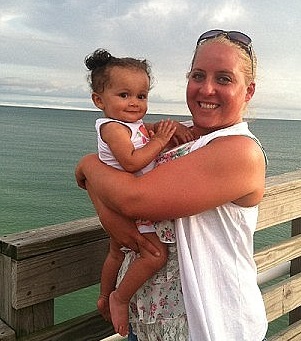
mixed race child

[ I wrote about this case last fall, before the decision in the case. This Ethics Quiz is a follow up. No fair cheating by going back and reading the older post until you have your answer]

Jennifer Cramblett, one half of a white same-sex couple that wanted a child, went to Midwest Sperm Bank and chose adeposit from donor No. 380. The sperm bank made that ol’ “8 looks like 3” mistake, so instead of the white donor the couple wanted, they were given sperm from donor No. 330, a black man. Cramblett filed suit against the sperm bank in 2014 for damages because she gave birth to a mixed-race daughter, and that was not what she paid for.

The sperm bank apologized but refunded only part of the cost to Cramblett and her partner Amanda Zinkon, and denied that damages were warranted.  Cramblett’s suit alleged that the mistake caused her and her family stress, pain, suffering and medical expenses, and that she feared that her daughter, Payton, now 3, would grow up feeling like an “outcast.” Attorneys for the sperm bank argued that “wrongful birth” suits should only apply to cases where a child is born with a birth defect that was predictable. In this case, the girl, Payton, is normal and healthy. Being black, of course, is not a defect.

The judge threw out the case, but headlines have been misleading. The original suit—why, I don’t know—failed to allege negligence, which I would think would be a slam dunk. The suit can and presumably will be refiled with a negligence claim, and that’s res ipsa loquitur.  (If a black child is born to a white couple, someone goofed somewhere.) There will be damages, but the question is how much and on what basis.

Your Ethics Alarms Ethics Quiz of the Day is this:

Would it be ethical for a court to hold that having a child that is the “wrong” color is a hardship, injury, or misfortune worthy of damages?

Continue reading

Further Thoughts And Questions On “The Lottery Winner’s Sister-in-Law” (Part 2)

Money-box-gift

As promised, here are some proposed lines regarding the ethics quiz on the lottery-enriched brother and whether his financially-challenged sibling  should ask for a cut—and had a right to expect one. (Part 1 of the “Further Thoughts” is here)

All of the following assume that the lottery-winner does not have a personal emergency or crisis of his own that would require him to spend all or most of the money.

1. The wealthy brother is ethically obligated to offer financial assistance, if he can afford it without excessive hardship, without being asked, if his brother or his brother’s family is facing a health crisis of other catastrophe.

This is true regardless of whether his new financial resources come from luck, planning, work or skill, and regardless of how much money he has. Offering a loan rather than a gift is still fair and ethical. Charging interest under these circumstances is not, unless the poor brother has a record of not paying back earlier loans.

Possible exceptions: Continue reading

Ethics Quiz: The Lottery Winner’s Sister-in-Law

_rich_man_poor_man“Dear Prudence” (a.k.a Emily Yoffe), my least favorite advice columnist (who answers weird questions from weird people at Slate), received an ethics quiz worthy query from a woman whose husband has had some business reverses and now, as he near retirement age, is looking at two jobs and tarnished golden years without a pension or vacations. Meanwhile, her husband’s brother (let’s assume this is true: it sounds like a hypothetical to me) won 50 million bucks in the lottery a few years ago, and is having a ball. The two brothers are on good terms and speak often. She asks,

“What I don’t understand is how he can stand to see his little brother so stressed and working so hard while he has more money than he could spend in a dozen lifetimes. Obviously he is under no obligation, but he does not seem to realize how hard it is to see how he spends his money on travel and amusements. I think he should help his brother out. What do you think?”

Prudence  thinks the poor brother should ask the rich brother for money, and that if he won’t, the wife of the poor brother should: Continue reading

Ethics Quiz: “Rear Window” Ethics At The Ball Game

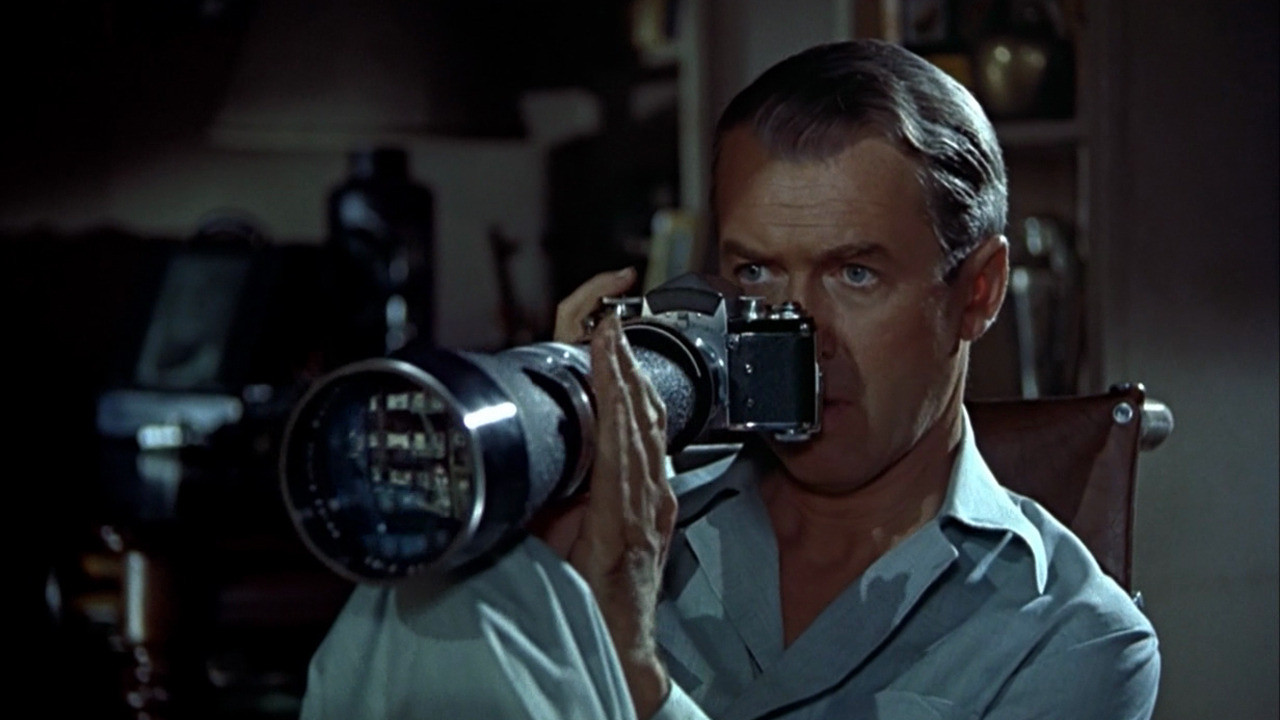
RearWindow1

The New York Daily News recounts the tale of two sisters attending an Atlanta Braves game who exposed a man’s cheating wife by taking photos of her as she apparently sexted another man with her arm around her husband. Delana and Brynn Hinson posted photos of her texts on Twitter.

The sisters said they slipped a note to the woman’s suspected husband as he was leaving, which read,

“Your wife is cheating on you. Look at the messages under Nancy! It’s really a man named Mark Allen.”

You can read the details—accurate or not—here.

I don’t care if the story is exactly as it was reported. Let’s assume it is.

The Ethics Alarms Ethics Quiz for the day is this:

Did the sisters behave ethically when they informed the husband about his wife’s secret texting?

Continue reading