Someone please explain how the closing of the investigation of the shooting of Ashli Babbitt can be reconciled with the sentence just handed down in the case of the Alabama officer who shot an allegedly suicidal man who would not drop his gun.
The US Capitol Police officer who shot and killed pro-Trump rioter Ashli Babbitt on January 6, 2020 will not face any disciplinary action. “USCP’s Office of Professional Responsibility (OPR) determined the officer’s conduct was lawful and within Department policy, which says an officer may use deadly force only when the officer reasonably believes that action is in the defense of human life, including the officer’s own life, or in the defense of any person in immediate danger of serious physical injury,” the department said in a statement. The department will not name the officer out of consideration for the officer’s safety, although his name has been unofficially on the web for quite a while. If this is not a USCP double standard, it is certainly a journalism and political double standard. A black officer who shot an unarmed white women is protected with official anonymity while one white officer after another in police-involved shootings of black men have had their names not only released, but published and made the targets of attacks by elected officials.
Baseball had a rare PR triumph earlier this month when it held a regular season game between the New York Yankees and the Chicago White Sox in the Iowa cornfield diamond that was the setting for the cult movie favorite “Field of Dreams.” The TV ratings were the best for any regular season broadcast in 16 years. That’s amazing, but maybe it shouldn’t be. Despite rumors of its demise, baseball still has a cultural bedrock of tradition, nostalgia and history unmatched by any other sport, professional or amateur. So many Americans would not tune in to a baseball game if they didn’t still have a flicker of affection for the sport, and if your argument is, “Yeah, but that’s just because of the movie,” the movie wouldn’t have become iconic if a lot of people didn’t care about baseball. As Terrence Mann said,
Now my confession: I’m not a wild fan of the film, nor that scene. The scene in particular is unforgivably stagey and artificial: it’s right out of the (much better) book, “Shoeless Joe,” and not even the great James Earl Jones could make it sound like anything but a recitation. I got annoyed, during the hype for the game broadcast, with “Field of Dreams” being repeatedly called “The greatest baseball movie.” I don’t regard it as that; I think it just barely makes the top five, and I could be talked out of ranking it that high.
For good reasons, many baseball writers, fans and bloggers have criticized the film over the years, and not just because it is shamelessly manipulative. But it is that. Baseball writer Craig Calcaterra, a vocal debunker of the film, writes,
“I will fully admit that a story about a father and son repairing a longstanding rift over a game of catch — with or without the magical realism elements — could form the basis of a MAJOR chills moment in an absolutely fantastic movie. The problem, as I’ve said in the past, is that “Field of Dreams” does not earn its chills moment. It is lazy in that it does not sketch out the dispute between Ray and his dad in anything approaching realistic terms — it’s dashed off in the rushed intro with almost no details — and it does nothing to explain why Ray’s moving the Earth and the Heavens to bring his dad back to that ball field is so important or why it serves as the “penance” Ray must pay for whatever reason. With no buildup or backstory, there’s no payoff.”
But worse, for me and others, is the slipshod handling of baseball history. “Shoeless Joe” Jackson was not innocent of taking a bribe to throw the 1919 World Series, he was guilty. He was not a thoughtful, wise-cracking Ray Liotta, he was just north of being a moron. He batted left-handed, and famously so, not right-handed like Liotta. When Frank Walley’s character, a magically reincarnated and youthened old ballplayer named Archie “Moonlight” Graham, whose single appearance in the major leagues was in 1905, is nearly beaned by a close pitch, he says “Hey ump, how about a warning?” Umpires didn’t warn pitchers for throwing at batters in 1905, and not for more than a half-century after that. Sloppy.
Ah, those heady days when the U.S. felt ethically justified in toppling governments it didn’t approve of, and “nation building” was still considered practical and virtuous. Today marks the anniversary of the U.S. overthrowing the government of Premier Mohammad Mosaddeq and reinstalling the Shah of Iran in 1953, The Shah was a torturing, oppressive autocrat, but he was our torturing, oppressive autocrat for 26 years, a dependable anti-Communist ally of the United States until a revolution ended his rule in 1979. You should know the rest. Wonder why Iranians aren’t crazy about the U.S.? Today is one big reason. Also on the ethics regrets list is the release of the West Memphis Three on this date in 2011. I wrote about that one here. An excerpt:
“In an ethical system, prosecutors would have made certain the wrongfully convicted men were freed, without any further adversary action. But this was not an ethical system. Instead, prosecutors insisted on a bizarre plea deal in which the Memphis Three agreed to take an Alford plea, a strange, dishonest and much criticized guilty plea in which a defendant essentially lies to avoid an otherwise unavoidable unjust punishment. With an Alford plea, the prisoner or defendant asserts he or she is innocent, but acknowledges that the prosecution has sufficient evidence to prove guilt beyond a reasonable doubt, and thus acknowledges legal, though not actual, guilt. Prosecutors insisted that all three men plead “guilty” in this fashion in order to agree to release them with time served. The judge accepted the deal. Now Echols, Baldwin and Misskelley are free, their lives all but ruined by 18 lost years, thanks to a rotten system. The news media for the most part didn’t bother to explain why the terms of their release was just one more gratuitous assault on their existence by Arkansas legal hacks.”
I’m sorry today reminded me of this case. It still upsets me to think about it.
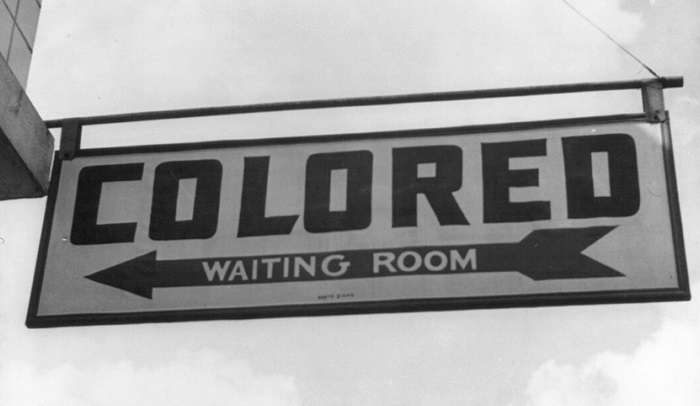
1. Here’s evidence that the current complaints of antiracism propagandists is a crock: Denzel Washington. I’ve been watching a lot of his movies lately, and a comparison with Sidney Poitier is unavoidable. Poitier was the ground-breaker, the black man who became a genuine movie star in a majority white market, and more than that, did it by holding up the racism and discrimination in American culture for all to see. Nonetheless, he was limited by his race. Poitier always played character’s whose race was central to their roles in the plot. He never played a villain: like many stars, like John Wayne, Cary Grant and Clark Gable, he regarded his career as a continuous work exploring a particular archetype in all of its facets. For Poitier, it was that of the outstanding black man as an outsider in American society. In Poitier’s amazing year of 1967, he was in three hit movies: “In the Heat of the Night,” “Guess Who’s Coming to Dinner?,” and “To Sir, With Love.” All three featured Poitier as a black man thrust into a biased white environment, and gradually earning respect and some measure of equality. Today the #1 black star is Denzel, and he doesn’t have to play such sanctimonious roles. Race plays a part in many of his movies; he has even played black civil rights activists, like Malcolm X and Hurricane Carter. Washington, however, in part because of Poitier’s work, often plays parts that were written for white actors, and nobody cares. He isn’t afraid to play flawed characters and even brutal ones, like in “The Equalizer.” Washington’s success, and the versatility and range he is allowed to explore in his movies, would have been impossible in Poitier’s prime years. His body of work is proof of how far American attitudes toward race have advances and how unfair and dishonest the Black Lives Matter/ Critical Race Theory narrative is holding that the Jim Crow culture still rules America.
Denzel is also better than Poitier, although it is fair to say that Poitier never had the option of being as versatile as Washington. If Sidney Poitier is cinema’s Jackie Robinson, Denzel Washington is its Willie Mays.
I owe Ann Althouse for finding this; I never would have, especially since I’m disgusted with YouTube.
Above is a montage of all of the TV series offered to the public by ABC in the Fall of 1961. It’s worth noting that in 1961 the Fifties culture was still going strong, though JFK had replaced Ike as President. What we think of as the cultural Sixties didn’t really start until after Kennedy’s assassination in November of 1963. Also worth noting: ABC was the perennial least watched network on 1961. That meant they took the most risks, but ’61 was not a good year for ABC.
What can we learn from the montage? Culture is ethics and ethics is culture; this is a snapshot that shows what a large percentage of Americans watched at night, and what contributed to their worldview. It is fair to say, I think, that nothing in popular culture today influences an many people as even ABC’s prime time schedule did. The snap shot reveals where the nation has progressed, and what it has lost. In 60 years, there is a lot to consider.
Ethics Alarms’ resident musician has a fascinating Comment of the Day humming with informative observations, and best of all, it has nothing to do with the Wuhan Virus vaccine
Jack, it makes perfect sense that you bring Heather Mac Donald’s very long, two-part screed to your readers’ attention. It’s gotten a lot of notice in the music world. Personally I respect Ms. Mac Donald’s place in the overall cultural and political discussion, whether I agree with her writings or not. I’ve noted either her research or simply her references to the variables of two-parent families and basic levels of educational attainment as fundamental explainers of personal achievement, independent of ethnic background. Her views are part of the overall discussion in America today, or should be.
All that said, her big article about classical music is flawed in at least three ways. Here are those issues:
1. A lot of the article confuses music with musicology. The latter field has been kind of nuts for a while, extending way back before last year. The principal educators of today’s and tomorrow’s performing artists are not theoretical musicologists. They’re a combination of distinguished performers themselves and effective pedagogues, often combined in the same person. I’m not going to excuse some of the crazier things that have recently come out of Juilliard and elsewhere, but conservatory education remains very rigorous and performance-focused, indeed arguably too much so given the supply-demand imbalance for classical music talent.
2. The article is not really fair to the Sphinx Organization. One of the things that Sphinx does is to deal with the same overwhelming problem of expenses for families of limited means that you see in sports such as baseball and soccer. This time of year they bring in, for example, string players – yes “black and brown” ones – to top schools and institutions for intensive education and opportunity for rehearsal and performance experience. An example of someone who came out of the Sphinx Organization is the fantastic violinist Melissa White – yes that’s her name. Melissa has performed in our region at the Phillips Collection in D.C. and the Richmond Symphony, and she has numerous recordings to her name with the Harlem Quartet (which actually performs a huge range of traditional classical and other, adventurous music). And as you know, I believe it is completely valid to assert that, just as in other fields of employment, classical music employers should assess the whole person and what they can bring to an institution, even if their performance chops are obviously the primary criterion.
My wife and boss, Grace, emailed me this morning with a list of major events that occurred on August 9th, remarking, “NOW THIS WAS AN INTERESTING DAY IN HISTORY !” Indeed it was: this is a major marker of ethically provocative events, each worth not just a post, but a debate, a book, and museum:
Richard Nixon’s resignation as the 37th President of the United States took place at noon on August 9, 1974, avoiding the personals shame and the national trauma of an impeachment and trial, back when an impeachment was still an impeachment (and not, as the Democrats recently transformed it, a purely partisan device to demonstrate hatred of the elected President). This put an unelected President into office, Gerald Ford, who soon after taking office announced that he was pardoning the man who appointed. This act forever defined Ford’s brief Presidency, and was either a courageous act of political sacrifice on his part, or part of a corrupt scheme to allow Nixon to escape criminal prosecution. (I believe the former description is the correct one.)
On 2014, a black teen, Michael Brown, was shot to death in Ferguson, Missouri, by a white police officer. The episode launched an ongoing Ethics Train Wreck that is still stopping for passengers and causing great destruction to this day.
It was on August 9, 1969, that members of Charles Manson’s “family” murdered five people in movie director Roman Polanski’s Beverly Hills, California, home, including Polanski’s pregnant wife, actress Sharon Tate. Less than two days later, the cult members killed again, murdering Leno LaBianca and his wife Rosemary in their home. The murders finally ended the myth of the “peace and love” Sixties while casting a shadow over the lives of many not butchered that night, from the Beach Boys to Doris Day to Hollywood, especially perhaps Polanski, who eventually became a living Ethics Train Wreck himself.
Speaking of the hippies, Henry David Thoreau’s “Walden, or, A Life in the Woods” was published on August 9, 1854 and became a staple in the intellectual arsenal of those advocating “dropping out” of society. “Dropping out” of society is unethical.
August 9, 2010 was the day that JetBlue flight attendant Steven Slater actually attracted praise for his “fuck you” exit from his job as a Jet Blue flight attendant. Not from Ethics Alarms, though…
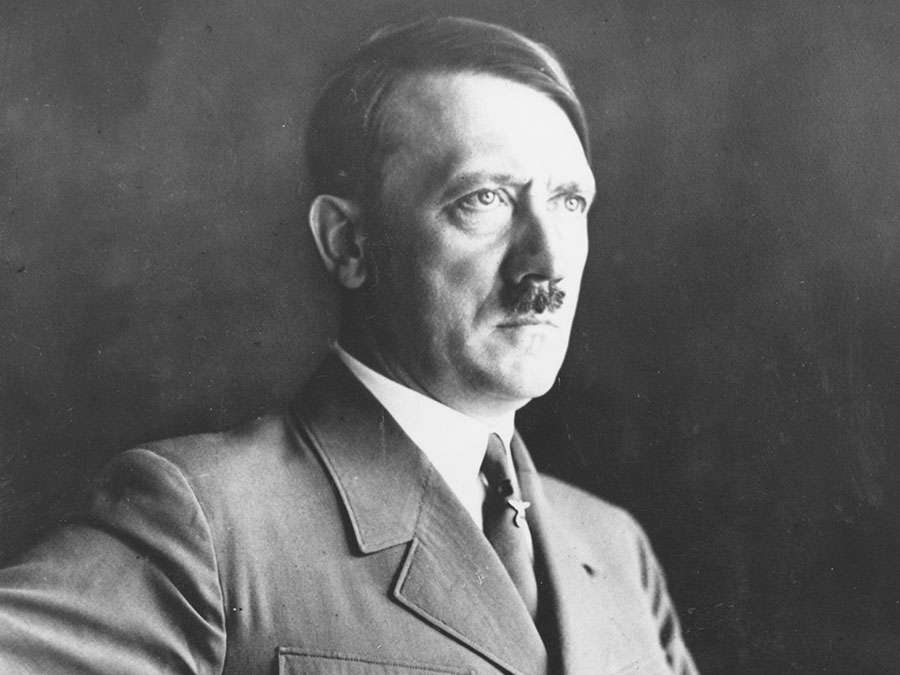
And speaking of metaphorical “funk you’s,” on this day in 1936, African American track star Jesse Owens won his fourth gold medal of the Berlin Olympics in the 4×100-meter relay, thus foiling and infuriating Nazi leader Adolf Hitler plan to use the Games for “master race” propaganda.
Finally, though it should probably by first, it was on August 9, 1945, that the U.S. dropped a second atom bomb on the citizens of Japan, at Nagasaki, finally speeding Japan’s unconditional surrender. If the decision to drop the first atom bomb is controversial, the ethics controversy over the second is even more contentious.
1. Oh, let’s start with another Wuhan vaccination matter, this one from the Ethicist, who was asked,
My elderly mother is in an independent-living facility where all the residents have been vaccinated …Protocols are very strict, and no resident has gotten sick. [A] relative who lives nearby… is not vaccinated. This facility will soon mandate that all visitors be vaccinated, but my relative plans to dissemble in order to evade the requirement. Should I … tell the facility that my relative is not vaccinated?
Does she really have to get expert advice to figure this out? Continue reading →
I’ve complained about Streeter before, but he really needs to be officially flagged as an Ethics Dunce, hence this Popeye post, an Ethics Alarms feature when my alternatives are to write or throw myself into a woodchipper. Streeter personifies the general principle that if a reader can tell your race while reading your work product about a topic that doesn’t have anything to do with race, you’re biased and laboring under a conflict of interest while using your job to advance personal agendas and grievances.
Streeter now writes the once iconic “Sports of The Times” column, and, the Times tells us, “he has a particular interest in the connection between sports and broader society, especially regarding issues of race, gender and social justice.” Translation: He exploits sports to advance his social justice hobby horses rather than enlighten readers about what he’s supposed to be writing about. His presence as the New York Times’ most prestigiously-presented sportswriter tells us exactly what the New York Times cares about, and it sure isn’t sports.
Sports is often about ethics, and Streeter’s Sunday Times column column today pretends to be about ethics. It’s called “Tokyo Olympians Are Showing That Grit Can Be Graceful,” and a few of his entries raise some great ethics issues. For example, I didn’t know, because watching the greed- and Larry Vaughn Effect-driven Olympics could not drag me from my disorderly sock drawer, that high jumpers Mutaz Essa Barshim of Qatar and Gianmarco Tamberi of Italy agreed to forgo a jumpoff that would have decided the competition so they could share the Olympic gold medal. That’s fascinating, because the deal could be the ultimate display of sportsmanship and respect, or a calculated decision to maximize personal gain while minimizing risk of loss at the expense of competition, which is, after all, what fans want to see. Streeter, however, can’t see the issue, and instead has to take his social justice warrior cheap shot. “They knew full well they would be blasted by those who claim that there must always be a single winner, that sharing is weak and — even worse — unmanly,” he writes. Streeter is so tiresome and predictable.
“You can’t have an under-representation without having an over-representation. Are the people who come out on top guilty of “privilege”? Did they “steal” their success? Do they owe their success to the denial of opportunity to someone else? Even if so here or there, is it universally true in every case? Is that a dictum that we have to adhere to? I would submit that this is the wrong way to think about social outcomes. You can see that it’s the wrong way from the places this sort of thinking leads you. “
—Glenn Loury, Merton P. Stoltz Professor of the Social Sciences and Professor of Economics at Brown University, an African-American, in the inaugural essay of the newJournal of Free Black Thought.
You won’t see Loury interviewed on CNN , MSNBC, NPR or the networks. He undermines the narrative—a lot of them, in fact. In his essay, his primary target is Black Lives Matter, as part of his warning against the ascendancy of “bad ideas.” He writes,
“Racial essentialism is one of these bad ideas…If we can’t find some way of countering the underlying problematic ideological commitment to race as an essentialist category, we’re in trouble. Martin Luther King had the right idea with colorblindness, yet today it’s regarded as a microaggression to say one doesn’t see color. Of course, it’s impossible literally not to see color, but despite pressure from cultural elites, we needn’t give it the overarching significance we now do. In fact, if we’re going to make our experiment in democracy work, we mustn’t give it such significance.”
August 6, 1945 is one of the most important ethics days of all, and among the most controversial. The United States bomber Enola Gay—now on exhibit in a hangar near Dulles Airport, dropped the first atomic bomb on the Japanese city of Hiroshima. Approximately 80,000 people were killed in seconds, and another 35,000 were injured. More than 60,000 would be dead by the end of the year from the effects of the fallout. Was the launching of the nuclear age by the United States ethically justified to save American lives (an invasion of the Japanese mainland had been estimated to risk a million U.S. casualties) and end the war? Was President Harry Truman guilty of a war crime, as non-combatants, including children, constituted most of the deaths? Did the horrible results of the new weapon prevent World War III, or make it more likely? These are still intensely debated questions by scholars, historians, theologians, military strategists, philosophers and peace activists.
1. Well, I’ve been spoiling for a fight, shopping around Northern Virginia and fining myself one of the few unmasked. So far, nobody’s said a word, but anyone who does is in for it. I’ve been vaccinated twice and probably had a mild, symptom-free infection before that. I have always been unusually resistant to viruses. Mask fog up my glasses and make me miserable. If you have chosen not to get your shots, swell, that’s your choice, but your exercise of personal liberty is not going to restrict mine without a fight. And don’t tell me I have to wear a mask so phobics feel “safe.” That’s not my problem either. I am not inclined to “social distance,” either. The mask fetish is going to strangle community, society and the joy of life unless we draw some hard lines. I’m drawing.
…but not before Amy Cooper had to flee the country and go into hiding.
To refresh your memory about this Ethics Train Wreck that has been silently rolling all this time, review the posts about on Ethics Alarms here (describing the episode, or at least as we told about it), here, about a month later, commenting on New York City District Attorney Cyrus Vance Jr.’s unethical decision to prosecute Amy Cooper (which he partially justified based on the the intervening George Floyd Freakout), and finally here, from March, when I discussed Amy having to agree to endure state-mandate brainwashing in order to have Vance’s persecution dropped. The short version—but read the posts—is that White Amy Cooper walking her dog off-leash in Central Park was confronted by Black Christian Cooper, a birdwatching enthusiast, who demanded that she leash her dog and filmed her reactions as she demanded that he stop, then called 911. His video showed her telling authorities with increasing agitation that “An African-American man” was threatening her. Black Cooper’s sister then posted the video on line,White Amy became the personification of a racist “Karen,” and the story nicely set the stage for the George Floyd mess, which, through contrived logic and unscrupulous hype, it was linked to.
I must confess that I am proud of Ethics Alarms for its coverage of this case. Even before I had the additional facts (because nobody did), I correctly discerned that both Amy and Christian Cooper, the black bird-watcher whom she called the cops on,
—behaved like jerks,
—that the fury Christian brought down on Amy’s head was disproportionate to her conduct,
—that Don Lemon and others making what was a minor local tiff into a national controversy was unconscionable, and
—that Amy did not deserve to lose her job, career, dog and reputation, plus be prosecuted and get a lifetime ban from using Central Park,
….because, in essence, she was white and behaved like an asshole. (Some readers seemed to think that the fact that Amy eventually got her dog back was sufficient mitigation.) I wrote in the first post, “Proportion is an ethical value. It appears to be completely absent from this fiasco, on all sides.” Truer words I have seldom published, and that was before the recent revelations.
Bari Weiss, the New York Times rebel and exile I wrote about here, has a podcast, and in her most recent release reveals what some non-mainstream media reporters discovered when they dug deeper than their mainstream counterparts bothered to do. Amy Cooper, now living abroad to escape the constant harassment and abuse she endured in the wake of the incident, also is interviewed.