About A New Rationalization And The Netflix Series That Just Reminded Me Of It

I’d like to write about the new Netflix mystery series “Clickbait” in detail, but that would be unfair, because everyone deserves to see it without knowing all of its twists and turns. Maybe after enough readers watche it, I’ll set up a Zoom discussion or something.

There is no doubt about it, “Clickbait” is an ethics drama, or perhaps a dramatization of an ethics train wreck would be a better description. If I had to pick a favorite Ethics Alarms concept that is illustrated by the show, it would be “Ethics Chess,” defined as the vital skill of anticipating the likely consequences, including the worst case scenarios, of ethically challenging or questionable decisions. Multiple characters take extreme or impulsive action without their ethics alarms pinging, often with disastrous results. Reflex lying and deceit is also a persistent theme, along with too many rationalizations on the list to count (or at least I stopped counting them).

Late in the show, in Episode 8, a character voiced a familiar line that I suddenly realized was a rationalization that I had missed, as she urged a family member to stop being obsessed with obtaining “justice” for the death of another family member whose demise was at the center of the plot. “It won’t bring him back,” she said.

Bingo! That’s new Rationalization #52A, “The Resurrection Delusion,”which will soon take its place as a sub-rationalization to #52, The Underwood Maneuver, or “That’s in the past.” (This will require bumping the current 52A, Ted Kennedy’s Stall, or “We’ll cross that bridge when we come to it,” to 52B). Like many of the rationalizations on the list, this one has some ethical uses, as when it is employed to explain the unethical nature of revenge. However, the rationalization often dishonestly (or foolishly) reduces complex ethics calculations to ridiculously simple-minded form when it is used as an excuse to avoid requiring accountability for serious wrongdoing. Like its parent, 52, 52A uses “Move on!” as if doing so is always the right and ethical course.

Other notes on “Clickbait”:

Continue reading →

Which Rationalization Will Apologists And Enablers Of The Biden Administration Settle On To Spin The Afghanistan Disaster?

georgeclooney

The nominations are all in, and boy, there are a lot of them! Before we open the envelope, here are the contenders:

#1A. Ethics Surrender, or “We can’t stop it.”

#1B. The Psychic Historian, or “I’m on The Right Side Of History”

#2A. Sicilian Ethics, or “They had it coming”

#8A. The Dead Horse-Beater’s Dodge, or “This can’t make things any worse”

#13. The Saint’s Excuse: “It’s for a good cause”

#13A  The Road To Hell, or “I meant well” (“I didn’t mean any harm!”)

#15. The Futility Illusion:  “If I don’t do it, somebody else will.”

#18. Hamm’s Excuse: “It wasn’t my fault.”

#19A The Insidious Confession, or “It wasn’t the best choice.”

#19 B. Murkowski’s Lament, or “It was a difficult decision.”

#22. The Comparative Virtue Excuse: “There are worse things.”

#23. The Dealer’s Excuse. or “I’m just giving the people what they want!”

#25. The Coercion Myth: “I have no choice!”

#28. The Revolutionary’s Excuse: “These are not ordinary times.”

#29A  The Gruber Variation, or “They are too stupid to know what’s good for them”

#31. The Troublesome Luxury: “Ethics is a luxury we can’t afford right now”

#36. Victim Blindness, or “They/He/She/ You should have seen it coming.”

#37. The Maladroit’s Diversion, or “Nobody said it would be easy!”

#38. The Miscreant’s Mulligan or “Give him/her/them/me a break!”

#40. The Desperation Dodge or “I’ll do anything!”

#41. The Evasive Tautology, or “It is what it is.”

#49. Ethics Jiu Jitsu, or “Haters Gonna Hate!”

#50. “Convenient Futility,” or “It wouldn’t have mattered if I had done the right thing.”

#51. The Apathy Defense, or “Nobody Cares.”

#51A.  Narcissist Ethics , or “I don’t care”

#52.  The Underwood Maneuver, or “That’s in the past.”

#54. Tessio’s Excuse, or “It’s just business”

#58. The Golden Rule Mutation, or “I’m all right with it!”

#60. The Ironic Rationalization, or “It’s The Right Thing To Do”

#64. Yoo’s Rationalization or “It isn’t what it is”

#69. John Lyly’s Rationalization, Or “All’s fair in love and war”

Some of these have been evoked by Joe Biden directly, others by his desperate defenders. I will not hold you in necessary suspense: the Unethical Rationalization settled upon by the defenders of the completely botched abandonment of Afghanistan, all of its people who relied on our commitment to their sorrow, and the so far undetermined number of Americans currently trapped in the country is…

50. “Convenient Futility,” or “It wouldn’t have mattered if I had done the right thing.”

The description on the list reads,

“One of the more pathetic excuses incompetent and negligent individuals try to employ when they have made bad decisions with disastrous results is to argue that a better decision would have not made any difference, so, by implication, it wasn’t such a bad decision after all. It may or may not be the case that the irresponsible or incompetent decision wasn’t the only reason for the related harm, or that other decisions would have turned out just as badly.  That, however, is convenient speculation. If the decision was demonstrably careless, ill-advised, poorly reasoned or foolish and bad consequences follow, the decision-maker is accountable.

“#50 is the reverse of hindsight bias, in which a decision is second-guessed by critics based on information the decision-maker couldn’t have had when the decision was made. With Convenient Futility, the argument is that unknown and untested approaches to the problem or situation other than the one that was used couldn’t have been any more effective. It’s an air-tight, all purpose excuse, reflecting back on Rationalization #8, “No harm, no foul,” as in “OK, it was a bad decision, but since everything would have fallen apart no matter what, it’s no big deal!”

“The rationalization confounds law and ethics. I was once on the jury for a medical negligence lawsuit in which a woman was suing a doctor for causing her to go blind by giving her an incompetent diagnosis. The doctor’s defense was that she would have lost her sight anyway because she didn’t follow the treatment prescribed by another doctor. That defense worked: he wasn’t legally responsible for her blindness due to an intervening cause. Nevertheless, the doctor was still an incompetent, dangerous doctor. He was just lucky that his ineptitude didn’t blind her.

“It wouldn’t have mattered because the same thing might have happened even if I was competent‘ is still an admission of incompetence.

“Like many of the rationalizations on the list, #50 is sometimes fair and true. Those in charge are often held responsible for events that nobody could have foreseen or prevented. That, in part, is what makes the rationalization so useful for a failed decision-maker desperately searching for an excuse.”

Continue reading →

Unethical Quote Of The Month: President Joe Biden

afghanistan-001-3

“That was four days ago, five days ago!”

President Joe Biden, employing Rationalization #52. The Underwood Maneuver, or “That’s in the past,” to brush off an interviewer’s reference to desperate Afghans falling from U.S. transport plans in their desperate efforts to escape a Taliban onslaught.

President Biden, who has been avoiding questioning from the news media over his self-made national and international crisis in Afghanistan, took the weird but telling step of sitting for an interview on the matter with a single journalist—sort of–that has yet to be broadcast. Not surprisingly, the journalist chosen was career Democratic Party operative George Stephanopoulos, who hosts ABC’s talking heads Sunday news show as well as “Good Morning America!” where he is more like a performer. As Ethics Alarms regularly pointed out until I got sick of it, George has no business interviewing political figures like Hillary Clinton, since he has a flaming conflict of interest, nor can he be trusted to cover any political story involving partisan divides. Virtually all TV journalists are Democrats, but Stephanopoulos was a professional Democrat, and has proven repeatedly that he lacks the integrity and courage to overcome that bias.

Continue reading →

Ethics Quiz: Apple Thinks Of The Children

Apple privacy

Last week, Apple announced a plan to introduce new technology that will allow it to scan iPhones for images related to the sexual abuse and exploitation of children. These tools, however, which are scheduled to become operational soon, can be used for less admirable objectives, like so many technologies.

Apple’s innovation will allow parents have their children’s iMessage accounts scanned by Apple for sexual images sent or received. The Parents would be notified if this material turns up on the phones of children under 13. All children will be warned if they seek to view or share a sexually explicit image. The company will also scan the photos adults store on their iPhones and check them against records corresponding with known child sexual abuse material provided by organizations like the National Center for Missing and Exploited Children.

Cool, right? After all, “Think of the children!!” (Rationalization #58) But while Apple has promises to use this technology only to search only for child sexual abuse material, the same technology can be used being used for other purposes and without the phone owner’s consent. The government could work with Apple to use the same technology to acquire other kinds of images or documents stored on computers or phones. The technology could be used to monitor political views or “hate speech.

Computer scientist Matthew Green, writing with security analysist Alex Stamos, warns,

“The computer science and policymaking communities have spent years considering the kinds of problems raised by this sort of technology, trying to find a proper balance between public safety and individual privacy. The Apple plan upends all of that deliberation. Apple has more than one billion devices in the world, so its decisions affect the security plans of every government and every other technology company. Apple has now sent a clear message that it is safe to build and use systems that directly scan people’s personal phones for prohibited content.”

Your Ethics Alarms Ethics Quiz of the Day:

Does the single beneficial use of the Apple technology make it ethical to place individual privacy at risk?


Morning Ethics Warm-Up, 8/17/2012: The Ethics Buck Stops Here [Updated]

All My Fault

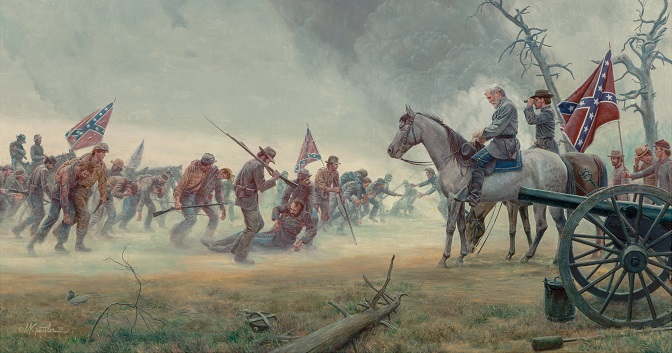
1. Note to future elected officials and politicians trying to weasel their way out of a fiasco of their own making: if you say “I take full responsibility,” then you can’t go on to blame anyone you can think of. The painting above, by artist Mort Künstler (b. 1931) is titled “It’s All My Fault,” and depicts the moment when General Robert E. Lee met his shattered troops after they had marched, under his orders, into Union artillery and Meade’s troops entrenched on higher ground, in the doomed “Pickett’s Charge” that ended the Battle of Gettysburg. “It’s all my fault!” is what he reportedly told his men. National leaders like President Biden, Hillary Clinton and former President Biden might well reflect on those words, which in my view justify remembering and honoring Lee all by themselves, as their supporters tear down Lee’s statues. (President Trump tried to protect the statues, but he has never emulated Lee in the matter of accepting responsibility either.) Their version of taking responsibility is to mouth “I take full responsibility” followed by a string of “buts” that translate into “It wasn’t my fault!” In the Biden version, you do this and then refuse to take questions (Like, say, “WHAT???) and jump on a plane to flee.

Yesterday, President Biden cynically used Harry Truman’s creed “The buck stops here” after blaming the Afghanistan debacle on President Trump and the Afghans themselves. Apparently in a competition with other media hacks for the boot-licking gold, Brian Williams said, on the air, that Biden’s speech wasn’t what it was (Rationalization #64). “He didn’t run from it, he owned it. He owned this decision. He owned the fact that, as he put it, the buck stops with him,” the exiled former NBC news anchor said. Since Williams has no credibility whatsoever, he has none to lose, but this was still stunning: not just a lie, but a Jumbo: “Excuses? What excuses?”

Continue reading →

From “The Popeye” File, Ethics Dunce: Kurt Streeter, NYT Sports Columnist

I’ve complained about Streeter before, but he really needs to be officially flagged as an Ethics Dunce, hence this Popeye post, an Ethics Alarms feature when my alternatives are to write or throw myself into a woodchipper. Streeter personifies the general principle that if a reader can tell your race while reading your work product about a topic that doesn’t have anything to do with race, you’re biased and laboring under a conflict of interest while using your job to advance personal agendas and grievances.

Streeter now writes the once iconic “Sports of The Times” column, and, the Times tells us, “he has a particular interest in the connection between sports and broader society, especially regarding issues of race, gender and social justice.” Translation: He exploits sports to advance his social justice hobby horses rather than enlighten readers about what he’s supposed to be writing about. His presence as the New York Times’ most prestigiously-presented sportswriter tells us exactly what the New York Times cares about, and it sure isn’t sports.

Sports is often about ethics, and Streeter’s Sunday Times column column today pretends to be about ethics. It’s called “Tokyo Olympians Are Showing That Grit Can Be Graceful,” and a few of his entries raise some great ethics issues. For example, I didn’t know, because watching the greed- and Larry Vaughn Effect-driven Olympics could not drag me from my disorderly sock drawer, that high jumpers Mutaz Essa Barshim of Qatar and Gianmarco Tamberi of Italy agreed to forgo a jumpoff that would have decided the competition so they could share the Olympic gold medal. That’s fascinating, because the deal could be the ultimate display of sportsmanship and respect, or a calculated decision to maximize personal gain while minimizing risk of loss at the expense of competition, which is, after all, what fans want to see. Streeter, however, can’t see the issue, and instead has to take his social justice warrior cheap shot. “They knew full well they would be blasted by those who claim that there must always be a single winner, that sharing is weak and — even worse — unmanly,” he writes. Streeter is so tiresome and predictable.

Continue reading →

Say Howdy To The Latest Addition To The Rationalizations List: #1D, Higgins’ Misconception”

Higgins

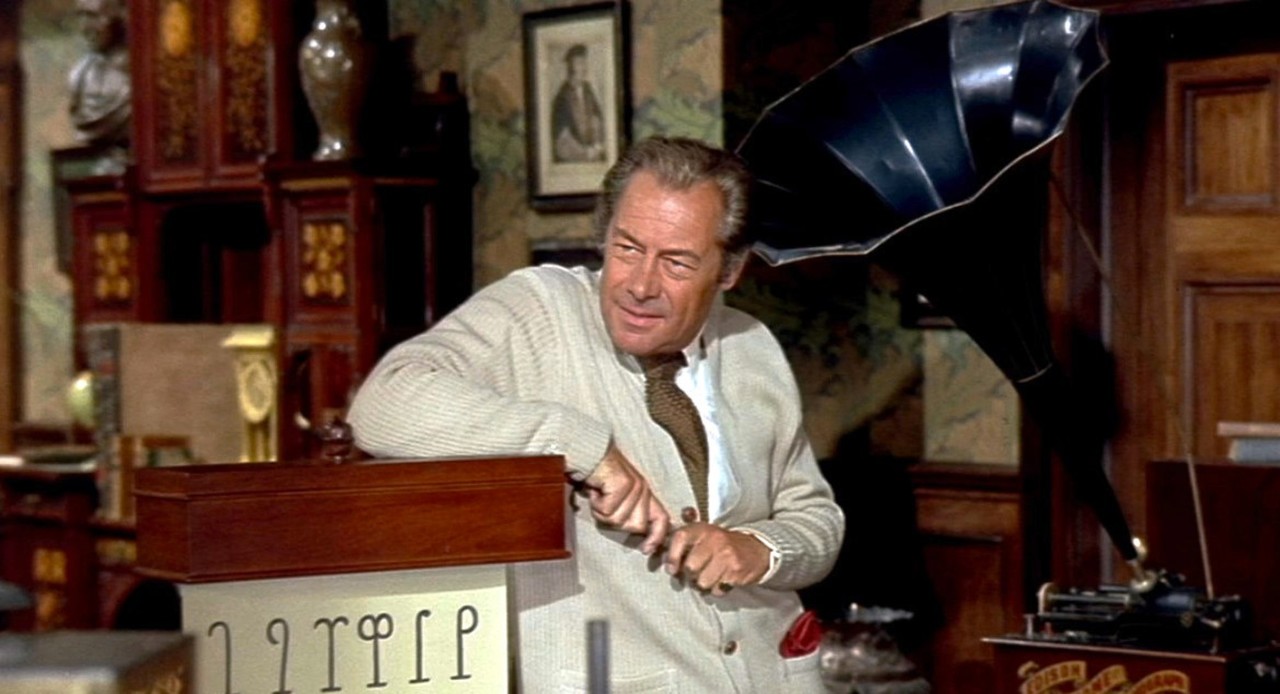
The title of Rationalization 1D comes from literature, specifically George Bernard Shaw’s 1912 drama, “Pygmalian,” better known today for its musical adaptation,”My Fair Lady.” The moment when Shaw’s obnoxious and misanthropic antihero Henry Higgins defines his rationalization occurs in Act 5; Alan J. Lerner lifted it almost verbatim for his book of the musical. Arrogant speech expert Higgins, having been rebuked by Eliza, the flower girl whom he taught to speak like an upper-class British woman to win a bet, for his cruel and uncivil conduct toward her says in his defense,

HIGGINS. … If you come back I shall treat you just as I have always treated you. I can’t change my nature; and I don’t intend to change my manners. My manners are exactly the same as Colonel Pickering’s.

LIZA. That’s not true. He treats a flower girl as if she was a duchess.

HIGGINS. And I treat a duchess as if she was a flower girl.

LIZA. I see.

HIGGINS. Just so….The great secret, Eliza, is not having bad manners or good manners or any other particular sort of manners, but having the same manner for all human souls: in short, behaving as if you were in Heaven, where there are no third-class carriages, and one soul is as good as another.

I immediately thought of this exchange when Gov. Andrew Cuomo of New York, in his rambling denial of multiple sexual harassment and sexual assault allegations, proclaimed his innocence (His victims don’t understand him!) by arguing that as a red-blooded Italian he’s just wired to be physically demonstrative, and treats everyone the same way.

Continue reading →

Sunday Ethics Warm-Up, 8/1/2021: Simone Biles-Free Zone Edition!

Tower shooting

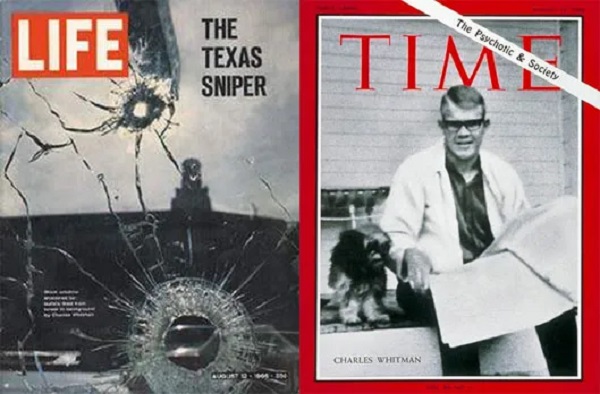
I don’t think that we need to debate the ethics of deranged mass shootings. The first one I was ever aware of occurred on this date in 1966. Charles Whitman, a former Eagle Scout and Marine, brought a stockpile of guns and ammunition to the observatory platform atop a 300-foot tower at the University of Texas. He had packed food and other supplies, and before settling in for 90 minutes of deadly target practice, killing some victims from as far away as 500 yards—he was a trained marksman—Whitman killed the tower receptionist and two tourists. He eventually shot 46 people, killing 14 and wounding 32 before being killed by police. The night before, on July 31, Whitman wrote a note saying, “After my death, I wish an autopsy on me be performed to see if there’s any mental disorders.” Whitman then went to his mother’s home to murder her, using a knife and a gun. He returned home to stab his wife to death.

Whitman’s story does raise medical ethics issues. He was seeing a psychiatrist, and in March told him that he was having uncontrollable fits of anger. Whitman apparently even said that he was thinking about going up to the tower with a rifle and shooting people. “Well, your hour is up, Mr. Whitman. Same time next week, then?” The intersection of mental illness with individual rights continues to be an unresolved ethics conflict 54 years later. In addition, the rare but media-hyped phenomenon of mass shootings has become a serious threat to the right of sane and responsible Americans to own firearms. See #5 below.

1. The King’s Pass in show business. A new book by James Lapine tells the antic story of how the Sondheim musical “Sunday in the Park With George” came to be a Broadway legend. Lapine wrote the book and directed the show. The cult musical—actually all Sondheim shows are cult musicals–eventually won a Pulitzer Prize ( you know, like the “1619 Project”) and bunch of Tony nominations. I was amazed to read that the show’s star, Mandy Patinkin, at one point walked out on the production and was barely persuaded to return. Lapine writes that he never fully trusted Patinkin again. Why does anyone trust him? In fact, how does he still have a career? Patinkin has made a habit of bailing on projects that depended on him. He quit “Chicago Hope,” and later abandoned “Criminal Minds,” which had him as its lead. To answer my own question, he still has a career because of “The King’s Pass,” Rationalization #11. He’s a unique talent, unusually versatile, and producers and directors give him tolerance that lesser actors would never receive. Mandy knows it, too, and so he kept indulging himself, throwing tantrums and breaking commitments, for decades. He appears to have mellowed a bit in his golden years.

2. Speaking of Broadway, the ethical value missed here is “competence”…There is more evidence that the theater community doesn’t realize the existential peril live theater is in (the medium has been on the endangered list for decades) as it copes with the cultural and financial wreckage from the Wuhan Virus Ethics Train Wreck. Just as theaters are re-opening, the Broadway theater owners have decreed that audience members will be required to wear masks at all times.

I have one word for that: “Bye!” Maybe some fools are rich, submissive and tolerant enough to pay $100 bucks or more for the privilege of being uncomfortable for three hours. Not me. My glasses fog up when I wear masks. I have been vaccinated; I’m fairly sure I was exposed to the virus before then and had minimal symptoms, and much as I believe in live theater, I will not indulge the politically-motivated dictatorship of virtue-signalling pandemic hysterics. The industry is cutting its own throat, but then theater has never been brimming with logic or common sense.

Continue reading →

For Ethics Alarms, The Controversy Over The Unmarried Pregnant Art Teacher Is An Easy Call

pregnant teacher

I lost an ethics training client over the issue now raising its ethically-muddled head in New Jersey. Several years ago, during a day long seminar I taught for a teachers association, I stated that a teacher who taught grade school, middle school of high school students while pregnant and unmarried was harming her students, and that responsible school were ethically entitled to make pregnancy outside of marriage grounds for dismissal. Literally all of the attendees were outraged (even the two men in the group), though none could articulate a valid argument against what I said. (“The right to choose!” is not a valid argument in this context.)

I was right, they were wrong. The controversy now over a Catholic school art teacher who is demanding that she should have been able to keep her job despite being pregnant is much easier, or should be.

Victoria Crisitello was an art teacher at the New Jersey’s St. Theresa elementary school in Kenilworth. In the course of negotiating for a raise, she mentioned that she was having a baby. Weeks later, she was fired by the principal, a Roman Catholic nun, who explained that she was being terminated “because she was pregnant and unmarried.” “Sex out of wedlock violates a fundamental Catholic belief that the school in this instance felt it could not overlook,” lawyers for St. Theresa’s wrote in a petition to the state Supreme Court. Crisitello’s lawsuit was tossed out by two trial court judges, only to be restored each time when an appeals court sided with the ex-teacher. Now the state’s highest court, acting on an appeal by the school, has agreed review the case, which raises the continuing thorny question about the relationship between the government and religion.

Continue reading →

An Everyday Ethics Conundrum: Free Air

air pump

Help me out with this one, if you can.

Our car has a slow leak in my right front tire. It get about seven pounds low every three days or so, and it has not been convenient for me to spend the time to go to the dealer and have the thing plugged. For several months now I have just filled the tire at the closest filling station, which has two air pumps (one is perpetually broken) that require six quarters to start the air coming.

About a week ago, both of the air dispensers—including the busted one— began sporting signs announcing that air would now be $2.00 for five minutes rather than $1.50. At the time, that caused me additional annoyance since I only had six quarters, and had to get change at the 7-11 to acquire the additional fifty cents. But when I put in the coins, the air turned on after only six quarters, as it always had. I finished filling the tire in about a minute, wasting the other four minutes of potential air, assuming the change in price had just occurred and the owner hadn’t yet adjusted the machine. But today when I went to fill up the once-again underinflated tire, it still only took $1.50 to start the air flowing.

The question: Am I ethically obligated to inform the owner of this? Do I owe him a buck for the last two air purchases?