The Ethical Christmas Carol

Considering that Christmas is our culture’s ethical holiday, it is remarkable that only one traditional carol—and no modern holiday songs—celebrates ethical conduct. The one carol is “Good King Wenceslas,” and a strange one it is.

The lyrics are by J. M. Neale (1818-66), and were first published in 1853. Neale is a superstar in the Christmas Carol firmament: he also is responsible for the English lyrics of “Good Christian Men, Rejoice,” and “O Come, O Come, Emmanuel,” both of which you hear much more frequently than “Good King Wenceslas.” One reason is that the ethical carol tells a story in ten verses, and if you don’t sing them all, the story doesn’t make sense. There are very few recordings of the song in which all the verses are sung. Ten verses is also a lot to remember for any song. My elementary school used to teach the whole carol to sixth graders for the Christmas assembly, but let them have crib sheets. This was before it was decreed that allowing children to learn, sing and listen to some of the most lovely and memorable songs in Western culture was a form of insidious religious indoctrination.

Here is the whole carol:

Good King Wenceslas looked out
On the feast of Stephen,
When the snow lay round about
Deep and crisp and even;

Brightly shone the moon that night
Though the frost was cruel,
When a poor man came in sight,
Gath’ring winter fuel.

‘Hither, page, and stand by me,
If thou know’st it, telling
Yonder peasant, who is he?
Where and what his dwelling?’

‘Sire, he lives a good league hence,
Underneath the mountain,
Right against the forest fence,
By Saint Agnes’ fountain.’

‘Bring me flesh and bring me wine,
Bring me pine logs hither,
Thou and I will see him dine
When we bear them thither.’

Page and monarch forth they went,
Forth they went together,
Through the rude wind’s wild lament
And the bitter weather.

‘Sire, the night is darker now
And the wind blows stronger;
Fails my heart, I know not how,
I can go no longer.’

‘Mark my footsteps, good my page,
Tread thou in them boldly:
Thou shalt find the winter’s rage
Freeze thy blood less coldly.’

In his master’s steps he trod,
Where the snow lay dinted;
Heat was in the very sod
Which the Saint had printed.

Therefore, Christian men, be sure
Wealth or rank possessing,
Ye who now will bless the poor
Shall yourselves find blessing.

For one thing, “Good King Wenceslas” has little to do with Christmas Day, and doesn’t mention Jesus or the Nativity. The Feast of St. Stephen is also known as Boxing Day, the day after Christmas, December 26. It is a British Commonwealth tradition that never caught on in the U.S. In some European countries like Germany, Poland, the Netherlands and the Nordic countries, the day is celebrated as a Second Christmas Day. Continue reading


Ethics Quiz: The Ethical Duties Of Santa Claus Imposters

11 photos for movie review running Thanksgiving Eve. Billy Bob Thornton in Terry ZwigoffÕs BAD SANTA. Photo Courtesy of Tracy Bennett.

A post yesterday described the outrageous conduct of the management at the Six Flags Over Texas theme park, which declared a local man named Jerry Henderson person non grata and kicked him out of the park because he “looked too much like Santa Claus” (they want him to shave his white beard to resume his park privileges). He also gave candy canes to children after their mom asked him to pose with her kids for a photo.

A regular Ethics Alarms commenter related this 180 degree variation on the story:

My kids take swimming classes at our local park authority pool, and last week, while we were signing in, one of the managers came out of the back office dressed as Santa. However, he was doing it as a gag for the other employees, not for the kids. (About 80%+ of the people there were children.) My kids went running up to him shouting, “Santa, Santa!” He did not acknowledge them or the other kids, didn’t even say hi, and just walked into one of the workout rooms.

I thought my kids were going to cry. I had to tell them that Santa was busy right now, but not to worry, we would go see him tomorrow when he had time to talk to them.

Your “Bad Santa”-themed Ethics Alarms Ethics Quiz of the Day:

If you look like Santa Claus, are you ethically obligated to act like Santa Claus?

Continue reading

Ethics Quote Of The Month: Philosophy Professor Peter Boghossian

"Hmmm. OK, now THIS seriously undercuts some of my strongly held beliefs..."

“Hmmm. OK, now THIS seriously undercuts some of my strongly held beliefs…”

“We’ve taught, “Formulate your beliefs on the basis of evidence.” But the problem with that is people already believe they’ve formulated their beliefs on evidence — that’s why they believe what they believe. Instead, what we should focus on is teaching people to seek out and identify defeaters.

What is a defeater? A defeater is: If A, then B, unless C. C is the defeater. We should teach people to identify conditions under which their beliefs could be false.”

Peter Boghossian, Assistant Professor of Philosophy at Portland State University, who studies critical thinking and moral reasoning, in a wide-ranging interview with  Malhar Mali

He continues, Continue reading

Ethics Dunce: Liberty University

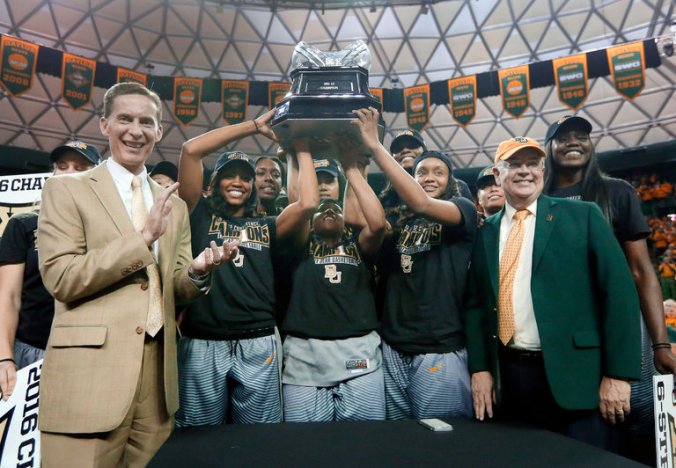
That's McCaw on the left, Starr on the right, with the Baylor women's basketball team.

That’s McCaw on the left, Starr on the right, with the Baylor women’s basketball team.

Football is a sport, but in American culture its primary impact is as an ethics corrupter. The latest revolting example of this is occurring at Lynchburg, Virginia’s Liberty University, a prominent Christian fundamentalist institution founded by Jerry Falwell, the late TV evangelist and Religious Right icon. The school  is supposedly dedicated to imbuing its students with moral values, but if it comes to choosing between the Ten Commandments and pigskin glory, guess what comes out on top?

Last week, with great fanfare, Liberty hired Ian McCaw as its new athletic director. “My vision for Liberty is to position it as a pre-eminent Christian athletic program in America,” McCaw said during a news conference.

This is his first paying assignment since May, when he left his job as the athletic director at Baylor, also a Christian university. His departure was made essential after a thorough investigation that found that those overseeing Baylor’s  football team as well as the management of  the athletic department—that is, McCaw— had been informed of multiple gang rapes and sexual assault by team members and had ignored it, as any good football-loving Christian would….especially when a star was involved.

Baylor’s summary of its confidential investigation, overseen by the law firm of Pepper Hamilton, found that athletic program administrators and football coaches learned of accusations of gang and date rape over many years and did not report them or take appropriate action. This, the report found, “reinforces the perception that rules applicable to other students are not applicable to football players.”

Ethics Alarms calls this “The King’s Pass,” or “The Star Syndrome.” It is antithetical to moral and ethical principles, and, in theory, religion.

The report concluded that the “the choices made by football staff and athletics leadership, in some instances, posed a risk to campus safety and the integrity of the University.” Continue reading

“The 2016 Election Is a Disaster Without a Moral”? Only If You’re In Denial, Mr. Chait!

That should be "lessons," plural...

That should be “lessons,” plural...

The many outbursts of  liberal anger, resentment, accusations and denial over the election have been revealing, and not in a good way. Few have been as directly and stubbornly misguided and biased, however, as the current New York Magazine article by Jonathan Chait, with the clickbait title, “The 2016 Election Is a Disaster Without a Moral.”

It is, in essence, yet another example of Democrats attempting to argue away any accountability for their own misfortune, making Chait’s piece itself a denial of several moral lessons, such as “I am the architect of my own destiny,” “Take responsibility for your failures,” and “Don’t blame others for your own mistakes.” The post-election progressive freak-out, of which Chait is a part, also has a very important moral lesson in store, the one embodied in the Serenity Prayer authored by theologian and philosopher Reinhold Niebuhr (1892–1971):

God, grant me the serenity to accept the things I cannot change, the  courage to change the things I can, and wisdom to know the difference.

Clearly, this moral lesson is completely elusive, with pointless recounts underway supported by the Clinton campaign; round the clock complaining about the Electoral College, part of the 225 year-old rules of the game the Democrats accepted when they ran a candidate in the election; unethical and futile attempts intimidate electors or convince them to violate their vows;  embarrassingly infantile laments and near-breakdowns of whining students on college campuses,; and “Not My President!” protests and riots.

The lessons are there to learn, Jonathan, you just don’t want to learn them. He actually writes—and if this isn’t denial, I don’t know what is, “It is hard to think of an election defeat more singularly absent of important lessons.”  What??? To the contrary, it is hard to think of an election that taught more important lessons than this one. Continue reading

My Happy Birthday Ethics Quiz: The National Review’s Theory

flaming-cake

Today is my annual struggle (since 2009) to try to think of my birthday as something better than “Finding Dad Dead In His Chair Day,” and I must say, Facebook Friends have been especially helpful by sending along happy birthday wishes. Since none of them de-friended me for political differences during and after the campaign, I was intrigued by this essay in the National Review, titled “Ten Reasons Left-Wingers Cut Trump Voters from Their Lives.”

Now as I have made painfully clear, I was no Trump voter, having determined early on that I would sooner undergo a head-transplant from a warthog, even a Bernie-boosting warthog, but I was no Hillary Clinton supporter either, and was especially eager to shoot down particularly stupid memes from OccupyDemocrats, MOVE-ON, and the National Federation of the Brain Debilitated when my friends posted them, which was depressingly often. (Come to think of it, most of those FBFs who are addicted to progressive memes haven’t sent me birthday wishes, the bastards, but then the National Review piece wasn’t called “Ten Reasons Left-Wingers Won’t Say Happy Birthday To Facebook Friends Who Point Out That The Memes They Post Have Been Proven To Cause Retardation In Chimps.

The article is biased, of course: it’s the National Review. Obviously its assertion is over-generalized. But how fair is its general proposition, which is that the 2016 phenomenon of people cutting off friends and family is “one-sided”? Continue reading

When Ethics Alarms Don’t Ring Dept: Planet Fitness

header-2

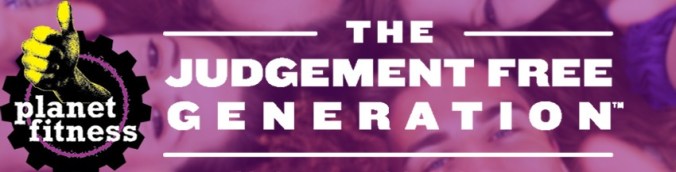
There’s nothing substantively wrong with the fitness chain Planet Fitness’s new philanthropic program to combat bullying. However, one has to question the ethics alarms and basic English comprehension of a company that sees nothing wrong with naming a campaign “The Judgement Free Generation.” I just saw a TV ad that was a teaser for the program. The announcer ended by saying “Now Planet Fitness is creating a Judgement Free Generation.”

Judgement is not a bad thing. Judgement is a good thing. So is making judgements. Society without constant judgements of all kinds cannot possibly have or maintain standards. Without standards, there can be no ethical guidelines and boundaries.Nobody with any concept of what ethics are and why they are essential to civilization would every want to eliminate judgement. Judgement and bullying are not synonymous, not even close.

What some copywriter at Planet Fitness has done is to launch a national campaign that frames “judgement” as something to be avoided. Nobody in the hierarchy there perceived anything wrong with that. This isn’t being “judgement free,” this is just bad judgement, as in incompetent.. To the extent that it advances the culture’s increasing tendency to discourage negative judgements against any conduct, even objectively destructive conduct, leading to purely subjective ethics (that is, no ethics at all), the campaign’s message is irresponsible.

Besides, based on what I’ve seen of late on college campuses, Bernie rallies and anti-Trump freakouts, we may already have a judgement-free generation.

At least one.

Donald Trump: A Pre-Election Ethics Alarms Character and Trustworthiness Review: 2005-2016 [UPDATED]

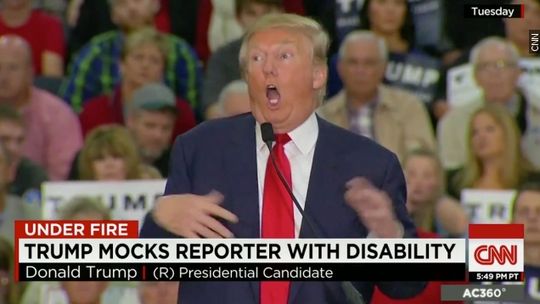
trump-mocks-disabled-reporter-cnn-usa-today

Donald Trump has no character or trustworthiness. Next question?

Oh, all right, in the interests of equity and fairness, I’ll submit The Donald to the same process as I did with Hillary Clinton, though in his case the verdict is res ipsa loquitur. Trump’s lack of ethics and his unfitness to fill the shoes of Washington, Lincoln, Teddy, FDR, or Millard Fillmore is, or should be, self-evident. Those for whom it isn’t self-evident are either ignorant, devoid of values themselves, or intentionally seeking to harm the United States.

I’ve been writing about the awfulness that is Donald Trump since 2005. He was noted for his dishonesty on my Ethics Scoreboard when I called foul on his marketing “various ‘get rich’ products, including tapes, seminars, and “Trump U,” an on-line delivery system for more of the same.” I wrote in part

There are thousands upon thousands of Americans who started with meager resources and made themselves rich through talent, hard work, creativity, inventiveness, and some luck. …Not Trump. The success of his pitch to the desperate wannabes and clueless is based on their erroneous assumption, nurtured by Trump but not explicitly supported by him, that he can teach them to do what they think he did…make himself rich through hard work and a business savvy. But what Trump is best qualified to teach is how to make yourself richer when you inherit an established business and have millions of dollars plunked into your waiting hands after your Dad has sent you to Wharton.

The fact that Trump doesn’t lie outright about his background but simply allows his marks to jump to the wrong conclusions puts his “get rich like me” marketing efforts in the category of deceit…but deceit is still dishonesty. Trump undoubtedly has useful wisdom to impart about building a successful career; it’s not as easy to stay rich as some people think. Ask most state lottery winners. Still, the most vivid lesson of Donald Trump’s successful campaign to sell himself as a self-made billionaire is the lesson that 19th Century con-man Joe Bessimer pronounced more than a century ago: There’s a sucker born every minute.

So we knew, or should have known, that this was a con artist at least back eleven years. In 2006, I posted on Trump’s misogyny and incivility, writing about the first outbreak of his feud with the equally vile Rosie O’Donnell, and their public name-calling…

Rosie set off the exchange by suggesting on ABC’s “The View” that Trump’s recent assumption of the role of moral exemplar by chastising and threatening to fire the reigning Miss USA for being a party-girl was more than a little ridiculous, given his own well-documented penchant for fast women and extra-marital affairs. Sometimes Rosie’s full of beans, and sometimes she gets it right; this time she was right, but spoiled it by concluding her commentary with some unflattering name-calling. Trump, no girly-man he, immediately said he would sue O’Donnell, and then launched into an extended riff on how unattractive and fat she was, including the charming phrase, “pig-face.” Classy as always, Donald…. Yes, anyone who admires either of these two annoying characters already has a problem, but there is no escaping the fact that both are celebrities, and as celebrities they contribute to establishing cultural norms of civility and conduct. This is especially true of Trump, who despite his low-life proclivities is a successful business executive. Resorting to personal attacks on an adversary’s weight or appearance is disrespectful, unfair, cruel and indefensible. Doing so on national media is like firing a shotgun into a crowd. There are a lot of fat or unattractive women out there, Mr. Trump, who are smart, generous, productive, loving, intelligent people… Golden Rule, anyone? How are we to convince our children not to ridicule the personal traits of others, when those they see as rich, famous and successful do the same openly, shamelessly, and even gleefully?

You can imagine my continued amazement that ten years after writing this rather obvious assessment, without Trump having undergone a complete transformation, and indeed with his conduct and public statements becoming worse rather than better, we are on the eve of a day that may live in infamy as the moment democracy  completely failed the United States of America, inflicting on it, and the world,  as unstable and unqualified a leader of a great power as history has ever witnessed. Continue reading

Ethics Quote Of The Month: Hillary’s “Basket Of Deplorables”

basket-of-deplorables

“You know, to just be grossly generalistic, you could put half of Trump’s supporters into what I call the basket of deplorables. Right? The racist, sexist, homophobic, xenophobic, Islamophobic — you name it. And unfortunately there are people like that. And he has lifted them up. He has given voice to their websites that used to only have 11,000 people — now 11 million. He tweets and retweets their offensive, hateful, mean-spirited rhetoric. Now some of those folks — they are irredeemable, but thankfully they are not America.”

—-Democratic nominee Hillary Clinton during a fundraiser—just as Mitt Romney’s infamous “47%”  comment in 2012 was made at a fundraiser!—the LGBT for Hillary Gala in New York City on Sept. 9, 2016.

One of the consistent features of both Clintons is that they engage in so much problematic conduct that often one incident worthy of serious criticism will be knocked out of the headlines by another.

Hillary’s 9/11 “over-heating, well, dehydration, well, ok, since it’s on video, she has pneumonia” fiasco,  demonstrating that suspicions that she and her campaign aren’t being truthful about the state of her health are not “conspiracy theories,” effectively muted discussion about her “basket of deplorables” classic, complete with an imaginary word, “generalistic,” that if it had been uttered by George W. Bush would have been mocked far and wide.

I categorize this as an ethics quote rather than an unethical quote, because it is both ethical and unethical simultaneously. (The Clinton’\s seldom say things that aren’t adaptable to multiple interpretations; this allows them to leap from one to the other, like they are ice floes, when one meaning is justly condemned or found to be false.)

On the ethical side, it is completely fair and accurate to diagnose Trump supporters as deplorable, defined as “lamentable, or deserving censure or contempt.” This doesn’t apply to those conflicted potential voters who have reluctantly decided that in the terrible binary choice Americans have had shoved down their civic gullets by the two incompetent political parties, Donald Trump is preferable to Hillary Clinton. That is not the most responsible choice—it can’t ever be responsible to give such power to an unstable and ignorant boor—but it is an excusable mistake, given the horrible dilemma.

Supporting Trump, however, as in actively wanting him to become President, is as good a definition of “deplorable” as I can imagine. In this respect, Hillary was too generous. 100%, not merely 50%, of Trump’s supporters are deplorable. They lack the values, civic responsibility, understanding of their own nation and its history, or sufficient intelligence to be competent voters.

You know: deplorable. Continue reading

Ethics Quiz: Ad Hominem Or Not?

I frequently find myself correcting commenters who accuse me of ad hominem attack when I diagnose their problem, based on their arguments as jerkism or mental deficiency. (I recently found one legal blogger who actually states that if a commenter uses the term incorrectly, the comment will be rejected). Ad hominem is an argument fallacy that holds that if a messenger is flawed, his or her argument can’t be valid. It’s a cheap debate tactic, and unethical. If I conclude, however, that your argument is so idiotic that it could only be devised by an  idiot and thus designate you as one in so many words (because you have a right to know), that’s not ad hominem.

African-American pastor Mark Burns is a rafter-shaking speaker and an unusual and useful advocate for Donald Trump. He has been on cable news segments frequently, and even spoke at the GOP Convention. Being black, he is obviously roundly detested by those who regard Trump as a bigot, indeed by those who just dislike Trump generally. This almost certainly includes journalists on CNN, a Hillary stronghold.

A member of the black fraternity Kappa Alpha Psi alerted CNN that  Burns had claimed to have been a member,  but there was no record to support it. This set CNN on a quest to check all of Burns’ credentials and biography items, and it found that he had other dubious claims. Confronted on the air by (also African-American) CNN reporter Victor Blackwell with these discrepancies, Burns stuttered, humina-huminaed, protested, lied (his web site bio had been “manipulated” in some way, he said—the Weiner Excuse: “I’ve been hacked!”), and finally stormed out of the interview, which is to say, he ran.

Mark Burns is a Trump ally and supporter of note because he is a black pastor. He is still a black pastor. He makes a case for why blacks should support Doonald Trump. That case does not in any way rely on his military record or where he went to school, or, for that matter, how well he responds to having his honesty and integrity challenged on TV.

Your Ethics Alarms Ethics Quiz of the Day is...

“Was CNN’s attack on Pastor Burns fair and responsible, or..

Was it an unethical ad hominem attack designed to discredit a Donald Trump ally?”

Continue reading