Unethical Quote of the Week: Kim Davis

“I never imagined a day like this would come, where I would be asked to violate a central teaching of Scripture and of Jesus Himself regarding marriage. To issue a marriage license which conflicts with God’s definition of marriage, with my name affixed to the certificate, would violate my conscience. It is not a light issue for me. It is a Heaven or Hell decision. For me it is a decision of obedience. I have no animosity toward anyone and harbor no ill will. To me this has never been a gay or lesbian issue. It is about marriage and God’s Word. It is a matter of religious liberty, which is protected under the First Amendment, the Kentucky Constitution, and in the Kentucky Religious Freedom Restoration Act. Our history is filled with accommodations for people’s religious freedom and conscience. I want to continue to perform my duties, but I also am requesting what our Founders envisioned – that conscience and religious freedom would be protected. That is all I am asking. I never sought to be in this position, and I would much rather not have been placed in this position. I have received death threats from people who do not know me. I harbor nothing against them. I was elected by the people to serve as the County Clerk. I intend to continue to serve the people of Rowan County, but I cannot violate my conscience.”

—-Kim Davis, Rowan County Kentucky Clerk  and hero of the addled, who has been making an ass out of herself while inconveniencing and insulting citizens of the State of Kentucky who only wish to get a marriage license, as is their right, in an official statement today released by her lawyers.

Stop in the name of arrogance and ignorance!

Stop in the name of arrogance and ignorance!

The U.S. Supreme Court declined to extend a temporary stay of a federal court order directing Davis to stop grandstanding, do her job and issue marriage licenses to a same-sex couples. One of the couples that Davis sought to deny the equal protection of law sued her, hence the order.   Davis’s lawyers, who have been giving her lousy advice, appealed  that order to the Court of Appeals, which stayed the lower court order until August 31. Now the stay of the order is no longer in effect, she’s out of even semi-rational options, and the courts are out of patience.

Davis, expressing certainty regarding her gross misinterpretation of law, religion, the Bible, and what it means to have a job, embraces a version of the Rule of Law that would lead directly to a theocracy. She is doing more damage to Christianity by her high profile idiocy than any gay couple possibly could. Continue reading

Update: More Abortion Advocate Struggles With Ethics In The Midst Of The Planned Parenthood Videos Revelations

panda

As the pro-abortion lobby has rushed to defuse the ticking time bomb of comprehension that might make lazy and inattentive American think. “Wait, that’s what happens in an abortion?,” its dishonest, desperate, and unethical arguments have been as revealing as the videos themselves, and as damning.

Frankly, I’ve been surprised: they really don’t have much that makes ethical sense, just “it’s legal!” and “It’s Our Bodies And We’ll Kill If We Want To!” (a little known B-side flop by the recently departed Leslie Gore.)  I recently wrote about their defenses in the posts Planned Parenthood Videos Surprise: Forced To Defend Abortion Ethics Acknowledging The Existence Of A Second Human Life In The Equation, Advocates Run Out Of Arguments (Part One) and Part Two: Bad Analogies. As I wrote in the latter: “If an advocate has persuasive, honest, strong arguments not based on fallacies and rationalizations, I assume that those would be the ones he or she would use.”

More evidence that they don’t possess them and also don’t care to have an honest debate recently came to light.

The most bizarre was an article in the Washington Post ostensibly about the ongoing drama at the National Zoo in Washington, D.C. The female panda there gave birth to twins (“Awwwww!”) then abandoned and neglected the smaller one (“OH NO!!!”) which soon died. Before the little panda’s demise, those clever abortion advocates of the Post saw an opportunity, and had a female reporter, Sarah Kaplan, author an article which the Post titled “The perfectly sensible reason why panda mothers and other creatures selectively abandon babies.”

If you want to think it’s a coincidence, go ahead. I don’t. To Kaplan’s credit, she avoided any overt analogies to human beings, and played it straight, as she always does. (She’s a terrific reporter.) Still, there is that headline. It’s sensible to “abandon” babies that will be too difficult for the mother to care for, “abandon” in the wild being the equivalent of “kill.” This points to  Rationalization #51—the latest on the Ethics Alarms list-–as a defense for abortion: “It’s natural.” Continue reading

Ethics Quiz: The Looney Tunes Cartoon Disclaimer

Warner Brothers Warning

Above is the disclaimer shown at the beginning of each DVD in the Looney Tunes Golden Collection: Volume 4, Volume 5, and Volume 6 sets, as well as the Daffy Duck and Foghorn Leghorn Looney Tunes Super Stars sets and the Warner Bros. Home Entertainment Academy Awards Animation Collection:

Your Ethics Alarms Ethics Quiz of the Day:

Is the warning that introduces the Warner Brothers classic cartoon videos fair and responsible?

Continue reading

The Cake And The Clerk: If Living In A Pluralistic And Democratic Society Offends You, It May Be Time To Find Another One

Davis Protest

The kicking and screaming of the anti-gay marriage bitter-enders is becoming a national embarrassment, especially since some of the Republican Presidential candidates can’t seem to resist pandering to them. The social contract in a democracy involves accepting where the system decides to go and following along to the extent the law requires. If we don’t like a law, or a war or a government program, we are free to complain and to try to get them changed, or to pay the price for defying the law as part of the contract. We may not unilaterally declare that the law doesn’t apply to us. No, not even if we think God agrees. He’s not a party to the contract.

This is straightforward and clear. The ethics of citizenship requires it. Two current situations that have had significant developments in recent days illustrate the principle in the breach of it.

The Cake.

Jack Phillips, who is yet another Christian cake baker, lost an appeal that asserted that he had a First Amendment right to refuse to provide a cake for a gay couple to celebrate their wedding. Continue reading

Look! “An Illustrated Book of Bad Arguments”!

bad arguments

As various thought fallacies and flawed arguments are constantly being exposed, used, debunked or otherwise referenced during our ethics discussions and debates—the Ethics Alarms compendium is here–this looked like something readers would enjoy. I probably should dedicate this post to former blog Commenter of the Year tgt, in appreciation for his ending—maybe just briefly, we shall see—his latest sabbatical with a flurry of 70 comments while I was lecturing in Newport last week. I didn’t have time to properly engage him or even read all the comments, but he seemed in characteristic form.

Tgt loves the fallacies and delights in slapping them down whenever they occur. His favorite is “No True Scotsman.” I immediately thought of him when I  stumbled upon “An Illustrated Book of Bad Arguments” by the multi-talented Ali Almossawi. Tgt’s  pet fallacy is here, as well as ad hominem, appeals to authority, the straw man, equivocation and others, some under different names than those I am used to. I haven’t read it carefully: there may be one or two that needs to be added to the Ethics Alarms list.

This is a well-researched and written exposition of some major fallacies with lovely illustrations, presented like a vintage children’s book. Someone should actually publish a children’s book like this: I would have been grateful for one when my son was a boy, or when I was a boy.  I’m grateful for this now.

You can find this amazing work of art, ethics, rhetoric and logic here. I’ve already sent the link around to many friends, young and old, and you may want to do the same.


Further Thoughts And Questions On “The Lottery Winner’s Sister-in-Law” (Part 1)

lottery win

The last ethics quiz posed the questions of whether a financially struggling (that is, like most people) brother [NOTE: In the earlier version, I incorrectly said they were twins. Why, I don’t know, except that it makes the set up more perfect. I apologize for the error. It didn’t change the issues any, or the commentary.]  in his Sixties should suggest to his lottery-winning brother, now 50 million dollars richer, that he could use some of that excess cash…and whether the brother would be unethical to refuse.

The more I think about it, the more I am sure that Slate advice columnist Emily Yoffe was answering a fictional hypothetical carefully devised to coax out the answer it did. I write these things for a living, and the brothers element is suspicious. The idea was to emphasize the perception of unfairness: here we have two genetically similar human beings raised with the same advantages and disadvantages, not just metaphorically “created equal” but equal in fact. How cruel and unfair that, in “Dear Prudence’s” words,  “your brother-in-law, through no effort of his own—save the purchase of a quick pick—was smiled on by fate and now enjoys luxuriant leisure. Especially since the two brothers suffered from a start in life that would have crushed many, it’s disturbing that the lottery winner hasn’t been moved to share a small percentage of his good fortune so that his brother doesn’t spend his last years scrambling to meet his basic needs.”

I didn’t exactly give my preferred answer to the quiz, but I did suggest that Yoff’e’s answer and the orientation of the questioner were redolent of the prevailing ethos of the political left. This was met with some complaining in the comments, but come on: “it’s disturbing that the lottery winner hasn’t been moved to share a small percentage of his good fortune so that his brother doesn’t spend his last years scrambling to meet his basic needs” would be a great Occupy Wall Street poster if it wasn’t so long, and it perfectly states the ethically dubious mantra we can expect from Bernie, Hillary or Elizabeth and probably any other Democrat who is selected to be called “a lightweight” and “a loser” by Republican nominee Trump.  In fact, I think this hypothetical would be a great debate question….and better yet if we explore some of the  variables.

For example: Continue reading

Rationalization #51: The Hippie’s License, or “If It Feels Good, Do It” (“It’s Natural!”)

hippies

It is time—past time, really— for a another entry in the Ethics Alarms Rationalization List.

One of the most seductive and simple-minded of rationalizations, The Hippie’s License flourished in the 1960’s and still haunts us today. The theory is that that up-tight and sanctimonious moralizers drive mankind into misery, stress and insanity by denying basic human urges and instincts, and worse, declaring conduct based upon them wrong. This leads to guilt and the reduction of self-esteem. The Hippie’s License was employed in the Swinging Sixties to justify everything from promiscuity and adultery to petty theft and lawlessness,  incivility, vandalism, public defecation and poor hygiene. It was also, as it is today, wildly hypocritical: the hippies derided violence, and little is more human or natural than that.

The sad truth is that ethics are unnatural, civilization is unnatural, and the state of being human demands a greater acceptance of responsibility to others than nature has programmed into us. Ethics evolve faster than we do; while our DNA is telling men to mate with every healthy and attractive female, to fight those who challenge their status in their group and to take what we want and need whenever we want and need it, civilization, traditions, laws, societal standards, experience, knowledge, education and ethical systems instruct us otherwise for our own good Indeed, much of the task of being ethical involves recognizing natural instincts that make us do bad things, and resisting them. Continue reading

“I think abortion is evil, but it is a necessary evil.” Discuss.

Foetus-435110

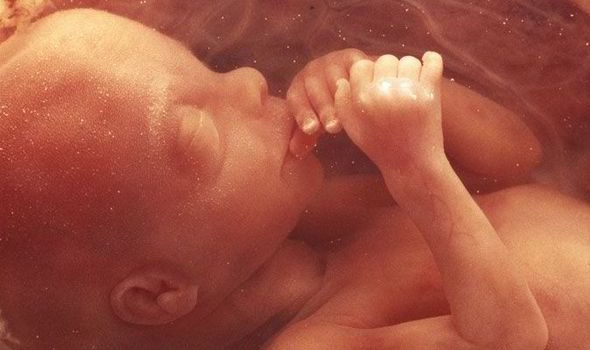
This blog doesn’t discuss evil very often because it is not a term appropriately associated with ethics. Evil is a concept related to morality. In an ethics discussion, I would take evil to mean something extremely, irredeemably unethical by any ethical analysis or system. The statement “I think abortion is evil, but it is a necessary evil” appeared parenthetically in a comment by Beth, a frequent commenter on Ethics Alarms who is a mother and a lawyer, regarding the Planned Parenthood videos. Though the news media appears to have successfully distorted that story by focusing only on whether the videos were evidence of illegal “trafficking in body parts” by Planned Parenthood, that was not the reason I posted the essays, and it is not the reason those videos are significant in the ongoing debate over abortion rights. Two high ranking individuals in the organizations casually discussed the crushing and crunching of the heads and torsos of living and helpless individuals with the sensitivity I would associate with stepping on a roach. If this doesn’t disturb you, it should. If it does disturb you, as it did Beth, what does that mean?

Abortion is one of the most important and difficult ethics issues in the culture, indeed in world culture. It involves millions of lives and millions of deaths, law, bioethics, religion, social policy, science, human rights and feminism, as well as society’s ultimate respect for life itself. I have written about the ethics of the abortion debate frequently (you can find most of the relevant posts here), but to summarize the Ethics Alarms views on the topic:

1. Abortion is an ethics conflict, meaning that there are ethical principles in opposition to each other, requiring society to set priorities.

2. The absolutist position on the anti-abortion side is that abortion involves the taking of innocent human life, which begins from conception, and is thus unethical in all cases. It is a strong position if one accepts the underlying assumption.

3. However, no absolute position is really absolute. Every ethics absolute has an exception, or several: there must be some circumstances when abortion is necessary and right. (This is not true of moral absolutes, since moral absolutes are self defining. If the power dictating a moral precept says it is absolute, it is so.)

4. The absolutist position on the abortion side of the argument holds that a woman’s right to have complete dominion over her body, reproductive activity and health justifies abortion in all cases. This is not a strong position, and in fact is one that cannot be honestly argued or sustained. It supports abortion on demand for any purpose or preference, entirely at the mother’s discretion.

5. To make that argument, extreme pro-abortion advocates have had to deny the humanity and human rights of unborn children, even to the point of arguing that they are not individuals at all, but mere “parasites,” or “tumors.” The removal of a second life from the equation that is at the core of the abortion problem makes the abortion decision easy and guilt-free; it also settles the debate by pretending the central issue doesn’t exist. That issue is that there is another life involved, not just the mother’s.

6. The debate over the ethics of abortion has been handicapped by the tactic of both sides to pretend a legitimate interest championed by the other doesn’t exist. A woman’s ability to control her own life, career and what happens to her body is an important societal issue, yet the term “pro-life” ignores it entirely. It is not the only important interest involved in the abortion decision, however, as the term “pro-choice” suggests.

7. Neither absolute position, whatever its theoretical virtues, is practical from a policy perspective. Desperate women who are pregnant will seek abortions, people will help then (or exploit them, or kill them), and public policy cannot pretend otherwise. Society will not tolerate punishing women for aborting their unborn children, whether they deserve to be punished or not. Yet allowing mothers to have unborn children killed on a whim leads to the callous, ugly, dangerous attitude toward innocent life on display in the Planned Parenthood videos. Callousness toward any human life, history has shown us, is a slippery slope with the potential of doing terrible harm to the culture.

8. Roe v. Wade was a premature Supreme Court decision and a badly reasoned one. Until and unless it is overturned, abortion is a right. That does not mean, and never meant, that abortion necessarily is right.

9. Because absolutism fails here, abortion is a problem that demands utilitarian analysis–balancing of interests and values, in the best interests of society, long and short-term, and everyone in it, according to the facts as we understand them.

10. Balancing requires an honest acknowledgement that there is something to balance. The “pro-choice” and “pro-life” dichotomy doesn’t acknowledge that in their most extreme incarnations, and since abortion is currently a right, the pro-choice lobby detects no reason to yield to logic, science and reality. Continue reading

Planned Parenthood’s Callousness Toward Life On Video, ACT II

In her op-ed for  USA TODAY, Kirsten Powers, one of the token liberals (she’s a moderate conservative, really) on Fox News, does an excellent job of compiling the inadequate and indeed damning responses of Planned Parenthood and the pro-abortion establishment to the video evidence of its executives’ stunning lack of respect for  unborn human life. (I covered much of the same territory here and here.) There is now a second video, and that means that the “this is just an aberration and one woman’s mistake” rationalization for Planned Parenthood’s senior director of medical research, Deborah Nucatola casually talking about crushing the heads of living human beings to preserve their organs for medical research. Powers quotes her “friend and former Obama White House staffer Michael Wear” as tweeting “It should bother us as a society that we have use for aborted human organs, but not the baby that provides them.”

Well said. Does it bother us? It certainly doesn’t bother Democratic presidential candidates, none of whom have breathed a word about the videos. Neither have they been asked about them, because with the exception of the evil Fox News, none of the news organizations have treated the first video as anything but a one day story. Writes Powers, accurately,

It’s a measure of how damning the video is that Planned Parenthood’s usual defenders were nowhere to be found. There was total silence from The New York Times editorial board and their 10 (out of 11) pro-abortion rights columnists. Hillary Clinton and Nancy Pelosi — both recipients of Planned Parenthood’s highest honor, the Margaret Sanger Award — have been mum.

They want the story to go away, and the reason is that the ethics of abortion is extremely vulnerable to facts and honest discussion. Shouldn’t the news media be promoting both? Let me rephrase that: wouldn’t objective, unbiased, ethical journalists have a duty to examine the issue in the light of the videos, and not shrink from them?

Of course. Continue reading

Professor Schwitzgebel Concludes That Ethicists Aren’t Very Ethical—Luckily, According To Him I’m Not An Ethicist, So I Don’t Take It Personally

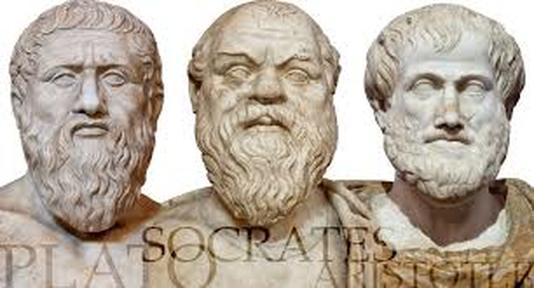
Greek phil

Eric Schwitzgebel is professor of philosophy at University of California, Riverside, as well as an author and a blogger. His essay “Cheeseburger Ethics” immediately caught my attention, as his thesis is one that I have embraced myself, occasionally here: ethicists are not especially ethical.

The essay is thought-provoking. He’s a philosophy professor and an academic, so naturally he views his own, isolated, rarified species of ethicist as the only kind. In announcing the results of his “series of empirical  studies” on the ethics of ethicists, Professor Schwitzgebel announces, “…by ‘ethicist’, I mean a professor of philosophy who specialises in teaching and researching ethics.” Got it, prof. I, in contrast, am the kind of ethicist typically denounced on other blogs as a “self-proclaimed” I don’t regard myself as an academic, my degrees are in American government and law, and my specialty is leadership and the role of character in developing it. My job isn’t to teach half-interested students about the abstract thoughts of dead Greeks and Germans; my job is to make professionals, elected officials and others understand what being ethical in their jobs and life means, how to distinguish wrong from right, and how to use proven tools  to solve difficult ethical problems they will face in the real world. I get paid for it too.

My audiences hate ethics, usually because of the people who Prof. Schwitzgebel has decided are the “real” ethicists. They have made ethics obscure, abstract and gnaw-off-your-oot boring for centuries, with the result that the mere word “ethics” sends the average American into a snooze. I have had corporate clients ask me to teach ethics without using the word “ethics.” The most common evaluation I read are from participants who write that they dreaded my seminar and were shocked that they were engaged, interested, entertained, amused…and learned something useful and occasionally inspiring.

Is it ethical to reduce the public’s interest in and respect for the very subject—a vital one– you have chosen to specialize in and teach, often because you have lousy speaking and teaching skills? Why yes, I’d call that very unethical. So I agree with Schwitzgebel’s assessment of his colleagues. Continue reading