Harvard researchers are on the way to perfecting brain-to-brain interfaces, permitting a human to control the behavior and eventually instincts and emotions of other creatures with thought alone. Continue reading
Religion and Philosophy
Lauren Green vs Reza Aslan Aftermath: Attack Of The Spinners
The interview Lauren Green of Fox news inflicted on her guest, Reza Aslan, was bad journalism, bad television, and just plain wrong–unfair, unreasonable, and biased. In a sane U.S., nobody would defend such a dull-edged hatchet job, which appeared to be crafted, by Green or her Dark Lords at Fox, to make the network’s conservative Christian viewers happy by accusing a scholar of religious bias for simply challenging the historical accuracy of the New Testament. But this is an insane, crazily partisan U.S., where every perceived defeat in the culture wars is cause for garment rending, so such niceties as being honest when one of your allies misbehaves is considered tantamount to surrender.
Thus along comes conservative religious scholar Matthew J. Franck, who on his blog First Thoughts hands the Christian Soldiers of the Right just the ammunition they need to rehabilitate Green. (Note: Green revealed herself as a shameless hack, and doesn’t deserve to be rehabilitated.) Naturally, the strategy is to discredit Aslan, and this he tries to do with gusto in not one, but two blog posts. His accusation: Aslan misrepresented his scholarly credentials, when he was trying repeatedly to challenge Green’s idiotic contention that a Muslim isn’t qualified to write about Jesus. This means, concludes Franck, that Aslan can’t be trusted, so Green was right all along. His book should be ignored.
Ironically enough, this calls to mind another one of Bickmore’s Laws (His First Law of Being Biased was featured in the original post about Green’s interview) , Bickmore’s Second Law of Being Biased:
Nitpicking others’ arguments is not the same thing as “critical thinking.” That involves nitpicking your own arguments.
This applies nicely to Franck’s attack on Aslan.
Aslan said, off the cuff and while being badgered by Green, Continue reading
Lauren Green, Fox News, and Bickmore’s First Law Of Being Biased
Watch this, if you dare.
I have been using the phrase “Bias makes you stupid” for many years, but only recently learned that a Utah climate-change scientist has claimed the observation as his own. In fact, Barry Bickmore has a lot of useful, perceptive observations among “Bickmore’s Laws” ( Example: Bickmore’s First Law of Being Reasonable Reasonable people understand that good arguments can sometimes lead to false conclusions, and bad arguments can sometimes lead to true conclusions ), though they all were apparently devised to help him debunk the arguments of climates change skeptics. Most of them have general applicability. and that includes his version of what I once called “Marshall’s First Law”: Bickmore’s First Law of Being Biased: Bias makes you human. Unchecked bias makes you stupid.
Which brings us to Lauren Green, and Fox News.
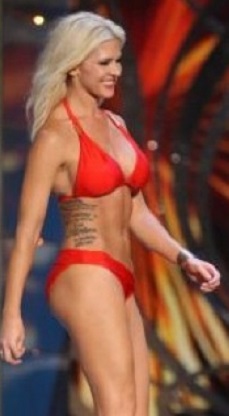
I have no idea whether Ms. Green is really stupid or not. I do know she is a former beauty queen, and that Fox (other networks too, but Fox is blatant about it) clearly values pulchritude over journalistic acumen and skill when making their on-air talent decisions not involving Y chromosomes. This itself is stupid, unprofessional, sexist, insulting to women, unfair to better journalists with smaller bra cups and courser features, and I must admit, when it leads to an epic live embarrassment such as Green’s, I take some satisfaction that Roger Ailes is getting exactly what he deserves for such a cynical, reckless, ratings ploy.
If Lauren Green is not stupid, then her frantic efforts to play to the core Fox audience’s presumed bias in favor of Christianity of the literal variety and related bias against non-Christians, especially Muslims, sure caused her brain to take a holiday. Or, perhaps, her own unchecked Christian biases—she is Fox’s “religion correspondent” these days—triggered a classic display of Bickmore’s First Law of Being Biased. In either case, I think her credibility is permanently shot, even at Fox. She might want to consider a different line of work. Continue reading
Ideology And The Vegan Kitten
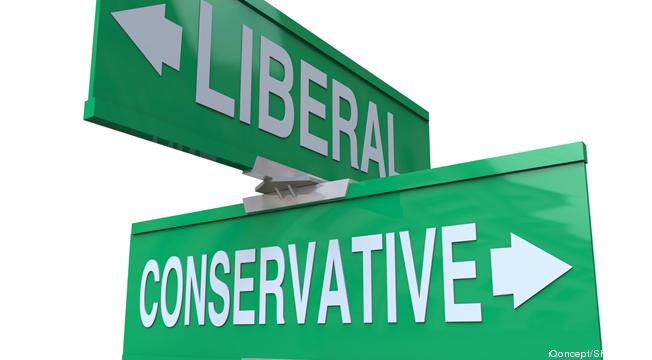
Regular readers of Ethics Alarms may have surmised that I detest rigid ideologies. Like moral codes, they are short-cuts for the intellectually and ethically lazy, “how-To” manuals for policy-making and problem-solving that eliminate the need for analysis and critical thought, and that therefore cause untold misery. Ideologies, whether they involve small government, caring for the poor or always bring in your closer in the ninth inning, are among the primary reasons that the country and the world are in the mess that they are.
An awful story from Melbourne, Australia is the best metaphor for this that I have encountered in a while. A vegan couple decided that their virtuous lifestyle dictated that they make a vegan out of their kitten—cats, unlike dogs, must eat meat to survive—so they force-fed the little fluffy animal a vegan diet of potatoes, rice milk and pasta. Naturally, the kitten became deathly ill and was barely saved by an animal hospital after three days of intensive care.
Human babies have also been made sick and sometimes killed by similar misapplied ideologies. These people are, of course, idiots, but are they that much more irresponsible than elected leaders who are incapable of setting aside their ideological biases to care for cities, states, and nations, and deal with the non-conforming, non-ideologically neat crises they find themselves in?
________________________________________
Spark and Pointer: Instapundit
Facts: The Herald Sun
Well, Let’s Kill All The Lawyers, Then!
One reason why democracy doesn’t seem to be working very well is that the public is becoming increasingly ignorant about what makes it work at all. Evidence of this trend comes by way of a provocative study by the Pew Research Center, which polled the public regarding which professions it believes contribute the most to society.
The results can be found in this press release, this summary, and this article in The Careerist, but here is a snapshot:
ARRRGH! Outrageous Ethics Malpractice By “The Ethicist”!!!!
It’s time for Chuck Klosterman, the New York Times’ designated amateur who now handles “The Ethicist” advice column, to hang it up, and let some randomly chosen unemployed New Yorker take a shot at the job. Since assuming his post, Chuck has had good moments and bad, but this botch is embarrassing, and signature significance—no one who isn’t a bona fide Ethics Dunce could make such a terrible call.
Get this: Klosterman was asked whether surreptitiously taking cuttings from plants owned by a shopping center was unethical:
“…While walking through our local shopping center, we noticed a particular plant that we both liked and decided to get it for our patio….My wife thought she could grow it from cuttings, so we went back and took about three or four cuttings from one of the many plants that were scattered around the shopping center. The plant was not hurt or damaged in any manner or form, but my gut instinct told me that this was wrong. Was it?”
Does this question really need asking? Apparently, because the fraud masquerading as an ethicist at the Times thinks it’s a “thorny” question (Chuck likes puns…maybe the column should be called “The Punster”) about an “unethical act that has a positive impact.” ( Helpful hint to Chuck: the issue is stealing.) Klosterman then embarked on a rationalization orgy: Continue reading
Ethics Quote of the Week: Phyllis McGinley (1905-1978)
The Angry Man
The other day I chanced to meet
An angry man upon the street —
A man of wrath, a man of war,
A man who truculently bore
Over his shoulder, like a lance,
A banner labeled “Tolerance.”
And when I asked him why he strode
Thus scowling down the human road,
Scowling, he answered, “I am he
Who champions total liberty —
Intolerance being, ma’am, a state
No tolerant man can tolerate.
“When I meet rogues,” he cried, “who choose
To cherish oppositional views,
Lady, like this, and in this manner,
I lay about me with my banner
Till they cry mercy, ma’am.” His blows
Rained proudly on prospective foes.
Fearful, I turned and left him there
Still muttering, as he thrashed the air,
“Let the Intolerant beware!”
— Poet Phyllis McGinley, quoted in the comment thread on the Volokh Conspiracy’s post about the Supreme Court decision this week in Glowicki vs. Howell Public School District. Continue reading
“Rubbish” and Ethics
Cognitive scientist and philosopher Daniel Dennett has a brilliant and original mind. One of the seven tools he advocates (in his most recent book) for those of us who want to think more clearly and make better use of our time caused me to reflect on one of the most persistent criticism I receive about Ethics Alarms. one of America’s foremost thinkers. Here are the seven, with a sample of Dennett’s comments about them:
1. USE YOUR MISTAKES
“Try to acquire the weird practice of savoring your mistakes, delighting in uncovering the strange quirks that led you astray. Then, once you have sucked out all the goodness to be gained from having made them, you can cheerfully set them behind you and go on to the next big opportunity. But that is not enough: you should actively seek out opportunities just so you can then recover from them.”
2. RESPECT YOUR OPPONENT
“Just how charitable are you supposed to be when criticizing the views of an opponent? If there are obvious contradictions in the opponent’s case, then you should point them out, forcefully. If there are somewhat hidden contradictions, you should carefully expose them to view – and then dump on them. But the search for hidden contradictions often crosses the line into nitpicking, sea-lawyering and outright parody. The thrill of the chase and the conviction that your opponent has to be harboring a confusion somewhere encourages uncharitable interpretation, which gives you an easy target to attack….” Continue reading
“How To Make An Unethical Apology” by Rev. David Brassfield, Apology Innovator
Apologies are fascinating, because they are so seldom honest, benign, sincere, and genuinely contrite. Rev. David Brassfield just submitted one that might serve as a classic in the category of backhanded, insincere, bilious apologies, and a useful template for high-placed jerks in search of inspiration.
Before revealing the good Reverend’s masterpiece, some background is in order. In the wake of the deadly tornado that devastated the area around Oklahoma City, Brassfield printed and distributed an attack on local atheist groups to parishioners attending his Newalla Church of Christ, alleging that they proved their deficits in morality, character and community support by failing to join with various church groups in relief efforts.
“….They claim believers in God are blind and only they see the truth. But, in fact, they only see themselves. Helping others is beneath them. Ironically, they greatly resemble a religious group of Jesus’ day: the Jewish leaders, who talked a good game but did nothing. We should dread the day if those who reject God and the church Jesus built become a majority in this land. …If the “proof is in the pudding,” then those anti-God groups have left a bad taste in the world’s mouth. Thanks be to God that because of the love and sacrifice of his son, believers in God have felt compelled to come from all places to give of themselves freely.”
As Emily Litella would say, “Never mind!” The pastor was dead, dead wrong. Local atheist groups had organized, pitched in, and done their part to assist in relief efforts. A humble apology was called for. This is what Reverend produced. As usual, bolded and bracketed asides are me: Continue reading
Supreme Court Justice Powell’s Ethical Dilemmas
The New York Times, anticipating next year’s Supreme Court consideration of the gay marriage problem, tells a fascinating story about the late Justice Lewis Powell, who was the swing vote in the 1986 case of Bowers v. Hardwick, which was overturned in 2003, upholding a Georgia law outlawing sodomy.
During the consideration of the case, Powell told his colleagues that he had never met a homosexual, though in reality he had more than one gay law clerk during his tenure, and according to at least one of the former clerks, knew it. (Powell even quizzed one of them about the mechanics of gay sex.) The reason he told his fellow Justices an untruth, the theory goes, is that he knew there was a stigma in the legal profession and in Washington connected to being gay, and he wanted to protect his law clerks.
Yet Powell, after flip-flopping on Bowers, finally came down on the side of a state’s right to make homosexual sex a crime. Continue reading