“The Mentalist” Ethics: Patrick Jane Osamas “Red John”

Red John's bloody calling-card will be found at serial killing scenes no more.

Tonight marked the season finale of “The Mentalist” on CBS, and by happy coincidence, Bruno Heller’s odd-ball murder mystery drama ended with its hero, Patrick Jane (played with brio by the excellent Simon Baker) executing his nemesis, the serial killer “Red John,” in a crowded food court…a Osama bin Laden style killing that, like the death of the Al Qaida mastermind, was both technically illegal and completely ethical.

Bravo.

Red John, for those of you who do not follow “The Mentalist,” is the self-chosen monicker of a brilliant maniac with financial resources, who slaughtered California Bureau of Investigation consultant Jane’s family as well as untold others. Jane has spent the three years of the series in an Ahab-like quest for revenge, wittily solving other murders along the way. In the final episode, Red John plotted the death of Jane’s boss and maybe love interest, Theresa Lisbon, played by Robin Tunney. Red John’s henchman managed to kill two officers and wound Lisbon before he was foiled, leading to a dramatic confrontation between the serial killer himself and the hero. Continue reading

Ethics Quiz: What Is Wrong With This Statement?

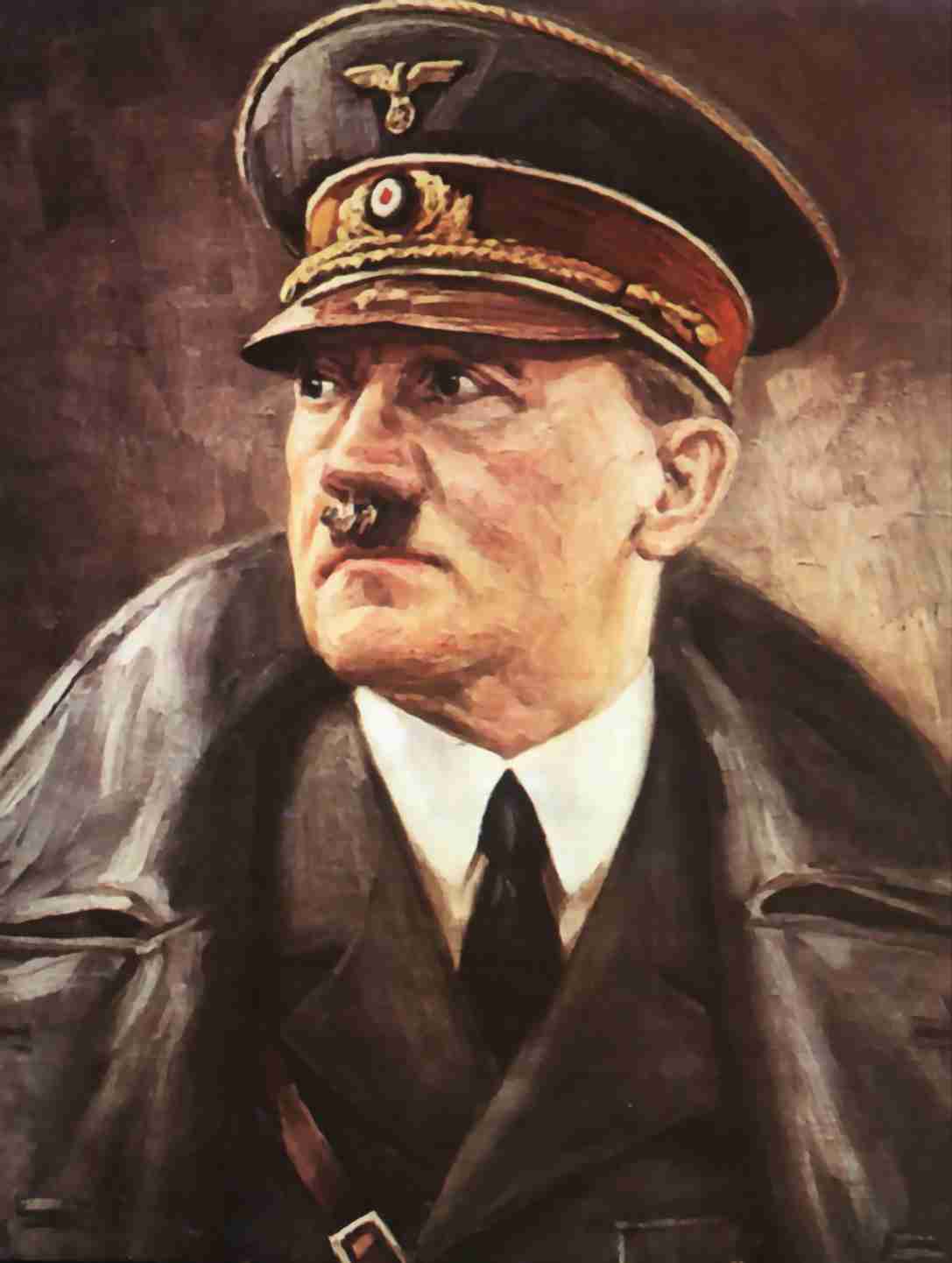
Wait...is there some problem with making Hitler jokes in France?

“The Festival de Cannes provides artists from around the world with an exceptional forum to present their works and defend freedom of expression and creation. The Festival’s Board of Directors, which held an extraordinary meeting this Thursday 19 May 2011, profoundly regrets that this forum has been used by Lars Von Trier to express comments that are unacceptable, intolerable, and contrary to the ideals of humanity and generosity that preside over the very existence of the Festival. The Board of Directors firmly condemns these comments and declares Lars Von Trier a persona non grata at the Festival de Cannes, with effect immediately.”

—- The Cannes Film Festival organizers, kicking Danish director Lars Von Trier out of the event (though his film remains in the competition for a prize) for some rambling, clearly (if ineptly) facetious comments he made to reporters in response to a question, referring to himself as a Nazi and saying that Israel was “a pain in the ass.”

This should be an easy one.


The Unethical Consequences of Ethical Coffee

"Mmmmmmm! Smells ethical!"

When ethical conduct becomes too complicated, confusing, or controversial, the vast majority of people will shrug and give up, leaving the conduct to be embraced by fanatics who can be relied upon to argue among themselves about who is really being ethical.   Welcome to the world of so-called ethical coffee, where adherents must choose between a dizzying number of certifications and categories to ensure that their coffee purchases support ethical practices and objectives.

“Shouldn’t the dollars you spend support the values you believe in?,” chirps the home page of EthicalCoffee.com. “Fortunately, when it comes to the morning cup of coffee so many of us love, it’s easier to put your money where your conscience is than with any other commodity. (Just try to find a gas station that can certify that the gasoline you’re putting in your tank isn’t linked to environmental disasters or labor abuses halfway around the world.) With coffee, you can pay a little more and know the grower is getting a minimum price or be sure you’re helping preserve winter habitat for some of the same songbirds that will show up next summer in your back yard.”

Hey, sounds great! Love those song birds! Then comes the “but’… Continue reading

Ethics Hero: Sen. John McCain

Arizona Senator John McCain has seriously tarnished his reputation for integrity  since losing the Presidential election in 2008, particularly during his last campaign for re-election to the Senate. The best of McCain was on display this week, however, as he delivered a strong and eloquent denouncement of torture (a.k.a “enhanced interrogation techniques”) on the Senate floor, in response to the ethically offensive arguments being put forth by many conservatives that the successful elimination of Osama bin Laden somehow magically transformed the evil practice of torture into a respectable tactic of national security. It is an important, courageous and persuasive statement from a U.S. Senator with special qualifications to make it, as one who had been tortured himself, and as fine a legacy as McCain, or any Senator, could aspire to.

Sen. McCain said, in part (you can read the entire text of his speech here)…

“Mr. President, the successful end of the ten-year manhunt to bring Osama bin Laden to justice has appropriately heightened the nation’s appreciation for the diligence, patriotism and courage of our armed forces and our intelligence community.  They are a great credit and inspiration to the country that has asked so much of them, and like all Americans, I am in their debt.

“But their success has also reignited debate over whether the so-called, ‘enhanced interrogation techniques’ of enemy prisoners, including waterboarding, were instrumental in locating bin Laden, and whether they are necessary and justifiable means for securing valuable information that might help prevent future terrorist attacks against us and our allies and lead to the capture or killing of those who would perpetrate them.  Or are they, and should they be, prohibited by our conscience and laws as torture or cruel, inhuman and degrading treatment. Continue reading

Me, Wrestling With Bias, And Losing

A large part of being ethical involves being aware of your biases and minimizing their impact on your conduct. As I recently was reminded, this sounds easier than it is in practice.

Searching yesterday for an Ethics Alarms topic, I came across an interesting, if not earth-shaking, issue of legal ethics that had obvious applications to other professions. Tracking down the source of the story, I discovered that the original idea was posted by a lawyer-blogger who in the past has gone out of his way to denigrate me professionally and personally on the web. He has also insulted me directly. Outside of that, though, he is by all accounts a terrific lawyer, an astute commentator on the legal profession, and, I’m sure, the salt of the earth.

Still, I don’t feel like sending readers to his site. Not only did the guy, unfairly, set out to harm me professionally, but he probably would do so again. I have no reason to do something that benefits him, nor is there any reason for me to try to curry favor with him: he owes me an apology, and I know I am never getting it.

I could link to one of the blogs and websites that picked up and elaborated on his post, but that would be unfair: I try to link to the originator of a useful ethical discussion as a matter of fairness and recognition. Continue reading

Ethics Quote of the Week: Washington Post Columnist Michael Gerson

“In determining who is a “major” candidate for president, let’s begin here. Those who support the legalization of heroin while mocking addicts are marginal. It is difficult to be a first-tier candidate while holding second-rate values.”

—-Washington Post columnist and former Bush advisor Michael Gerson, pronouncing presidential candidate Rep. Ron Paul’s Libertarian endorsement of drug legalization ethically unacceptable.

Gerson’s deconstruction of the all-too-common and increasingly ominous calls for legalizing addictive drugs nicely captures the trio of ethical flaws of the advocacy: it denies the crucial and legitimate government role defining responsible conduct for society, it embraces the myth that recreational drug use “does no harm,” and it is arrogant and selfish, condemning the poor and reckless to problems that their fragile resources cope with, in order to bestow a dubious “freedom” that the drug advocates do not need. Continue reading

What Do you Call A Newspaper That Defends Outrageous Journalistic Practices? How About “Di Tzeitung”?

If Di Tzeitung had covered the Civil War

If I could pronounce it, the Brooklyn-based Hasidic newspaper Di Tzeitung would be useful shorthand  for “shamelessly using rationalizations to defend indefensible conduct.”

Last week, the newspaper ran the now-familiar photo of President Obama, Secretary of State Hillary Clinton, and others in the White House Situation Room, except that in Di Tzeitung’s version, Clinton  and the only other woman present, Director for Counter-terrorism Audrey Tomason, had magically vanished. Di Tzeitung had airbrushed them out, Politburo-style.

Of course, publishing the photo of a historic news event and altering it to convey misleading or false information (in this case, “Hillary wasn’t there”) is a substantial and wide-ranging violation of core journalism ethics, a breach of the reader’s trust, unfair, dishonest, misleading, incompetent and disrespectful. The altered photo was alternately condemned and mocked all over the media and blogosphere. Yet Di Tzeitung is largely unapologetic, and made it clear that it would do the same thing again if the opportunity arose. In a prepared statement, the editors explained why they did nothing “wrong”…well, almost nothing…challenging the Olympic record for rationalization by a news organization along the way: Continue reading

The Great Norwalk Kindergarten Heist

The Tanya McDonald controversy

A homeless woman is facing 20 years in prison if she is convicted of stealing over $15,000 of Norwalk, Conn. taxpayer funds. The details of her crime are controversial: she lied about her residence to get her child into what she believed was a better school system, but one that, as non-resident, she was not entitled to use. The details also create a tangled mess of law, justice, ethics, fairness, compassion, public policy, finances, class and education.

Let’s try to unravel it, shall we? Continue reading

Comment of the Day: “Osama’s Assassination: The Ethics Elephant in the Room”

First time commenter Margo Schulter delivers a powerful, passionate and eloquent absolutist rebuttal to my post asserting an ethical defense of Osama bin Laden’s targeted killing/assassination/execution by U.S. military personnel. My immediate response to her can be found in the comments to the original post here; I don’t want to re-post it with this post because Margo’s thoughtful comment should be read and thought about prior to considering my rebuttal. Ethics Alarms is blessed with many sharp and persuasive comments, and this is one of the finest. In the grand tradition of absolutism, her answer to my question about firing the bullet that would kill an unarmed and submissive Osama  is “I wouldn’t fire that bullet to save the whole universe.” And she explains why:

“Please let me try to put my best foot forward, and keep a spirit of civility and friendly inquiry, as I say that my whole being — my guts, heart, intuition, and intellect –cry out, “No exceptions! Executions, extrajudicial or legal, are _wrong_!” I wonder what an MRI might show, and what neuroethics might say, about how people in the U.S.A. and elsewhere have such different reactions to what I would call a consummately evil and dehumanizing act.

“Please let me also apologize for the length of this comment, nevertheless just the starting point for a dialogue with lots of ramifications. How do pacifists like me see the scale of moral evils in different kinds of violence, and when might we consider using certain forms of nonlethal force? Also, there’s a way that President Obama might have modified his strategy a bit to fit Frances Kamm’s Doctrine of Triple Effect (DTE), illustrating what I see as the dangers of this intellectually intriguing concept. I’d love to join a dialogue going in any or all of these directions.

“It’s curious. You write, “I assume you shoot him dead.” And my whole being cries out, “You assume wrong!” While I’m not a physicalist, I do recognize that while we’re in this world experience and behavior are mediated through the brain, so I wonder what an MRI or the like would show for
people who have these radically different intuitions. Continue reading

Death Photo Ethics

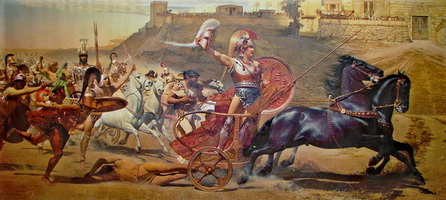
Even before Achilles dragged the corpse of Hector behind his chariot through the dust around the walled city of Troy, the tradition of demoralizing the enemy by degrading and displaying the bodies of its dead heroes was well-established. The United States was horrified when this was done to our fallen servicemen in Somalia, and it is one of the most barbaric and unnecessary practices of war.  While the Geneva Convention doesn’t mention the displaying of enemy corpses, a 2005 publication by the Red Cross called Customary International Humanitarian Law does. It was written to address issues that international treaties omitted, and its Rule 113 reads:

“Each party to the conflict must take all possible measures to prevent the dead from being despoiled. Mutilation of dead bodies is prohibited. Continue reading