Why NPR’s Wrongs Don’t Make James O’Keefe Right

James O'Keefe, Ethics Corrupter

And the NPR Ethics Train Wreck continues

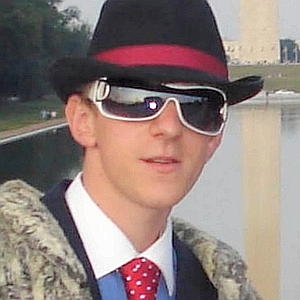
Between union hysteria in Wisconsin, carnage in Libya, and tsunamis, the fact that James O’Keefe’s fake Muslim billionaire act exposed more NPR integrity issues was drowned out by shouting, gun shots and water. In fact, the second victim of O’Keefe’s sting may have taught us more about NPR than the first.

In the surreptitious audiotape of  NPR’s continued encounters with the fake potential big bucks donor, NPR’s director of institutional giving, Betsy Liley, is heard advising the supposedly wealthy Muslim donor how the network could help “shield” his group from a government audit if it accepted the $5 million he was offering. It seems pretty clear from the tape that this was not what the sting was set up to prove: what the “Muslim donor” really wants is to get a promise from NPR that it will slant the news content the his way if the gift is big enough. Liley stood her ground on this core journalistic principle admirably—so much for the claim that George Soros bought NPR’s advocacy with his recent gift—but fell into another trap of her own making.

NPR spokeswoman Dana Davis Rehm said in a statement that Liley’s comments on the tape “regarding the possibility of making an anonymous gift that would remain invisible to tax authorities is factually inaccurate and not reflective of NPR’s gift practices. All donations—anonymous and named—are fully reported to the IRS. NPR complies with all financial, tax, and disclosure regulations.” That’s undoubtedly correct; Liley was not merely ethically wrong but also literally wrong, for what she was suggesting almost certainly couldn’t happen. However, the fact that she would say such a thing believing it could happen, or think it was acceptable if it did happen, or try to acquire a large donation by persuading a donor to believe it could happen, all point to the one conclusion: NPR’s culture is ethically compromised, and the organization’s leadership has failed to meet its obligations to create an ethical culture  there. The sting is more disturbing than the earlier one that caught an outgoing NPR executive taking extreme partisan positions that belied NPR’s position that it is objective and unbiased. The comments of Ron Schiller just confirmed what many, including me, thought was already apparent in the tone of NPR’s work. I had also always assumed, however, that the place was professionally and ethically run (excepting the tendency to fire employees for expressing politically incorrect opinions on Fox News).

So this settles it, right? O’Keefe is a hero?

No, he’s not. James O’Keefe, in fact, is an ethics corrupter, an individual who weakens the public’s ethics by encouraging it to accept his dubious values. Continue reading
Illinois’s Death Penalty Ban: Defensible Decision, Indefensible Reasoning

Justice.

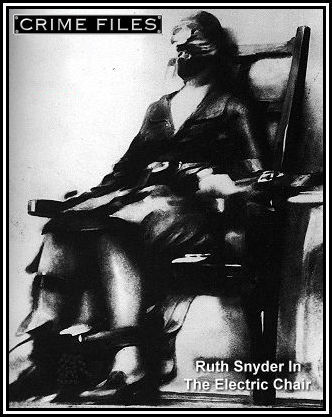
Illinois Gov. Pat Quinn  signed legislation abolishing capital punishment in the state and commuted the sentences of the 15 inmates still on death row to life in prison without parole.

I disagree with the decision, and have stated my reasons for not abolishing the death penalty here and here. Never mind: this is a topic on which ethical and reasonable people can disagree with honor. But if one is going to abolish an important law enforcement tool, the official justification for it ought to be coherent and persuasive, and not just facile rhetoric. That, unfortunately, is what Gov. Quinn gave us.

Here is the relevant segment of Quinn’s statement after signing the bill into law during a private ceremony: Continue reading

Unethical Quote of the Month: Newt Gingrich

“There’s no question at times of my life, partially driven by how passionately I felt about this country, that I worked far too hard and things happened in my life that were not appropriate. And what I can tell you is that when I did things that were wrong, I wasn’t trapped in situation ethics, I was doing things that were wrong, and yet, I was doing them. I found that I felt compelled to seek God’s forgiveness. Not God’s understanding, but God’s forgiveness. I do believe in a forgiving God. And I think most people, deep down in their hearts hope there’s a forgiving God.”

Former Speaker Newt Gingrich, preparing for a presidential run by attempting to explain and apologize for his serial marital betrayals, the most spectacular of which was visiting his first wife while she was in the hospital recovering from cancer surgery to announce that he was divorcing her to marry his mistress. Then he cheated on his second wife, the former mistress, with a member of his staff. He ditched Mistress #1, Wife #2, for Mistress #2, who became Wife #3. This is why he needs a forgiving God, or at least a forgiving electorate.

Newt’s defense now is that he felt so passionately about his country that it caused him to dump his cancer stricken wife (so much for all that “in sickness or in health” stuff), and later, while he was leading a party that was making the case that a U.S. President shouldn’t be having on-the-job sexual encounters with interns, using his staff and appointees to cover it up, and lying about it under oath in court, to commence a second extra-marital affair of his own. This, naturally, helped let President Clinton wiggle of his well-earned impeachment hook, and also helped cement the socially destructive public perception that 1) everyone cheats on their spouses, so it’s okay, and 2) you can’t trust any of our elected leaders.

Thanks for nothing, Newt.

God is welcome to forgive you; I won’t. You are obviously untrustworthy. Once cheating on a spouse may be a mistake; cheating on a second spouse is a behavior pattern. If a politician who likes to invoke God will lie to and betray two women who he swore, before God, to take “’til death us do part,” not to mention his children, I see no reason to assume that he won’t betray voters who has never met, loved, or lived with.

God’s forgiveness is irrelevant to the central issue of whether New Gingrich has the reliability of character and core values to justify entrusting him with great power. As his self-serving quote demonstrates, he does not.

But good luck with God, Newt.


The Naked Teacher Principle Strikes Again!

Once the class sees Teacher like this, it's over...

The Naked Teacher Principle holds, in essence, that once a teacher is seen by his or her students cavorting in the nude, school administrators and parents are not being unreasonable or unfair if they decide that the teacher can no longer teach effectively. From the classic example involving internet photos, to exceptions like the male teacher appearing in a community theater production of “The Full Monte”, to strange corollaries like “the Naked Butt-Painting Teacher with a Paper Bag Over His Head Variation,” naked teachers create headaches for their schools, giggles (at least) for their students, and anxiety for the teachers involved.

Now we have another variation. Continue reading

Ethics Quote of the Week: Ex-Con John Collins

Charlie made a different kind of mistake, too!

“We’re people, we’re not monsters. We’ve just made a different type of mistake than someone else.”

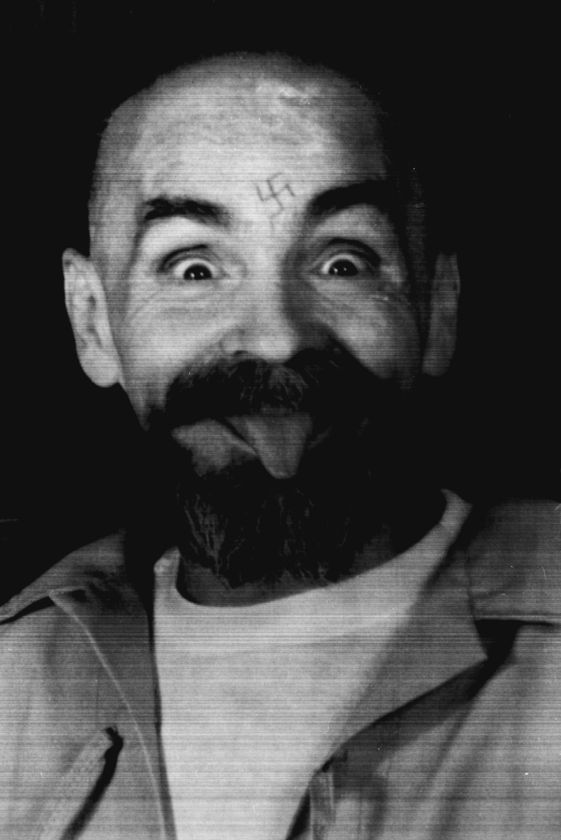
34-year-old John Collins, who announced his support for a provision being pushed forward by the Seattle Office For Human Rights, which believes that convicted criminals should be made a protected class.

Collins sure made a different kind of mistake, all right. He served four years in prison for drugging and raping his estranged wife. Continue reading

Announcing: The Incompetent Elected Official of the Month

"What, me legislate?"

With this post, Ethics Alarms announces a new continuing category for ethics infamy: Incompetent Elected Officials.

We tend to focus on corruption, dishonesty, conflicts of interest and lies when identifying unethical public officials, but it is the wildly incompetent of the breed who might carry the most ethics baggage of all. An incompetent elected official not only is irresponsible for taking on leadership that he or she is unable to deliver due to a lack of brains, skill, experience or judgment, but also keeps a more deserving and able individual from a distinguished position that needs him, jeopardizes the public, and undermines trust in the government generally. The public’s ethics are also implicated by the incompetent official’s ascension to power, as the truly inept can usually be identified with a modicum of diligence and care. Incompetent and irresponsible officials require the assistance of incompetent and irresponsible voters.

Thus incompetent elected officials warrant special attention. And the first incompetent elected official to be honored as the Ethics Alarms Incompetent Elected Official of the Month is….Alabama Republican State Senator Gerald Allen! Continue reading

Liar of the Week: Mike Huckabee, as He Fails The Integrity Test

A Mike Huckabee advisor?

…and also the courage test.

Speaking unpopular truths and backing down once they prove unpopular is worse than what most politicians do, which is to avoid speaking the truth at all. In Huckabee’s case, he compounded the villainy by not only backing down, but by absurdly lying about what he had said, despite the fact that his words were recorded and his meaning was clear as a bell.

Huckabee, in case you don’t follow the remarks of former state governors under the delusion that he can they can be  elected President, had criticized Oscar winner Natalie Portman’s proud single mother-to-be act, saying, Continue reading

Ethics Heroes: The U.S. Supreme Court

As the perfect tonic for all the attempts to silence Gilbert and Sullivan songs with controversial lyrics, reject bus ads espousing controversial positions, and declare that words like “target” are just too darn inflammatory for the sensitive, politically-correct ears of CNN viewers, here comes the U.S. Supreme Court, galloping to the rescue with a near unanimous (8-1), ringing reaffirmation that free speech is a bastion of American democracy, even when the speaker or speakers are vicious, unfair, cruel, radical and deluded. Continue reading

A Shocking Farewell Confession From “The Ethicist”

In Randy Cohen’s farewell column for “The Ethicist” today—he was sacked by the new editor of The New York Times despite providing an entertaining, well-written and provocative column for many years— he makes a statement that I find shocking, and one that challenges the core assumption of this blog and indeed my occupation.

Writing the column has not made me even slightly more virtuous. And I didn’t have to be: it was in my contract. O.K., it wasn’t. But it should have been. I wasn’t hired to personify virtue, to be a role model for the kids, but to write about virtue in a way readers might find engaging. Consider sports writers: not 2 in 20 can hit the curveball, and why should they? They’re meant to report on athletes, not be athletes. And that’s the self-serving rationalization I’d have clung to had the cops hauled me off in handcuffs.
What spending my workday thinking about ethics did do was make me acutely conscious of my own transgressions, of the times I fell short. It is deeply demoralizing.

Amazing. Randy, we hardly knew ye, and we sure didn’t understand ye, either. How can someone possibly spend one’s working day “thinking about ethics” and not become more virtuous in his daily conduct? Continue reading

The Ethics Final: Ending My Mother’s Life Today

Some of our most important ethical decisions are made with the least analysis. At least that was the way it was for me this morning at 10:34, when my sister and I directed that my 89-year-old mom, Eleanor Coulouris Marshall, be taken off of life support. Continue reading