The Significance of “Pow Wow Chow”

Great title, by the way….

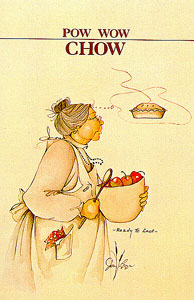
There is mostly bad ethics news for Elizabeth Warren fans from the re-discovery of the 1984 cookbook she contributed to called “Pow Wow Chow,” but some good news too. The good news is that the 28 year-old cook book, edited by her cousin and listing the current Harvard professor and Democratic Senate contender as a contributor named “Elizabeth Warren, Cherokee,” shows that Warren didn’t just concoct her claims of Cherokee heritage to achieve minority status to help her get faculty jobs through university diversity hiring policies. Oh, she intentionally employed her dubious heritage credentials to get that edge, no doubt about it. But the cookbook shows that though she was only 1/32 Native American by the most generous calculations and was assuming that lineage on the basis of hearsay alone, Elizabeth Warren really had convinced herself that she is a Cherokee, and probably believes it to this day. Hence her obsession with being able to call herself a Native American appears less opportunistic and more, well, nuts. [ Note: for a thorough though excessively sympathetic review of Warren’s claims, read this, in The Atlantic.]

In fact, it looks like a severe case of Sixties Liberal Delusion Syndrome, also known as Billy Jack Disease. Warren talks and writes like a stereotype campus liberal, and like her Sixties campus forbears, she must have figured out in early adulthood that kinship with oppressed minorities is the antidote to white guilt and the ticket to a perpetual state of self-righteousness and victimization. If my diagnosis is correct,  Warren’s lockstep liberal mindset seized upon her family lore about American Indian heritage, and installed it as a cornerstone of her self-image as a foe of the capitalist, white-dominated American power structure. I am sorry I doubted her; I now think it is likely that she has long thought of herself as a true Cherokee. True, I think that is ridiculous; I think extending that attenuated minority identification into a resume enhancement, allowing her to displace more deserving candidates, is indefensible; and I think her obsession calls her judgement and stability into question. But at least she wasn’t lying. About that.

Yes, this is the good news.

The bad news is that Warren’s contributions to the cookbook appear to be misrepresented and stolen. Continue reading

A Dinosaur Brain Fart From Fox

“All right, who farted?”

Here’s a rule that I would like to propose: if a news outlet can’t find a reporter who has the education and analytical ability to comprehend a complex concept, then the story shouldn’t be covered at all. Better no coverage than misleading coverage. What do you think?

Of course, this would mean that about half of all news stories wouldn’t be covered, since if journalists had the ability to understand those topics, they would have entered professions other than journalism.

Fox News shocked the world this week by announcing that a new study had shown the dinosaurs farted themselves out of existence: Continue reading

Unethical Quote of the Week: “Chronicle of Higher Education” Editor Liz McMillen

A Note to Readers: When we published Naomi Schaefer Riley’s blog posting on Brainstorm last week (“The Most Persuasive Case for Eliminating Black Studies? Just Read the Dissertations”), several thousand of you spoke out in outrage and disappointment that The Chronicle had published an article that did not conform to the journalistic standards and civil tone that you expect from us. We’ve heard you, and we have taken to heart what you said. We now agree that Ms. Riley’s blog posting did not meet The Chronicle’s basic editorial standards for reporting and fairness in opinion articles. As a result, we have asked Ms. Riley to leave the Brainstorm blog. Since Brainstorm was created five years ago, we have sought out bloggers representing a range of intellectual and political views, and we have allowed them broad freedom in topics and approach.  As part of that freedom, Brainstorm writers were able to post independently; Ms. Riley’s post was not reviewed until after it was posted. I realize we have made mistakes. We will thoroughly review our editorial practices on Brainstorm and other blogs and strengthen our guidelines for bloggers. In addition, my Editor’s Note last week inviting you to debate the posting also seemed to elevate it to the level of informed opinion, which it was not. I also realize that, as the controversy unfolded last week, our response on Twitter did not accurately convey The Chronicle’s message. I sincerely apologize for the distress these incidents have caused our readers and appreciate that so many of you have made your sentiments known to us. One theme many of you have sounded is that you felt betrayed by what we published; that you welcome healthy informed debate, but that in this case, we did not live up to the expectations of the community of readers we serve.
You told us we can do better, and we agree.”

Liz McMillen, editor of the highly respected Chronicle of Higher Education, tossing away the integrity of her publication in a complete and cowardly capitulation to political correctness and enforced academic dogma, while trashing the principle of academic freedom and the free exchange of ideas which her publication is supposed to champion.

The big ‘C’ stands for “chicken.” Or maybe “choke.”

Riley, the fired blogger, is a well-established iconoclast and critic of liberal arts institutions, which is undoubtedly why she was recruited as a blogger in the first place.  Her post was a reaction to an earlier Chronicle article about rising scholars in “black studies,” and she took to the the blog to point out that the summaries of their scholarly topics in that article’s sidebar showed what was wrong with the field, at least as it was currently taught.  She concluded, Continue reading

Credit Ethics: New Ethics Alarms Policy

The sound of my palm belatedly smacking my expansive forehead

What will heretofore be referred to as “The Mary Frances Prevost Affair” has its silver lining. Watching another blogger incorporate the main body of my blog post into her own by-lined essay without credit or attribution has caused me to do a lot of thinking about the inadequacy of credit and attribution in the blogosphere  generally, with a relatively  few exceptions. Most of these are blogs written by academics who hold to the standards of their profession rather than the much looser practices of the internet. It also caused me to wake up to the inadequacy of my own attribution practices on Ethics Alarms. I have never taken an entire post from another source and represented it as my own, but I have frequently taken a factual account of a story from another website that itself was essentially  republishing, for example, an AP story, put the facts in my own words, sometimes with a stray phrase remaining, and not credited either source. I have often derived information in a post from multiple news sources but only linked to the one that I felt related the event the most thoroughly and clearly. Another writer’s work has sometimes sparked an idea for a post that was substantially different, and I have not credited the source of that spark.

All of this is common practice in blogging, but it is still wrong, and sloppiness is always a slippery slope. In the wake of “The Mary Frances Prevost Affair,” a colleague alerted me that I had included one complete sentence and part of another in an Ethics Alarms post that were identical to the post of another writer on the same subject. I didn’t even recall using the source, but upon going over my notes, I found that the earlier post had supplied me with the bulk of the facts I relied upon, though not the analysis of them. . I immediately contacted the author to apologize, and he was gracious and understanding. Nonetheless, this should never happen, especially on an ethics blog.

Therefore, as of today, Ethics Alarms will maintain a strict policy of crediting all sources that go into the inspiration, research and writing of the posts here. Links in the body of the text will be either be for informational purposes only, such as when I make a gratuitous cultural reference that nobody under the age of 50 is likely to recognize, or to back up direct quotes. At the end of each post, there will be credits and/or links listed, when appropriate, in some or all of the following categories: Continue reading

The Plagiarist Strikes Back!

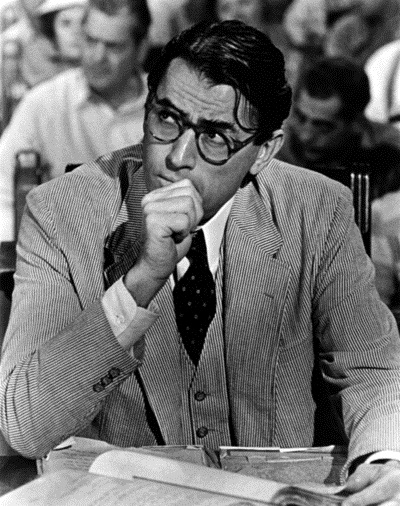
Move along, Atticus. Nothing to see here, and I wouldn't want you to barf.

Well, some of you called it. I was a sap. I expected better.

Mary Frances Prevost, the California criminal law attorney who substantially expropriated an Ethics Alarms post and placed her name on it, responded to my request for an explanation, and failing that, an apology, a retraction, and proper credit, with this (on her Facebook page), in which she said, in part:

“I received a histrionic run-on-sentence email from someone named “Jack Marshall” today accusing me of committing crimes, threatening to report me to my bar association(s), the Inns of Court, and essentially spend your days and nights harassing me.” I have also viewed a a highly unethical rant published purportedly by you on a blog suggesting strongly that I have engaged in unethical conduct throughout the entire course of my career. I have counseled with one of the country’s premiere ethics attorneys. Here’s the result: 1) accusing me of a crime is defamation per se and unethical; 2) suggesting that my entire law practice has been based on unethical conduct is defamatory and unethical. I maintained copies both of your email and blog. It is clear that you are hell bent on engaging in systematic harassment and unethical conduct, the likes of which can, and most likely will, develop into a lawsuit unless rescinded forthwith. It is clear you have little to do in your life besides sent me emails accusing me of crimes, and writing poorly written blog posts accusing me of immoral behavior. Interesting how one making such claims, engages in most egregious conduct himself….But the sheer amount of energy really suggests something more: a lack of work; too much time; off your meds. I suggest you take a look inward and remove your defamatory and unethical blog post regarding me. Indeed, you should come clean on your blog. You’ve practiced law only two weeks before giving up. Yet, your resume suggests far more experience. I think you should rethink what you’ve done.”

Now how do you like that? Continue reading

Is a Plagiarist a Trustworthy Attorney? Let’s Ask Mary Frances Prevost!

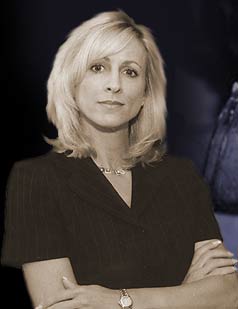
This is me, apparently.

San Diego criminal defense attorney Mary Frances Prevost has an interesting post on her blog about the ethics of George Zimmerman’s first set of attorneys.

MINE.

You wouldn’t know it was mine, of course, because blogger/attorney/ former Washington Post journalist Prevost has slapped her own name on it. There it is, right at the beginning: “by Mary Francis Prevost.” I think that’s interesting.

Her post, entitled “The Trayvon Martin Case Trainwreck: George Zimmerman’s Attorneys Need To Shut Up!”, was posted the same day as the Ethics Alarms post, “Next To Board The Trayvon Martin Ethics Train Wreck? Why, The Lawyers, Of Course!”, which began, coincidentally enough, by quoting John Steel’s post from the Legal Ethics Forum that read, “[S]hut up, guys. Shut the h*** up.”  It was two introductory paragraphs later, however, when “her” post got into the substance of “her” analysis of the ethical problems with the farewell press conference given by George Zimmerman’s attorneys shortly before the shooter of Trayvon Martin was charged, however, that I really began getting a serious dose of deja vu, also known as “Holy crap! This woman stole my article!” Continue reading

Ethics Hero: “Gaia” Scientist James Lovelock

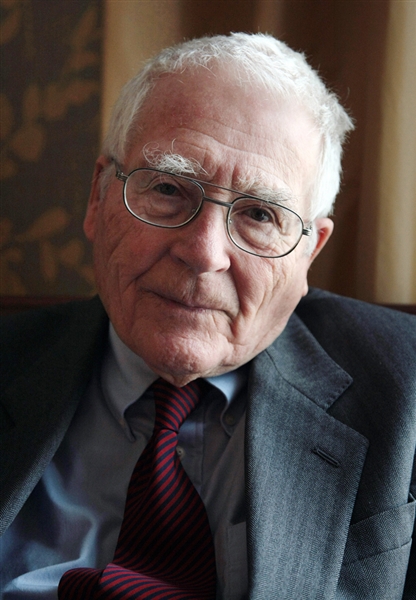
James Lovelock

“The problem is we don’t know what the climate is doing. We thought we knew 20 years ago. That led to some alarmist books – mine included – because it looked clear-cut, but it hasn’t happened. The climate is doing its usual tricks. There’s nothing much really happening yet. We were supposed to be halfway toward a frying world now. The world has not warmed up very much since the millennium. Twelve years is a reasonable time… it (the temperature) has stayed almost constant, whereas it should have been rising — carbon dioxide is rising, no question about that.”

With that admirable statement of candor and humility, renowned earth scientist James Lovelock did what everyone in the climate change debate should be doing, and should have been doing all along. He admitted the uncertainty of climate science, the fallibility of models and projections, and the fact that the extent, speed, predictability and causes of climate change are still far from certain. If other scientists involved in this critical issue had Lovelock’s integrity,  perhaps ignorant pundits, journalists and politicians would not feel so justified in calling skeptics about climate change the equivalent of Holocaust deniers. Continue reading

Comment of the Day: “A Last Word on the Kevin Coffay Sentence”

Brain chemistry?

Michael, who is the reigning Comment of the Day champion, comes up with another here regarding the Kevin Coffay sentence and the mitigating factor in juvenile crimes, supported by brain chemistry research, that adolescents are not as capable of rational decision-making as adults, and therefor should not be punished as severely for their reckless acts. This is his post regarding A Last Word on the Kevin Coffay Sentence.”

“Don’t go overboard with the studies that show adolescents are incapable of being responsible, thinking rationally, or evaluating risks. If you look at such studies, they are done in a vacuum and merely state that older people are BETTER at evaluating risks (duh). The main point is that our brains continue to develop until 25 or so. Much like Titanic research, however, this research is interpreted wildly and without considering evidence to the contrary. Continue reading

A Last Word on the Kevin Coffay Sentence

Keven Coffay, the teen who drove drunk, killed three of his friends as a result and fled the wreck as they lay trapped and dying, has prevailed in his effort to get the original 20 year prison sentence (for involuntary manslaughter) reduced. Now he may be released as early as next spring, on parole from his new, lenient, 8 year sentence. I won’t re-iterate my views on Coffay’s case, which are already here and here. I will make this additional observation.

In his column today, George Will discusses the science behind the growing consensus that life sentences without the chance of parole qualify as “cruel and unusual punishment” prohibited by the 8th Amendment. I don’t disagree with his conclusion, nor do I doubt, as the father of a teen-age son, that the brain chemistry of teens dictate special calculations and analysis when trying to decide on what is just punishment for crimes arising from the recklessness and poor judgment of adolescents as opposed to adults. Continue reading

From Massachusetts: Proof That It CAN Happen Here…and Does; That It CAN Happen To You…and Might.

Tortured. At his Special Needs school. By good people like us.

As I recently wrote to a commenter on another post, Ethics Alarms is not intended to catalogue every prominent example of unethical conduct, and not just because attempting to do so would require a fleet of bloggers. If it is discussed here, an incident usually requires some kind of ethical analysis to determine whether it is ethical or not, or has larger cultural or societal significance. That the incident at the center of this post was unethical (as well as illegal), there can be no doubt, and that, ironically, is why it is worthy of special attention. The conduct is self-evidently horrific and beyond justification, and yet it occurred anyway, in a community, state and nation where virtually every sentient citizen over the age of nine would say that it could never happen—not here, not in the United States of America, not in the land of the free and the home of the brave. The fact that it did happen is both a revelation and a warning.

Film footage under seal since 2002 was finally shown in a Massachusetts courtroom this week. The film shows how the staff of a school for special needs students in Canton, Mass., the Judge Rotenberg Center, strapped a disabled 18-year-old student named Andre McCollins to a table and proceeded to torture him, administering 31 jolts of electricity to the screaming boy over a seven hour period. Lawyers defending the school in a lawsuit have claimed that the atrocity was “treatment,” but other evidence indicates that it was punishment—for  McCollins’ defiance of a teacher’s demands that he remove his jacket in class. Continue reading