“Titanic” Ethics

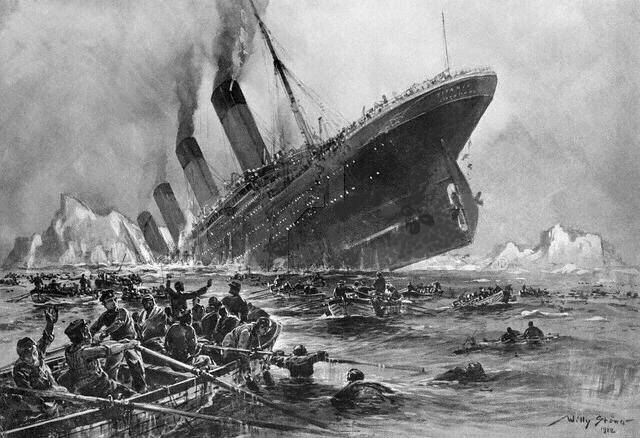
This is Titanic week, as all of you who don’t live in tunnels like prairie dogs must know. It has been a century since the sinking of the Great Unsinkable, with the deaths of 1500 souls including some of the great artistic, financial and industrial greats of the era. James Cameron’s 1997 film is also returning this week in 3-D, which means that the misconceptions, false accounts and outright misrepresentations the film drove into the public consciousness and popular culture will be strengthened once again. I think it would be ethical, on this centennial of the tragedy, for those in a position to do so to make a concerted effort to honor the victims and their families by honoring the truth. Thanks to Cameron, this is impossible. Continue reading

Ethics Quote of the Week: Prof. Paul Horwitz

“I can think of a number of posts about the ACA from legal scholars last week that were clearly and openly offered as advocacy and did a fine job of it. And I can think of others that were clearly not offered as advocacy at all, and said useful and interesting things about the oral arguments…But I do believe that some posts last week traded on the authority of their authors, made overconfident or disingenuous claims about the state of current law and the strength or weakness of opposing arguments, and did so for strategic reasons. I see those reasons as more inculpatory than exculpatory. I don’t see the minimal requirements for scholarly integrity that I offered as changing because of the medium, or because of the importance and currency of the case.”

Hey, Professor! We assume you're smarter than we are: don't play games with our trust!

—-University of Alabama Law Professor Paul Horwitz, writing about the confounding number of liberal law professors and scholars who wrote internet posts professing that the constitutionality of Obamacare’s individual mandate was obvious and undeniable, and that the provision’s Supreme Court approval was assured. As Ethics Alarms did regarding other commentators, Prof. Horwitz suggests that some of the commentary was designed as spin, or to use his term, to “shape the narrative.” He argues that in cases where the scholar was deliberately over-stating the case for constitutionality, this constituted a breach of integrity and honesty. Hie professor-speak for this is “inculpatory.” He means that it was unethical.

Which, of course, it was. Continue reading

The Principal Who Helped Gaby Rodriguez Fake Her Pregnancy Just Won “Principal of the Year.” The Frightening Thing Is, He Might Have Deserved It.

Note that it says "Principal." It doesn't say anything about "principles."

I received this news from Ethics Hero Harris Meyer, the journalist who has been trying to preserve some semblance of integrity in his profession by reminding it what ethical investigative journalism is not, through his efforts to rebut the praise for Gaby Rodriguez, the high school student who deceived her family and classmates by pretending to be pregnant as her senior project. The news: Trevor Greene, the principal who helped devise Gaby’s unethical stunt and assisted her in lying to the rest of the school, has been named the state’s top high school principal by the Association of Washington School Principals.

He received this  honor, the release says, by virtue of his organizing a system of student-teacher mentorships, and guiding the school’s effort to expand and improve its science, technology, engineering and math curriculum. The fact that he also mentored a student in a blatantly unethical exercise that was, as I wrote in my original post about Gaby’s scam, Continue reading

Our Untrusted Professions: Another One Bites The Dust…Or Should.

Come to think of it, Mr. Gower would have put poison in a boy's medicine if it hadn't been for George Bailey...

America’s trust crisis, which has seen virtually all its institutions decline precipitously in public trust, hasn’t left the professions unscathed. Far from it: Gallups’ annual poll of the public’s regard for the professions, the most recent of which was released last December, showed accountants trusted by only 43% of the public (abysmal for a profession whose only mission is to accurately determine the truth and to relay it—funeral directors are trusted more), journalists at just 26% (which is more than they deserve), bankers at 25%, lawyers at an insulting 19% (for a profession that includes honesty as a core ethical requirement), business executives slightly less at 18% (but no lower than those champions of the 99%, labor leaders, also at 18%). Stockbrokers, who figure to have fallen even lower after Greg Smith’s anti-Goldman Sachs diatribe, came in at a “can’t be trusted to deliver the water bill payment” 12%, and then we’re really in the pits of utter distrust, with lobbyists, used car salesmen, and members of Congress, all tied for last place at 7%.

In contrast, one of the professions that always is on top of the list or near it is pharmacists. In 2011, the friendly neighborhood druggist scored a trust rate of 73%, better than doctors and second only to the perennial champs of the last decade, nurses.

Well, all that trust in pharmacists appears to be misplaced. Continue reading

Dr. Z’s Tips to Avoid Unethical Influences in the Workplace and in Life

The wise and provocative "Dr. Z" (on the left)

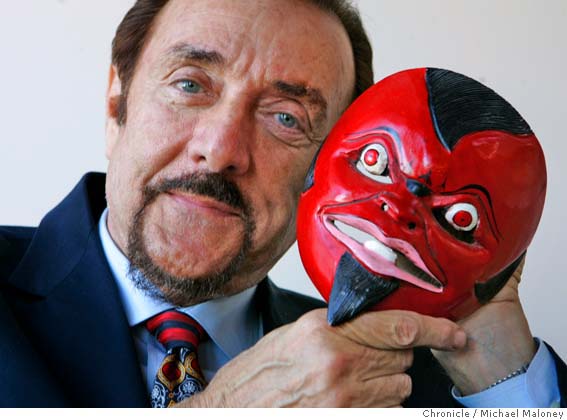
I’m giving ethics seminars to lawyers and accountants today at a non-profit conference in Washington, D.C. While I’m gone, I thought you might want to think about one of the topics I’ll be talking about, the problem of avoiding unethical influences and being co-opted by an unethical culture. What follows are some of the principles advocated by psychologist  Philip Zimbardo, “Dr. Z” to his students, who is best known for devising the infamous Stanford Prison Experiment (it was even made into a movie), that demonstrated to a frightening degree how ethical individuals could engage in horrendous acts when placed in the right (or wrong) environment. Zimbardo has studied, taught and written about this phenomenon extensively, and I find his advice bracing and wise, as well as fodder for debate and discussion. Here it is: Continue reading

Here’s a Proposal: Republicans Stop Saying That Obama’s a Muslim, and Democrats Stop Saying that The Supreme Court “Stole” The Presidency For Bush

Law professor/blogger Ann Althouse properly chastises The National Review’s Jonathan Cohn for designating “Bush v. Gore” as the most earth-shattering case of the 21st Century, and not just because the case, decided in December of 2000, occurred in the 20th Century.

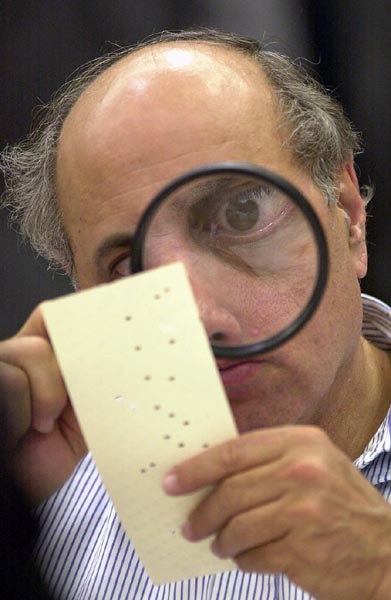
“Ridiculous! I can’t believe Cohn doesn’t know that if the case had gone the other way Gore would still have lost in the end!”, Althouse writes, reminding her readers of the results of the objective, meticulous and multiple recounts performed by journalists in 2001, which showed—much to the surprise of the counters, who were dying to be able to report that Gore had been robbed—that “George W. Bush would have won a hand count of Florida’s disputed ballots if the standard advocated by Al Gore had been used.”

I can believe Cohn wrote what he wrote, because the claim that Bush’s presidency was “stolen” has been a cornerstone of Democratic political warfare and unscrupulous hard Left activists since the chad-counting stopped. It stoked the base, misled the public, increased partisan anger, divided the country and undermined Bush’s presidency, all good things from a partisan perspective (and the truth be damned), just as Republicans have been happy to allow the unjustified doubts about President Obama’s loyalty and citizenship linger among its most fanatic partisans. Continue reading

No, Center For Public Integrity, New Jersey Obviously Is NOT the “Least Corruptible State, ” and Stop Confusing Compliance and Ethics

Sorry, Tony! Overnight, New Jersey became uncorruptible. Time to move to Washington, D.C.

The Center for Public Integrity got what it wanted yesterday, which was headlines about its extensive new study of public ethics laws in the U.S. In order to get its cherished publicity, the Center added to the public’s confusion about what corruption is, what ethics is, and how one discourages one while iencouraging the other in our various governments. They released results that graded the 50 states according to “corruptibility”, and found that New Jersey was the least corruptible of all.  I hope the Center’s officials and scholars are happy with their PR, but if they have a shred of integrity and common sense, they should be ashamed of themselves. Continue reading

Super Tuesday Confirmation Bias Lesson, Or Why We Can Never Trust Media Analysis

Checking the Republican primary results as Super Tuesday neared an end, I got an unexpected demonstration of confirmation bias in the news media, so vivid that it could be used in an educational video.

On CNN, John King, Gloria Borgia and the gang were analyzing the razor-close contest in Ohio, widely regarded as a must-win for Rick Santorum, just as Mitt Romney seemed to be pulling ahead for good. Welcome news for Romney? Not so fast!

Gloria Borger, whose contempt for all things Republican is always writ large on her face and unmistakably expressed by her tones of disdain (Does she even attempt to appear objective? It doesn’t seem so, as her demeanor when discussing GOP politics always suggests to me that she thinks she is covering some kind of demeaning novelty event, like a four-poster bed race or a dwarf-bowling, that the audience knows as well as she does is a colossal waste of time), vigorously took the floor and emphasized that Romney was winning in the very communities where Democrats were strongest, and losing to Santorum where Republicans usually did well. This, she said, eyes rolling (“I can’t believe I’m here talking about Republicans when I could be home watching a repeat of ‘Big Bang Theory!'”) showed that Romney would be in likely trouble if he were the nominee in November, since his strength would be wasted in Democratic strongholds and he wouldn’t be getting the support of the blue-collar types that a Republican presidential hopeful couldn’t win Ohio without. “To illustrate Gloria’s point,” King interjected, and then produced a computer graphic showing Romney’s fatally flawed vote patterns. Everyone nodded sagely. Mitt’s victory in Ohio showed that he was a loser.

Meanwhile, over at Fox, they were discussing the exact same phenomenon. Local politics maven Michael Barone weighed in, and said that this could bode well for Romney in November. John McCain, though losing Ohio in 2008, still “cleaned up” in the blue color districts, noted Barone, so even though Santorum was beating Romney there tonight, they could be still counted upon to go Mitt’s way in 2012 when Obama was the opposition. Meanwhile, the well-educated, wealthier areas that gave Barack Obama the critical swing state’s electoral votes that year have in the past swung Republican, and Mitt’s showing with that group tonight just might indicate that he could seriously cut into Obama’s strength, taking the state red. And Michale Barone knows his stuff, the Fox-ites gushed. Continue reading

Ethics Hero Emeritus: James Q. Wilson (1931-2012)

“Denmark or Luxembourg can afford to exhibit domestic anguish and uncertainty over military policy; the United States cannot. A divided America encourages our enemies, disheartens our allies, and saps our resolve—potentially to fatal effect. What General Giap of North Vietnam once said of us is even truer today: America cannot be defeated on the battlefield, but it can be defeated at home. Polarization is a force that can defeat us.”

James Q. Wilson wrote that, in an essay on America’s polarization. The scholar, author, philosopher and social scientist who died yesterday at the age of 80 was a passionate conservative who believed in winning arguments, influencing policy and changing conduct with the power of ideas, facts, studies and analysis. That the media, especially the conservative media, treated the death of Andrew Breitbart as a thunderclap and the death of Wilson as a footnote tells us as much as we need to know about our culture, values and intellect. I watched GOP presidential candidate Rick Santorum respond to the news of Breitbart’s death as if the culture warrior was the equivalent of Martin Luther King. Breitbart died too young, at 43; he had a family, and reputedly was a nice guy. But his contribution to the American scene was to use his various websites to increase the intensity of partisan warfare, and to help banish fairness, compromise, civility and mutual trust from public discourse. One of the last videos of Brietbart showed him screaming insults at Occupy protesters.

I had stopped using Breitbart’s sites for source material: I couldn’t trust them. The editing of James O’Keefe’s ACORN sting was one strike; the misleadingly truncated Shirley Sherrod speech was another. I wasn’t going to wait for a third. It tells me something alarming about conservatives in this country that such an unethical new media figure could be so lionized upon his death, when his methods were so frequently aimed at destruction rather than elightenment.

Wilson, in contrast, got substantive and wide-ranging results.His 1981 essay “Broken Windows” argued that community policing, rather than mere law enforcement, was the secret to changing urban culture. He wrote (with co-author George Kelling): Continue reading

“Baby-Killing” Ethics

No "moral right to life"?

Aided by Rick Santorum’s over-heated rhetoric, the concept of infanticide (I’m against it, by the way) has been hot in the marketplace of ideas lately.

A group of medical ethicists at Oxford made headlines by arguing that parents ought to have the option of killing their newborns because they are “morally irrelevant” and thus ending their lives is no different from abortion. After some recent examples of the press mangling the real message of scholarly papers, I was dubious about the news reports, but son of a gun, that’s what these ethicists wrote.

The article, entitled “After-birth abortion: Why should the baby live?”, was authored by Alberto Giubilini and Francesca Minerva, who argue, Continue reading