Historical Theft at the King Memorial

Rev. Theodore Parker

The new Martin Luther King Jr. Memorial is not just the King-in-Carbonite monolith that has caused so much controversy. There is much more to the National Mall’s latest addition, including inscriptions in marble of quotes from the martyred civil rights leader’s writings and speeches. There are more than a dozen examples of his oratory, a quotation from King’s 1963 “Letter From a Birmingham Jail,” and an excerpt from King’s Nobel Peace Prize acceptance speech in 1964.

Among them, this:

“The arc of the moral universe is long, but it bends toward justice.”

But Rev. King didn’t say it. Theodore Parker, an influential and eloquent Boston minister and abolitionist, did. King never pretended otherwise; it was one of his favorite quotes, and he used it often, but he usually credited its originator. Continue reading


God, Beck, and the Confirmation Bias Trap

Hurricane Irene proves that God agrees with Glenn Beck. Glenn Beck says so, and he must be right, because God agrees with him. Hurricane Irene proves it.

Policy makers, decision-makers, journalists, and indeed all of us have an ethical obligation to be on the alert for confirmation bias, that insidious human tendency to interpret all external phenomena as confirmation of our established opinions and beliefs. Why do we have the obligation? We have it because confirmation bias makes us dogmatic, inflexible, close-minded, incompetent, and, in a word, stupid. Life can make us wiser, but not if we misinterpret everything so as not to disturb our most cherished certainties. Continue reading

Ethics Reading Assignment…

If you are waiting for Irene to hit or simply looking for some ethical enlightenment, here are some scintillating posts from around the web on ethics, social norms and morality. It is also an opportunity to check out some of the excellent blogs and websites in the Ethics Alarms links, which I heartily recommend.

Here are...

Calvin College, Forfeiting Its Right To Exist

As further proof of evolution, the chimp is behaving exactly like his distant relatives, the adminsitrators of Calvin College

I don’t know what the exact point is that marks where a religious school’s departure from legitimate adherence to its core beliefs metastasizes into a nuisance to society and civilization by affirmatively encouraging life-crippling ignorance. I do know, however, that Michigan’s  Calvin College has passed that point.

Two religion professors at Calvin wrote scholarly papers suggesting that new discoveries in genetics and evolution raised questions about the literal reading of Genesis that could no longer be brushed aside. Neither professor questioned the existence of God or the role of their church, but they argued that the findings of rigorous, modern science may require a theological re-examination of literalist Biblical teachings. Readers of The Banner, the publication of the Christian Reformed Church in North America, promptly blew a Biblical gasket:

“To protect the church and college from false teachers and contrary orthodox beliefs it would be right to let these guys go,” said one commenter. “Clearly, professors who deny the scriptures as interpreted by our creeds and who have broken the promise they made when they signed the Form of Subscription should be fired,” said another. From yet another: “Why is it that so many Christians and academics in Christian colleges seem more concerned about keeping in step with what the world teaches than they are about what God’s Word teaches? Are we ashamed of God’s Word in the face of the beliefs of our worldly peers?”

Calvin investigated the two professors, and as a consequence one of them, John Schneider, resigned the tenured position he had held for 25 years, as part of a settlement with the college. Continue reading

The Folly and Threat of the Pew 13%

From the just-released Pew survey about American attitudes and practices regarding their mobile phones:

“Cell phones can help prevent unwanted personal interactions – 13% of cell owners pretended to be using their phone in order to avoid interacting with the people around them.”

For information and education of those 13% of cell phone owners, here is what I know about you because you engage in this practice:

  • You are rude.
  • You are disrespectful.
  • You are cowardly.
  • You are ignorant
  • You are a liar.

I am sure these same people will happily enter their opinions on blogs about what is and isn’t right about America, despite having avoided all but the most sanitized interaction with it—using pseudonyms to hide their identities, of course. They don’t want interaction, the mutual exchange of  opinions, or to have to deal with anyone who might shatter their ossified, unshakable view of the world with a different perspective. Continue reading

Do Nicer People Earn Less Money? Of Course They Do. And That’s the Way it Should be.

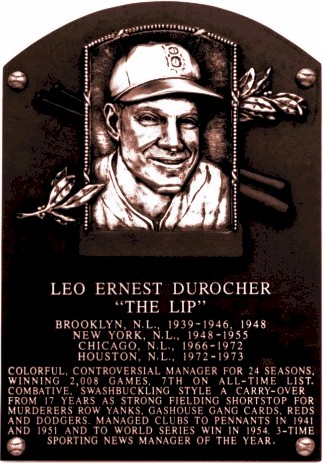
Leo Durocher figured out that "nice guys finish last" 60 years ago, and he never went to college. Now three academics, after extensive research, have "discovered" the same thing. Ah, scholarship!

A study by Cornell professor Beth A. Livingston,  Timothy A. Judge of the University of Notre Dame and Charlice Hurst of the University of Western Ontario study used survey data to examine “agreeableness” and found that disagreeable men made 18%, or $9,772 annually, more in salary than those who are more accommodating. The salary disparity was  less among women, with disagreeable females making 5% or $1,828, more than those who are easier to get along with. Does this shock you? It shouldn’t.

As is depressingly often the case, the academics who come up with such crack-brain studies—I read this one, and will want that wasted hour back when I’m on my death-bed so I can watch one last re-run of “Magnum, P.I.”—have so little experience with the working world and the reality of non-academic cultures that they don’t even comprehend their own research and draw absurd conclusions from it.

“The problem is, many managers often don’t realize they reward disagreeableness,” Livingston told the Wall Street Journal. “You can say this is what you value as a company, but your compensation system may not really reflect that, especially if you leave compensation decisions to individual managers.”

Oh brother. Continue reading

Major League Baseball, Forgivability, and List Ethics

Unforgivable?*

Bleacher Reports is an enjoyable sports website, and it gives opportunities to aspiring writers and bloggers, some of whom are quite talented.  In addition to typical opinion pieces and reporting, the site has a fondness for lists, often trivial to the extreme, like “The 50 Ugliest Athletes of All Time.” The titles are all misnomers, because there is almost never any criteria given for the choices or their relative ranking. An accurate title would be, “The Fifty Athletes I Think Are The Ugliest.”  And of course, who cares? (Don Mossi, by the way, was the ugliest athlete ever, no matter what anybody says.)

A recent list, however did bother me. It is called “The Fifty Most Unforgivable Acts in Baseball History,“ and much of the problem with it lies in the title itself. If you are going to write about history, there is a duty perform diligent research, even for a silly online list. Misrepresentations online have a large probability of misleading people.  The title is a misrepresentation, like “The 50 Ugliest Athletes,” but unlike that list, there is some harm done. The list isn’t close to complete; it isn’t consistent; it isn’t well-researched. I’d bet that the author, Robert Knapel, wrote it off the top of his head.  Anyone who looked at the list and assumed, as the author represents, that these are truly the low points—“the dark side,” as the author puts it—of major league baseball would be seriously misinformed.

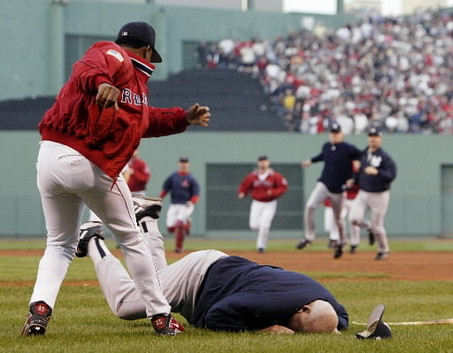
There are unequivocally, probably universally recognized incidents and events that are infinitely worse that most of the items on the list.  Just a  few samples: Continue reading

Ethics Quiz: Is It Ethical to Confess to a Murder You Were Acquitted of Committing, or Merely Annoying?


Come on, O.J! If he can do it, so can you!

Isaac Turnbaugh of Randolph, Vermont recently confessed to the 2002 shooting murder of a co-worker, using a rifle to kill the victim as he was at work in the American Flatbread Co, stirring a pot of  sauce.  A jury acquitted Turnbaugh of the charges in 2004. In July, Turnbaugh contacted police and said, jury verdict notwithstanding, he indeed shot Declan Lyons in the head with the rifle and wished to surrender to authorities. Too bad, they told him. In the eyes of the law, you are “not guilty,” and have to stay that way. Double jeopardy and all that.

Your ethics quiz for today:

If you have been acquitted of a murder and have a guilty conscience about it, what is your most ethical course of action? Continue reading

Comment of the Day: “Scent Branding, Mind-Control, and Ethics”

Elizabeth was the first one to dive into this murky, interesting, science fiction/ “Brave New World” issue that I examined in  “Scent Branding, Mind-Control, and Ethics,” on a topic that confused me more the longer I considered it. What resulted was unusually long, perhaps accounting for the lack of comments, and Elizabeth’s reaction is long as well, but worth reading. There is something potentially sinister here, or perhaps around the corner—or just in our imagination and fears. Scent manipulation, and all it implies, is in the wilderness of ethics, where human nature, science and commerce meet.

Here is the “Comment of the Day”:

“I agree this is a complicated issue.  As you said, restaurant smells (natural, I assume) tend to make people hungry (or more hungry than they really are), as do waiters with large platters of beautiful food which often encourage patrons order more, different, and perhaps more expensive food than what they may have had in mind.  The goal of the restaurant is to sell food:  if memory serves, it’s only been in the last 20 years or so that restaurants had at least parts of their kitchens open to the dining area so “good smells” could waft out from them.  My memory from childhood of elegant restaurants were the multiple green baize doors that completely closed the kitchen off from the dining room.  So was this change intentional or simply simpler and cheaper as restaurant designs?  I don’t know, but it’s different. Continue reading

Scent Branding, Mind-Control, and Ethics

Agreed: this is scary. We're not there yet. We don't even know if "there" exists.

A recent article on the web that purported to explore the ethics of “scent branding” was fascinating for two reasons.

First, “scent branding” is a term I had never encountered before, for a practice that I had not focused on. About five seconds of thought, however, made me realize that indeed I was aware of the phenomenon, and had been for quite a while. “Scent branding”—using fragrances in a commercial environment to create a desired atmosphere and to prompt positive feelings, recollections and emotions from patrons—has been around a long, long time, though not under that label. When funeral parlors made sure that their premises smelled of flowers rather than formaldehyde, that was a form of scent branding. Progress in the science of scent allowed other businesses to get into the act: I was first conscious of the intentional use of smell when I spent a vacation at the Walt Disney World Polynesian Villages Resort. The lobby and the rooms had a powerful “tropical paradise” scent, a mixture of beach smells, torches and exotic fauna. It was obviously fake, like much in Disney World; also like much in Disney World, I found it effective, pleasant, and fun. I certainly didn’t think of it as unethical. I was normal in those days, however.

Well, more normal.

The second aspect of the article, entitled “Is it Ethical to Scent Brand Public Places?”, that caught my attention was that it had an obvious agenda. The piece was opposed to scent branding, and set out to find the practice unethical in order to justify condemning it. Continue reading