Ethics Quiz: The Neglectful Mom

An upstate New York mother allowed her 10-year-old child to shop alone at the LEGO store as she shopped at a different store in the same mall. It appears that the LEGO store’s personnel called the mall’s security, and the child’s mother was arrested and charged with endangering the welfare of a child. The store does have a sign that states that children under the age of 12 must be accompanied by an adult.

Arresting the mother is obviously absurd over-kill. Obviously also, the LEGO store has a right to have whatever policy it chooses regarding unaccompanied children. However the question remains, and is the Ethics Alarms Ethics Quiz of the Day

Is it irresponsible for a mother to allow her 10-year-old to shop alone if the mother is shopping in the same mall?

Related questions as you ponder: Continue reading

Ethics Dunce: The Washington Metropolitan Area Transit Authority [ UPDATED]

[UPDATE: The original version of this post designated the dunces as the D.C. government. This was not accurate, as reader deery helpfully pointed out. You can read about the baroque and diffuse organization and leadership of the D.C. area’s transit system…currently in bad repair and financial distress…here.  Good luck. The text has been revised to reflect the correction in the title. Frankly, the exact organization of the DC. area Metro is less central to the post than the fact wherever the leadership is, it is government, it is dominated by the local Democratic leadership, and it is censorship. That’s what matters.]

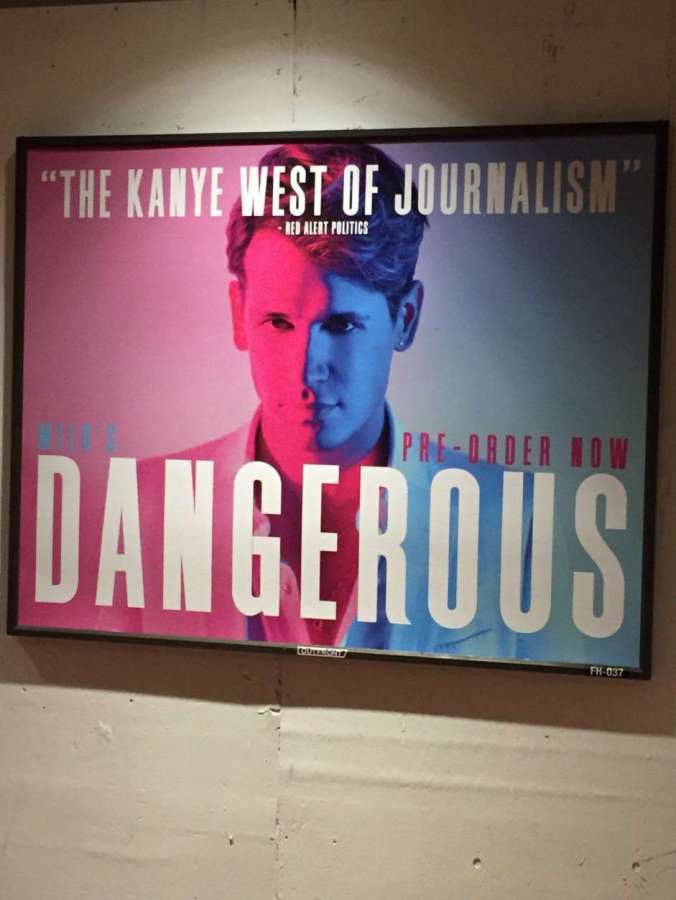
Quick, now: what controversial political position does the above Washington, D.C. area  public transit ad promote?

The Washington Metropolitan Area Transit Authority, the transit agency of the local  and state governments in and surrounding the nation’s capital,  has pulled ads for controversial right-wing speaker Milo Yiannopoulos’ self-published memoir after determining the ads violated the transit system’s policies banning issue-oriented, political and other advocacy advertising.

An independent contractor sells and installs ads across the system, but ultimately Metro’s leaders have the final say…providing that they follow the Bill of Rights. This appears to be a problem for them.

The relevant Metro policies  restricting advertising content include:

  • “Advertisements intended to influence members of the public regarding an issue on which there are varying opinions are prohibited”
  • “Advertisements that are intended to influence public policy are prohibited”

There is no argument here about what the banning of the book ad is: the Transit Authority is engaging in censorship.  This is especially obnoxious for an agency that represents the locality that hosts of the national government, and where the Constitution is on display.  It is also ignorant. Read the damn thing, you politically corrupt dolts. And it is arrogant. The District’s population, stuffed with Democrats like no other jurisdiction, with a majority African-American and conservative-loathing populace, figures to revile a right-wing troll like Milo, and the reliably Democratic riders served by the Metro in Northern Virginia and Maryland are hardly more tolerant of hard-right trolls. But Milo’s name and book cover by no stretch of the imagination are advocacy or efforts to “influence” anyone regarding public policy or “an issue.” Like all ads, here’s the position that it advocates: “Buy this!”

Milo Yiannopoulos is an ugly and cynical right-wing provocateur, but he does not forfeit the protection of the First Amendment because of who he is. When did liberals and Democrats lose their comprehension of this basic democratic concept? What ever the origin of their confusion, it makes them untrustworthy, sinister, and almost as revolting as Milo.

He’ll probably sue the Washington Metropolitan Area Transit Authority for infringing his rights, which it has. He will win. Keep it up, Democrats! Keep indulging that inner totalitarian just screaming to get out.

See what happens.

The Tangled Ethics Of Men, Women, Sexual Harassment,Sexual Discrimination, Romance, Common Sense, And “Vive La différence!”

Mike Pence would not have a business dinner with Debrahlee Lorenzana. What’s wrong with him?

Many years ago I did a sexual harassment seminar for a New York law firm. Afterwards, the partner responsible for handling the firm’s EEOC and workplace matters told me that my ethics-based approach to the topic wasn’t sufficiently rigorous, since he believed that innocent contact between employees in the firm could spawn lawsuits. “I refuse to travel with female associates,” he told me. “I can’t be sure what they will think is harassment.”

“Wait,” I asked. “So because you’re afraid of being accused unjustly of sexual harassment, you engage in sexual discrimination?”

He sputtered something and left to arrange his sock drawer.

I think of this conversation often. I thought of it when Vice-President Mike Pence was reported as saying in 2002  that he never had a meal with a woman who was not his wife, and was promptly savaged for it by feminists and the news media. Because the new rules and practices of the workplace have developed amid contradictions and rigid doctrine rather than with attention to whether they were workable or not, Pence and that hypocritical lawyer years ago are both victims and victimizers. It is often impossible to know what ethical workplace conduct is.

The New York Times was happy to bash Pence for his candor as part of a requirement of membership in “the resistance,” but then, as is often the case for the schizoid paper, later competently and objectively examined the issue away from politics. A Morning Consult poll conducted for the paper  found that there is widespread fear of one-on-one situations, male-female interactions in the workplace.  About 25% think private work meetings with colleagues of the opposite sex are inappropriate. Almost 2/3  say it is prudent to be especially wary and sensitive around members of the opposite sex at work. A majority of women, and nearly half of men, say it’s unacceptable to have dinner or drinks alone with someone of the opposite sex other than their spouse. Continue reading

Oh, Fine. Now I have To Defend Kathy Griffin…

Hahaha! Boy, this just fractures me every time…

From LawNewz:

Comedian and actress Kathy Griffin has reportedly been interviewed by the U.S. Secret Service for more than an hour. The investigation is connected to a recent photograph which showed her holding the bloody head of Donald Trump.

Griffin’s attorney contends that the actress was just exercising her constitutional rights.

“She basically exercised her First Amendment rights to tell a joke,” Dmitry Gorin, a criminal defense attorney representing Griffin said. “When you look at everything in the media, all the times entertainers make videos or express themselves in other ways, you’ve never seen an entertainer, let alone a comedian, be subject to a criminal investigation.”

Ugh.

Griffin’s attorney doesn’t have to “contend” that she was “exercising her constitutional right” of free speech, she was exercising that right—-irresponsibly, recklessly, unethically, stupidly, hatefully, but she was still exercising it. There is no question that her disgusting photo was inappropriate and pure hate posing as humor, but never mind: people choosing to be hateful and irresponsible in their public speech should expect consequences, but not from the feds. Of course it chills freedom of expression for Griffin to be subjected to this kind of secret police-style grilling. It is a matter of public record that she is a comedian. It is a matter of public record that she is a professional jerk. Thus it is a matter of public record that she is a no threat to the President….just to a civil culture and good taste. Continue reading

Dear Idiots: Please Stop Making Me Defend The Bigoted Baker

I am pleased that the Supreme Court will be taking the case of Jack Phillips, the Colorado baker who refused to sell a wedding cake to a gay couple because, he said, they wanted it to be customized, and doing so would offend his faith.  His claim is based on the First Amendment, which prevents the government from making you say what you don’t want to say as much as it prevents the government from stopping you from saying what you want to.

Colorado’s courts denied that Phillips was doing anything but saying that he doesn’t like or respect gays sufficiently to make the exact same cake for them that he would make for non-gays.  I agree with their holding that his actions violated the public accommodations laws. I wrote when this case first reared its frosted head…

“The court’s conclusion  is impossible to rebut. The cake the baker was asked to bake for the gay wedding differed not at all from one he would normally sell a straight couple. In truth, this had nothing to do with expression. He was just refusing to serve a gay couple because of their sexual orientation. Selling them a standard cake would neither constitute, nor would it be recognized as a “message” in support of gay marriage.

The Court agreed that a wedding cake with a customized message celebrating a same-sex marriage as such might implicate First Amendment speech issues, but “we need not reach this issue,” the court said. “We note, again, that Phillips denied Craig’s and Mullins’ request without any discussion regarding the wedding cake’s design or any possible written inscriptions.”

In other words, Phillips was gratuitously and unnecessarily being a cruel jerk. An alleged Christian who is unable to detect the basic Golden Rule application in treating fellow citizens with the minimal level of respect inherent in allowing them to buy a standard wedding cake requiring no “Yay Gay!” or “Charlie and David Forever!” messages in pink frosting deserves no sympathy or quarter from the law. Could the couple have just shrugged and found another bakery? Sure, they could have. Linda Brown could also have just shrugged and found an all-black school to attend, too.

The gay couple are not the villains here. Jack Phillips broke the social contract, as well as the law.”

Now that SCOTUS has decided, by agreeing to review the case,  that he has perhaps a scrawny, shaky legal leg to stand on before they kick it out from under him, Phillips and his lawyer are taking a premature victory lap, as if making it quite clear that you think gays are second class citizens is something to be proud of (and, sadly, too many still think it is.) Their publicity campaign took them all the way to The View, a wise choice. After all, nothing can make an unethical position seem more persuasive than when it is being attacked by idiots, and idiots of the left-wing persuasion are pretty much what ABC’s “Six Opinionated Female B and C List Celebrities Sitting Around Slamming Conservatives”  daytime show has to offer. (To be fair, the show usually has one even dumber right-wing idiot on hand to make the left-wing idiots seem astute by comparison.) Continue reading

Comment of the Day: “Morning Ethics Warm-Up, 6/30/17.”

As he usually does, when he’s feeling frisky,  reader Extradimensional Cephalopod (above right) has dived into the issue of “health care rights” with gusto and perception. As I often do whether I’m feeling frisky or not, I have some cavils about the assumptions being made at the outset.

A right is a moral or legal entitlement to have or obtain something or to be able to do something. Moral and legal rights are two different things. When someone says, as did my friend on Facebook that started this debate. “I believe health care is a right,” he had to be asserting a moral right to healthcare, since a legal right to health care doesn’t exist. If he said, “I believe health acre should be a right,” then he would have clearly meant a legal right. That’s a policy issue. When someone argues that there is a moral right, then they are making the case for a legal right that doesn’t exist. The law in an ethical society ought to protect and advance moral rights, and society must agree what those rights are. Thus when he says, early on, “Note that a right isn’t something we owe Note that a right isn’t something we owe people just because they exist.,” he signals that he is describing legal rights only.   Moral rights are what we owe  people just because they exist. That’s why the Declaration begins with Jefferson saying that “we are endowed by our Creator” with “unalienable rights.”

Here is Extradimensional Cephalopod‘s Comment of the Day on #5 in the post, “Morning Ethics Warm-Up, 6/30/17.”

Let’s start at the beginning. We need to define the phrase “healthcare is a right”.

A “right” is a protection or entitlement we collectively decide to give to people at the expense of our some of our freedoms because we think that society will be more robust, sustainable, able to advance, or generally pleasant to live in as a result. That’s very similar to the basis for ethics, as far as I can tell. A right is a meta-law, a limitation on what laws can be made. Rights may be conditional. Note that a right isn’t something we owe people just because they exist. It’s something we decide we owe them because we want to live in a world where people have that right–because it’s safer for us, or because it means the world will still be there for our descendants, or because it allows civilization to progress to something better, or because we want others to be happy, or all of the above. This will be important later.

Therefore, when we say, “healthcare is a right”, what we mean is “in order to make society more robust, sustainable, able to advance, or generally pleasant, we choose to sacrifice some of our individual freedoms to provide everyone with healthcare.”

We’re half done. Now, what is “healthcare”?

Let’s actually distinguish it from health insurance, because we’re smarter than Congress. Health insurance, like any insurance, is a gamble, in which people periodically pay a small amount of money to an insurance company, which will pay them back a larger amount of money (whatever is necessary, to the limit of what they are insured for) if the person’s health is in danger in a way that neither of them can predict. The idea is that the insurance company can’t predict who needs the money, but they can predict how many will need money and how much, statistically, so they accept enough money from people that they can afford to pay the people who end up needing more money. Continue reading

Observations On Britain’s Charlie Gard Ethics Fiasco

A recipient of Great Britain’s national health care, infant Charlie Gard was born with  a rare genetic condition resulting in what is probably irreversable brain damage.  He cannot move his arms or legs, eat or even breathe without a ventilator.

After 10 months of being kept alive, Charlie’s caretakers, the Great Ormond Street Hospital for Children in London, announced that it was time for Charlie to die. Chris Gard and Connie Yates, Charlie’s parents, wanted to take him to the United States to try an experimental treatment available here. The doctors at the hospital refused to allow them to take the child, and vetoed their decision, even though the parents had received sufficient funds from donations to pay for the effort.  In  the resulting lawsuit, British courts sided with the hospital. The parents then brought the case  to the European Court of Human Rights, which declined to hear the case last week. The previous court rulings that it was in Charlie’s best interest to withdraw life support and that the state, not the parents, got to make this life and death decision stood.

The  parents, Chris Gard and Connie Yates, appeared on a video this week,, sobbing and saying their son would be removed from life support at the hospital. “He’d fight to the very end, but we’re not allowed to fight for him anymore,” Gard said in the video statement. “We can’t even take our own son home to die.”

Initially, the hospital would not delay the fatal  disconnection of the child from life support so family members could gather and say goodbye. It has since relented.

Observations: Continue reading

Morning Ethics Warm-Up: 6/30/17

1. Traffic here is cratering in the run-up to the 4th, guaranteeing that for one of the few months in Ethics Alarms history, June 2017 will have seen significantly less traffic than its previous year’s equivalent. 2017 and 2016 are now in a dead heat.

I have some theories: by this point last year the campaign was heating up, and I was being sufficiently critical of both parties and candidates to make everyone happy. Ethics Alarms also started getting a lot of those paid Hillary shills commenting; I banned more commenters in 2016 by far than any other year. Also because of the campaign, there were an unusual number of posts shared by hundreds and even thousands of readers, as well as a record number of the anomalous posts that double or even triple the daily average. Those, I have found, are completely unpredictable. What I consider important or especially astute essays almost never attract readership; the runaway posts are usually about something relatively trivial.

On the other hand, the blog has many more followers in 2017, more consistently high-quality comments, and, as my life partner continues to remind me with dagger glances, revenue is holding steady…

2. There was another Ethics Hero tale to tell yesterday, though the only one I had time for was the group in Texas that bought a car for a young fast-food worker.

Major League Baseball umpire John Tumpane, assigned to a Pittsburgh Pirate home series, was walking from his hotel to the ball park across the Roberto Clemente Bridge when he saw woman climb over the railing to the outside of the bridge. He decided to approach her, and in response to his queries, she told Tumpane she just wanted to get a better view of the Allegheny River below.

The look on her face and the tone of her voice told Tumpane otherwise, so he grabbed her and refused to obey her demands that she let her go…and jump. Another  bystander saw what was going on and joined him, grabbing the woman’s free arm. A third grabbed her legs through the railing as Tumpane implored the gathering crowd to call 911. The three men held on  until emergency responders arrived. Continue reading

( PSSST! The Supreme Court Just Unanimously Pointed Out That The Courts Blocking The Trump Temporary Travel Ban Were Playing Partisan Politics, Not Objectively And Ethically Doing Their Jobs)

As many predicted (including me), the Supreme Court unanimously slappped down the lower court injunctions based on claims that the Trump temporary travel restrictions on six Muslim countries were unconstitutional, writing,

But the injunctions reach much further than that: They also bar enforcement of §2(c) against foreign nationals abroad who have no connection to the United States at all. The equities relied on by the lower courts do not balance the same way in that context. Denying entry to such a foreign national does not burden any American party by reason of that party’s relationship with the foreign national. And the courts below did not conclude that exclusion in such circumstances would impose any legally relevant hardship on the foreign national himself. See id., at 762 (“[A]n unadmitted and nonresident alien . . . ha[s] no constitutional right of entry to this country”). So whatever burdens may result from enforcement of §2(c) against a foreign national who lacks any connection to this country,they are, at a minimum, a good deal less concrete than the hardships identified by the courts below.
At the same time, the Government’s interest in enforcing §2(c), and the Executive’s authority to do so, are undoubtedly at their peak when there is no tie between the foreign national and the United States. Indeed, EO–2 itself distinguishes between foreign nationals who have some connection to this country, and foreign nationals who do not, by establishing a case-by-case waiver system primarily for the benefit of individuals in the former category. See, e.g., §§3(c)(i)–(vi). The interest in preserving national security is “an urgent objective of the highest order.” Holder v. Humanitarian Law Project, 561 U. S. 1, 28 (2010). To prevent the Government from pursuing that objective by enforcing §2(c) against foreign nationals unconnected to the United States would appreciably injure its interests, without alleviating obvious hardship to anyone else.

…The Government’s application to stay the injunction with respect to §§6(a) and (b) is accordingly granted in part. Section 6(a) may not be enforced against an individual seeking admission as a refugee who can credibly claim a bona fide relationship with a person or entity in the United States. Nor may §6(b); that is, such a person may not be excluded pursuant to §6(b), even if the 50,000 person cap has been reached or exceeded. As applied to all other individuals, the provisions may take effect.

Got that?

“To prevent the Government from pursuing that objective by enforcing §2(c) against foreign nationals unconnected to the United States would appreciably injure its interests, without alleviating obvious hardship to anyone else.” Continue reading

Ethical Quote Of The Month: Harvard Law Professor Jeannie Suk Gersen

“We chose to set up our system to be stacked in favor of the defendant in all cases.So, in areas where most of the defendants are male, and most of the accusers are female, it’s a structural bias in favor of males. Even if we were to get rid of sexism, it would still be very hard to win these cases. I think this is what we have to live with on the criminal side, because we’ve made the calculation that this is the right balance of values.”

—-Jeannie Suk Gersen, Harvard Law School professor, explaining why the failure of a jury to convict Bill Cosby has little to do with sexism and everything to do with our standard of guilt in criminal cases.

The Professor could also have said, just as accurately,

‘We chose to set up our system to be stacked in favor of the defendant in all cases. So, in areas where the defendants are police officers, and most of the victims are black, it’s a structural bias in favor of cops. Even if we were to get rid of racism, it would still be very hard to win these cases. I think this is what we have to live with on the criminal side, because we’ve made the calculation that this is the right balance of values.’

It’s the exact same problem. The confusion comes when the public or a portion of it is  certain that particular defendant is guilty, and thus regards the failure of the system to find him so as proof of a malfunctioning justice system. It isn’t. It is proof that the system functions as it is supposed to, was designed to do and must do.  We do not take citizens’ freedom away unless guilt can be proven beyond a reasonable doubt under the evidence rules of the law. This is what Colin Kaepernick doesn’t understand. This is what Black Lives Matters refuses to understand. This is what feminists and the Obama Education Department, which commanded that universities give the benefit of the doubt to accusers in allegations of sexual assault rather than the accused, either refuse to understand or do understand but argue against anyway to pander to the ignorant.

Americans, however, must understand this principle, and not just understand but fight for it, because it is the foundation of the Rule of Law as well as our individual rights.

Before I am done I will probably have posted this scene from “A Man For All Seasons” more than a hundred times. Maybe I should post it every day. Those who casually advocate forging short-cuts and detours through our laws and rights as the remedy for what they perceive as intolerable wrongs need to see it, read the words, memorize them, and maybe be quizzed on the scene’s lesson as a condition predicate to being respected in any policy debate: