Comment of the Day: “Morning Ethics Warm-Up, 6/30/17.”

As he usually does, when he’s feeling frisky,  reader Extradimensional Cephalopod (above right) has dived into the issue of “health care rights” with gusto and perception. As I often do whether I’m feeling frisky or not, I have some cavils about the assumptions being made at the outset.

A right is a moral or legal entitlement to have or obtain something or to be able to do something. Moral and legal rights are two different things. When someone says, as did my friend on Facebook that started this debate. “I believe health care is a right,” he had to be asserting a moral right to healthcare, since a legal right to health care doesn’t exist. If he said, “I believe health acre should be a right,” then he would have clearly meant a legal right. That’s a policy issue. When someone argues that there is a moral right, then they are making the case for a legal right that doesn’t exist. The law in an ethical society ought to protect and advance moral rights, and society must agree what those rights are. Thus when he says, early on, “Note that a right isn’t something we owe Note that a right isn’t something we owe people just because they exist.,” he signals that he is describing legal rights only.   Moral rights are what we owe  people just because they exist. That’s why the Declaration begins with Jefferson saying that “we are endowed by our Creator” with “unalienable rights.”

Here is Extradimensional Cephalopod‘s Comment of the Day on #5 in the post, “Morning Ethics Warm-Up, 6/30/17.”

Let’s start at the beginning. We need to define the phrase “healthcare is a right”.

A “right” is a protection or entitlement we collectively decide to give to people at the expense of our some of our freedoms because we think that society will be more robust, sustainable, able to advance, or generally pleasant to live in as a result. That’s very similar to the basis for ethics, as far as I can tell. A right is a meta-law, a limitation on what laws can be made. Rights may be conditional. Note that a right isn’t something we owe people just because they exist. It’s something we decide we owe them because we want to live in a world where people have that right–because it’s safer for us, or because it means the world will still be there for our descendants, or because it allows civilization to progress to something better, or because we want others to be happy, or all of the above. This will be important later.

Therefore, when we say, “healthcare is a right”, what we mean is “in order to make society more robust, sustainable, able to advance, or generally pleasant, we choose to sacrifice some of our individual freedoms to provide everyone with healthcare.”

We’re half done. Now, what is “healthcare”?

Let’s actually distinguish it from health insurance, because we’re smarter than Congress. Health insurance, like any insurance, is a gamble, in which people periodically pay a small amount of money to an insurance company, which will pay them back a larger amount of money (whatever is necessary, to the limit of what they are insured for) if the person’s health is in danger in a way that neither of them can predict. The idea is that the insurance company can’t predict who needs the money, but they can predict how many will need money and how much, statistically, so they accept enough money from people that they can afford to pay the people who end up needing more money. Continue reading →
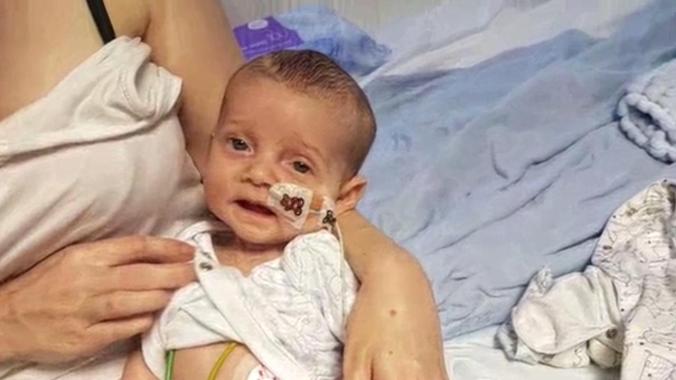
Observations On Britain’s Charlie Gard Ethics Fiasco

A recipient of Great Britain’s national health care, infant Charlie Gard was born with  a rare genetic condition resulting in what is probably irreversable brain damage.  He cannot move his arms or legs, eat or even breathe without a ventilator.

After 10 months of being kept alive, Charlie’s caretakers, the Great Ormond Street Hospital for Children in London, announced that it was time for Charlie to die. Chris Gard and Connie Yates, Charlie’s parents, wanted to take him to the United States to try an experimental treatment available here. The doctors at the hospital refused to allow them to take the child, and vetoed their decision, even though the parents had received sufficient funds from donations to pay for the effort.  In  the resulting lawsuit, British courts sided with the hospital. The parents then brought the case  to the European Court of Human Rights, which declined to hear the case last week. The previous court rulings that it was in Charlie’s best interest to withdraw life support and that the state, not the parents, got to make this life and death decision stood.

The  parents, Chris Gard and Connie Yates, appeared on a video this week,, sobbing and saying their son would be removed from life support at the hospital. “He’d fight to the very end, but we’re not allowed to fight for him anymore,” Gard said in the video statement. “We can’t even take our own son home to die.”

Initially, the hospital would not delay the fatal  disconnection of the child from life support so family members could gather and say goodbye. It has since relented.

Observations: Continue reading →

Morning Ethics Warm-Up: 6/30/17

1. Traffic here is cratering in the run-up to the 4th, guaranteeing that for one of the few months in Ethics Alarms history, June 2017 will have seen significantly less traffic than its previous year’s equivalent. 2017 and 2016 are now in a dead heat.

I have some theories: by this point last year the campaign was heating up, and I was being sufficiently critical of both parties and candidates to make everyone happy. Ethics Alarms also started getting a lot of those paid Hillary shills commenting; I banned more commenters in 2016 by far than any other year. Also because of the campaign, there were an unusual number of posts shared by hundreds and even thousands of readers, as well as a record number of the anomalous posts that double or even triple the daily average. Those, I have found, are completely unpredictable. What I consider important or especially astute essays almost never attract readership; the runaway posts are usually about something relatively trivial.

On the other hand, the blog has many more followers in 2017, more consistently high-quality comments, and, as my life partner continues to remind me with dagger glances, revenue is holding steady…

2. There was another Ethics Hero tale to tell yesterday, though the only one I had time for was the group in Texas that bought a car for a young fast-food worker.

Major League Baseball umpire John Tumpane, assigned to a Pittsburgh Pirate home series, was walking from his hotel to the ball park across the Roberto Clemente Bridge when he saw woman climb over the railing to the outside of the bridge. He decided to approach her, and in response to his queries, she told Tumpane she just wanted to get a better view of the Allegheny River below.

The look on her face and the tone of her voice told Tumpane otherwise, so he grabbed her and refused to obey her demands that she let her go…and jump. Another  bystander saw what was going on and joined him, grabbing the woman’s free arm. A third grabbed her legs through the railing as Tumpane implored the gathering crowd to call 911. The three men held on  until emergency responders arrived. Continue reading →

( PSSST! The Supreme Court Just Unanimously Pointed Out That The Courts Blocking The Trump Temporary Travel Ban Were Playing Partisan Politics, Not Objectively And Ethically Doing Their Jobs)

As many predicted (including me), the Supreme Court unanimously slappped down the lower court injunctions based on claims that the Trump temporary travel restrictions on six Muslim countries were unconstitutional, writing,

But the injunctions reach much further than that: They also bar enforcement of §2(c) against foreign nationals abroad who have no connection to the United States at all. The equities relied on by the lower courts do not balance the same way in that context. Denying entry to such a foreign national does not burden any American party by reason of that party’s relationship with the foreign national. And the courts below did not conclude that exclusion in such circumstances would impose any legally relevant hardship on the foreign national himself. See id., at 762 (“[A]n unadmitted and nonresident alien . . . ha[s] no constitutional right of entry to this country”). So whatever burdens may result from enforcement of §2(c) against a foreign national who lacks any connection to this country,they are, at a minimum, a good deal less concrete than the hardships identified by the courts below.
At the same time, the Government’s interest in enforcing §2(c), and the Executive’s authority to do so, are undoubtedly at their peak when there is no tie between the foreign national and the United States. Indeed, EO–2 itself distinguishes between foreign nationals who have some connection to this country, and foreign nationals who do not, by establishing a case-by-case waiver system primarily for the benefit of individuals in the former category. See, e.g., §§3(c)(i)–(vi). The interest in preserving national security is “an urgent objective of the highest order.” Holder v. Humanitarian Law Project, 561 U. S. 1, 28 (2010). To prevent the Government from pursuing that objective by enforcing §2(c) against foreign nationals unconnected to the United States would appreciably injure its interests, without alleviating obvious hardship to anyone else.

…The Government’s application to stay the injunction with respect to §§6(a) and (b) is accordingly granted in part. Section 6(a) may not be enforced against an individual seeking admission as a refugee who can credibly claim a bona fide relationship with a person or entity in the United States. Nor may §6(b); that is, such a person may not be excluded pursuant to §6(b), even if the 50,000 person cap has been reached or exceeded. As applied to all other individuals, the provisions may take effect.

Got that?

“To prevent the Government from pursuing that objective by enforcing §2(c) against foreign nationals unconnected to the United States would appreciably injure its interests, without alleviating obvious hardship to anyone else.” Continue reading →

Ethical Quote Of The Month: Harvard Law Professor Jeannie Suk Gersen

“We chose to set up our system to be stacked in favor of the defendant in all cases.So, in areas where most of the defendants are male, and most of the accusers are female, it’s a structural bias in favor of males. Even if we were to get rid of sexism, it would still be very hard to win these cases. I think this is what we have to live with on the criminal side, because we’ve made the calculation that this is the right balance of values.”

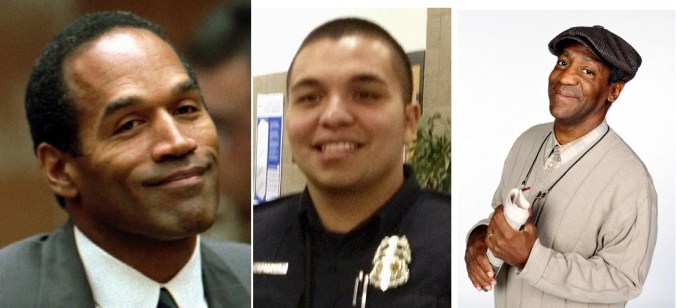
—-Jeannie Suk Gersen, Harvard Law School professor, explaining why the failure of a jury to convict Bill Cosby has little to do with sexism and everything to do with our standard of guilt in criminal cases.

The Professor could also have said, just as accurately,

‘We chose to set up our system to be stacked in favor of the defendant in all cases. So, in areas where the defendants are police officers, and most of the victims are black, it’s a structural bias in favor of cops. Even if we were to get rid of racism, it would still be very hard to win these cases. I think this is what we have to live with on the criminal side, because we’ve made the calculation that this is the right balance of values.’

It’s the exact same problem. The confusion comes when the public or a portion of it is  certain that particular defendant is guilty, and thus regards the failure of the system to find him so as proof of a malfunctioning justice system. It isn’t. It is proof that the system functions as it is supposed to, was designed to do and must do.  We do not take citizens’ freedom away unless guilt can be proven beyond a reasonable doubt under the evidence rules of the law. This is what Colin Kaepernick doesn’t understand. This is what Black Lives Matters refuses to understand. This is what feminists and the Obama Education Department, which commanded that universities give the benefit of the doubt to accusers in allegations of sexual assault rather than the accused, either refuse to understand or do understand but argue against anyway to pander to the ignorant.

Americans, however, must understand this principle, and not just understand but fight for it, because it is the foundation of the Rule of Law as well as our individual rights.

Before I am done I will probably have posted this scene from “A Man For All Seasons” more than a hundred times. Maybe I should post it every day. Those who casually advocate forging short-cuts and detours through our laws and rights as the remedy for what they perceive as intolerable wrongs need to see it, read the words, memorize them, and maybe be quizzed on the scene’s lesson as a condition predicate to being respected in any policy debate:


What Is The White House’s Obligation To Journalism And Journalists When They Are No Longer Behaving As Journalists Nor Abiding by Journalism Ethics?

I know: I’m full of questions lately, and short on answers. I certainly don’t have an answer to this one, and the urgency of finding an answer, and a solution to the underlying crisis, is critical.

Here was Camille Paglia last week describing the state of American journalism:

“It’s obscene. It’s outrageous, OK? It shows that the Democrats are nothing now but words and fantasy and hallucination and Hollywood. There’s no journalism left. What’s happened to The New York Times? What’s happened to the major networks? It’s an outrage. I’m a professor of media studies, in addition to a professor of humanities, OK? And I think it’s absolutely grotesque the way my party has destroyed journalism. Right now, it is going to take decades to recover from this atrocity that’s going on where the news media have turned themselves over to the most childish fraternity, kind of buffoonish behavior.”

(I would link to a non-right wing source, but for some reason the mainstream media didn’t feel Paglia’s assessment was worth reporting. I wonder why?)

Now here was Peggy Noonan, in a Wall Street Journal op-ed:

“Dislike of Mr. Trump within the mainstream media is unalterable,” she wrote. “It permeates every network, from intern to executive producer and CEO. Here is a theory on what they’re thinking: They’re thinking attempts at fairness and balance in this charged atmosphere get them nowhere. They’re attacked by both sides. And anyway they think Mr. Trump is insane. They live on ratings, which determine advertising rates. Hillary Clinton got 2.9 million more votes than Mr. Trump, so the anti-Trump audience is larger.

Hillary Clinton got 2.9 million more votes than Mr. Trump, so the anti-Trump audience is larger. Moreover, people who oppose Mr. Trump tend to be more affluent, more educated, more urban. They’re more liberal, of course, and they’re younger. They’re a desirable demographic. The pro-Trump audience is more rural, more working- and middle-class, older. A particularly heartless media professional might sum them up this way: “Their next big lifestyle choice will be death.”

So, if you are a person who programs or sets the tone of network fare and you want to take a side—you shouldn’t, but you want to!—you throw your lot with the anti-Trump demo, serving them the kind of journalistic approaches and showbiz attitudes they’re likely to enjoy.

Mr. Trump, you are certain, won’t last: He’ll bring himself down or be brought down. You want to be with the winning side. So play to those who hate him, exclude others, call it integrity and reap the profits.”

Both women are substantially right at worst, despite the furious head-shaking you get from journalists, who are either in denial or corrupt, and most progressives and Democrats, who have every reason to deny the phenomenon because 1) they are the beneficiaries of it and 2) they have been leached of all integrity by emotion, arrogance, and bias.

Currently the mainstream news media is having a collective conniption because the White House is increasingly limiting reporter access. The journalists regard this as an ominous effort to constrain the free press, which it would be, except that the “free press” is not conducting itself as honest and trustworthy journalists are obligated to do.

If a lawyer practices law in blatant violation of the ethics rules, he or she doesn’t get to practice law any more. If a doctor breaches the ethical tenets of the medical profession, he or she is barred from treating patients. Journalism styles itself as a profession, meaning that it exists for the public good. Its ethical principles demand fairness, competence, responsible reporting, independence and objectivity. For a long, long time, what we still call “journalism’ for lack of a better name has not met any of these ethical ideals with sufficient consistency, and since the 2016 election, it has openly, shamelessly allied itself with the partisan effort to undermine and destroy the legally elected Presidency of Donald Trump. To do this, the mainstream news media has jettisoned its ethical values, and its right to be trusted by the public. As polls show, the public doesn’t trust them. The public still gives them more trust, out of habit, that they deserve.

For example, here’s a news flash: Continue reading →

Illegal Immigrant Ethics Do’s And Don’ts

DON’T do this:

A customer’s cell phone video caught  a  7-Eleven clerk on Tampa, Florida screaming at a customer and asking about his immigration status after the customer used the Spanish word for ‘green’ to ask the clerk for a specific brand of cigarettes. The clerk demanded Hernandez speak English, and is is heard saying, “Are you here legally? Do you have papers? Do you have papers?”

This isn’t the clerk’s job, and if the company has not directed that all customers should not be treated with dignity, courtesy and respect, no employee should be going free-lance ICE on anyone.

A spokesman for the 7-11 owner  wrote, “Every customer is important. The statements made by the sales associate were inappropriate and offensive. We are investigating the matter and will ensure it is handled appropriately.”

“Appropriately” means firing the clerk. In addition to acting ultra vires, the clerk is also making the store unpleasant and unwelcoming for other customers, risking an escalating confrontation, and being a jerk while representing the enterprise. Wrong, wrong, and wrong.

However…

Continue reading →

California “Ethics”

California is not only rapidly exiting mainstream U.S. culture, it is forging its own distorted and unethical version of right and wrong.

Three alarming examples:

1. Forging ahead with single payer, and reality be damned.

The Sacramento Bee  pointed out that by replacing current state-run health programs with a single-payer system, the state would still need to come up with an additional $200 billion annually.This year’s state budget in California is about $180 billion. Yes, implementing a single-payer health care system would require doubling California’s current tax burden.

Oh, never mind! The state Senate voted 23 to 14 this month in favor of SB 562, a single-payer proposal that would guarantee universal health care to all Californians. “What we did today was really approve the concept of a single-payer system in California,” declared state Senator Ricardo Lara following the vote.

No, what they did was reaffirm the fact that progressive cant refuses to yield in the face of cold, hard facts, math, reason and common sense. The cheerleading from the Left is mind-numbing. Writes the Nation: “If health care is a right—and it is—the only honest response to the current crisis is the single-payer “Medicare for All” reform that would bring the United States in line with humane and responsible countries worldwide.”

Well, let’s see: health care is NOT a right except in Left-Wing Fantasyland, and all of those “humane and responsible countries” have crushing tax burdens, reduced liberty, economic instability, crushing debt and completely different values, priorities and responsibilities than those of the United States.

Ethics is only ethical when it is practical and practicable in the real world. The ethical response to the fact that single-payer doubles the state budget is to say, “Oh. Well, obviously we can’t do that, then. On to plan B.”

2. That minimum wage increase that Gov. Brown said was based on principle rather than economics? Yeah, about that…

Continue reading →

New York Times: ‘Now That The Supreme Court Has Ruled That Our Position Was Progressive Censorious Jack-Boot Political Correctness Enforcement, We Didn’t Mean It’


How can anyone take the New York Times seriously anymore as an objective source of commentary, reporting and analysis?

Here is a hilarious section from today’s editorial celebrating the Supreme Court’s unanimous decision in Matal v. Tam as a victory for free speech:

Writing for the majority, Justice Samuel Alito said the law violates a “bedrock First Amendment principle: Speech may not be banned on the ground that it expresses ideas that offend.” That’s the right call. The First Amendment bars the government from discriminating among speakers based on their viewpoints. In this case, the Trademark Office did that by blocking only registrations for trademarks it determined to have negative connotations. …The decision is likely to help the Washington Redskins, who lost their trademark protections in 2014 after years of complaints from Native American groups. At the time, this page supported the Trademark Office’s decision, and we still regard the Redskins name as offensive. Based on this case, however, we’ve since reconsidered our underlying position.

Really? When did the Times reconsider that “underlying position”? It reconsidered it only when the Supreme Court made it crystal clear that the government’s attempt to bully the Redskins into changing their name was a neon-bright, obvious First Amendment breach that any non-partisanship-addled person of moderate intelligence should be able to discern, thus constituting an embarrassment for a renowned First Amendment-protected entity—the Times—that couldn’t discern it, or that didn’t have the integrity to oppose its ideological allies by stating the inconvenient truth.

The Times endorsed the underlying position that the government could dictate what was “acceptable” speech because Harry Reid’s Democrats and the Obama Administration were doing the dictating on behalf of a core Democratic Party constituency and the progressives that constitute the Times’s readership.

What a cynical, biased, dishonest, corrupt and untrustworthy news source the New York Times has become.

Morning Ethics Warm-Up: 6/20/17

1. It isn’t just the President’s boorish role modelling and the misbehavior and incivility of his opposition that makes me fear for the ethics alarms of our rising generation. The long-term results of people being able to isolate themselves from social contact—and the social skills and sensitivities that direct, face to face contact nurture—by constant attention to electronic devices is a matter for concern. Yesterday, I became aware of another danger.

I heard, on the new Sirius-XM Beatles channel, a recording of Paul McCartney singing my favorite song from “Guys and Dolls,” a sweet ballad sung in the musical by an elderly father to his grown daughter during her romantic crisis.

McCartney has a foot in two cultures and always has. As much as a rock and pop innovator as he was, Paul was also steeped in the traditional love songs of his parent’s generation, including Broadway. Today both of McCartney’s feet are planted where nobody under the age of 30 is likely to tread, and that is natural. Yet it seems that popular music is increasingly devoid of tenderness, empathy and compassion. Hip-Hop, particularly, seems immune from being able to express a sentiment like that in Frank Loesser’s nearly  70-year-old song that Paul McCartney obviously understands. I wonder, and worry. how many of today’s young Americans understand it, or will grow up with the capacity to do so.

Here’s Bing crooning the same song…

You know I love ya, Bing, but the Moptop wins this round.

2. There was some discussion on a thread here yesterday about the ethics of interests outside the state putting so much money into Georgia’s 6th congressional district’s special election. The House was designed to give communities a say in the national government, so to the extent that a local election is warped by interests outside the community—the Democrat, Jon Ossoff, is a carpetbagger who doesn’t live in the district—it’s a violation of the spirit of the Constitution and the ideal of American democracy. Some have even made an analogy to foreign governments interfering in U.S. elections. On the other hand, all this outside “interference” consists of are words, ads, and marketing. The district’s residents still are the ones who vote. If they are so easily swayed by slick ads and robocalls, that’s their responsibility. (There may even be a backlash.) Continue reading →