The States’ Inexcusable Incompetence In Rape Cases

rape kits

If anyone can think of a good explanation for this outrage, please enlighten me.

Massachusetts has a 15-year statute of limitations on prosecuting sexual assault crimes, but the state only requires that untested rape kits be stored for six months.  No state currently provides the victim of an alleged sexual assault the right to require a jurisdiction to retain a rape kit until the statute of limitations expires, and only six states and Washington, D.C., provide a right for the prompt processing of a rape kit.

How can this be? Why wouldn’t it be obvious that as long as it is possible that rape charges can be brought, the relevant rape kit must be preserved? Continue reading →

Ethics Jump Ball: What Is An Ethical Reaction To This Story?

Pippa-Bacca

From the BBC (2008):

An Italian woman artist who was hitch-hiking to the Middle East dressed as a bride to promote world peace has been found murdered in Turkey.

The naked body of Giuseppina Pasqualino di Marineo, 33, known as Pippa Bacca, was found in bushes near the northern city of Gebze on Friday.

She had said she wanted to show that she could put her trust in the kindness of local people.

Turkish police say they have detained a man in connection with the killing.

Reports say the man led the police to the body.

I think I’ll add my reactions to the comments.

Fragments can be found in the tags.

You go first.

__________________

Pointer: Red Flag

Ethics Quote Of The Week: FCC Commissioner Ajit Pai

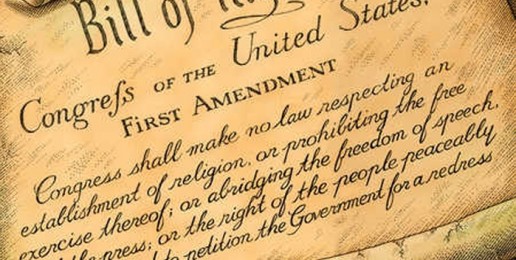
First-Amendment-on-scroll1

“The text of the First Amendment is enshrined in our Constitution, but there are certain cultural values that undergird the amendment that are critical for its protections to have actual meaning. If that culture starts to wither away, then so too will the freedom that it supports.”

—FCC Commissioner Ajit Pai  to the Washington Examiner, in an interview where he expressed concern that respect for First Amendment principles were diminishing, particularly on college campuses.

Isn’t it fascinating that so many of those who are concerned about the freedom of speech being diminished by political correctness have responded by supporting a Presidential candidate who regularly abuses the right of free speech, and whose response to protesters at his own speeches is to abuse them?

But I digress.

Today’s example of what Pai is talking about comes from California State University Los Angeles (CSULA), where president William Covino, responding to expressions of dismay from the same kinds of students who needed counseling at Rutgers, cancelled a scheduled speech by conservative pundit and Breitbart editor Ben Shapiro, and in a particularly Orwellian touch, did so citing the need for the “free exchange of ideas.” Continue reading →

Ethics Observations On Georgetown Law Center’s Scalia Foofarah

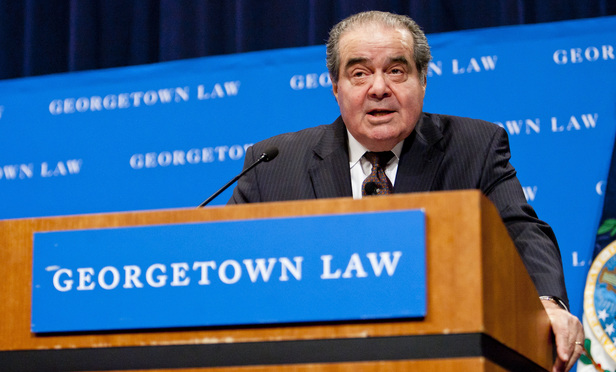
Scalia-Georgetown

I am a Georgetown University Law Center grad, as well as a former administrator there. I also know and have personal relationships with several members of the faculty. None of this especially informs my ethical analysis of the community argument there that arose from a rather innocuous official expression of respect and mourning in the wake of Justice Scalia’s death, but if anyone wonders why I’m posting about this rather than many other ethics issues nipping at my heels, that’s part of the reason. The other reason is that this academic dust-up raises interesting ethics issues, and has received national publicity.

Observations on the tale as it has unfolded:

1.  Georgetown Law Center issued a press release mourning the death of Antonin Scalia, including a statement from Dean William M. Treanor that read:

““Scalia was a giant in the history of the law, a brilliant jurist whose opinions and scholarship profoundly transformed the law. Like countless academics, I learned a great deal from his opinions and his scholarship. In the history of the Court, few Justices have had such influence on the way in which the law is understood. On a personal level, I am deeply grateful for his remarkably generous involvement with our community, including his frequent appearances in classes and his memorable lecture to our first year students this past November. The justice offered first-year students his insights and guidance, and he stayed with the students long after the lecture was over. He cared passionately about the profession, about the law and about the future, and the students who were fortunate enough to hear him will never forget the experience. We will all miss him.”

[Note: In the original post, I missed the first line, and kept missing it. Don’t ask me why. The text has been finally, after a couple botched attempts, been revised to include it.]

Is there anything inappropriate about the dean’s statement? Not in my view. This is nothing but a traditional expression of professional respect on behalf a prominent institutional member of the legal community. There is nothing in the statement, save for the last sentence, that anyone could argue is untrue. Countless academics, as well as Scalia’s more liberal colleagues, did learn “a great deal from his opinions and his scholarship.” He was an influential and significant figure on the Court. Scalia was generous with his time and passion as a teacher, and by all accounts he was a good one.

The opening statement,  “Scalia was a giant in the history of the law, a brilliant jurist whose opinions and scholarship profoundly transformed the law,”  seems to be what rankled Scalia critics. It shouldn’t have. At worst it is standard memorial puffery. But calling Scalia a giant “ in the history of the law” seems fair whether you agree with his jurisprudence or not: he is certainly among the 20 or so most quoted, most debated, and most provocative justices. The rest shouldn’t be troubling to anyone who isn’t suffering from Scalia-phobia. A Justice can be brilliant and transformational while being wrong.

None of the reports of the controversy ignited by this standard issue sentiment mention it, but Georgetown Law Center isn’t on the Georgetown campus. It has its own campus that is a 15 minute walk from the Supreme Court. Law students regularly attend oral arguments; I did: it was one of the great advantages of studying law there. More than any law school, the Law Center has good reason to feel a special affinity to the Court and all its justices.

2.  What about the last sentence? Is it appropriate for Treaner to speak for the law school community and say that “We will all miss him”? He was reasonable and fair to assume that.  Unfortunately, in today’s vicious partisan divide where opinions and sincere positions reached after thought and research are too often treated as proof of consort with Satan, and ion which even lawyers, who are trained not to take legal arguments personally, are frequently unable to respect a colleague for a well-reasoned argument that they may still think is completely wrong, it was not a safe assumption. Pillory the dean, then, for giving all members of his community the benefit of the doubt, and assuming they are capable of grace, compassion, fairness, professional respect and civility.

It’s still not unethical to assume one’s colleagues have some class.

3. They all don’t, unfortunately. Law Center professors Gary Peller and Mike Seidman (I know Mike, never met Gary) then used the Campus Broadcast system, usually used for event announcements, invitations and policy changes, to send a message  to all members of the student body titled, “Responses to Dean Treanor’s Press Release Regarding Justice Scalia.”  Peller’s statement reads,

Like Mike Seidman, I also was put-off by the invocation of the “Georgetown Community” in the press release that Dean Treanor issued Saturday. I imagine many other faculty, students and staff, particularly people of color, women and sexual minorities, cringed at headline and at the unmitigated praise with which the press release described a jurist that many of us believe was a defender of privilege, oppression and bigotry, one whose intellectual positions were not brilliant but simplistic and formalistic….That ‘community’ would never have claimed that our entire community mourns the loss of J. Scalia, nor contributed to his mystification without regard for the harm and hurt he inflicted.”

This was partisan grandstanding of the worst kind. The professors, of course, have a right to proclaim their opinions to the student body any time they want to, but their complaint here was petty and mean-spirited. It also models behavior that is poisonous both to the legal profession and the culture as a whole. The are saying, in essence, “We don’t mourn him, we won’t miss him, and we’re glad to be rid of him, because his legal theories aren’t our legal theories, and we are on the side of the angels while he was an uncaring villain.” Such a message accomplishes nothing positive, and much that is destructive. The professors engaged in demonizing, when their profession and their duty is not to denigrate but reason. If they really think they can prove that Scalia was a defender of privilege, oppression and bigotry, they can make that case in a scholarly paper: I doubt that they can. Scalia often defended the rights to engage in conduct that he did not personally support, as well as some he did: the sloppy rhetoric of Seidman and Peller echoes the legally ignorant who accuse criminal defense attorneys of defending robbery and murder. Continue reading →


“His WORDS Are Too Horrible to Bear!” Why Is Rutgers Pampering Student Delusions About Free Speech?

"He DISAGREES WITH ME!! ARRGH!! It's too painful to BEAR!!!"

“He DISAGREES WITH ME!! ARRGH!! It’s too painful to BEAR!!!”

It is unethical to make students or their parents pay obscene amounts of money to be rendered incompetent and dysfunctional for the life challenges that face them. Based on this bizarre incident at Rutgers—tuition about $25,000 per year, per student—that is exactly what that esteemed institution is doing. How many others are doing the same?

Journalist Milo Yiannopoulos—that’s being generous: I’d call him a professional troll, or a white, gay Ann Coulter—kicked off his “Dangerous Faggot” tour at Rutgers. He’s an in-your-face, liberal shibboleth-shattering, intentionally provocative rabble-rouser of the hard right, famously banned by Twitter, which now appears to be sucking up to Social Justice Warriors. Milo, who is one of the ugly, culture-scarring mutants created by the radiation emanating from the hyper-partisan environment encouraged by the Obama Administration,  expounded on  gender wage gap myths, feminism, the “rape culture” and Black Lives Matters in as offensive a manner as he could, and he is talented at being offensive. Some 50 students in the audience who were there to bury Milo, not to praise him,  stood up and smeared fake blood on their faces to signal their opposition. Ten protesters left, forty stayed.

Then they had a collective breakdown, or something. The Daily Targum, Rutgers newspaper, reported that following Yiannopoulos’ appearance, students and faculty gathered in the Paul Robeson Cultural Center to discuss their trauma at his words and the reaction to it from students in the audience. “We are here to show support,” was the mantra repeated by nearly every person in the crowd as they introduced themselves, as if voluntarily listening to a hard-right, politically incorrect conservative provocateur was the equivalent of experiencing sexual assault or the death of a child. Continue reading →

Ethics Observations On Talia Jane’s “Open Letter” To Yelp

Talia Jane. Get used to seeing this face over the next 15 minutes or so...

Talia Jane. Get used to seeing this face over the next 15 minutes or so…

The story: A 25-year-old entry level Yelp (at Eat24, which is owned by Yelp) customer service agent named Talia Jane posted an article to the social media site Medium titled, An Open Letter To My CEO.  Addressed to “Jeremy,” Yelp Chief Executive Officer Jeremy Stoppleman, Jane’s epistle was a long. angry, often sad, more often snarky lament about her low compensation, current poverty, and lack of satisfaction with her job;  her personal hardship as she struggled with Bay Area living expenses like rent, food, electricity, internet, transportation; and her criticism of company policies and Stoppleman’s millions (Yelp was his creation.) The letter quickly went viral, especially among Bernie-files and on left-leaning websites, as the post was a rant against the lack of a living wage and greedy corporations generally. A couple hours later, Talia posted an update that she had been fired, and Stoppleman responded to some of her concerns on Twitter, protesting that he and his company were not as callous as she claimed. Stoppleman also tweeted that he was uninvolved in her firing and it was unrelated to the Medium post.

Observations:

1. Of course, Yelp had to fire her. Any company, large or small, would and should fire a low level employee who intentionally attacks her employer and the company’s CEO in a public forum. That the letter was read far and wide just sped up the process. The Bernie Brats, being so ignorant of the way of the world that they actually believe Sanders’ Socialist fantasies, naturally faulted Yelp for her fate. In Bernie World, you see, everyone is guaranteed a job, even after they go out of their way to embarrass the people who write their paychecks, or so they appear to believe.

2. Jane wrote that her firing was “unplanned” but not unexpected. I don’t believe that for a second; in fact, the statement is contradictory. She wrote a 2500 word attack on her employer and posted it online, and says she “expected’ to be fired. When you take deliberate action that you know will have a specific result, that’s a plan. The plan is to get out of a job she hates and that doesn’t advance her desired career—apparently to be a highly paid web commentator and wit—by making herself into a sympathetic celebrity long enough to exploit her fame and re-boot her ambitions. Isn’t that obvious? I’m sure that Talia is being booked on radio and TV shows as I write this. For her plan to work, however, she has to lie about her intentions in writing the letter. To some extent, I admire her audacity, and the plan may work. But this is The Saint’s Excuse: she made a deal with Yelp; they held up their end of it; she miscalculated, she was dissatisfied, so she made Yelp a public target for her own benefit.  Unethical. It is also the rationalization called Ethical Vigilantism: she thinks this is right because she deserves better, and is justified betraying her benefactor.

3. I wouldn’t trust Talia Jane to run my lemonade stand. Continue reading →

Ethics Dunce: Samuel French, Inc.

collage

A ridiculous and offensive example of misuse of legal process and interference with free speech was just flagged by self-exiled Ethics Alarms star, Barry “Ampersand” Deutsch on his blog.

In her one woman play Thatswhatshesaid, playwright Courtney Meaker cherry-picked lines from the female characters in the eleven most-produced plays of past theater season, according to one list, anyway. She mashed them up for effect, the effect being to show how “society forces women to conform to certain harmful and paradoxical gender stereotypes, and America’s most popular plays reflect those stereotypes. Playwrights perpetuate the patriarchy by creating roles for women that reduce them to one version or another of male fantasy or fear, and playhouses make sure those plays have a home.”

Okaaay, I think I’ll be passing on that one! Nevertheless, re-arranging bits and pieces of other copyrighted works to create a different work and message from any of the components is such a well-traveled and obvious tool of the modern arts that to say this play’s content is fair use, legal and ethical should be completely unnecessary. Collages that do this (see above) have been accepted as routine; musical works and videos too. Here’s a favorite of mine…

But law, ethics and art didn’t stop Samuel French, the theatrical publishing company which licenses some of the plays quoted in Thatswhatshesaid. The company  sent a last minute cease-and-desist notice right before a performance, demanding the play not be presented, and also left a threatening message on the voicemail of the show’s sole performer, Erin Pike, promising to “go after” her, “the presenter and the theater and all the folks connected to it.” Despite being warned by the theater not to defy the mighty French, Pike made sure her show went on anyway, like any good and courageous artist should.

What’s going on here? Continue reading →

Celebrity Ethics: Sir Paul And Bill

Pual rejcected

Two recent ethics stories involving the famous, accomplished and popular:

1. Bill Murray The aging bad boy of SNL and “Groundhog Day,” found himself in some trouble recently when he was trying to chill at the Vesuvio rooftop lounge in Carmel, California, convenient to the annual Pebble Beach Pro-Am golf tourney in which Bill was playing. A few patrons started flashing cameras at him from close range—without asking, of course–and true to his on-screen character (and off-screen, where he is known as an impulsive jerk), Murray got up and chucked their phones off the 2nd story rooftop. Obviously, whatever the provocation, you can’t do that.

Bill paid for the phones, and the owners didn’t press charges. The problem for me were the typical reactions of commenters on the story, proving once again that the average, even above average member of the public can’t solve a simple ethics problem. Continue reading →

Comment of the Day: “Unethical High School Assembly Video Of…What? The Month? The Year? Eternity?”

race

I must admit: I thought the “unequal opportunity race” video that was the subject of my post to be so outrageously simplistic, exaggerated, insulting to white Americans and discouraging to minority Americans that nobody would defend it. The lively debate that the post sparked proved that the white privilege deflection has seeped into mainstream thinking far more than I had previously understood, and that the position the progressive movement wants to communicate to African Americans is that absent aggressive, government-executed hobbling of present day white citizens as they pursue their own ambitions and dreams, and opportunities for their children, black Americans are doomed to comparative failure, cursed to be victims of traps, gaping craters and metaphorical sharks.

Late in the debate, commenter Chris Bentley, himself an African American, provided a different perspective in two long posts. I am combining them as his Comment of the Day, on the post ,Unethical High School Assembly Video Of…What? The Month? The Year? Eternity?.

To which I say b.s. (as a black man). I have no doubt, no doubt whatsoever, that I have succeeded (and failed at times) solely based on my merit, talents, and desire. I have not been unemployed for even a second, since the age of 18 (I am 37). I have applied to many, many jobs that I have desired, and been hired for many of those jobs. I have been accepted and attended 8 (8!) different colleges, earning 3 different degrees. I have spent the last 20 years working in education, from ECE to college, and spent 3 years as a preschool director (a black male preschool director is about as rare as a unicorn that poops gold).

None of this is meant to be taken as bragging, as my story is no more successful than anyone else on this blog. Nor am I more successful then any average black man, who grew up with loving, educated parents, who forced me to have a good head on my shoulders, taught me the importance of education, and did not teach me to be distrustful of whites, or to blame shift my failures elsewhere. I find it patronizing to be told that individual merit is not enough for me to succeed, when compared to whites; that if I truly want to compete on an even playing field, I need those same whites to level the field.

No. I. Don’t.

Continue reading →

From A Proud Abortion Defender, An Inconvenient Truth….

Snake eating its tail

A New York lawyer named Janice Mac Avoy gifted the Washington Post with an op-ed that was supposed to be a powerful brief for abortion. Viewing it as someone who is deeply conflicted about the ethics of abortion, which is to say, someone who is objective and who didn’t make up his mind first and then look for rationalizations to support that position, I recognized it as a perfect example of why abortion advocates still haven’t made a strong enough case for me, and perhaps why they can’t.

I am still surprised, somehow, when lawyers, like Mac Avoy, display poor reasoning skills. I shouldn’t be, I know: I’ve known plenty of dumb lawyers, even rich and successful dumb lawyers. I suppose I am hostage to the mythology of law school, that professors take students whose “minds are much,’ to quote Professor Kingsfield, and transform those minds into whirring computers of emotion- and bias- free rationality. Unfortunately, mush in, mush out tends to be reality.

Mac Avoy places her own mind in the mush column immediately, with her title “I’m a successful lawyer and mother, because I had an abortion.” This shows her adoption of the classic logical fallacy Post hoc ergo propter hoc, or “After this, thus because of this.” The statement is factually nonsense, and her column takes off from there.

Some highlights:

1. She writes…

“In spring 1981, I knew I wanted to be a lawyer. I was about to become the first person in my family to graduate from high school. I had a scholarship to college, and I planned to go on to law school. I was determined to break a cycle of poverty and teenage pregnancy that had shaped the lives of the previous three generations of women in my family — all mothers by age 18. Then, just before graduation, I learned I was pregnant. Knowing that I wasn’t ready to be a mother, I had a friend drive me to a Planned Parenthood clinic, where I had an abortion.”

Pop quiz: What crucial piece of information is glossed over, indeed strangely omitted, from that account? Mac Avoy “was determined to break a cycle of poverty and teenage pregnancy” —so determined and laser focused on the life goal that she suddenly woke up pregnant! How did that happen? Apparently, despite her representation to the contrary, she was not sufficiently determined that she was willing to refuse  to engage in the exact and only conduct that could foil her intent, and that she knew could foil her intent.

I’m not arguing that a teenage mistake of judgment should derail a life, but I am pointing out that to ignore that personal conduct, as Mac Avoy does, and pretend that pregnancy in every case is some unavoidable random tragedy like a rape or incest, is self-serving and intellectually dishonest, and like most pro-abortion rhetoric, avoids the key issues that make abortion a difficult ethical problem.

2. She writes… Continue reading →