Anti-Smoking Ethics—And A Subversive (But Ethical!) Suggestion

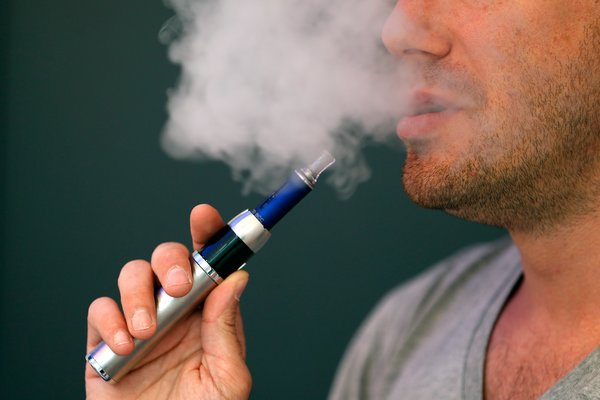
"Sorry, sir, but sort-of-looking-like-you're smoking's not allowed in here, and besides, a phony study will be finding it deadly any day now."

“Sorry, sir, but sort-of-looking-like-you’re smoking’s not allowed in here, and besides, a phony study will be finding it deadly any day now.”

Little noted in the news winds was the fact that a major study reported in the Journal of the National Cancer Institute found “no link between the disease and secondhand smoke.” Oh!  Well, never mind then. The supposed deadly effects of second hand smoke gave hoards of health-policing citizens leave to not only be obnoxious and confrontational–“You have no right to pollute my lungs!”—but also to ban a legal consumer product in public places as well as to stigmatize anyone using the products as selfish sociopaths perpetrating slow-motion serial murder.

The second-hand smoke theory always seemed too convenient to me. Many years ago, I permanently soured my relationship with the head of a large Washington association, a non-smoker (as am I, except that I don’t presume to tell others what legal products to entertain themselves with), by opposing his ban on smoking in meetings and offices (and, eventually, his employees’ own homes) because he thought it was dangerous.  He trumped me by producing a couple of fishy studies that, it appears, were in fact as fishy as I suspected at the time. I would like to see a call for accountability on this: how did data now shown to be completely without factual basis manage to surface, become accepted in the regulatory establishment, and be used to bully smokers for decades?

And if you think this reminds me of the over-hyped scientific “consensus” on global warming and climate change, you are exactly right. Continue reading

Ethics Dunce: Actress Jennifer Lawrence

Walters and Lawrence

Jennifer Lawrence is a young break-out movie star. She’s talented and charismatic. Now she need to learn that people pay attention to what celebrities think and say, too much so, in most cases, and she either needs to improve her knowledge base to say, 7th Grade level, exercise judgment by not spouting irresponsible and ignorant opinions as if the national media was a typical blog comment thread, or shut up about anything weightier than what it is like to work with her co-stars and what she eats on location.

I point this out because, in a regrettable instance of the aged fool interviewing a newly-minted one, Barbara Walters—who just told Piers Morgan, on the topic of Barack Obama,  that “We thought that he was going to be – I shouldn’t say this at Christmastime, but – the next Messiah—-interviewed Lawrence for Barbara’s upcoming  “Most Fascinating People of 2013” TV special, and Jennifer opined,

“I just think it should be illegal to call somebody fat on TV. If we’re regulating cigarettes and sex and cuss words because of the effect it has on our younger generation, why aren’t we regulating things like calling people fat?” Continue reading

Ethics Quiz: Awarding An Accused Rapist The Heisman Trophy

jameis2Heisman Trophy winner Jameis Winston was cool, collected and funny delivering the “Top Ten” on David Letterman last night, but to me, the hijinks seemed out of sync with reality, fairness and justice somehow.

The 19 year-old-Florida State University star quarterback became the youngest Heisman Trophy winner ever when he was named college football’s most outstanding player Saturday night in New York. He is also the youngest accused rapist to be awarded the Heisman.

That award  symbolizes football’s ongoing ethics problem. The pro game’s brutal, uber-macho and “the ends justify the means” culture that has players maiming each other as the crowd cheers and multiple felons on the field in most games has reached into the lower reaches of football, with both colleges and high schools breeding arrogant, entitled jerks who get special treatment through their pampered academic careers and too often emerge from from the football machine as polished sociopaths. The Penn State horror story was a symptom of this. Is Winston’s award another?

It hasn’t been featured in many of the exultant stories about the Heisman winner, but a year ago, on December 7, he was accused of rape by an FSU co-ed. Last week the prosecutors—just in time for the Heisman!—declared that they had not found enough evidence to convict him, which means that they did not have enough evidence to ethically prosecute him. The accuser’s attorney, Patricia Carroll, immediately condemned the decision and the  investigation that led to it, detailing multiple irregularities in the the handling of evidence and testimony. Writes Slate’s legal reporter Emily Bazelon: Continue reading

When Evil Doesn’t Seem Wrong: The Post World War II Lobotomies

The recent, shocking discovery that the Soviet Union forcibly lobotomized thousands of World War II veterans when the battle-weary soldiers could not cope with the post traumatic stress created by the horrors of war reaffirms our convictions about the dehumanizing effects of totalitarian government.

Wait…did I say the Soviet Union? My mistake. It was our government that did this, and sent letters to their families like this one:

lobotomy instructions

From the Wall Street Journal this week: Continue reading

“When Will They Ever Learn?” Department: “Baby Emma” Déjà Vu

Preston and Baby Wyatt

Preston and Baby Wyatt

Once again, an unmarried father is trying to get the courts to award him custody of his child after the mother handed the child off to adoptive parents. This issue was recently examined by the U.S. Supreme Court in the case of Adoptive Couple v. Baby Girl, and on Ethics Alarms two years ago in its examination of the “Baby Emma” drama. Now it is in the news again, as Preston King, the 19-year-old father of “Baby Wyatt” fights for his child in the California courts

The details of these cases vary, as do the state laws governing them. In the Baby Emma case, for example, among the complexities were the fact that the state of the couple’s residence, Virginia, recognizes an unmarried father’s right to custody, while the state where the adoption took place, Utah, does not. All the cases have  in common a conflict between rights, law and ethics. Continue reading

Comment of the Day: The “I ♥ Boobies” Saga

Me too! Uh, all in the interest of breast cancer detection and awareness, of course. Wait, what did you think I meant?

Me too! Uh, all in the interest of breast cancer detection and awareness, of course. Wait, what did you think I meant?

As is often the case, this topic interests me more than it appears to engage Ethics Alarms readers, so I was thrilled to see the following comment by Ulrike, who seems to share my belief that “Keep A Breast” Foundation is the ethics villain of this First Amendment skirmish, choosing buzz and cheap publicity over responsible messaging and being willing to throw well-aimed, legally immune monkey wrench into the classroom as well. 

Here is the Comment of the Day by Ulrike (who also has amassed a bumper crop of Ethics Alarms brownie points by being the blogs most determined volunteer proof-reader) on the post  The “I  ♥  Boobies” Saga.

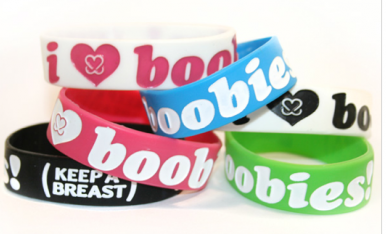
I beg anyone’s pardon if you may find this off topic, but I really need to vent my anger about these bracelets: The message that these bracelets are sending out is not “Save your life by having regular check-ups!” but “Women are perceived as having breasts first, and subsequently as a person”. All this bracelet manages to do is to reduce women to their sexual attractiveness while fighting for their very lives. Well done, “Keep A Breast” Foundation. I wonder what bracelets girls and women who fell victim to aggressive breast cancer and lost one or both breasts are supposed to wear. Maybe “Don’t got boobies you can love anymore”? Continue reading

The “I ♥ Boobies” Saga

boobies bracelet

Some time in the foreseeable future, we may have the pleasure of reading the various opinions of sages like Antonin Scalia and Ruth Bader Ginsberg regarding the import of bracelets bearing the message, ” I  ♥ Boobies,” and whether it is a constitutional violation for public schools to ban students from wearing them. In August, the Third Circuit U.S. Court of Appeals rejected Pennsylvania’s’ Easton Area School District’s  prohibition of the breast cancer awareness bracelets on the grounds that they were potentially disruptive and inappropriately vulgar.

In late October, the District voted  authorize the district’s solicitor to file a petition with the U.S. Supreme Court seeking to have the high court hear arguments in the case. The controversy has been going on for three years, has cost the district  thousands of dollars in litigation costs that should have been spent on education, and will result, you can bet, in even more egregious expansion of vulgar language in the schools.

This easily avoidable Ethics Train Wreck occurred when two middle school students in Easton wore the bracelets to school with their parents’ permission despite a school ban that called them “distracting and demeaning.”  ETHICS FOUL #2  School is about learning and facilitating learning, not making an effort to intentionally pick fights  in the shadowy realm of First Amendment law. Why did the parents do this? Are the provocative bracelets really essential school fare? Will their presence in the schools have a measurable impact on breast cancer awareness? Was the ability of the girls to wear the bracelets, and their opportunity to bend the school to its will worth all the cost, time and disruption this defiance of a dress code was likely to cause a legitimate utilitarian trade-off?  I don’t think so. Continue reading

The Federal Government Apparently Finds Ethics Suspicious, And Other Alarming Developments

And not just ethics—music teacher ethics.

Thank God we have a federal government poised and ready to come down hard on monopolist schemers like her...

Thank God we have a federal government poised and ready to come down hard on monopolist schemers like her…

Like many professions, music teachers regard it as uncollegial, unprofessional and wrong to poach another music teacher’s clients—that is, little Marvin who’s learning the violin, or little Patrice who is practicing the piano. Thus the tiny Music Teachers National Association (MTNA) included a provision in its code of ethics condemning such conduct, and declaring that no ethical music teacher sets out to actively recruit another studio’s or teacher’s students.

Regulators are hired to regulate, which means, though big government fans refuse to admit it, that we have tax-payer funded government employees who spend their time looking for ways to justify their existence. One such employee at the Federal Trade Commission must have really been desperate, because the MTNA received an official letter from the FTC announcing that because of the association’s ethical ideals, the 22,000 member group of mostly piano teachers was under investigation for fostering non-competitive practices that would lead to price-fixing. Yes, the Feds find professional courtesy suspicious. Can’t have that.

This came as a shock to the association, since… Continue reading

Wait…The Judge And The Defense Attorney Were Having An Affair, And The Defendants Were Convicted Anyway? So What’s The Problem?

"Yes, counsel, I am throwing the book at your clients because I love you."*

“Yes, counsel, I am throwing the book at your clients because I love you.”*

The Georgia Court of Appeals has ordered new trials for five men convicted of serious crimes in Fayette County because their trial judge was having an undisclosed affair with defendants’ public defender.

Doesn’t  that seem strange to you? After all, the clients of the judge’s secret love were convicted and sentenced. Why should they get the benefit of  new trials when the judge’s evident conflict and judicial misconduct didn’t benefit them or harm them in any way (unless a judge making sure his lover’s clients get prison time is a quirky way to say “I love you” in the Peach Tree State). This isn’t like the horrendous Charles Dean Hood case in Texas, where a man was sentenced to death after a trial in which the state prosecutor was sleeping with the judge.

The Georgia judge-lawyer affair (and I thought Steven Bochco was making it all up!) came to light in 2010. Paschal English, who subsequently resigned as chief Superior Court judge, had been involved in a romantic relationship with assistant public defender Kimberly Cornwell, who has also moved on to new pursuits, ideally those that don’t require trust or ethics. A three judge panel recently agreed that this relationship, undisclosed and a clear cut ethical violation for both judge and attorney, required that there be new trials for Christopher Wakefield and Travion Willis on charges of armed robbery, kidnapping, aggravated assault and other crimes; William Nutt for aggravated child molestation and aggravated sexual battery; Rashad Arnold for burglary; and Calvin Boynton for armed robbery, aggravated assault, possession of a sawed-off shotgun and drug possession.

Hmmmm… Continue reading

Ethics Quiz: The Kidneys of Orlac

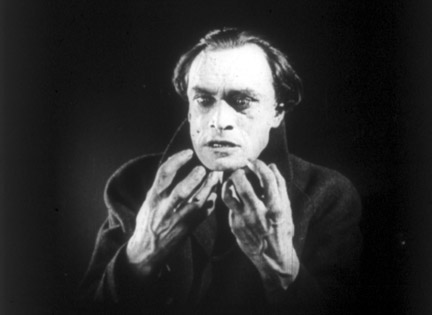
Kidneys, okay, maybe...BUT NOT THE HANDS! NEVER THE HANDS!!!

Kidneys, okay, maybe…BUT NOT THE HANDS! NEVER THE HANDS!!!

One individual who may be having complicated sentiments this Thanksgiving is Ronald Phillips, who is current residing on Ohio’s death row. He was supposed to be dead by now, but was spared at the last moment when Governor John Kasich issued a stay of execution to ponder Phillips’ unusual request, which had been rejected by prison officials. Phillips, you see, is not a nice guy, as his current address might suggest. He was convicted of raping and killing the three-year-old daughter of his girl friend. (They subsequently broke up. It was him, not her.) He had experienced a change of heart, however, or rather, wished to facilitate one. His sister needs a heart transplant, and he wants his to be passed over to her after his execution by lethal injection. He also wants his kidneys donated to his mother, who is on dialysis because hers are failing, and any other parts of him that might save a life given to others.

Presumably this will not include his hands, because there are a couple of horror movies, one old one in particular, about what happens after that operation, and they are pretty scary. There are no horror films that I know of, however, about the aftermath of getting an executed murderer’s kidney.

Yet.

Gov. Kasich, who is a nice guy, has explained that as heinous as Phillips’ crime was, the state should try to accommodate his desire to save innocent lives. The tentative plan is to hollow Phillips out, execute him in July, and then harvest anything that’s left.

Have you seen that movie, by the way?

Your Ethics Alarms Ethics Quiz:

Should such a request by a condemned prisoner be granted?

I’ll play devil’s advocate here, except that the advocate for the child rapist deserves the title more than I do. I think Kasich is confused, and that Phillips or his lawyers have figured out one more way to foil the criminal justice system. Continue reading