Ethics Dunce + Incompetent Elected Official = Censorship In North Carolina

Thank-you. I see no reason to believe that your funding is in any jeopardy, by the way."

Thank-you. I see no reason to believe that your funding is in any jeopardy, by the way.”

Central Carolina Community College pulled the plug on a public affairs  talk show airing on its radio station after a legislative assistant for State Rep. Mike Stone complained about an online post by one of the show’s hosts, criticizing the  Sanford, N.C. Republican.  Susan Phillips, Stone’s legislative assistant, wrote the school’s president, T.E. “Bud” Marchant, with pointed questions about the program’s affiliation with the school, funding sources, and budget.  Central Carolina Community College is one 58 community colleges in North Carolina that depend on the  legislature for funding, and Stone’s message was received loud and clear. Marchant shut down the show, known as “The Rant,” two days later. He also denied that Stone’s interference had anything to do with it.

Sure.

There shouldn’t be any question over what happened here. An elected official in a supposedly democratic nation decided to abuse his position and power as well as violate his oath of office  by using veiled threats and intimidation to stifle Constitutionally protected criticism of his job performance, and a craven educator caved to his pressure, violating his duty of respecting academic freedom and standing against efforts by the state to stifle free speech and political dissent. Marchant, if he had even a rudimentary backbone, would have told Stone’s minion to back off and reported this clumsy attempt at extortion to the area’s news media. Stone, if he had any integrity or respect for the founding principles of the United States, would have taken “The Rant’s” host’s criticism like an adult and a believer in free speech, and responded with a defense or a rebuttal, not by leaning on the radio station’s management. As for Marchant’s incredible claim that Stone’s complaints and the show’s demise were unrelated, even if that were true, his creating the appearance of censoring campus speech in response to government disapproval would be nearly as offensive as censorship itself, because it would still have the effect of chilling First Amendment rights.

I’m certain, considering what appears to be the generally low quality of state legislators across the country (which figures, given the abysmal quality of national legislators), that this kind of thing occurs far more frequently than we know. Let’s see if Stone’s bedrock, conservative supporters are sufficiently offended by his efforts to use government power to muzzle adverse opinion, and send him on a new career path. My guess? This incident won’t make any difference to his election chances at all, if voters like Stone’s politics and believe the radio host is a nettlesome lefty. We are constantly told how much of the country is willing to dispense with the Second Amendment, as if that proves that amendment is archaic. Sincere public support for the First Amendment is similarly shaky.

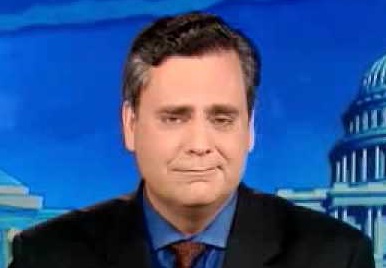
All right, let us agree that both legislator and college president are unqualified for their positions by virtue of their abandonment of their ethical obligations in their respective roles—Stone’s duty to respect free speech and observe proper limits on government power, Marchant’s duty to protect academic freedom and oppose government efforts to stifle free expression. That still doesn’t justify the elitist coverage of this story by Jonathan Turley, whose blog post first alerted me to it. For some reason, the noted civil rights expert and law professor believes that it is Stone’s wan academic credentials and humble work experience that explain his bullying tactics. Why else would Turley feel it is germane to note that Stone lists his education as ‘“Attended, Accounting, Central Carolina Business” and lists his experience as “Business Owner, O’’Connell’s Grocery Store”’ ? Why is any of that relevant? The law school professor is evidently a bigot, and believes that one’s ethical instincts and character are directly proportional to one’s degrees and work experience.

Rep. Stone is a citizen of the United States, and like every citizen, should be presumed to know about the Four Freedoms whether he graduated from Harvard or the School of Hard Knocks. There are plenty of well-credentialed bullies, fools and ignoramuses in elected office. It is sufficient to judge Stone by what he did; Turley’s implied ridicule of his educational and work background is a cheap shot, and reflects badly on the commentator, not his target.

_____________________________

Pointer: Res Ipsa Loquitur

Facts: NC Policy Watch

Graphic: Pozniak
Why The Gun Bill Deserved To Lose, and Why We Should All Be Glad It Did

A bad day for Machiavelli is a good day for America.

A bad day for Machiavelli is a good day for America.

Consequentialism rules supreme in Washington, D.C.; that is the tragedy of our political system. If unethical conduct is perceived as having a positive outcome, few in D.C. will continue to condemn the means whereby those beneficial and lauded were achieved. Worse, the results will be seen as validating the tactics, moving them from the category of ethically objectionable into standard practice, and for both political parties

Thus we should all reluctantly cheer the likely demise of the Senate’s gun control bill yesterday. The compromise background check provision that failed wasn’t perfect, but it would have been an improvement over the current system. Nevertheless, the post-Sandy Hook tactics of gun control advocates, including the President and most of the media, have been so misleading, cynical, manipulative and offensive that their tactics needed to be discouraged by the only thing that has real influence in the nation’s Capital: embarrassing failure.

The tainted enterprise begins with the fact that it should not have been a priority at this time at all. Newtown did not signal a crisis; it was one event, and that particular bloody horse had left the barn. The supposedly urgent need to “prevent more Sandy Hooks” was imaginary, but it apparently served the President’s purpose of distracting attention from more genuinely pressing matters, notably the stalled employment situation and the need to find common ground with Republican on deficit and debt reduction. Meanwhile, the conditions in Syria have been deteriorating and North Korea is threatening nuclear war: why, at this time, was the President of the United states acting as if gun control was at the top of his agenda? It was irresponsible, placing political grandstanding above governing. In this context, Obama’s angry words yesterday about the bill’s defeat being caused by “politics” were stunningly hypocritical. The whole effort by his party was about nothing other than politics. Continue reading →

Integrity Check For Homeland Security: Profiling At The Boston Marathon Bombing

...unless the government feels like it, in which case it's just fine. Got that?

…unless the government feels like it, in which case it’s just fine. Got that?

Shortly after the bombs went off in Boston, we were told that a “person of interest” was in custody and undergoing questioning. As detailed in a New Yorker piece, the young man who was apprehended and interrogated for five hours became a person of interest for one reason and one reason only: he “looked like a terrorist.” He was a Saudi national with a foreign name, and despite the fact that he was wounded in the blasts and acted no differently from any of the other horrified victims in the crowd, he was detained and his apartment was searched. Ultimately it was determined that he was innocent of wrongdoing, and he was released.

Oops! Never mind! Have a nice day!

Except I was under the impression that this practice, which is racial profiling beyond any question, was something this administration and the Dept. of Homeland Security rejected philosophically and practically. It is wrong, and it doesn’t work—or so those of us who are sick of going through invasive and time-consuming screenings at airports are told when we dare to suggest that there may be a better way than feeling up six-year-old girls and senile old men in wheelchairs. The conduct of agents and law enforcement officials in apprehending the young man for his garb, name and the color of his skin shows either that our government doesn’t really believe what it is telling us about profiling, or that it is willing to discard its human rights principles when the pressure is on. Which is it? I see no third explanation Continue reading →

Unethical Quote of the Week: David Drumm

“Gosnell is on trial for 7 counts of first-degree murder regarding the deaths of seven babies, and one count of third-degree murder for the death of a female patient. Many conservatives pundits think there should be greater media coverage. Be careful what you wish for.”

–—David Drumm, guest blogger on Jonathan Turley’s “Res Ipsa Loquitur,” arguing that scrutiny of the facts behind the Gosnell late-term abortion murder trial will show that pro-life protestors at Planned Parenthood clinics forced some women to enter Dr. Gosnell’s “house of horrors,” so conservatives should be eager to suppress the ugly story, just as the main stream media has done to avoid sparking an emotional national debate over the realities of abortion.

I'll put up a more flattering photo, Professor Turley, when you stop letting unethical people write on your blog.

I’ll put up a more flattering photo, Professor Turley, when you stop letting unethical people write on your blog.

A statement like Drumm’s above is signature significance. I don’t need to read another word to know that this is a commentator driven by politics and tactics rather than principle. Why is someone like this guest blogging on Jonathan Turley’s website? Turley is a legal scholar, an ethics expert, and everything Drumm is clearly not. He does not take knee-jerk ideological positions; his commentary is not partisan, and he is a civil libertarian. Civil libertarians do not endorse media manipulation of the news in the pursuit of partisan agendas, which is exactly what Drumm does here. Continue reading →

Ethics Quiz: The Case Of The Creepy Student

Muse and Artist, Victim and Harasser, or Censor and Victim?

Muse and Artist, Victim and Harasser, or Censor and Victim?

Joseph Corlett’s essay, though I have not found the full text of it,  is undoubtedly creepy.

In fall 2011, the 56-year-old countertop refinisher was taking a writing course at the Oakland University in Rochester, Michigan. His teacher, Pamela Mitzelfeld, gave the class an open writing assignment for their journals, and, Corlett says, assured them that any topic was acceptable, with no-holds barred.  She said, Corlett’s lawsuit now asserts, that she wanted “the raw stuff.”

That’s just what she got. Corlett wrote an essay called “Hot for Teacher,’ inspired by a Van Halen song by the same name, describing how his sexual attraction to Mitzelfield was irresistible. “Tall, blonde, stacked, smart and articulate…” he described her in his daybook. “Are you kidding me? I should drop right now. There is no way I’ll concentrate in class especially with that sexy little mole on her upper lip beckoning with every accented word. And that smile.”

Mitzelfield alerted university officials, saying that Corlett’s essay frightened and upset her, and that she refused to teach him any further. Moreover, she insisted that either he be ejected from the campus, or she would quit herself. He was escorted out of Mitzelfeld’s class a few days later by the Oakland University Police. A sexual harassment charge was dropped, but a hearing by university officials found Corlett guilty of intimidation and he was expelled for the rest of the semester. University officials allegedly told him that he would be arrested if he returned to the campus. His suspension lasts for  three semesters, and he must go through sensitivity counseling before he can reapply.

Aided by The Fire, Corlett is now suing for over two million dollars in damages, maintaining that his First Amendment rights have been infringed. “The university has essentially issued a straightjacket to every writing student to protect the delicate sensibilities of faculty and staff,” says Greg Lukianoff, FIRE advocate. The legal issues look pretty clear: Oakland University has a terrible case. “Write anything” means write anything, and certainly cannot mean “write anything except something the instructor will freak out over, in which case we’ll fix you good.” If it is true, as Corlett alleges in his lawsuit, that Mitzelfield made no objection to other sexually themed compositions by him that referred to her, his treatment by the school is indefensible. That’s not the ethical question, however. That question is your Ethics Alarms Quiz for the day, and goes like this: Conceding that Oakland University mishandled the episode…

Was Corlett’s essay ethical and blameless?  Continue reading →