Yes, ProPublica is generally a one-way-only ethics watchdog, but that way is still worth watching.
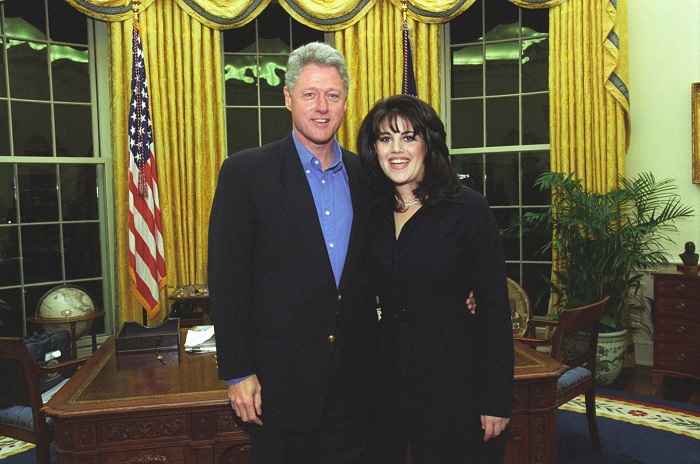
It is reporting that Senator Joni Ernst (R-Iowa), had a romantic relationship with a legislative affairs official for the Navy. According to two sources with knowledge of an inspector general’s nvestigation, this was not the GOP combat veteran’s only inappropriate relationship with military personnel. Earlier this year, the Air Force revealed that Maj. Gen. Christopher Finerty, who oversaw its lobbying before Congress, had inappropriate romantic relationships with five women, including three who worked on Capitol Hill. One of those, though the names in the report were redacted, was allegedly Ernst. Because the Senator is an influential voice in Congress regarding the Pentagon and she sits on the Senate’s Armed Services Committee which has a crucial role in setting its annual budget, these are troubling accounts.
ProPublica says that neither Ernst nor the two military officers were married at the time. Current Senate rules do not bar lawmakers from entering into romantic relationships with lobbyists or other legislative advocates, although why I don’t know. Nonetheless, government employees and officials, like judges, are supposed to avoid appearances of impropriety.” “Ethics experts say such relationships can create a conflict of interest,” ProPublica tells us. “A former legislative affairs official for the military” tells ProPublica that “From an ethics standpoint, [these relationships] are severely problematic.”
“Experience the future of companionship with an AI girlfriend chatbot. Designed to listen engage and respond with intelligence and warmth this virtual partner offers meaningful conversations, emotional support, and personalized interactions. Whether you seek a friend a confidante or just casual chats this ai girlfriend chatbot companion is always there for you anytime anywhere. Enjoy a unique ever-evolving connection powered by artificial intelligence.”
I think a blow-up doll is more ethical. The product is as perilous as crack or heroin, and destined to cripple and manipulate vulnerable, lonely people, like, say, me. It is the logical and inevitable next step from 800 sex chat phone lines. They can’t be made illegal; someone will undoubtedly argue that AI girlfriend chatbots can be therapeutic and even, on balance, capable of accomplishing more good than bad.
Rationalization #64 A, The Cheater’s Defense or “It Didn’t Mean Anything” is a rather narrowly applicable addition to the list: it arises when a half of a supposedly committed couple has sexual relations with a third party. I have entered it as a sub-rationalization to the infamous Yoo’s Rationalization (“It isn’t what it is”) because betraying a spouse, partner or lover does mean something, probably many things.
The Ethicist received a question from, as always, “Name Withheld,” whose partner had cheated on her and used that phrase, “It didn’t mean anything.” She asks, years after the event, “I still don’t understand why cheaters use the phrase ‘‘(She/he) didn’t mean anything to me.’ How does one even respond to a statement like that?”
Kwame Anthony Appiah, in his usual measured fashion, says that the line “is how cheaters try to reassure their partners that their infidelity wasn’t going to lead to a serious relationship and needn’t spell the end of their existing one; that a fling was ‘just sex.’’’ But that still doesn’t translate to “It didn’t mean anything.” Having sex out of one’s committed relationship probably means, among other things,
The cheater isn’t as committed as he or she had led the betrayed partner to believe.
The cheater cannot be trusted.
The cheater has a drinking or substance abuse problem.
The cheater has some apparent needs that the supposed love of his or her life isn’t supplying
The cheater lacks some degree of impulse control.
The cheater is an easy mark for an aggressive come-on from an attractive member of the opposite sex (in other words, the cheater is a typical heterosexual male.)
Of course it meant something. The statement, like many rationalizations, is a lie. “The Ethicist” concentrates on what the use of the rationalization means: that the cheater, in addition to cheating, is manipulative jerk. “Cheaters demean the people they cheated with by dismissing them as meaningless, demean their partner by implying their pain is unjustified and demean their relationship by saying that they betrayed their beloved’s trust for a liaison they insist was insignificant,” he concludes.
Here’s now sinister this ad is: I must have watched it six or seven times before I thought, “Hey…wait a minute!”
The male “bad date” in the ad is so disgusting a viewer is half-hoping the woman pulls out a .44 and shoots him right between the eyes. This is masterful manipulation at work…he begins with an insult framed as blame causing him disappointment: “You’re too short.” Asshole. Then he reveals his narcicissm and boastfulness, showing the selfie “by the dumbbells.” Giant asshole! Next the air-drumming comment…UNBELIEVABLE asshole! When he gets to the bit about forgetting his wallet and “Sugarmamma,” the viewer is seeing red, and feeling that the victim of this toxic creep is being noble by just sneaking out rather than setting him on fire.
But she isn’t. She’s being an asshole too, just a slightly better one. Leaving the table on false pretenses to escape is cowardly and indefensible. Moreover, someone who misbehaves as outrageously as the “bad date” needs to be told just clearly how unacceptable his conduct is and why, since he obviously doesn’t know. His next victim will at least partially be the runaway date’s fault.
The commercial also showed an anti-female bias by making the bad date a male and his victim female. A genders switched version would inspire at least a substantial reaction from viewers of “What a weenie! The jerk doesn’t have the guts to confront that jerk!” But teh woman in the ad is also a weenie—it’s just that the Hyundai marketers are calculating that running away from confrontations and unpleasant situations is a girl thing, and socially acceptable.
No, it really isn’t. This is not only a stereotype, it’s a damaging one. Why haven’t we elected a female President yet? Accumulated cultural poison like this commercial is one of the reasons.
Incidentally, I hope that actor who plays the asshole was well paid for his performance, because he may end up dying single and alone as a result.
An Australian woman had been dating her husband-to-be for a few months in Melbourne after meeting him on a dating app. Then he invited her to a “white party” in Sydney, telling her to bring a white dress to fit the theme of the event. When she arrived at the party venue, the only other people there were the boyfriend, a photographer, the photographer’s friend, and a marriage officiant. The friend explained that he had planned a fake wedding to increase his social media following (he has 17,000 followers on Instragram) and he needed her to play the bride.
She is, I should interject here, an idiot, because she shrugged and said, “Ok!” She did call a freind to ask if there were any risks to being a bride in a “fake wedding,” and the friend said, “Nah! Go ahead!” Here’s another pro tip: if you are an idiot, the chances are high that your friends are idiots too.
Norfolk Southern’s board has fired CEO Alan Shaw after an investigation found that he has been “engaging in a consensual relationship with the company’s chief legal officer,” the colorfully named Nabanita Nag. She was also canned from her positions as executive vice president corporate affairs, chief legal officer and corporate secretary.
Those are the lovebirds above.
Because this is a firing for cause, Shaw might have lost millions of dollars in what otherwise would be a “golden parachute.” This kind of vertical messing around is always stupid and unethical (but so romantic!), but it is particularly reckless for a CEO who is on metaphorical thin ice already, for then the “King’s Pass” is not going to be in play.
His two-year tenure included bitter labor negotiations that nearly resulted in an economy-crippling strike and the horrific derailment in East Palestine, Ohio that released tank cars full of toxic materials. This was not a good time for the company’s chief executive to go all Woody Allen.
But there is never a good time. When Cupid’s dart strikes, the only professional, ethical decision is to suck it up and resist, or play Edward the Eighth and abdicate “for the woman you love.”
The fact that Shaw was married to someone else should have giving him a strong hint that his ethics alarms should be ringing.
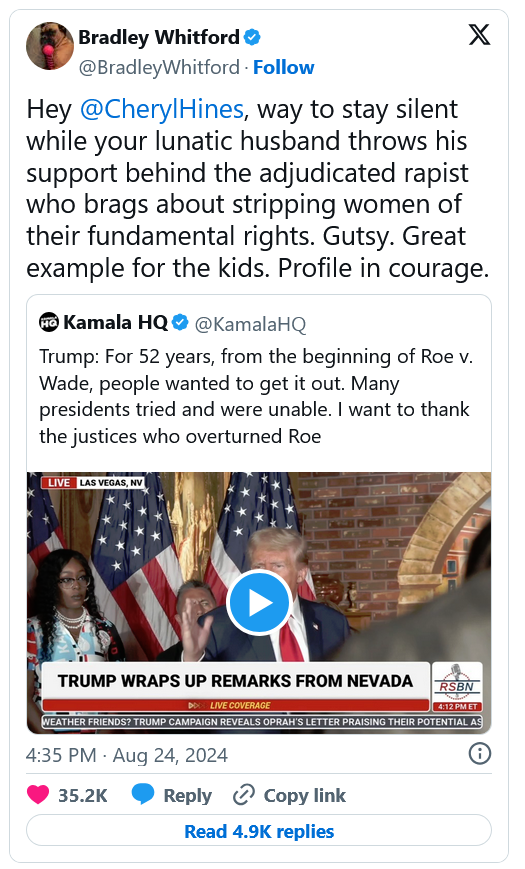
Just remember, the Ethics Alarms position is to strive as much as possible to remain unbiased regarding a performer’s art regardless of his or her demonstrated political orientation or revealed personal character flaws. I enjoy Bradley Whitford as an actor.
But only an unethical, bullying asshole would write a tweet like that.
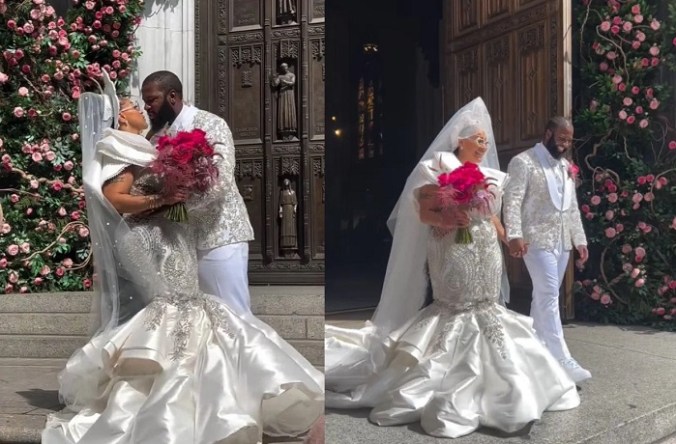
This couple really and truly charged their wedding guests $333 per head to attend their wedding. You know, to help pay for tasteful accoutrements like that lovely wedding dress. An astounding 60 friends and relatives out of the 350 Nova and Reemo Styles invited paid the price, which I guess means that venal people have friends who don’t object to venality. Or that ethics dunces have friends who can’t recognize despicable conduct when they see it.
If some alleged friends of mine asked for $333 dollars for the honor of witnessing their wedding, I would send a lovely wedding cake with “Bite Me!” lovingly written on the top.
18-year-old Sumaya Thomas of North Liberty, Iowa was supposed to go on a blind date with a young man she had met on an online dating app. But by the time her date arrived at her abode to pick her up on the evening of June 16, Thomas had changed her mind. Did she tell him that to his face, like any normal, decent human being, apologizing for wasting his time and dashing his hopes? Oh noooo. Did she text him, the weenie’s way out? No. Did she just leave him on her doorstep, knocking and buzzing while she hid under the bed? No. Did she sneak out the back door? No, not that either.
Instead, Thomas called 911 and said her abusive ex- was outside harassing her because she was seven months pregnant with their child. She said she needed the police to get him off her property as he was threatening to “hit, punch, kick and stab her.”
Nice! A police car was dispatched, and when officers arrived they found an apparently calm, confused young man in the process of walking away. Upon being questioned about the situation, he explained that he had arrived to go on a date with the woman inside the house, and that he had only met her online a week ago.
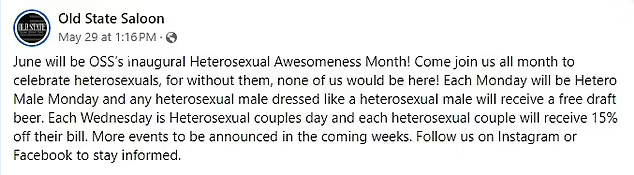
Naturally, the reaction was explosive on both sides of the, uh, well, both sides. “News about Heterosexual Awesomeness Month has spread worldwide!,” the bar announced in a follow-up social media post. “Many people have asked how they can support us. Owner Mark Fitzpatrick is excited to build a 25,000 sq ft community event center nearby to host events, provide amazing and wholesome food, support conservative ideas, and help true conservatives get elected. So, we started a GiveSendGo fund. For the haters spewing venom, perhaps you feel bad and want to contribute a few dollars now? For the rest of you reasonable people, if you feel inclined to give, please do! May God bless you!”
The Old State Saloon in in Eagle, Idaho, not far from Boise, and its promotional stunt is the work of new owner Mark Fitzpatrick, a South California transplant who bought the bar in 2023 and who describes himself as “a Christian, conservative, Constitution supporter, retired police officer, and family man.”
Ew!
The fact that this promotion is taking place during “Pride Month,” when everyone is supposed shout out hosannas for minority sexual practices while festooning everything in rainbows, means that it is also being taken as a shot across the hallowed bow of wokeness. LGBQ Nation snarks, ” Fitzpatrick claims to have banned a couple of dozen hateful negative Facebook commenters for ‘using horrific words, expletives, using the name of the Lord in vain, etc,’ but it’s hard to tell one heterosexual man’s hate from another’s unbridled excitement.”
Your Ethics Alarms Ethics Quiz of the Day is…
Is “Heterosexual Awesomeness Month” unethical?
I’m open to being convinced otherwise, but I think it is a divisive tactic, essentially tit for tat, but inevitable and perhaps necessary. Once upon a time “days” and “months” designated to celebrate particular components of the American melting pot were benign and opportunities for all to signal appreciation for our component cultures. The practice quickly curdled into group chauvinism and anti-majority bigotry with the continued celebration of Black History Month, Women’s History Month and Pride Month. Those groups once arguably needed their “months” to restore self-esteem after long being discriminated against, but now they just resonate as “Who needs whites and men?” exercises in division.
As an aside, anyone who is “proud” of their sex life has problems. I remember when Grant was tiny and we watched “Sesame Street” together, I was consistently amused by a oft repeated number in which a bovine Muppet sang, “I’m proud, proud, proud to be a cow!” “Pride Month” strikes me as similarly excessive. OK, so you’re gay. I don’t care. I’m bald. What do either of us have to be “proud ” about?
If it is unimaginable to have a “Heterosexual Pride Month” or “White Achievement Month” or “Hooray for Men Month,” and it is, then it’s time for those other month-long celebrations to be retired as past their pull dates, and now doing more harm than good.
To that end, I suppose “Heterosexual Awesomeness Month” has a certain “So how do YOU like it?” appeal. Nevertheless, two wrongs don’t make a right.
Added: I have to include that “Proud to be a Cow” song. Here you go…



 Ethics Alarms