“Oh The Humanity!”

Today is the anniversary of one of the most vividly recalled disasters in U.S. history.  On May 6, 1937, the German passenger airship LZ 129 Hindenburg, a flying equivalent of The Titanic,  burst into flames while trying to dock with its mooring mast at the Naval Air Station in Lakehurst, New Jersey. The conflagration was captured in spectacular and now iconic newsreel footage, as well as in dozens of photographs.

Many  are surprised to learn that there were only were 35 fatalities in the explosion, 13 passengers and 22 crewmen,  among the 36 passengers and 61 crewmen on board (There was one fatality on the ground). The accident looked far more horrible than it was.

The appearance of the accident was so spectacular that it ended the passenger airship business That’s a  classic example of the Barn Door Fallacy, in which the reaction to  predictable and often inevitable disasters leads to  emotional over-reactions, as if by retroactively making an event impossible it can be reversed. Airships were a safe mode of travel (and a luxurious one: remember “Indiana Jones and the Last Crusade”?) in good weather when they were filled with Helium. The Hindenburg and other German Zeppelins used highly flammable hydrogen, making them flying tinderboxes, just waiting for a spark. But once the fireball that the ship became was gasped at world wide, no  explanations could make the visceral image recede. Nobody wanted to get on those things again. Continue reading

Comment Of The Day: “The Pandemic Creates A Classic And Difficult Ethics Conflict, But The Resolution Is Clear, Part I: Stipulations”

Matthew B fulfilled my fervent wish (as did Michael R, whose comment will be going up later today) by dealing with the risk assessment issue authoritatively and clearly so I wouldn’t have to.

Here is his Comment of the Day on the post, “The Pandemic Creates A Classic And Difficult Ethics Conflict, But The Resolution Is Clear, Part I: Stipulations”:

We’re seeing the problem with the vast majority of people’s inability to grasp statistics, and in particular the statistics of risk. That’s the problem here – with the Wuhan flu, we’re talking about something that – at most – could kill 1 in 100 people. We’re seeing higher numbers for death rates in many places, but they’re talking about case fatality rate. 1% in the US means 3 million people die, and we’re at 70K dead as of this morning in the US, 3.2 million short in 1% of American’s dying. Yes, I get many haven’t been infected and many more will die, but we’re absolutely on a trajectory far short of a 1% fatality rate.

As soon as you’re talking about numbers that low, far too many people’s brains stop being logical and emotion takes over. The tell for this is the saying “if it just saves one life.” People say that, but they’re turn a blind eye to so many things that kill people an no one addresses. Because there is no critical thought being applied, they remain illogical and darn near impossible to considering any position other than those formed by emotion.

We take risks every day that we don’t think about and we ignore things that people die from because of normalization of that risk. If you’re under 45, your odds of suicide, homicide and accidents killing you outweighs your risk of dying of health complications. If you’re under 25, that risk is three to one that it’s something other than a health condition that kills you. Even amongst the health conditions, there are many that are swayed by our own conduct and we ignore that.

Through most of the existence of the automobile, it’s ranked as the number one cause of premature death in the United States. Only in the last decade has the rise of the opioid epidemic managed to surpass the death rate of automobile fatalities. The opioid epidemic is a harder one to discuss, so I’ll start with the automobile. Automobile deaths are ignored, few people are afraid to get into a car because it might kill them. There are marginal improvements in automobile safety, but many of the key contributors have had little improvement. Mass use of air travel has had about 1/2 the time of the mass use of the automobile, but air travel has had massive improvements. At first there were many crashes because airplanes broke and directly or indirectly through the distractions they caused resulted in mass fatalities. That got fixed first. Then aviation regulators figured out that a growing fraction of accidents were pilots flying perfectly good airplanes into the ground or each other. They borrowed ideas from the nuclear industry, and instituted many policies that have resulted in a remarkable fall in airline fatalities. Do you realize the last time an passenger aircraft went down in the United States was November, 2001? 19 years. The only other crash was a 777 in San Francisco that stalled on approach, and most of the passengers came out with no or minor injuries. That’s truly remarkable. Continue reading

The Banjo/Damien Patton Affair: Can You Ever Escape A Disgraceful Past? Should You Be Able To?

Damien Patton is the the 47-year-old co-founder and CEO of the rising data gathering startup Banjo. The combination of the company’s success and its founders’ inspiring life story has made him the subject of many tech media and business publication profiles, for it is the kind of gutter to boardroom story on individual bootstrapping America has always celebrated.  He has described an abusive childhood that caused him to run away from home at age 15. He joined the U.S. Navy, then worked as a NASCAR mechanic before learning the craft of crime-scene investigation.  He  learned to code, and then became a co-founder of Banjo as he raised  nearly $223 million in venture capital for the Utah-based company.

However, Americans don’t like their rags-to-riches stories to begin too deep in the gutter. The tech news outlet OneZero uncovered transcripts of courtroom testimony, sworn statements, and more than 1,000 pages of federal records revealing that before he turned to coding, Patton was a member of the Dixie Knights, a Ku Klux Klan group active in the Nashville area in the late 1980s and early 1990s,  and not a passive one. He was was involved in shooting up a synagogue, for example. Understandably, this detail was something Patton did not highlight in his inspirational speeches before aspiring entrepreneurs.

The question is, now what? What does this mean today? What should it mean? Continue reading

Is There An “Incompetent At Zoom Porn Site-Frequenting Teacher Principle”?

No, but apparently the University of Miami thinks there is. The school’s business analytics professor John Peng Zhang was teaching a remote class on Zoom when he inadvertently revealed a bookmark on his internet browser that read, “Busty college girl fu…” to the class. One student pointed out the tab to others and  the students began taking photos and videos. Someone sent a complaint to the University’s ethics hotline.

The incident was investigated by the Office of the Provost, its Title IX investigator and the Miami Herbert Business School. A statement by the university said that the “University of Miami aggressively investigates all complaints of inappropriate behavior or sexual harassment,” according to NBC News.

Zhang resigned under duress or was fired.

Some students who have registered a petition on Change.org  laid out some of the reasons  why this decision is unfair: Continue reading

I Know We’ve Got Enough To Worry About, But…How Much Is The Government Ethically Obligated To Tell Us About UFOs?

https://www.youtube.com/watch?v=WNQrHKaDAiM

Today the Pentagon shared three videos taken by US Navy pilots that show  what the military calls “unidentified aerial phenomena,” and what we have usually called “UFOs.” The videos, from November 2004 and January 2015, have been on the web for a while, and have turned up in various documentaries and even  on the History Channel and elsewhere.

The three videos can be downloaded here. (I’ve seen them. Cool!) The Department of Defense stated that the videos were finally being made public after it was determined that they did not reveal any “sensitive capabilities or systems,” nor would releasing them “impinge on any subsequent investigations of military air space incursions.” Continue reading

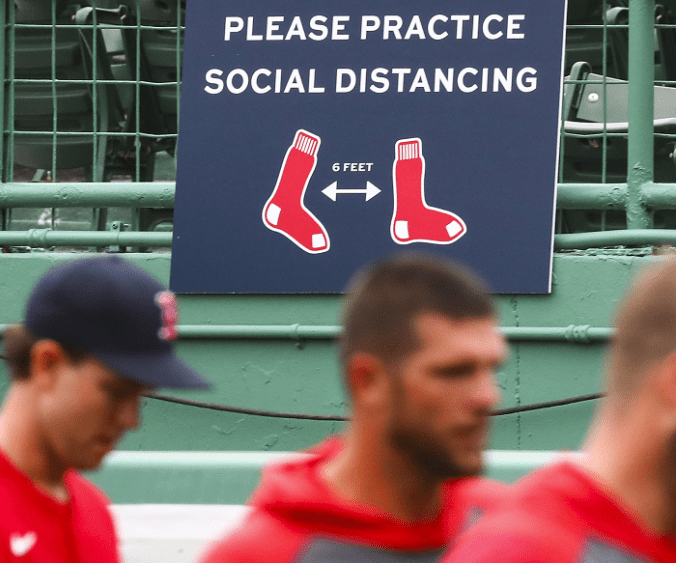
Baseball May Be Missing, But Baseball Ethics Marches On; The MLB Verdict On The Boston Red Sox Sign Stealing Allegations

If you are just joining us, the Houston Astros (if you don’t know that’s a baseball team, then none of this will make sense to you, and neither does the United States in all likelihood) were slammed by Major League Baseball after it was determined that the team, primarily through the efforts of then-coach Alex Cora and veteran player Carlos Beltran, systematically utilized cameras at home games to steal catchers’ signs to opposing pitchers and relay them to Astros batters during their at-bats. This, the investigation found, continued through the 2017 season, post-season and World Series, which the Astros won. (Ethics Alarms covered the cheating scandal from many aspects, here.) The punishment meted out to the Astros was substantial, though not as severe as some, including me, would have liked. I think the team should have been stripped of their 2017 World Championship.

Shortly after the Astros scandal was first revealed by the baseball news media, the next year’s World Champions, the Boston Red Sox, were accused of another sign stealing scheme during 2018, one that involved using the team’s video replay equipment, which is near the dugout during games, to study the opposing team’s signs and relay them to batters. This seemed especially ominous since the bench coach  who had been identified as the mastermind behind the Astros scheme in 2017 was the manager of the Red Sox in 2018, and had led them to a record-setting World Series run.

MLB interviewed Red Sox players and management in a mysteriously long investigation, and only yesterday revealed the results and the sanctions. Boston’s video replay system operator J.T. Watkins was suspended without pay for one year, and banned from holding that same position with any team. Boston was stripped of the  its second-round draft pick in the2020  amateur.  Alex Cora, who was fired by the Red Sox in January after the revelations from the Astros investigation,  was suspended for this year, but only for his Astros conduct in 2017. The investigation exonerated him of any role in the Sox matter, which MLB found to be confined to Watkins acting on his own intermittently, and a few players. Continue reading

Saturday Ethics Warm-Up, 4/18/2020: The “ARRGGH!” Edition

A weekend?

Frankly, at this point, I can’t tell the difference.

1. ARRGH! Trump Calls For An Insurrection! I must say, having a President who is 12 does create problems. The President’s juvenile “Liberate Michigan!” tweet naturally had the “resistance” in an uproar; the Washington Post even dug up a lawyer from the Obama administration who was willing to write an op-ed seriously arguing that he had advocated the overthrow of the government. Oh, great, I can’t wait for Adam Schiff to try to impeach him for a tweet that had the gravitas of graffiti.

If one concedes that the President should tweet at all—and since he refuses to use any filters whatsoever, I don’t concede that; I doubt that anyone who wants to maintain credibility and trust should tweet—then urging the states to start nudging the economy back into operation is a legitimate objective, and so is opposing outrageous meat-axe over-reach by governors. mayors and police that abuse civil rights—like banning the sale of seeds, or being alone in a car. However, as I am sick of saying, the President’s mode of communication does not include nuance, which makes tweets like yesterday’s irresponsible and incompetent

2. “ARRGH! I’ve been infected!”  When the going gets tough, the tough get scamming. In Arcata, California, a fake on-line ordering webpage named “Order Hero” copied web pages from local restaurants including phone numbers, addresses and actual menu items. Customers accessed the  website through Google, then provided credit card information to order food.  When the victims arrived at the restaurant to pick up their order, they learned no such on-line ordering services existed.
Continue reading

Perspective From Michael Crichton On Experts And Predicting Crises

Michael Chrichton was a unique and relentlessly positive influence on our culture, popular and otherwise, before his death in 2008 at the age of 66.  Trained as a doctor and scientist, he applied his knowledge, his brilliance, and more importantly, his remarkable powers of lateral thinking and unbiased analysis, to myriad  fields, always aimed at a form of public education that was fueled by entertainment.  He taught, he wrote best-selling novels, he was a futurist, he directed movies, he created TV shows.   Mostly he thought, and through the fruits of his thought, made ordinary people smarter, at least those smart enough to pay attention. Yes, he thought a lot about ethics. You can learn more about his career and interests at his website, here.

Michael Crichton was especially interested in threats and crises, how they happen and our reactions to them. His first hit novel, “The Andromeda Strain” was about a deadly virus. He would have been very helpful right now. Though he was himself an expert on many topics, he was wary of the abuse of expertise; though he was a visionary, he was was a vocal skeptic of predictions and assumptions. Crichton, I think, would have found the current weaponizing of hindsight bias to find a new way to demonize President Trump as revolting and dishonest as I do.

In this 2002 lecture, Crichton discussed the media’s obsession with speculation, and society’s unwarranted confidence that the future is predictable, especially when experts are doing the predicting. Some selections: Continue reading

Ethics Dunces: The U.S. Congress. Again

Actor Mark Ruffalo (he plays the Hulk in The Avengers  movies, but it wasn’t because of that role) was invited to testify before Congress last year on public policy involving  public health, chemistry, toxicology, and epidemiology. He has no expertise in these areas at all. The reason was that he starred in “Dark Waters,” which I wrote about here.

Ruffalo is a 9/11 truther, believing  that the U.S. government helped destroy the World Trade Center. That would be enough for me to ding him as an authority on anything, but he has embraced other conspiracy theories as well, like this one.

Never mind: he was presented to the public as an authority on pollution whose opinions on environmental matters have weight. The don’t, and they shouldn’t.

This is a repeat offense. Members of Congress are addicted to the unprofessional and insulting stunt of inviting actors and performers to testify as substantive witnesses on topics that they acted about in movies. As a professional director, I can state with absolute certainty that if an actor is really an expert in something their character was supposed to experience or know something about, 1) that actor is very unusual, and 2) there will still be thousands of real authorities who know a lot more.

Nevertheless, Congress keeps doing this, apparently believing that the public is so naive and gullible that they really believe that because a performer credibly pretends to know what a script-writer prepares to make them sound like the know, they really are experts. Sadly, a lot of the public does believe that. (More sadly, a lot of actors do too) Continue reading

Pandemic Ethics Potpourri: Spring Cleaning, Chapter 1

My files of potential and ongoing ethics stories and issues involving the Wuhan virus outbreak are stuffed to overflowing. I’m not going to have time to do the full posts many of these deserve, and the rest risk dropping into oblivion. Here is the first of several collections that will at least flag issues while allowing me to keep current…

1. Golf and the virus…

  • Three Massachusetts golfing enthusiasts, blocked from the links in their own state , were charged with misdemeanors in Rhode Island after going to extraordinary lengths to sneak into that state to hit the little white balls around. Rhode Island has issued a directive requiring all travelers to quarantine themselves for 14 days after entering the state. Gregory Corbett, 51, Tyler Pietrzyk, 22, and Nye Cameron, 22, determined to make it to the Meadow Brook Golf Course drove from Massachusetts to the smallest state, changed cars in a McDonald’s parking lot, and proceeded to the golf course with Rhode Island-issued plates to the club.
  • Right: right, we’re all in this together. Here’s Michigan Democratic Attorney General Dana Nessel in two tweets:

2. When the going gets tough, the tough get race-baiting. Black Americans are experiencing a significantly higher percentage of infections and deaths than other demographic groups, especially in big cities. There are many likely reasons for this, but this one is infuriating: Continue reading