Ethics Hero: Mark Cuban

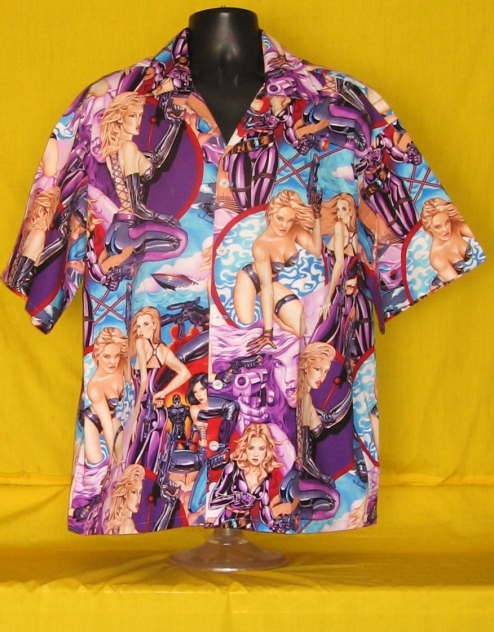
This is really stupid, but imagine if there's  a watch on it! Useful AND stupid at the same time! What a concept!

This is really stupid, but imagine if there’s a watch on it! Useful AND stupid at the same time! What a concept!

Billionaire Mark Cuban is an entrepreneur, investor, and owner of the NBA’s Dallas Mavericks, but in one of his more trivial enterprises (sometimes it appears that he is aspiring to be the next Donald Trump—now why would anyone do that?), he serves as a “shark” investor on the ABC TV reality show “Shark Tank.” There investors and nascent entrepreneurs compete to justify their brilliant new ideas to investors, and there Cuban recently distinguished himself as well as served as a much-needed cultural role model by calling out a fraudulent product while attempting to educate a stubbornly ignorant public.

One contestant, Ryan Naylor, hoped to succeed with what he called “a fashion accessory with health benefits.” Esso Watches, he said, restore the body’s “energy field” and improve sense of balance. You’ve seen the bracelets and necklaces that athletes wear and that work on the same theory, the theory being magic, or, if you will “negative ion technology.” When Naylor handed out samples of his product to the judges, Cuban refused to even take one, saying, “No, I’m allergic to scams. Seriously, this is not new. It’s been disproven. What you saw is the placebo effect. There’s athletes that wear it. It’s a joke. It’s a scam. It’s not real. I’m out. Okay. Thank you.”  Then, having been emboldened, the rest of the judges piled on: there was blood in the water, and you know how sharks are.

In one of the filmed asides to the camera, a discouraged and bitter Naylor blamed his failure on Cuban, who, he suggested, was so emphatic about the fact that his watch’s health claims were nonsense that nobody would challenge him.

Good. Continue reading

In Massachusetts, The Unethical Kind Of Prosecutorial Discretion

The DA explains why he's glad the law was broken. Wait...WHAT?

The DA explains why he’s glad the law was broken. Wait…WHAT?

Prosecutorial discretion is a critical aspect of the prosecutorial function. There are many good reasons for a prosecutor  to charge an individual with a crime in a particular case, and among the factors a prosecutor may legitimately consider in making this decision are, according to the American Bar Association’s ethical guidelines:

  • whether there is evidence of the existence of criminal conduct;
  • the nature and seriousness of the problem or alleged offense, including the risk or degree of harm from ongoing criminal conduct;
  • a history of prior violations of the same or similar laws and whether those violations have previously been addressed through law enforcement or other means;
  • the motive, interest, bias or other improper factors that may influence those seeking to initiate or cause the initiation of a criminal investigation;
  • the need for, and expected impact of, criminal enforcement to punish blameworthy behavior; provide specific and/or general deterrence;
  • provide protection to the community; reinforce norms embodied in the criminal law; prevent unauthorized private action to enforce the law;
  • preserve the credibility of the criminal justice system; and other legitimate public interests.
  • whether the costs and benefits of the investigation and of particular investigative tools and techniques are justified in consideration of, among other things, the nature of the criminal activity as well as the impact of conducting the investigation on other enforcement priorities and resources
  • the collateral effects of the investigation on witnesses, subjects, targets and non-culpable third parties, including financial damage and harm to reputation
  • the probability of obtaining sufficient evidence for a successful prosecution of the matter in question, including, if there is a trial, the probability of obtaining a conviction and having the conviction upheld upon appellate review; and
  • whether society’s interest in the matter might be better or equally vindicated by available civil, regulatory, administrative, or private remedies.

None of these suggest that the prosecutor’s personal sympathy with the motives of the lawbreaker is a sufficient or ethical reason not to charge when a serious crime has been committed. That, however, appears to be how Bristol County (Massachusetts) District Attorney Sam Sutter sees his role: arbiter and enabler of righteous criminal activity. Continue reading

Comment of the Day: “Mid-EthicsTrainwreck Observations On Ferguson”

China Protest

How much fire power should a democracy’s police forces have at their disposal? Is the trend toward militarization in urban police departments an inherent threat to our liberty? These are interesting topics, and issues with public policy as well as ethical implications, brought to our attention by the armored vehicles we have seen prowling through the streets of Ferguson, Missouri.

I confess to neglecting these matters on Ethics Alarms, in part because the question of whether a police officer justly and legally shot (six times) and killed 18-year-old Michael Brown has been muddled by too many other considerations already. As a result, I haven’t given the issues much quality thought, other than my usual fascination at the ability of some committed libertarians to take a position dictated by their ideology without being troubled by the obvious practical problems associated with that position, a proclivity I would file under the heading of “Irresponsible.” Also, “Strange.” How can someone advocate virtually unregulated access to increasingly powerful weaponry by citizens—including criminals—and oppose sufficient arms in the hands of the police to protect the public from a misuse of that weaponry? Libertarians (and others) maintain that a prime purpose of the Second Amendment  is to prevent the government from disarming  citizens to dominate and control them. Agreed. But the unfettered freedom of law-abiding citizens to acquire the weapons they feel are necessary for whatever lawful purpose they choose will also result in the same weapons being available to those with less savory objectives in mind. I understand that the opposition to a police force armed to the teeth springs from either a distrust of government generally (libertarians and anarchists) or police specifically , especially by a segment of the population, African-Americans, who are otherwise favorably inclined toward a large, intrusive government—a contradiction as striking as that offered by the libertarian position, but understandable for those who live under the threatening authority of the Killer Klown act known as the Ferguson Police Department.

Fortunately, texagg04, a distinguished Ethics Alarms regular, has been inspired to delve into some of these questions, and others, in a superb post, the Comment of the Day, on the essay Mid-EthicsTrain Wreck Observations On Ferguson. Here it is: Continue reading

Unethical App of the Year: BuyPartisan

The un-American app at work. Just what we need...more help at being divided.

The un-American app at work. Just what we need…more help at being divided.

One thing we can be sure of in our capitalistic, entrepreneurial culture: if there’s toxic conduct that somebody can make a buck out of facilitating, someone will.

BuyPartisan is a new smartphone app and the inspiration of app developer Spend Consciously. It allows users to receive an instant ideological score on every product, designating the manufacturer or service provider as virtuous or evil, or, as this sick, hyper-partisan, hyper-polarized, disintegrating culture would have it, Republican or Democratic, conservative or liberal.  After the self-righteous, hating-the-other-side-of-the-political-spectrum user scans the bar code on products with his or her phone camera, BuyPartisan (Get it???) accesses campaign finance data and analyzes contributions from the company’s board of directors, CEO, employees and PACs. This allows the happy, political aparthied-loving app user to stick it to any company that doesn’t comport with the user’s narrow, but absolutely right beyond question, view of the world.

Yecch. I want an app that tells me who uses this app, so I can avoid them whenever possible. Continue reading

Phtography Ethics, Parenting Ethics, Face-stomping Ethics

no photographs

Item:

“A 32-year-old city resident was arrested for allegedly stomping on the face of a college student who was taking pictures at a Liberty Heights park on Tuesday afternoon. Victoria M. Torres, of 211 William St., was taken into custody for assaulting a 22-year-old student who was taking snapshots for a “photography class project” near the water park in Van Horn Park, Springfield police spokesman Sgt. John Delaney said.”

The student was taking photos of Torres’s young daughter, among other subjects.

More…

“Torres approached the photographer and “demanded in a threatening manner” that she delete any pictures containing images of her children, according to Delaney. The student, who wasn’t publicly identified by police, tried to avoid a confrontation and started to leave the park.”As she was walking out, the outraged female came over and punched her twice in the face, grabbed her by the hair and pulled her to the ground,” Delaney said. Torres then “kicked the victim and stomped her face” after the photographer had fallen to the ground, Delaney said.Torres also tried to take the woman’s camera and equipment, valued at about $4,000. Torres grabbed hold of the camera strap in effort to pull the camera from the student’s neck, Delaney said.”

Let’s stipulate that stomping on the student’s face…indeed, stomping on faces generally, is per se unethical. Now that this is settled, did the t mother have a legitimate objection? Was the student behaving ethically?

Yes, and no. Continue reading

Unethical Website Of The Month: OKCupid…The First Corporate Fick!

cupid5af

The ignominy of mere Ethics Dunce status is too good for OKCupid CEO Christian Rudder and his online dating service, and Unethical Website of the Month doesn’t do it justice either. The online dating website has revealed itself as an ethics outlaw, and a smug one. It is lying to its customers,  toying with the lives of vulnerable people who trust it, and doesn’t see anything wrong with its conduct.

That qualifies OKCupid as a Corporate Fick, the first ever so-identified here. As stated in the blog glossary of terms and concepts, a fick is someone who openly and blatantly violates social norms of responsibility, honesty or fairness without shame or remorse. That description fits OKCupid to a fare-thee-well.

In case you missed the story, the website revealed—proudly, in fact—that it intentionally set up users with bad dates, or mismatched by its own compatibility formulas, to see how people would behave. The uproar over Facebook’s undisclosed manipulation of users’ moods prompted the disclosure.Facebook’s experiment violated research ethics standards, and the company was misrepresenting both law and ethics when it claimed that they had Facebook user’s consent to use them as cyber lab rats. That was bad. This is infinitely worse. Continue reading

A Proposed Guide To Spoiler Ethics

"It SINKS??? You spoiled the ending!!!"

“It SINKS??? You spoiled the ending!!!”

I was just admonished on Facebook by a friend (a real friend, not just the Facebook variety), for referencing the end of the last episode of Season One of “Orange is the New Black.”  He hadn’t finished viewing the season yet, and this was a breach of spoiler ethics. Or was it?

Ever since I encountered for real someone who was angry with me for “spoiling” the end of “Thirteen Days,” ( “Yes, World War III started and everybody died”), I have been dubious about spoiler etiquette. The advent of DVDs and Netflix has made this all the more annoying. If I’m in a group of five, and one individual hasn’t kept up with “House of Cards,” are the rest of us obligated to censor our discussion? As a devotee and fanatic devourer of popular culture, I admit that my first instinct is to say, “Keep up, get literate, or pay the price.” If I actually live by that rule, however, I will be a walking, talking, writing, spoiler machine.

Chuck Klosterman, “The Ethicist” in the world of the New York Times, recently pronounced himself an anti-spoiler absolutist:

“I’m an anti-spoiler fascist. I don’t believe that any conversation, review or sardonic tweet about a given TV show is more valuable than protecting an individual’s opportunity to experience the episode itself (and to watch it within the context for which it was designed). I’ve never heard a pro-spoiler argument that wasn’t fundamentally absurd.”

Even Klosterman, however, excepted sporting events (the question posed involved mentioning World Cup scores to a friend who was annoyed that the game had been “spoiled” for him) from his fascism, writing, reasonably:

“I must concede that live, unrehearsed events are not subject to “spoiler” embargoes A live event is a form of breaking news. It’s not just entertainment; it’s the first imprint of living history. …Because this guy is your buddy, you might want to avoid discussing the games’ outcomes out of common courtesy — but not out of any moral obligation. It’s his own responsibility to keep himself in the dark about current events.”

For once I agree with Chuck. But what are reasonable ethics rules for dealing with the other kind of spoiler, involving literature and entertainment?

Luckily, this is not new territory, though it is evolving territory. The underlying ethical principles include fairness, trust, consideration, compassion, and empathy, which means that the Golden Rule is also involved.

Back in 2010, an erudite blogger calling himself The Reading Ape proposed a draft “Guide to Responsible Spoiling.” That blog is defunct; the promised successor is not around, and so far, I haven’t been able to discover who the Ape is. Whoever he is (Oh Aaaaape! Come back, Ape!) , he did a very good job, though some tweeks might  improve his work, especially in light of the emergence of Netflix.  (I have edited it slightly, not substantively…I hope he doesn’t mind, or if he does, that he’s not a big ape.) His approach is to frame the problem as an ethical conflict, in which two competing ethics principles must be balanced. I think that’s right.

Here is his “draft”—what do you think?

“A Brief Guide to Responsible Spoiling”

by The Reading Ape (2010)

The objective is to balance two ethical principles:

I. The Right to Surprise: The inherent right of any viewer or reader to experience the pleasure of not knowing what’s
going to happen next.

II. The Right to Debate: The inherent right of any viewer or reader to engage in public discourse about the content of
a given work of narrative art.

Part 1: When Spoiling is Fair Game

In the following circumstances, one can discuss crucial plot details and reveal endings with a clear conscience. Continue reading

Ethics Strike Three And Four Against Facebook In Its Creepy Mood Manipulation Study

Facebook is so out.

"Meh. Look at this neat picture of my dog!"

“Meh. Look at this neat picture of my dog!”

Ethics Strike One was the research itself, using its own, trusting users as guinea pigs in a mad scientist experiment to determine whether their moods could be manipulated by secretly managing the kind of posts they read from Facebook friends.

Ethics Strike Two was the lack of its subjects informed consent for the study, violating the basic standards of human subject research. A boilerplate user agreement that makes a vague reference to using data for “research” in no way meets the requirements of informed consent for this kind of study.

This brings us to Ethics Strike Three.  In justifying the legality and ethics of the research, Facebook’s researchers explained that leave to perform such experiments was consistent with the user agreement (See Strike Two):  “[the experiment] was consistent with Facebook’s Data Use Policy, to which all users agree prior to creating an account on Facebook, constituting informed consent for this research.” As I pointed out above and in my previous post on this topic, this isn’t informed consent as the research field and various ethics codes define it. But even if it was, this statement is a lie. Continue reading

A New “Don’t Ask, Don’t Tell” For Conservative Politicians? You Wish, Jennifer Rubin…

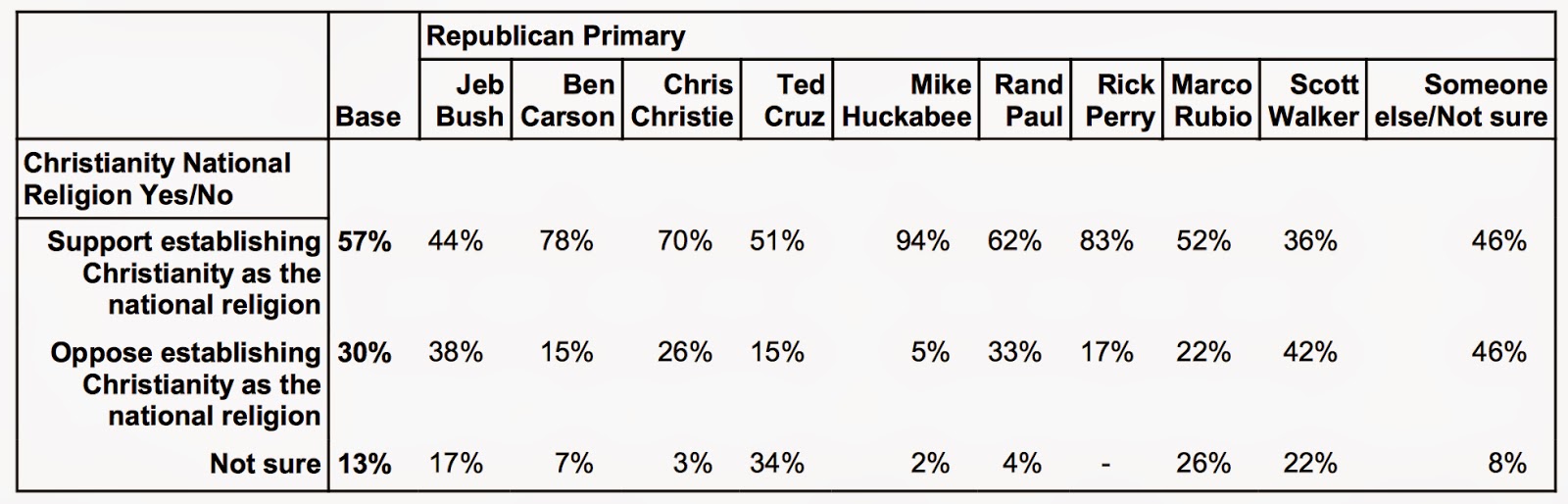
creationismOne of the Washington Post’s rare conservative columnists has a solution for GOP candidates and office holders whose views on some subjects are likely to make them targets of furious criticism: refuse to express them. She writes in her latest column:

“Not everything is a political issue, nor one on which politicians have any particular insight. Candidates are not asked their views on divorce, for example. Each state has laws on the topic, and one’s religious views aren’t a topic for public debate. It is not (and shouldn’t be) asked of nor answered by politicians…Creationism? Unless you are running for school board and intend to be guided by your religious convictions, it does not matter. Born again? None of my business.

“…[Q]uestions about creationism, gay marriage, the nature of homosexuality and other value-specific questions serve no purpose other than to provide targets for faux outrage. These questions are designed to divide the population into believers and nonbelievers, between those who share the same cultural touchstones and those who differ.

“If a topic has no relevance to public policy or character or fitness to serve, why ask the question and why answer it? We aren’t electing pastors, family counselors or philosophers; we’re electing politicians whose job description and qualifications don’t include a great many topics. If we are heading for a more tolerant society, we have to agree to disagree on some issues and to respect some realm of private opinion and faith. For Republicans running in 2016, I would suggest a simple response to the sort of question intended to provoke divisiveness over irrelevant topics: “I can’t think of a single instance in which [creationism/the origin of homosexuality] would be relevant. I’m not here to sow division or take sides in faith-based debates. Let’s talk about something germane to the presidency.”

Wrong.

Incredibly wrong. Continue reading

Ethics Quote of the Week: Prof. Robert Kolter

"Miss me? I'm baaaack!!!"

“Miss me? I’m baaaack!!!”

“The scientists doing this work are so immersed in their own self-aggrandizement, they have become completely blind to the irresponsibility of their acts.”

Robert Kolter, professor of microbiology at Harvard Medical School, condemning the work of Professor Yoshihiro Kawaoka of the University of Wisconsin-Madison and his research team, which managed to recreate the Spanish Flu virus that killed an estimated 50 million people in 1918.

The reincarnated 1918 virus was recreated from eight genes found in avian flu viruses isolated from populations of wild ducks. Using a technique known as “reverse genetics,” Kawaoka’s team rebuilt the entire virus so that it was 97 % identical to the 1918 strain, identified from viruses recovered from frozen 1918 corpses.  Said Kawaoka: “The point of the study was to assess the risk of avian viruses currently circulating in nature. We found genes in avian influenza viruses quite closely related to the 1918 virus and, to evaluate the pandemic potential should such a 1918-like virus emerge, identified changes that enabled it to transmit in ferrets.”

And, in order to assess that risk, the research created a completely unnecessary one that if mankind proves fallible again, could, as various Stephen King and Michael Crichton novels and movies have shown, kill us all.

Eventually, one of these hubris-warped and ethics-free fools might just eradicate humanity…all in the interest of scientific inquiry, of course.