Google pulled that ad after a wave of criticism on social media.
Is the ad encouraging children to use AI instead of writing their own messages and letters? Is it an invitation to cheat in school? Does it suggest that robots are better at expressing genuine human feelings than humans are? Is having someone, or something, write your fan letters to a personal hero a cop-out? A lie?
Is the commercial “Ick!”, unethical, or just ominous?
Your Ethics Alarms Ethics Quiz of the Day is…
Is that Google AI ad irresponsible, corrupting—unethical? Did an ethics alarm fail to sound that should have?
This ridiculous section of an as yet undated Harris speech (or appearance, or nervous breakdown) would have once fallen into the Ethics Alarms Julie Principle category. Yes, yes, we all know that the Vice President is a babbling idiot, and there’s no point in pouncing on every time she proves it; after all, fish gotta swim, birds gotta fly. That, however, was before the Democratic Party, in its desperation after being caught deceiving the American people (with the aid of its propaganda organs, the biased and unethical news media) that President Biden wasn’t teetering on the brink of total senility, decided to make Kamala its nominee for President while bypassing primaries, debates, voting, competition—you know, that whole democracy thingy they claim to be protecting.
Now, however, the various emerging examples of Harris talking off the top of what we generously call “her head” becomes suddenly relevant, and not to be ignored out of pity and kindness. As I wrote in installment #1 of “This is Kamala Harris” last week…
“Evidence like this will be buried, ignored, or denied by the mainstream media, just like Hunter Biden’s laptop, until enough Americans have been deceived to put Harris in the White House….Harris’s distorted values, cracked logic, obnoxious character and arrogance are all intolerable, and most normal people will see that, if they only are allowed to read, watch and hear. “
Why is this particularly ludicrous example of Kamala being Kamala (I know, we have been told that using her first name is sexist and racist. Bite me.) significant? Several reasons, including the fact that almost all the major news sources now know about it but have refused to mention it, just as they continue to hide the substance of Harris’s extreme policy positions. Yet if Joe Biden, at least once the order had gone out to bring him down, had babbled like this the MSM might well have cited it as more proof that there were squirrels in his attic, metaphorically speaking or in actuality. And in contrast, as we all know and as I wrote in the earlier post, “each word out of Donald Trump’s ever-open mouth will be spun and fact-checked to put him in the worst light possible.”
I supposed technically Margeret Renkl isn’t a film reviewer for the Times: officially she’s a “contributing opinion writer who covers flora, fauna, politics and culture in the American South.” I don’t care: she criticizes an action movie that audiences are enjoying because it doesn’t deliver the progressive agenda propaganda that she thinks good little Big Brotherites should jam into the brains of the trusting public at every opportunity.
Renkle can bite me, and so can the Times for publishing her dreck.
Renkl and the Times concede that “Twisters,” which appears to be the non-superhero hit that Hollywood desperately needs, “ is a humdinger of a summer blockbuster that delivers exactly what theatergoers want in an action film: plenty of explosions, destruction, high-speed chases and heroism, all with a dash of wit and sexual tension thrown in. It is not — and does not aspire to be — high cinematic art.” However, it is, she argues, a missed “golden opportunity to talk about what scientists know and don’t know about how climate change might be affecting the formation, strength, frequency and geographic distribution of tornadoes, or why they now tend to develop in groups.”
No, it’s really not. A movie people want to see for escape and entertainment isn’t a “golden opportunity” for the writers and producers to bombard them with favored and faddish data related to progressive public policy. The Ethics Alarms standard response to the “Why are you talking/writing/singing about what you want to instead of what I want to” is “Write your own blog, direct your own play, produce your own movie or sing your own song.
Don’t ask me: I’m having enough trouble with my posts…
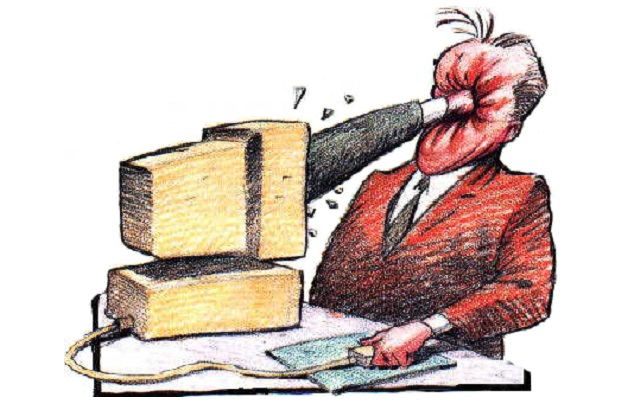
Today I’ve received messages on site and off from frustrated commenters. This isn’t new: periodically WordPress has decided it wants to make an example of a particular commenter, or something, who knows? Poor mermaidmary had every comment “eaten,” as she put it, for months; now she’s AWOL and I’m worried that she’s been eaten.
The software keeps changing. Once, I would have to clean out literally dozens or even hundreds of pieces of spam every day. Now spam rarely shows up at all—it’s culled before it even gets to my spam file. “Pending” is what is supposed to contain comments from aspiring new commenters who have not gone through moderation, but occasionally veteran participants have their comments end up there for no discernible reason. If I am away from the blog—and believe it or not, I have other obligations now and then—the unlucky writer won’t see his or her comment show up for hours.
It is clearly time for a discussion about what is going wrong, who is suffering from it, and who has figured out what solves the problems. If you can’t get your contribution posted, send it to my email.
I started reading a column in the Huffington Post that Ethics Alarms commenter Cornelius Gotchberg linked to today, and got almost half-way through it before I realized it wasn’t satire. But, horrifyingly, “It’s Time For The Biden Campaign To Embrace AI” isn’t satire. And now we know what kind of ethical limitations Democrats and progressives place on their tactics as they desperately try to save Joe Biden and their own metaphorical necks.
None. No limits at all. By any means necessary. The ends justify the means. In what this dangerous party has become, it’s Machiavelli and Big Brother all the way down.
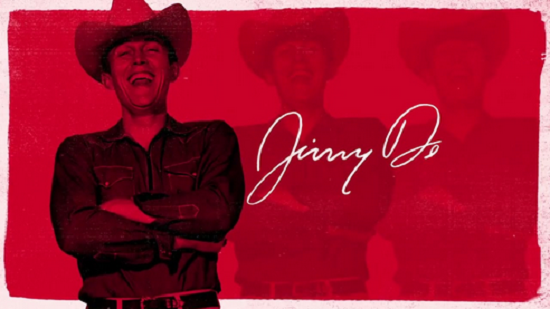
I decided to write about this insidious (but ethical?) phenomenon when I realized that the Jimmy Dean breakfast sausages TV ads are now using an AI-faked Jimmy Dean voice. For decades they only had one brief catch-line from the old ads when Jimmy was still alive (he died in 2010); we would hear the real Jimmy say, “Wake up to the goodness of Jimmy Dean sausages!” in various combinations. Now, AI Jimmy won’t shut up. (The new Jimmy doesn’t even sound quite right, in my opinion.)
NBC announced last week that veteran sportscaster Al Michaels will be doing recaps during the 2024 Paris Olympics. Well, not really Al; a fake Michaels generated by artificial intelligence will re-create the familiar sportscaster’s voice to provide customized Olympic recaps for Peacock subscribers. “Your Daily Olympic Recap on Peacock” will give users a customized highlight playlist, narrated by AI Al.
Al, who is well past his pull-date at 79 (though still younger than Joe Biden), apparently was happy to have AI Al take over for him, and especially happy to receive the check.
Your Ethics Alarms Ethics Quiz for July Fourth is…
If I had the time and inclination, I could locate dozens of trenchant quotes from Orwell and others making the same crucial point: fear is the enemy of liberty, and that aspiring dictators recognize that a population in fear of its safety will inevitably bargain away the freedoms and the autonomy of themselves and others. “I prefer dangerous freedom over peaceful slavery” was the way Thomas Jefferson put it, although usually in Latin. The idea behind America and its crucial unique rebellious character was that as a people we are worthy of democracy because we have the guts and fortitude to resist the siren song of peaceful security. Hence Ben Franklin’s much-quoted, “Those who would give up essential Liberty, to purchase a little temporary Safety, deserve neither Liberty nor Safety.” FDR, clever and cynical, inveighed against the dangers of fear (“We have nothing to fear but fear itself!”) even as he made brilliant use of fear to make himself the nearest thing to a dictator the U.S. has ever had.
There was more traffic on that post than there has been on any post here not linked by some mega-site like “Instapundit.” The truth hurts. Ironically, I just stumbled upon an example of our now thoroughly corrupted scientific establishment wielding the tactic of fearmongering by the device of arguing that the public is denying the truth, with the truth being, “EVERYTHING IS TERRIBLE! THE WORST EVER! WE’RE DOOMED IF THE SMART PEOPLE DON’T RESCUE US!FAST!“
The betting is that te retired Madison, Wis. law professor and longtime bloggress will still vote for Biden and the Democrats—like Bill Maher, Ann talks a good neutrality game, but always seems to come home again—but still, her observations are frequently spot-on.
“Passing AI images off as real ones for the sake of commercial or political gain should be prosecuted as fraud.The severity of the penalties should match the level of risk that disseminating these images poses to our society; i.e., they should be extreme.”
Ann adds, “How terribly punitive and repressive, and yet, isn’t it what you’ve come to expect from the segment of America that reads the New York Times?Notice the aggression mixed with passivity. The comment-writer doesn’t want to face the challenge of becoming more perceptive and skeptical dealing with the onslaught of A.I. images. They want the government to do the dirty work and do it good and hard.”
You should know the name Geoffrey Hinton by now. To the extent that any one scientist is credited with the emergence of artificial intelligence, he’s it. He was among the winners of the prestigious Turing Prize for his break-through in artificial neural networks, and his discoveries were crucial in the development of advanced Artificial Intelligence (AI) software today like Chat GPT and Google’s Bard. He spent 50 years developing the technology, the last 10 pf which working on AI at Google before he quit in 2023. His reason: he was alarmed at the lack of sufficient safety measures to ensure that AI technology doesn’t do more harm than good.
And yet, as revealed in a recent interview on CBS’s “60 Minutes,” Hinton still believes that his work to bring AI to artificial life was time well-spent, that his baby was worth nurturing because of its potential benefits to humanity, and that—-get this—all we have to do is, for the first time in the history of mankind, predict the dangers, risks and looming unintended consequences of an emerging new technology, get everything right the first time, not make any mistakes, not be blindly reckless in applying it, and avoid the kind of genie-out-of-the-bottle catastrophes that world has experienced (and is experiencing!) over and over again.
Regular readers here know about both my passion for baseball and my disgust with how many games are determined by obviously wrong home plate calls on balls and strikes. Statistics purportedly show that umpires as a group are correct with their ball/strike edicts about 93% of the time, representing a significant improvement since electronic pitch-tracking was instituted in 2008. What explains the improvement? That’s simple: umpires started bearing down once they knew that their mistakes could be recorded and compiled. In 2008, strikes were called correctly about 84% of the time, which, as someone who has watched too many games to count, surprises me not at all.
Even 93% is unacceptable. It means that there is a wrong call once every 3.6 plate appearances, and any one of those mistakes could change the game’s outcome. Usually it’s impossible to tell when it has, because the missed call was part of a chaos-driven sequence diverging from the chain of events that may have flowed from the right call in ways that can’t possibly be determined after the fact. Sometimes it is obvious, as in several games I’ve seen this season. An umpire calls what was clearly strike three a ball, and the lucky batter hits a home run on the next pitch.
Before every game was televised with slo-mo technology and replays, this didn’t hurt the game or the perception of its integrity because there was no record of the mistakes. (Sometimes it wasn’t even a mistake: umpires would punish batters for complaining about their pitch-calling by deliberately declaring them out on strikes on pitches outside the strike zone.) Now, however, a missed strike call that determines a game is both infuriating and inexcusable. As with bad out calls on the bases and missed home run calls, the technology exists to fix the problem.
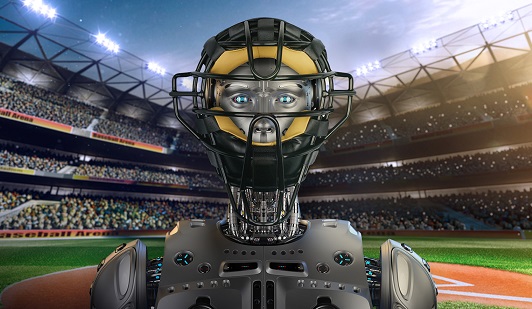
Baseball only installed a replay challenge system after the worst scenario for a missed call: a perfect game—no hits, runs or base-runners—was wiped out by a terrible safe call at first on what should have been the last out of the game. The game was on national TV; the missed call was indisputable. That clinched it, and a replay challenge system was quickly instituted. I long assumed that robo-umps would only be instituted after an obviously terrible strike call changed the course of a World Series or play-off game, embarrassing Major League Baseball. For once, the sport isn’t waiting for that horse to leave before fixing the barn door. It has been testing an automated balls and strikes system (ABS) in the minor leagues for several years now. Good. That means that some kind of automated ball and strike system is inevitable.



 Ethics Alarms