The non-existent girlfriend. You’d think the green skin would have tipped him off….
If you are not aware of the particulars of this weird and confusing tale, read the extensive account here, and good luck to you. From an ethics perspective, all that matters is:
Somebody perpetrated a web hoax, creating an imaginary online girlfriend for Notre Dame football star Manti Te’o.
The young man told the media a touching story about how his grandmother and girlfriend had died the same day.
Without checking any aspect of the story, outlet after outlet repeated and embellished the tale, despite the fact that the girlfriend never existed.
In his comments to the press, Manti Te’o never revealed that he had not, in fact, ever met the woman face to face. Indeed, many of his comments suggested otherwise.
As of this writing, no one is certain who created the fake girlfriend, or whether Manti Te’o was in on the deception. Continue reading →
At NPR, Linda Holmes writes about a little noted reason why Lance Armstrong is particularly despicable, and why the manner of his dishonest denials were especially harmful. You can read it here.
I saw this coming, of course, as did you. One thing we could count on with Lance (and Bill, and Pete, whose odious club Armstrong joins with the Oprah tactic) was that he would do whatever was necessary to benefit him. There is nothing, absolutely nothing, in common with a genuine confession and a real apology in Armstrong’s 180 degree reversal with Oprah, or in the necessary preparations for it he engaged in, like apologizing to the cycling community and the Livestrong staff. When Armstrong thought he could continue to fool some of the people all the time by lying, posturing, and viciously attacking—sometimes with lawsuits—those who he knew were telling the truth about his cheating, he continued to lie. Now that the jig is up and he has no other options, he’s going to come clean and weep softly with the Big O. Sociopaths are usually very good actors. Some of them have won Academy Awards. Continue reading →
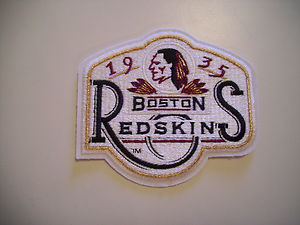
I’m sure glad I don’t own the Washington Redskins.
I say this without even considering the current problem of having a head coach who let the franchise player ruin his knee. I’m glad I’m not Dan Snyder because the annual sniping about his team’s unfortunate name pulls me in opposite directions ethically and emotionally, and I don’t enjoy being Rumpelstiltskin.*
If I owned the Washington Redskins and was being pragmatic as well as ethical, I’d just bite the bullet (oops! Is that phrase banned now?) and change the team’s name. The debate is stupid, but it’s a distraction no sports franchise needs. I would dig in my heels against political correctness zealots who demand that the Atlanta Braves, Kansas City Chiefs, Chicago Blackhawks and other Native American-themed names get tossed in the ash heap of history, but “redskins” is undeniably a term of racist derision, despite the fact that it isn’t that in the context of football. In football, it just means those NFL players in red and gold that a whole city worships year round.
If, however, I wanted to take a much needed stand against the unethical tactics of political correctness bullies everywhere, refuse to yield to an argument that is as dishonest as it is illogical , I might well do what Snyder has done so far out of pure orneriness and spite, which is to say to the team’s critics, “Stick it!” Continue reading →
One of the reasons there are always more negative stories than positive ones on Ethics Alarms is that ethical conduct is still much more common than unethical conduct, and thus has to be more spectacular to be worthy of comment. At least, that’s my rationalization this year….
Here are the 2011 Ethics Alarms Awards for the Best in Ethics:
Most Important Ethical Act of the Year:
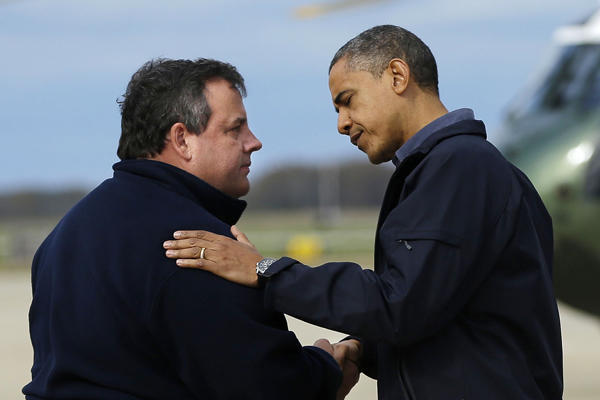
New Jersey Governor Chris Christie’s public display of appreciation to President Obamafor the rapid Federal response to Super Storm Sandy. Naturally, Christie was subsequently called a turncoat and blamed for Mitt Romney’s loss.
Outstanding Ethical Leadership
Supreme CourtChief Justice John Roberts. Roberts’ decision to confound conventional wisdom and to vote to uphold the constitutionality of the Affordable Care Act, a.k.a. Obamacare, reaffirmed the ideological independence of the Court while giving due deference to the will of Congress. Roberts was derided by Republicans and conservatives, while liberals and Democrats patted themselves on the back, presuming that they had intimidated him into rejecting the so-called conservative wing of the Court by their (irresponsible, dishonest and unethical) accusations that the Court put politics ahead of law and justice. Roberts, in truth, just interpreted the law, which is what his duty required.
Heroes of the Year
Seniors at Lexington (Ky) Catholic High School. When a gay couple was told by school administrators that they were not welcome at their senior prom, a significant number of their classmates moved the prom to the parking lot, where a good time was had by all. Courage, respect, fairness and kindness. These seniors are ready for the real world, which needs them more than they need it. Continue reading →
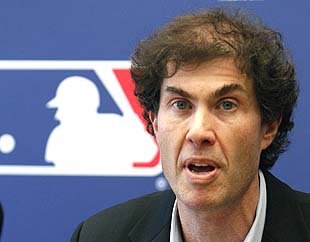
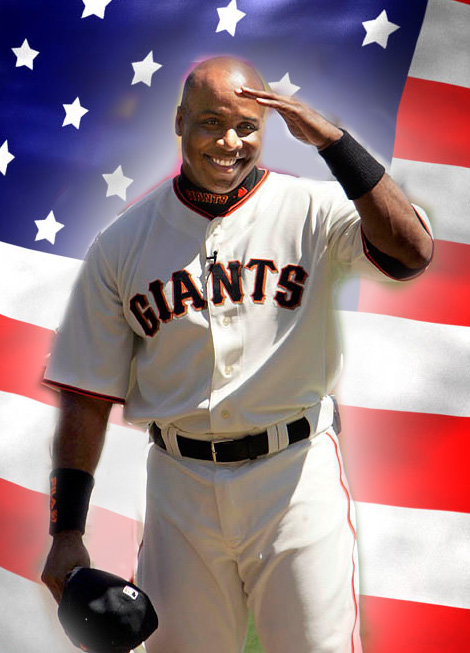
“Today’s news that those members of the BBWAA afforded the privilege of casting ballots failed to elect even a single player to the Hall of Fame is unfortunate, if not sad….To ignore the historic accomplishments of Barry Bonds and Roger Clemens, for example, is hard to justify. Moreover, to penalize players exonerated in legal proceedings — and others never even implicated — is simply unfair.”
—-Major League Baseball players union executive Michael Weiner, in a formal statement released after the news that the Baseball Writers Association of American had denied Hall of Fame admission this year to all-time home run leader Barry Bonds, pitching ace Roger Clemens, and several other players who have either admitted to steroid use or are strongly suspected of being users. No player was on the requisite number of ballots this year.
It takes a Harvard lawyer to be that unethical in so few words.
It’s not easy to pack so much bad ethics into one statement, but we should not be surprised that the baseball players’ union chief was up to the task. The union shares responsibility with baseball’s “see-n0-evil” management during the steroid era and the willful blindness of the sportswriting community for allowing steroids and other performance enhancing drugs to permanently scar the game’s integrity and distort its records beyond repair. Small wonder Weiner is eager to rationalize his organization’s complicity with an absurd, deceptive and corrupting assertion that none of it should make any difference:
The writers did not “ignore” Bonds’ accomplishments. To the contrary, his “accomplishment” of blatantly abusing steroids, launching a late career surge of power and prowess that was alien to the career arc of every other player who ever set foot on a field as he morphed into baseball’s version of the Hulk, all while lying his head off and convincing other players that drug-assisted cheating was the accepted way to achieve fame and fortune, was exactly why he was on less than 40% of the ballots ( 75% is required for enshrinement.) Continue reading →
In the Baseball Hall of Fame balloting announced today, those who elect baseball’s greats to its shrine of heroes failed to give anyone the requisite 75% ballots required for election. That’s too bad: Craig Biggio, Jeff Bagwell, Tim Raines and Mike Piazza are deserving candidates.
A newspaper columnist and an ESPN commentator both reaped the wild wind last month after statements in a column and on a televised panel that many, including me, took as irresponsible, unprofessional and worse. I wrote here about the column, a diatribe in Iowa’s Des Moines register by veteran Donald Kaul against guns, gun owners, the NRA and any politician who supported them. The panelist was ESPN’s Rob Parker, whom I didn’t write about simply because his racist rant against Redskins quarterback Robert Griffin was so obviously wrong that there was nothing much to say about it. If you missed it, African American Parker questioned Griffin’s bona fides as a black man because, among other offenses, he appeared to be a Republican and has a white girlfriend. I would have had a lot to write about ethical double standards if ESPN hadn’t finally fired Parker after suspending him, but he was let go yesterday.
Both Kaul and Parker now claim they were misunderstood, and thus treated unfairly. Kaul, who has been backed by his paper in an editorial, claimed in a recent column that his universally derided piece was obviously satire, and implying that anyone who didn’t catch the twinkle in his eye is illiterate:
“Gun owners seemed particularly upset at the suggestion that Boehner and McConnell be dragged [ by “a Chevy pickup truck… around a parking lot until they saw the light on gun control” ].The tactic, which dates back to the days of lynch mobs, became a more modern nightmare in the wake of the 1998 dragging murder of James Byrd by white supremacists in Texas. Many of the people I heard from said I should be arrested for threatening federal officials, and one said he had personally reported me to the FBI. Let me say this about that: That wasn’t a suggestion to be taken literally. I don’t believe Boehner and McConnell should be dragged. I was using it as a metaphor for making politicians pay a price for their inability to confront the gun lobby. It’s a literary device.
“Think of Jonathan Swift’s “A Modest Proposal,” written 200 years ago, in which he suggested that the Irish famine could be relieved if babies of poor families were confiscated at 12 months and sold to rich people, who could eat them. Swift, an Irishman, didn’t mean that literally. It was a satiric device to underline the misery that had been visited on the Irish by their English landlords. So too with my dragging of the Republican leaders.”
Yes, this hateful hack just compared himself to Jonathan Swift.
Parker, meanwhile, takes a different route: he tries that old stand-by, “it was taken out of context.” He told an interviewer he was shocked at the uproar his comments caused, saying,
“I mean, looking back at some of the comments, I can see how some people can take it out of context and run with it, but the response, and what happened over the past 30 days and everything was just shocking.”
Really. Well, here is the video of Parker’s attack on RG III. Tell me in what context such remarks would be considered appropriate, and not racist and mind-blowingly stupid:
Your Ethics Quiz Question:
Which of the two defenses, Kaul’s “It was satire!” or Parker’s “It was taken out of context!” is more unethical, unethical in this case meaning, “a pathetic lie and an insult to the intelligence of everyone who hears or reads it”? Continue reading →
If you want to see the stark difference between the culture of baseball and the culture of football. look no further than Washington, D.C., where the city’s sports fans are in mourning for the second time in barely three months’ time. The surging Redskins just met play-off elimination, because their young star quarterback was injured but allowed to stay in the game. Back in October, the city’s new sports darlings, baseball’s Nationals, were eliminated in their first play-off round, in part, fans believe, because the team wouldn’t let its completely healthy young star pitcher play for fear that he would get injured.
This week everyone from my local sandwich shop proprietor to the driver of the cab I just got out of is furious at Redskins coach Mike Shanahan for allowing the obviously hobbled Robert Griffin III to stay in the doomed game against the Seattle Seahawks when there was a competent back-up on the bench. And some, like Yahoo! sportswriter Dan Wetzel, are blaming Griffin, for “lying”:
“Robert Griffin III couldn’t do much of anything Sunday except lie, which is what he’s been trained to do in situations like this. Lie to himself that he can still deliver like no backup could. Lie to his coach that this was nothing big. Lie to the doctors who tried to assess him in the swirl of a playoff sideline. So Robert Griffin III lied, which is to be excused because this is a sport that rewards toughness in the face of common sense, a culture that celebrates the warrior who is willing to leave everything on the field, a business that believes such lies are part of the road to greatness.” Continue reading →
This is the first installment of the Worst. (Part 2 ishere, the Best is here.)
2012 inspired over 1000 posts, and Ethics Alarms still missed a lot. And the last week of 2012 was sufficiently ethics packed that the Awards are late this year. My apologies.
In a depressingly unethical year, these were the low points:
Ethics Train Wreck of the Year
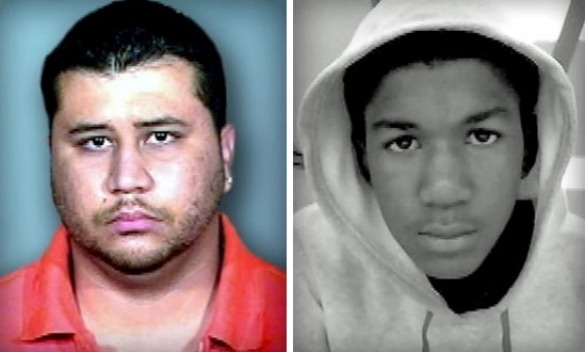
Was there ever any doubt? The Trayvon Martin- George Zimmerman fiasco, naturally, which is far from over. This year’s winner may be the worst ethics train wreck since Monica and Bill were dominating the news. So far it has involved dubious, unprofessional or clearly unethical conduct by, among others, Martin’s parents, their lawyer, Zimmerman, his wife, the police, Zimmerman’s first set of lawyers, the prosecutor, the Congressional Black Caucus, NBC (which repeatedly broadcast an “accidentally” truncated tape of Zimmerman’s 911 call that made him sound racist), the rest of the broadcast media, conservative talk radio and bloggers (who decided their contribution would be to try to show that Martin deserved to be shot), Spike Lee, Rosie O’Donnell, the New Black Panthers, and President Obama, who ratcheted up the hate being focused on Zimmerman by implying that the killing as racially motivated, and by connecting himself to the victim. Runner-up:The 2012 Presidential campaign.


 Ethics Alarms