Baseball Ethics: On MLB’s Reinstatement of Pete Rose and the 8 Dirty 1919 White Sox

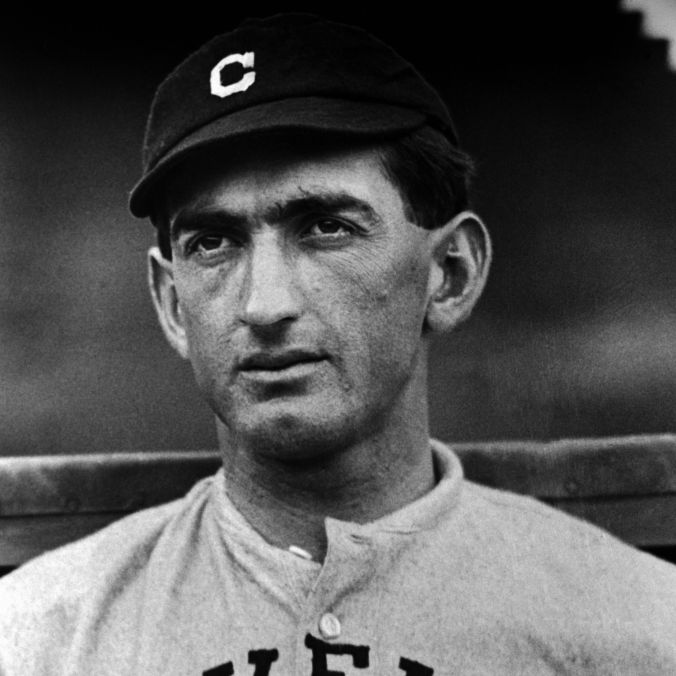
Today Pete Rose and other players “banned for life” by Major League Baseball were reinstated. This doesn’t mean they have been brought back to life, and it won’t get them into baseball’s Hall of Fame in Cooperstown. All it means is that a banning for life doesn’t extend past a banned player’s death.

I have to say, I thought this would bother me more than it does.

The decision by Commissioner Robert D. Manfred, whom I would regard as the Worst Commissioner Ever were it not for the fact that his predecessor, the revolting Bud Selig, should have that distinction forevermore, was clearly prompted by the death of baseball scumbag Pete Rose, President Trump’s meaningless promise to “pardon” him, whatever that means, and the Rose family’s renewed efforts to get baseball’s all-time hit leader into the Hall of Fame. From a lawyer’s perspective, I can’t quibble with Manfred’s logic that a lifetime ban, however deserved, should expire upon death, as most things do.

Continue reading

Twin Ethics…

When I read this story in the New York Times, I checked to see what I had posted in the past regarding twin ethics and was shocked that I could find only two essays on the topic. After all, twins deliberately impersonating each other for their own benefit has been a theme from ancient Greek comedies and Shakespeare right through to “The Jackson Twins” comic strip, “The Parent Trap,” and “The Patty Duke Show.”

There was a “Columbo” episode where twins used their ability to impersonate each other to pull off the “perfect murder,” which naturally Columbo solved anyway. But just because twins switching identities can be clever, funny, effective, or cute doesn’t make it ethical.

The first of my twin ethics posts involved a twins who impersonated his brother to win $50,000 in a contest. The other one came from Brazil, where twin brothers had used their resemblance to impersonate each other and date as many women as possible, and then defend themselves from allegations they were cheating on girlfriends. These twins were ducking child support one of them owed by refusing to say which one of them had fathered a child (DNA tests proving inconclusive because they their were identical twins)  assuming they would escape having to pay. It didn’t work: a judge ordered that they both had to pay child support and that the names of both men ended up on the girl’s birth certificate.

Continue reading

“War Is Peace”: Kareem Abdul Jabbar on D.E.I…

On the 78th anniversary of Jackie Robinson’s breaking of Major League Baseball’s color barrier, the Los Angeles Dodgers, successors to the Brooklyn Dodger franchise that brought Robinson into the big leagues, hosted its traditional annual commemoration of the culture-altering event. For some reason Kareem Abdul-Jabbar, L.A. Lakers legend, was on hand to give a speech, and as a smart and articulate social commentator instantly proved that bias makes you stupid by saying,

“Trump wants to get rid of DEI. And I think it’s just a ruse to discriminate. So I’m glad that we do things like this, to let everybody in the country know what’s important. They also tried to get rid of Harriet Tubman. But that didn’t work. There was just uproar about that. But you have to take that into consideration when we think about what’s going on today.”

Oh.

A few points: D.E.I. is explicit discrimination, just of the anti-white male variety. How could banning clear discrimination be a “ruse to discriminate?” Would Kareem support DEI in the NBA when he was playing, which would have meant inferior white players taking the jobs of better black players in the interests of diversity? Why would a smart individual say something so self-evidently Orwellian?

Continue reading

The Unethical Obscurity of Larry Doby

Yesterday was “Jackie Robinson Day” in baseball, with every player wearing the civil rights and baseball icon’s retired uniform number 42. April 15, 1947 is the day Robinson, following the bold plan of Brooklyn Dodgers General Manager Branch Rickey to desegregate baseball, officially broke the game’s color barrier in an event with national, cultural and societal significance. (I’ve written a lot about Jackie, a great man as well as a great baseball player.) Baseball is justly proud of its role in advancing civil rights (and justly ashamed of its long exclusion of black players before and after Robinson’s trailblazing), but commenter “Old Bill” reminded me this morning of the undeserved and unfair relative obscurity of Cleveland Indians great Larry Doby, the second black man to play Major League Baseball.

“It was 11 weeks between the time Jackie Robinson and I came into the majors. I can’t see how things were any different for me than they were for him,” Doby once said. Well, they weren’t. Doby’s courage and fortitude while battling bigotry and hostility to integrate what had been a white man’s game were no less than what Robinson displayed.

Lawrence Eugene Doby was born on December 13, 1923, in Camden, South Carolina. Larry’s father, David, was a stable hand, grooming the horses of many wealthy New Jersey families. When Larry was eight years old, his father died in a tragic accident. After that the boy was cared for by his aunt and uncle as well as his mother and moved from locale to locale, finally settling in Patterson, N.J. Even before graduating from high school, Doby was playing second base in the Negro Leagues under the assumed name of Larry Walker for the Newark Eagles. Despite is tender years, he was considered a rising star. He entered college, where he was a basketball stand-out, and was drafted and joined the Navy during W.W. II. Doby was honorably discharged from the military in January 1946, and inspired by the news that the Dodgers had signed a black player, Robinson of course, he changed his career plans from teaching to baseball. Doby sensed that the times they were a-changing. He rejoined the Negro League Eagles, believing that might be a path to the Major Leagues.

When his team went on to win the Negro Leagues World Series in 1946, Doby attracted the attention of maverick Cleveland Indians owner Bill Veeck, now best known as the man who sent a midget up to bat. Veeck, like Rickey, had long sought to integrate baseball, which for Veeck was the American League. He became convinced that Doby was the right player to do it. Veeck decided that he would purchase Doby’s contract and bring him up to join Cleveland right after the 1947 All-Star break. Doby’s white team mates on the Indians refused to look at or speak to him. Doby told an interviewer in 2002, “I knew it was segregated times, but I had never seen anything like that in athletics. I was embarrassed. It was tough.” 

He didn’t win a place in the Indians regular line-up until the next season, when the Indians won the AL pennant with him playing the outfield every day. That fall Doby became the first black player to hit a home run in the World Series, winning Game Four 2-1 and sending the Indians to a World Series victory the next day. A remarkable photo taken after Game Four showed Doby embracing white Cleveland pitcher Steve Gromek. (I was told that this photo is famous: I’ve followed baseball and baseball history most of my life, and I had never seen it. But there is a statue of Pee Wee Reese with his hand on Jackie Robinson’s shoulder! ) in what was supposedly a watershed for race relations.

Continue reading

Institutional Ethics Dunce: The Pittsburgh Pirates

Wow. Morons!

A crucial component of institutional competence is “know the history and culture of the organization you work for.” Obviously the Pittsburgh Pirates, one of the original National League Major League Baseball franchises, contains too many employees who lack this component. Had not this been true, the team would not have taken down a tribute to Pirates icon and Hall of Famer Roberto Clemente, whose uniform number, 21, was retired by the club, to put up a liquor advertisement.

How clueless can you get?

“Hey, Fred, what does this “Clemente 21″ thing stand for?”

Oh, I don’t know, Stinky, just some old guy nobody remembers! Just cover it up!”

Clemente, who died in a plane crash while trying to deliver humanitarian aid to Nicaragua, played 18 seasons for the Pirates, during which he joined the elite ranks of players with 3000 hits, had a .317 lifetime batting average and won four batting titles, twelve Gold Gloves, two World Series, and a National League MVP award. He may not have been the greatest Pirate—that honor goes to Honus Wagner—but he was and is the most beloved. For the team to replace his number with a liquor ad was spectacularly ignorant.

Continue reading

Fencing Ethics: What’s Going On Here?

I’m afraid I don’t know enough about fencing to comment as intelligently as I need to regarding this episode, but I’m going to charge on anyway…

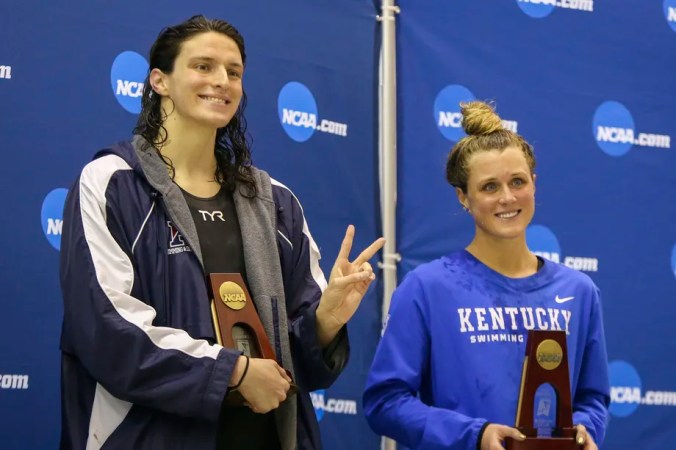
USA fencer Stephanie Turner was scheduled to face Redmond Sullivan at the Cherry Blossom Fencing Tournament held at the University of Maryland. As the match was about to begin, however, Turner “took a knee” and removed her mask, signifying that she would not compete against Redmond the Division 1A Women’s Foil event. Redmond, you see, is a formerly male fencer who has recently “identified” as female. Turner had decided that as a matter of principle she would not compete in women’s fencing against a “man.” “I saw that I was going to be in a pool with Redmond, and from there I said, ‘OK, let’s do it. I’m going to take the knee’,” she explained

After her protest, Turner was slapped with a “black card” signifying that she was suspended and out of the tournament.

“I knew what I had to do because USA Fencing had not been listening to women’s objections,” Turner said. “I took a knee immediately at that point. Redmond was under the impression that I was going to start fencing. So when I took the knee, I looked at the ref and I said: ‘I’m sorry, I cannot do this. I am a woman, and this is a man, and this is a women’s tournament. And I will not fence this individual.'”

U.S. Fencing responded with a wokey, weaselly statement undoubtedly drafted by the DEI Dept.:

Continue reading

Baseball Ethics: Now THIS Is Cheating…

Yesterday I discussed the silly controversy over “torpedo bats,” which are completely legal despite some commentators who should know better calling the use of them by some players “cheating.” Lo and Behold, no sooner had I posted that essay than news of a player being caught really cheating shook the baseball world.

Major League Baseball announced that Braves outfielder Jurickson Profar has been suspended for 80 games after testing positive for the performance-enhancing drug Chorionic Gonadotrophin (hCG). Profar will be able to return during the season but won’t be eligible for the playoffs this year: that’s the restriction and part of the pentalty for all players in the year they serve a PED suspension.

The Braves released a statement that began, “We were surprised and extremely disappointed to learn that Jurickson Profar tested positive for a performance-enhancing substance in violation of Major League Baseball’s Joint Prevention and Treatment Program.”

Why were they surprised?

I wasn’t.

Continue reading

Baseball Ethics: The Magic Bats!

The New York Yankees opened their season by crushing the Milwaukee Brewers with a record number of home runs. Some of the homers were hit by players using a new bat design imagined by a one-time MIT physicist. The bat is shaped at teh end like a bowling pin, or a torpedo. The Yankees hit a franchise-record nine home runs in the first game—-notably the player who hit the most was Aaron Judge with three, and he used an old-fashioned bat. The series sweep served “as a live infomercial.”

The Yankees aren’t the only team with players using the new bats. The Cubs, Minnesota Twins, Toronto Blue Jays and Tampa Bay Rays have some players who are trying them out. “It’s legal,” says one enthusiastic player. “It’s under MLB rules and everything. Just basically moving the sweet spot down. Those balls that you’re getting jammed on are finding some barrels.”

Continue reading

‘Chesapeake Bay, We Have a Marketing Competence Problem….’

Remember that little problem with the new Texas Rangers “double logo” cap? The Chesapeake Baysox say “Hold my beer!”

The Double-A minor league affiliate of the Baltimore Orioles in the Eastern League unveiled a new “alternate identity”: the team is also calling itself the Chesapeake Oyster Catchers as “a tribute to the Chesapeake Bay’s rich heritage and thriving ecosystem.” Let me interject here that I don’t understand why a baseball team wants or needs an “alternate identity,” unless it’s the Chicago White Sox, who last season broke the modern record for lousiness with 121 losses (out of 164 games).  How does a baseball team turn into Batman? Well, never mind…

The team unveiled two new logos centers inspired by the oyster catcher, a distinctive black-and-white shorebird with an orange beak that flocks in Maryland’s Chesapeake Bay. The bird hunts shellfish, and thus “is a symbol of strength and ingenuity—qualities that define both the Chesapeake region and its passionate baseball fans.”

Yyyyyyeah….

So here are the new logos…

And here is a close-up of the one that no one connected with the team seemed to be paying enough attention to…

“Wait,” some social media wags noted on social media, “Isn’t that thing in the glove a…?”

Yikes and holy female anatomical parts, Batman! The Baysox/Oystercatchers quickly removed that onscene logo from its social media posts, website, and online stories. That’s a good first step: now fire everyone in the marketing department who didn’t see what that “oyster” looked like and say something before the team embarrassed itself and everyone else.

Marketing Ethics: “That’s Some Bad Hat, MLB!”*

We shall see if the ethical value of accountability is completely dead in our culture by how many people are fired by Major League Baseball in the aftermath of the Great Baseball Cap Disaster of 2025. It should be a lot.

Baseball finally figured out that the clubs could make a lot of money by constantly adding new uniforms and baseball cap options to each team. (I blame former Commissioner of Baseball Peter Ueberroth, whose entire function during his tenure was to modernize the sport’s merchandising and public relations.) I thought this hustle had reached its apotheosis with the dreadful “City Connect” uniforms that were inflicted on the teams a few years ago, creating inexplicable eyesores like this for the RED Sox…

but the sport’s greed and lack of taste knows no bounds. Fans and collectors actually bought those jerseys and caps (to be fair, some of the redesigned uniforms aren’t quite that bad), along with the “vintage” uniforms and caps, the Mother’s Day uniforms and caps, the stupid “nickname” jerseys, the boring All-Star team jerseys and caps, “turn-back-the clock” uniforms….As P.T. Barnum said, “There’s a sucker born every minute.”

So someone got the bright idea to foist these ugly team caps off on the public, since obviously baseball fans will buy anything:

Continue reading