Ethics Dunces: The World Anti-Doping Agency, the International Tennis Integrity Agency & Professional Tennis Generally

I rate this episode as pure King’s Pass misconduct by both organizations and professional tennis.

Jannik Sinner, the top-ranked men’s tennis player in the world, just got a three-month ban for testing positive for a banned anabolic steroid last March. He says he “accepted” the short ban, and why wouldn’t he? It means he won’t miss any Grand Slam tournaments. The French Open, the season’s next major, starts May 25 and the ban ends May 4. This is like baseball banning a starting pitcher for throwing a doctored ball for three games so he doesn’t miss any starts.

The International Tennis Integrity Agency had decided earlier not to suspend Sinner by buying his excuse for why he tested positive: the clostebol in his doping sample was due, see, to the player getting a massage from a trainer who had used the substance to help a wound on his finger heal quicker. Never mind that virtually every athlete caught using steroids has claimed “accidental” contamination. It is why baseball went to a strict liability system after its steroid scandal.

Ah, but professional tennis is more dependent on its big stars than baseball for its gate income and TV ratings, so suspending the #1 ranked player in the world has unpleasant ripple effects.

This convenient resolution of Sinner’s violation, however, is also causing some rippling. After the settlement was announced, three-time major champion Stan Wawrinka posted on X: “I don’t believe in a clean sport anymore …” # 8 ranked Daniil Medvedev, said, alluding to double standards (Ya think?), “I hope everyone can discuss with WADA and defend themselves like Jannik Sinner from now on.”

Continue reading

The NYT Tries To Create Sympathy For An Unsympathetic Jerk And Paints a Fresh Target On His Back

Is this New York Times piece deliberately making the situation it is reporting on worse, or is the writer (Brendan Kuty) just as clueless as his subject?

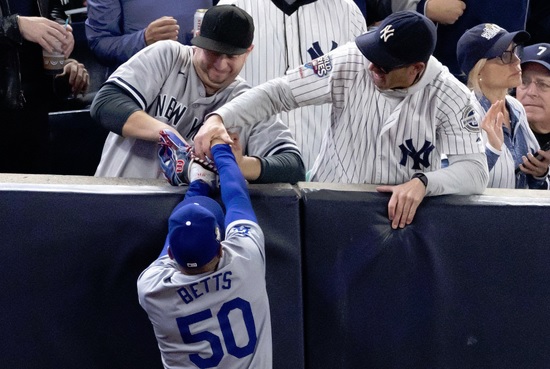
Baseball’s Spring Training is rapidly approaching, and so are media stories reminding us that it’s on the way. Today The Athletic, the sports publication that the New York Times owns and operates instead of its own sport page, ran a follow-up to the memorable (in a bad way) incident above that I wrote about here right after it occurred, during the World Series Two asshole Yankee fans (but I repeat myself—see? I’m getting ready for the season too!) nearly ripped Dodger outfielder Mookie Betts’ hand off trying to pry a foul pop out of his glove.

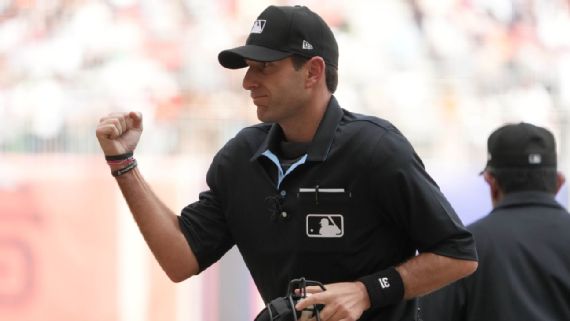
Interference was called, the Yankee batter (Gleyber Torres) was called out, and the two idiots were ejected from the game. For some reason it took Major League Baseball months to decide to ban the two from all ballparks for life, but that was ultimately the decision.

But The Athletic decided that it was time to try to make us feel sorry for Austin Capobianco, the jerk on the left in that photo whose name I had mercifully forgotten. We are told that he received a lot of mean phone calls, hate mail and mean messages on social media. Well, that’s what happens when you behave outrageously on national television and nearly hurt someone. An anonymous hater sent a box of poop to his home. Ew! and unethical, but there are a lot of crazy people out there (just look at yesterday’s protest against Elon Musk).

Continue reading

Oh Yeah, Pro Sports’ Greedy Embrace of Legalized Gambling Is Really Going Well…

In 2023, Ethics Alarms tersely predicted, regarding the full and loving embrace with which professional sports is snuggling up to online gambling, “This will not end well.” Ah, but there’s money to be made….so, for example, Major League Baseball allows Red Sox Hall of Famer David Ortiz to shill for one of the big online betting concerns during local game broadcasts. Not surprisingly, given that it is the most unethical of all sports organizations, the NFL had the first betting scandal under the new gluttony: In 2023, “Isaiah Rodgers and Rashod Berry of the Indianapolis Colts and free agent Demetrius Taylor were suspended indefinitely for betting on NFL games. Tennessee Titans offensive tackle Nicholas Petit-Frere was suspended six games for betting on other sports.

Next came the betting scandal involving baseball’s most famous star, pircher-slugger Shohei Ohtani, whose translator was caught illegally using the star’s name to pay off a bookie. But of course, there was, and is, more to come.

Toronto Raptors player Jontay Porter was banned from the NBA after an investigation last year found that Porter tipped off bettors about his health and then claimed illness to exit at least one game, creating wins for anyone who had bet on him to under-perform. Porter also gambled on NBA games in which he didn’t play, and once bet against his own team. Now another NBA player, Miami Heat guard Terry Rozier, is under investigation. He is suspected of manipulating his game performance “as part of an illegal sports betting scheme”when he was a member of the Charlotte Hornets.

Wait: pro athletes today make millions of dollars. The 1919 Black Sox scandal (Second mention today!) happened because the players involved were being exploited by their team’s owner and were barely able to feed their kids. Why would millionaire jocks ever get involved with gamblers?

Continue reading

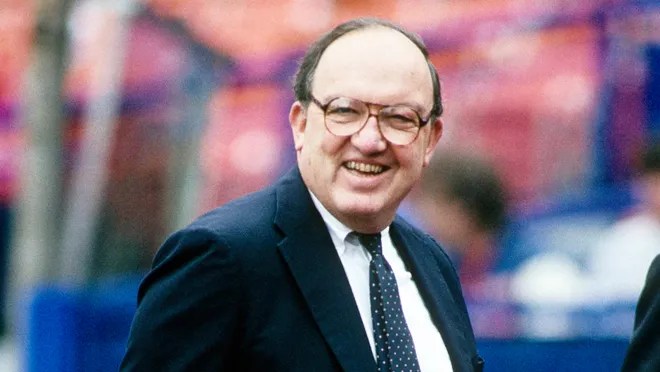
Death of a Baseball Ethics Hero: Fay Vincent (1938-2025)

Fay Vincent, the last real Commissioner of Baseball, has died and attention should be paid.

The post of Commissioner of Baseball was created in the wake of the 1919 Black Sox scandal, with baseball’s future in doubt after the revelation that key members of the Chicago White Sox had accepted money from gamblers to throw the World Series to the vastly inferior Cincinnati Reds of the National League. The desperate owners turned to an austere judge, the wonderfully named Kenesaw Mountain Landis, who accepted the job provided that he had absolute power to act in “the best interests of the game.”

Landis ruled with an iron hand and baseball’s perpetually corrupt, greedy and none-too-bright owners backed off while he was in power, from 1920 until his death in 1944. Landis, in the harsh light of hindsight, is now vilified for not figuring out that keeping blacks out of the Major Leagues wasn’t in the best interests of baseball (or blacks, or sports, or democracy, or society, or the nation), but he proved a tough act to follow nonetheless.

Most of his successors were mere figureheads or knuckleheads, notable more for their non-decisions and bad ones than their actions in the “best interests of baseball.” Ford Frick, one of the longest serving Commissioners, is best known for his foolish insistence that Roger Maris didn’t really break Babe Ruth’s season homer record, a controversy decisively ended in the American League three years ago by Aaron Judge. Baseball collected weenies and fools in the role because the owners wanted it that way.

There were a couple of exceptions. Peter Ueberroth made the game infinitely more profitable and considerably more popular by modernizing its brandingm merchandising, promotion and marketing. Bart Giamatti , following in the fading footsteps of Judge Landis, courageously refused to issue The King’s Pass to Pete Rose, one of the most popular former players in the game, and banned him for gambling. But when Giamatti died suddenly from a heart attack after less than a year as Commissioner, he was succeeded by Fay Vincent, in a sequence a bit like when the Vice-President takes over when a POTUS dies. He had been deputy commissioner under his good friend Giamatti, and the owners of the major league teams confirmed him without qualms as the next Commissioner . They thought he was one of them: a corporate veteran and lawyer who had served in top executive roles for Columbia Pictures and Coca-Cola before Giamatti recruited Vincent as his right-hand man.

Vincent, however, was not what the owners wanted or expected. He was intelligent, courageous, far-sighted, and worst of all, as a passionate baseball fan, he took his job description seriously and literally. He didn’t work for the owners, though they could fire him. His stakeholders were fans and the game itself. Vincent’s vision for the job was reminiscent of the difficult ethical conflict accountants face: businesses hire them and pay their salaries, but their duty is to the public.

Continue reading

Again, Hall of Fame Ethics, and Again, Ethically Inert Sportswriters Want To Elect Steroid Cheats

I know I’ve written a ridiculous number of posts about the logical, institutional and ethical absurdity of electing baseballs’s steroid cheats to the Hall of Fame in Cooperstown, but I have sworn to slap this down every time it rears its metaphorical ugly head until my dying day.

The 2025 Baseball Writers’ Association of America voted Ichiro Suzuki (one vote shy of being a unanimous selection), CC Sabathia and Billy Wagner into the Hall. Three quick ethics notes on this. First, whoever it was who left Suzuki off his ballot should be kicked out of the association using the equivilent of the Ethics Alarms “Stupidity Rule.” He is not only a qualified Hall of Famer, but belongs among the upper echelon of Hall of Famers with the likes of Ty Cobb, Babe Ruth, Ted Williams and Rogers Hornsby.

Second, I have no problem with CC Sabathia making the Hall, but that he was elected just a couple of months after Red Sox star Luis Tiant was rejected by a veteran’s committee, probably ending his Hall of Fame chances for good, shows just how arbitrarily the standards for Hall admission are applied. Tiant was objectively better than Sabathia, a bigger star, and while CC was a flashy presence on the mound, Tiant was more so. Luis (or “Loooooie!” as he was known in Fenway Park) died last year, and had said that if they weren’t going to let him into the Hall while he was alive, they shouldn’t bother after he was dead. Maybe the voters were just honoring his wishes…

Continue reading

“And Now, The Rest of the Story!” MLB Bans Those Two Assholes For Life…

Hey, maybe Major League Baseball reads Ethics Alarms!

In this post in October, EA reported that in the bottom of the first inning in Game 4 of the World Series with the Yankees losing 2-0, NY lead-off hitter Gleyber Torres “hit a high pop-up into right field foul territory. Dodgers right fielder Betts caught the ball with his glove, but” Asshole #1 grabbed Betts’ glove with both hands, opened it, reached inside with his right hand and knocked the ball back onto the field, as Asshole #2 assisted him. It was on national television for all to see, so the umpires, thank goodness, got the call right and ruled fan interference. Torres was called out. I ruled it the most egregious example ever of fans deliberately trying to interfere with a player’s efforts during a baseball game, and called for Austin Capobianco (Asshole #1) and John P. Hansen (Asshole #2) to be banned from attending baseball games for life.

It took three months for some absurd reason, but Major League Baseball finally has banned them from attending games at big league ballparks, probably forever. Good.

The league sent a letter to A1 and A2 this week informing them of the decision.

“On Oct. 29, 2024, during Game 4 of the World Series at Yankee Stadium, you interfered with play by intentionally and forcefully grabbing a player. Your conduct posed a serious risk to the health and safety of the player and went far over the line of acceptable fan behavior,” said the letter, released today. “Based on your conduct, Major League Baseball is banning you indefinitely from all MLB stadiums, offices, and other facilities,” the letter continues. “You are also hereby banned indefinitely from attending any events sponsored by or associated with MLB. Please be advised that if you are discovered at any MLB property or event, you will be removed from the premises and subject to arrest for trespass.”

There is justice in the universe. I would have preferred to see the letter end with a promise that if either miscreant is discovered at any MLB property or event or even so much as wearing baseball cap, he will be summarily wrapped in unwashed jock straps and have his eyelids stapled open while he is forced to watch the execrable film, “The Babe Ruth Story” starring William Bendix (which Ted Williams called “the worst movie I ever saw,” though he never saw “The Exorcist II”) on an endless loop until he can’t stop screaming and begs to have his eyes gouged out. But that’s just me.

I can live with this resolution.


Tales of the King’s Pass

During the baseball off-season the MLB channel on DirecTV has a lot of dead time to fill between the periodic announcements of trades, free agent signings and post-season awards and honors. Lately it has been re-running an old Bob Castas show called “Studio 42” (that’s Jackie Robinson’s number) where the perpetually boyish-looking baseball commentator, who now really is Old Bob, interviews retired players and managers about significant games and moments in their careers.

In an episode I happened across this morning after my dog woke me up and then stole the bed as soon as I got out of it, Costas’s guest was the late, great manager Whitey Herzog, like so many successful baseball managers, a mediocre-to-poor player in his Major League career. Whitey told a story that is as good an example of the King’s Pass, #11 on the Rationalization List, as there is.

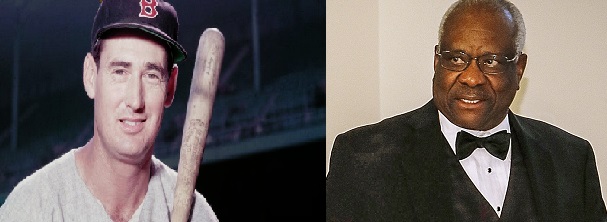
He said that in one game between the old Washington Senators (the first Senators, the team that moved to Minnesota and became the Twins) and the Red Sox in Boston, Ted Williams had drawn a walk on a 3-2 pitch right down the middle of the plate that the umpire had called a ball. Williams was famous for his plate discipline and above-average eyesight, and umpires frequently let him, opposing players complained, call his own balls and strikes because unpires acknowledged that he was better at it than they were. Herzog came to bat late in the same contest having walked four times and with a chance to set a record by getting five bases-on-balls in a single game. He told Costas that the umpire called him out on strikes on a 3-2 pitch in the dirt.

“I turned around and said to the ump, ‘You give Williams five strikes and give me only two. It should be the other way around!'”

This struck me particularly squarely because I had been thinking about the Judicial Conference declining to take any action against Supreme Court Justice Clarence Thomas, who has been the subject of a Senate Judiciary inquiry ever since ProPublica revealed that the Justice had neglected to report around half a million in luxury travel and gifts as legally required by the Ethics in Government Act of 1978.

Continue reading

Curmie’s Conjectures: What the Hell Was ESPN Thinking?

by Curmie

[My post yesterday about ESPN’s decision to ignore the pre-game events at the Sugar Bowl attracted almost no commentary at all, but it did prompt this installment of Curmie’s Conjectures, which makes it all worthwhile. This is cross-posted on Curmie’s blog; once again, I encourage everyone to visit it regularly. Curmie doesn’t post often, but as Spencer Tracy says of Katherine Hepburn in 1952’s “Pat and Mike,”…what’s there is cherce.” —JM]

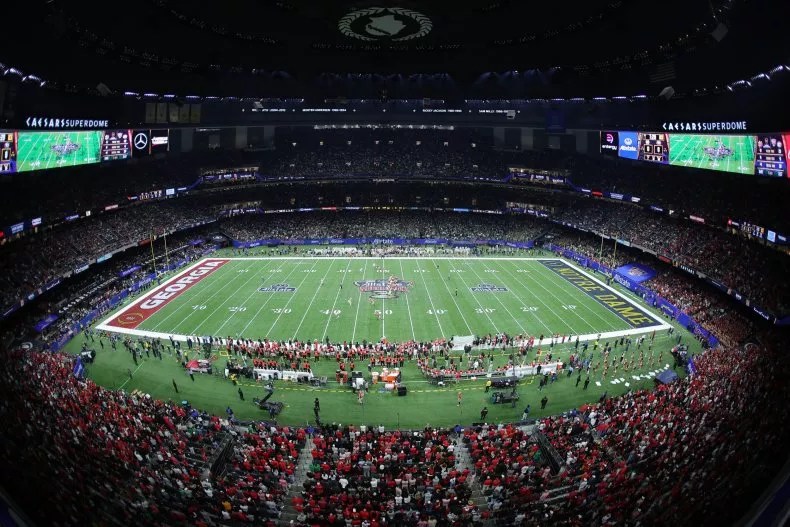
There’s a lot of brouhaha at the moment, including Jack’s apt commentary, about ESPN’s coverage of Thursday’s Sugar Bowl game in New Orleans, or rather of the pre-game.  The game was postponed for a day in the wake of the horrific events of early New Year’s morning only a few blocks from the Superdome, where the game was played.

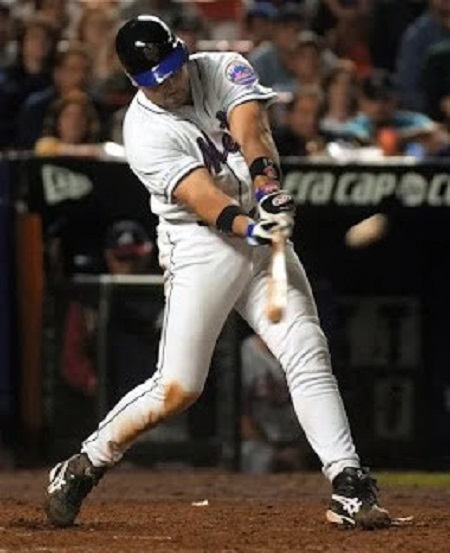
So why is the photo for this piece of a baseball game?  Allow me to explain.  I have been a fan of the New York Mets since 1962, the year of the team’s inception.  I can tell you with certainty that the biggest home run in Mets history had nothing to do with their World Series championship years of 1969 or 1986.  It was Mike Piazza’s two-run, come-from-behind, homer in the bottom of the 8th inning in Shea Stadium on September 21, 2001.  That’s what you see above.

It was the game-winning hit and it came against the best team in the division, the arch-rival Atlanta Braves.  Vastly more importantly, it was during the first major league game to be played in New York after the attacks of 9/11.  And, for the first time in a week and a half, the locals had something to be happy about.  That night, anyone who wasn’t a Braves fan per se (and probably a fair number who were) needed that home run.  Not just Mets fans.  Not just New Yorkers.  Americans.

We’d been told the everything was going to be OK, but we needed more.  David Letterman going back on the air helped, but everything was still somber.  The Bush jokes that would cement the resolve—you don’t joke about the President if your country is in crisis—were to come later.  But first, there was Mike Piazza.  Sometimes, sports matter.

In the winter of 1980, I lived in a small town in rural Kentucky.  I remember watching the “Miracle on Ice” Olympic hockey game on the TV.  After the incredible upset of the powerhouse Soviet team by a bunch of American college kids, after the most famous line of Al Michaels’s career—“Do you believe in miracles?  Yes!”—there was a lot of noise outside, loud enough to be not merely audible but intrusive in my second-floor apartment.

Outside, there was a string of cars with horns blaring; their windows were down (even in Kentucky it can get a little nippy in February), with a bunch of mostly teenagers leaning out and chanting “USA!  USA! USA!”  I’m willing to bet that I was one of fewer than a dozen people in the entire town who’d ever seen a hockey game live, but here were these kids who didn’t know a poke check from a blue line getting excited about the Olympic semi-final.

In the midst of the Iranian hostage situation, with the country only showing the slightest signs of emerging from the energy crisis (is it any wonder the incumbent President was routed in the election a few months later?), we—again, all of us—needed something to grab ahold of, something to suggest that we’d weather the storm. There have, of course, been other moments that transcended sports: Jesse Owens dominating at the Berlin Olympics in 1936, Joe Louis knocking out Max Schmeling in the first round, Billy Miles appearing from nowhere to win the 10,000m in the Tokyo Olympics; we might even add Spiff Sedrick’s improbable sprint to glory in the women’s rugby 7s in this year’s Olympics. But this year’s Sugar Bowl was most like that baseball game in September of 2001: what made it special wasn’t who won, or what political statement could be wrangled out of the victory, but the mere fact that the game went on was a sign of determination and perhaps a little bit of defiance.  If you’re a Georgia fan, you’re disappointed that your team lost, but you were reminded before kickoff that there are more important things than football games. 

Continue reading

Ethics Dunce: ESPN (Disney)

The College Football Playoff quarterfinal at the Allstate Sugar Bowl between the University of Georgia Bulldogs and Notre Dame, postponed from New Year’s Day to yesterday afternoon because of the deadly terrorist attack on Bourbon Street began with a solemn rendition of the National Anthem, a moment of silence, and a defiant crowd chant of “USA! None of this was deemed worthy of broadcasting by the main platform for the event on cable, ESPN. After all, they had ads to sell.

ESPN cut to a commercial break as the moment of silence began, and deliberately—don’t buy the narrative that it was inadvertent—chose not to let the national audience see the emotional prelude to the game including the “U.S.A!” eruption from the crowd. Disney and ESPN are so blinded by their institutional wokeness that they couldn’t recognize that the pre-game ceremonies had cultural and societal significance.

Continue reading

Ethics Dunce: Baltimore Ravens Wide Receiver Diontae Johnson

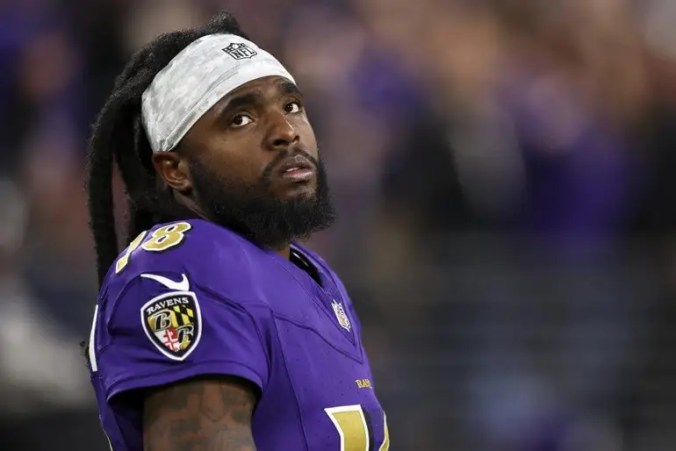
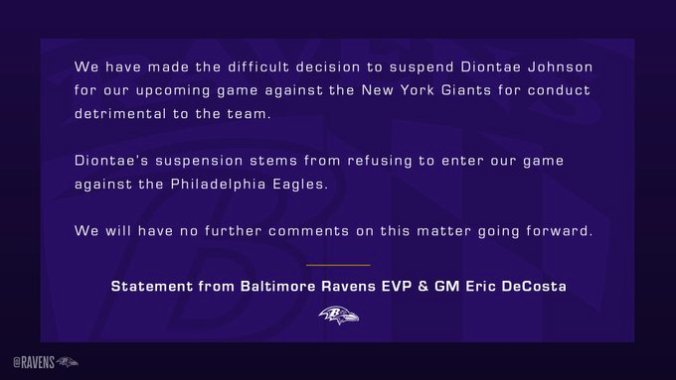
It is sad but probably to be expected that so many professional athletes don’t get the ethics thingy. The latest incident: Diontae Johnson, a wide reciever for the NFL’s Baltimore Ravens, for refused when his coach ordered him to take the field late in the team’s Week 13 game against the Philadelphia Eagles. The Ravens are still trying to make the play-offs, but it wouldn’t matter if the game had no importance to the Ravens’ fortunes at all. Johnson is a member of the team; he draws a salary. Apparently he was angry and frustrated over his lack of playing time since the Ravens acquired him, and had been complaining to teammates for weeks. “Tough noogies,” as they used to say when I was a kid in Arlington, Mass. (An alternative was “tough bunnies.” I never understood that, any more than I knew what a “hosey” was.)

Johnson was immediately suspended.

Wait…why was this a difficult decision? It was an obvious decision. This week the Ravens announced that Johnson was told to stay away from the team as a likely disruptive influence. There was some question why the Ravens didn’t just release him, but apparently that is because they don’t want any other teams strengthening themselves during the play-off run portion of the season.

Continue reading