Ethics Dunce: Major League Baseball

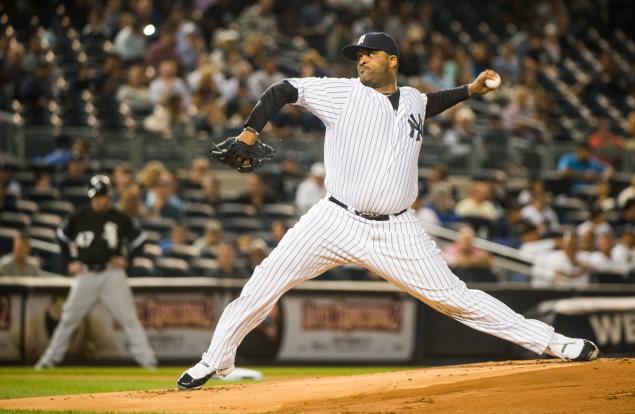
RalphieI just learned, via TV ad, that the fantasy sports company DraftKings is endorsed by Major League Baseball.

MLB needs to rethink that. The commercial I watched just concluded with the promise that if you play fantasy baseball using DraftKings, “You could win a ship-load of money!”

Stay classy, MLB. Why in the world would any sport that is trying (not so successfully, I may add) to attract more kids as fans and encourage families to go to the ballpark ally itself with a company that advertises itself during major league baseball games with dumb, gratuitous potty-mouth crudeness like that? It’s not clever. It’s not witty. Anyone who thinks that it’s funny is 12, Adam Sandler, or a moron. It’s rude, that’s all.

Professional and trustworthy operations, including sports, choose partners that are professional too. This advertising equivalent of fart jokes reflects horribly on the sport, and the people who run it.

And, I may add, the advertising industry. The wit who thinks “a ship-load of money” is a real come-on is probably the same slob who gave us Verizon’s “half-fast” internet ads.  At least that one was original: this Noel Coward-worthy play on words is the same low-life effort that K-Mart embarrassed itself with in its“ship my pants” ads in 2013.

We all have to swim in this water we call a culture, and this is the equivalent of pissing in the pool. We should be able to expect better from baseball.


Unethical Quote Of The Week: Kentucky Guard Andrew Harrison

“Fuck that nigger.”

—-Kentucky guard Andrew Harrison, muttering behind his hand into a live microphone after answering a post-Final Four game news conference question about Wisconsin player Frank Kaminsky, whose heroics had contributed greatly to Kentucky’s 71-64 defeat by the Badgers,  ruining  the Wildcats’ undefeated season and the favored Kentucky’s hopes of another NCAA basketball tournament championship.

Stay classy, Andrew.

Stay classy, Andrew.

We are constantly told how college sports builds character, sportsmanship and life skills, and that the experience itself is a valuable education that will serve students well in their future careers.

Sure.

Harrison later said, in multiple tweets apologizing on Twitter, that his remark was a misunderstood “poor choice of words”—well, except for the word “that”—and that he really admired and respected his rival. Harrison did not explain why his admiration and respect did not extend to shaking hands with the team that had just beaten his, as NCAA practice dictates.

If, by some chance, Harrison does not succeed in his imminent NBA career (that will prevent him from actually getting a degree) or does not make enough millions before flopping that he has to support himself with less lucrative pursuits, his lack of basic manners, civility and judgment will prove to be quite a handicap, I imagine. Too bad he didn’t learn any  of that in college.

But I look forward to having it explained to me once again why a black man calling a white one a “nigger” following a vulgarity should be excused as simply a charming cultural expression of respect that one can only appreciate in the context of the larger African-American experience, while a white man saying the same about a black player would become an instant national pariah and risk having his house burned down.

Side note: It took me 15 minutes and visits to six web sites before I could find out exactly what it was that Harrison said.  Most sources vaguely reported that he had uttered “an expletive and a slur,” or plunged readers into a game of “Hangman” with the statement being reported as “_ _ _ _ that _ _ _ _ _ _.” The Washington Post settled on “[Expletive] that [N-word].” Which expletive??? This is ridiculous, and as inexcusably bad journalism as refusing to show the Charlie Hebdo cartoons that caused the Paris massacre.  The story is about what Harrison said, and it is impossible to inform readers about the incident without saying exactly what was said.


The Phenom, The Agent And The Cubbies: 2015’s First Baseball Ethics Controversy

No, I don’t count Pete Rose.

Kris Bryant, whose day will come.

Kris Bryant, whose day will come.

The lesson of the Kris Bryant dispute is that sometimes the result that seems the least fair is also the right one. Bryant, in case you don’t follow baseball or do not live in Chicago, is the hot Chicago Cubs minor leaguer—what used to be called a “phenom” in the old days—who will not be playing third base for the Cubs when the season opens despite everyone’s agreement that he is not just ready for National League, but ready to star in it. Last week, the young man was assigned  to  the Cubs’ Triple-A Iowa farm team.  Cubs fans are upset. Sports pundits are outraged. Bryant’s agent is furious.

What’s going on here?

A lot.

The MLB  collective bargaining agreement, negotiated and signed by both baseball management and the players union, gives teams control over players for six years before a player can enter free agency and sell his talents to the highest bidder. Thus most young players earn a small percentage of their true market value initially, and, if they are good, hit the jackpot after that. (The average salary in Major League Baseball is $4 million a year). There is a catch, however—and an unavoidable loophole. A full season is defined as 172 days, though the season is 180 days. If a young player is left off the roster until there are fewer than 172 days remaining in the regular season, that season doesn’t count as one of the six years; a player can’t become a free agent mid-season six years later. Before the demise of the reserve system that bound a player to one team until the team released or traded him, there was no reason not to promote a promising minor league star to the big team the second it looked like he was ready. Now, there is a big reason: delaying those few games will give the team an extra year of control, since under the rule, 6 years and 171 games is still just six years. That means an extra year of the player at bargain compensation, and possibly an extra year of the player, since he can fly the coop once the clock has run.

This is not a new issue: players and agents have been complaining about teams doing this for years, but the rules allow it. Since the rules allow it, and since the monetary and competitive benefits of waiting those extra nine days can be huge, there is nothing unfair or unethical about a team taking advantage of the provision. Indeed, it would be irresponsible and a breach of management’s fiduciary duties not to save millions and ensure the extra year of a star’s services. What, then, has made Bryant’s case so contentious?

It’s the Cubs, that’s what. Continue reading

Go Ahead, Cheer March Madness, But Be Sure To Turn Off Your Ethics Alarms

NCAA

It is true that watching, rooting for, betting on and generally contributing to the perpetuation of the NCAA Division I men’s basketball tournament, March Madness, and thus big time college basketball generally, is not as unethical as supporting pro football…after all, as Rationalization #22 reminds us, at least we aren’t killing anyone. Still, the whole system is rotten to the core: it warps higher education priorities, it instills toxic values in students, it has nothing to do with student athletics, and it rewards deceit, bribery, and cheating. FACT: Colleges would be better and the culture would be healthier without it.

Unfortunately, that would require people like the President of the United States to show some restraint for the good of society and the education of our children, and say, “Nope. College is for education, and spending millions to create teams of mercenaries who are only interested in making the NBA is a disgraceful misapplication of resources as well as inherently corrupting.”

You doubt that description? Look at the University of Massachusetts, which announced that it will retire a jersey in honor of  John Calipari to commemorate the 20th anniversary of the university’s 1996 appearance in the men’s basketball Final Four, when he was the coach. Calipari, the university noted in the announcement, “catapulted” the university to “national prominence.” Well, that’s one description.  Because the N.C.A.A. eventually found out that Calipari’s star player, Marcus Camby, had accepted riches and, ah, “services” (prostitution services, for example), from sports agents, the university had to pay $151,000 in fines—how many indigent students’ tuition might that have paid for? At least one—and the Final Four appearance that Calipari is being honored for was wiped from the record books. Continue reading

Tales of “The King’s Pass”: Pete Rose and Jeremy Clarkson

King

The King’s Pass has been much in the ethics news of late—Brian Williams, Bill O’Reilly, David Petraeus, Hillary. Let’s review, shall we?

11. The King’s Pass, The Star Syndrome, or “What Will We Do Without Him?”

One will often hear unethical behavior excused because the person involved is so important, so accomplished, and has done such great things for so many people that we should look the other way, just this once. This is a terribly dangerous mindset, because celebrities and powerful public figures come to depend on it. Their achievements, in their own minds and those of their supporters and fans, have earned them a more lenient ethical standard. This pass for bad behavior is as insidious as it is pervasive, and should be recognized and rejected whenever it raises its slimy head.  In fact, the more respectable and accomplished an individual is, the more damage he or she can do through unethical conduct, because such individuals engender great trust. Thus the corrupting influence on the individual of The King’s Pass leads to the corruption of others…

1. The BBC just demonstrated how the King’s Pass should be rejected—with courage and gusto.

Jeremy Clarkson, the main host of the popular BBC auto show “Top Gear,” spent March misbehaving. He got in a shoving match with a producer, verbally abused staff and was recorded trashing the network. When Clarkson topped it off with a physical altercation with a show staffer, the BBC decided not to renew his contract. BBC head Tony Hall said in a statement:

It is with great regret that I have told Jeremy Clarkson today that the BBC will not be renewing his contract. It is not a decision I have taken lightly. I have done so only after a very careful consideration of the facts…I take no pleasure in doing so. I am only making [the facts] public so people can better understand the background. I know how popular the programme is and I know that this decision will divide opinion. The main facts are not disputed by those involved.

The BBC is a broad church…We need distinctive and different voices but they cannot come at any price. Common to all at the BBC have to be standards of decency and respect. I cannot condone what has happened on this occasion. A member of staff – who is a completely innocent party – took himself to Accident and Emergency after a physical altercation accompanied by sustained and prolonged verbal abuse of an extreme nature. For me a line has been crossed. There cannot be one rule for one and one rule for another dictated by either rank, or public relations and commercial considerations… Obviously none of us wanted to find ourselves in this position. This decision should in no way detract from the extraordinary contribution that Jeremy Clarkson has made to the BBC. I have always personally been a great fan of his work and “Top Gear”…The BBC must now look to renew Top Gear for 2016. This will be a big challenge and there is no point in pretending otherwise. I have asked Kim Shillinglaw [Controller of BBC Two] to look at how best we might take this forward over the coming months. I have also asked her to look at how we put out the last programmes in the current series.

The show, without Clarkson, is toast, and Hall knows it. Nonetheless, he had the guts to do the necessary and ethical act: not allowing its indispensable star to abuse his power and popularity . Once Clarkson did that, “Top Gear” was doomed anyway; firing him now just minimizes the carnage. Although Hall has no responsibility to other networks and organizations, his decisive handling of the episode has saved other programs even as it destroys his own. It is a precedent and a role model for employers refusing to allow themselves to be turned into enablers  by stars assuming the King’s Pass works. When they say, “You can’t fire me, I’m irreplaceable! There’s no show without me!”, the response now can be, per the BBC: “If there’s no show without a jerk like you, then there’s no show. Bye!”

2. Once again, Pete Rose is sucking the ethics right out of people’s brains.

Ah, Pete Rose. He was the topic of the first ethics post I ever wrote, way back in 2004. Then, in 2007, he became my first and only Ethics Dunce Emeritus.

The Pete Rose case is simple. Baseball has an absolute, no exceptions rule that demands a lifetime ban of any player, coach or manager who gambles on major league baseball games. Such banned players can’t be hired by major league teams for any purpose, and cannot be considered for Hall of Fame membership., ever, even after they are dead. Everyone in baseball knows why this rule exists—baseball was nearly destroyed in 1919 when gamblers bribed the Chicago White Sox to throw the World Series—and the rule is posted in every clubhouse. Rose bet on baseball while a major league manager, and also bet on his own team. Thus he is banned.

The significance of the fact that he is, as a player, the all-time hits leader and was the face of the game is that it led Rose to believe that the game would never ban him, and that if caught, he would be treated with special leniency. His excellence on the playing field doesn’t mitigate his conduct, or justify minimizing the ban it earned, at all.

The New York Times published a story about Rose’s efforts to get baseball to lift the ban, now that a new Commissioner, Rob Manfred, is in office. You can read the article here, which is remarkable for the many jaw-droppingly unethical arguments put forth by the baseball people the article quotes, contrasted with the occasional quote that shows that a speaker comprehends the concepts of consequences, accountability, and why letting stars break the rules is suicidal to any culture. It would be an excellent ethics exam.

Here are the quotes; my comments follow in bold. Continue reading

The Washington Post Editorial Board Demonstrates How Stupid Decisions Have Unprofessional Consequences

"As you can see, the logo and mascot are completely offensive. Well, you can see, but to let you see, you'd have to see it, and we won't take responsibility for letting you see it, because you shouldn't. Trust us."

“As you can see, the logo and mascot are completely offensive. Well, you can see, but to let you see, you’d have to see it, and we won’t take responsibility for letting you see it, because you shouldn’t. Trust us.”

Last August, the showboating Washington Post editors announced that they would no longer use the name of the city’s NFL team when writing about the city’s NFL team. It’s offensive you know. Well, to some. Well, to a theoretical some, those who want to make an ideological and philosophical point while forcing political correctness down the throats for the vast, vast majority of sports fans to whom “Washington Redskins” is the name of a well-loved (if lousy) football team, and nothing more or less, and no statement negative or positive about Native Americans at all.

In this the board is emulating the school that wouldn’t let a little deaf boy sign his own name, “Hunter,’ because the sign language designation was a hand-and-fingers approximation of a pistol, and pistols are offensive to even more people than politically incorrect team names are. This is really, really crazy stuff, even more for a newspaper than a school, in which it was just cruel. Newspapers are supposed to convey information clearly and unambiguously. Making symbolic stands requiring the self-censorship of words is a breach of professional duty and trust. The editors’ duty is to their readers, not to a theoretical Native American who reads a the footballs scores and has the vapors when he reads “Redskins.” (I still doubt that there are such people.)

Over the weekend the Post produced an embarrassing editorial that fulfilled all my dire predictions about the new policy: Continue reading

Ethics Hero: San Francisco 49ers linebacker Chris Borland,

concussions NFL

It is indeed strange to call someone an ethics hero for taking reasonable steps to save his own life. In the case of Chris Borland, however, it is appropriate.

Borland, one of the NFL’s top rookies in 2014, announced that he is retiring after just one season he does not want to risk the long-term effects of repetitive head trauma.

Borland, 24, said  he made his decision after consulting with  concussion researchers, and current and former teammates, as well as researching  the relationship between football and neurodegenerative disease.

“I just honestly want to do what’s best for my health,” Borland told ESPN.  “From what I’ve researched and what I’ve experienced, I don’t think it’s worth the risk.” Continue reading

Ethics Hero: Former Red Sox Pitcher Curt Schilling

schilling_rect

No, this isn’t about “the bloody sock.”

When Curt Schilling found his teenage daughter the target of obscene tweets from anonymous Schilling haters —he annoys vengeful Yankee fans because he led the historic Boston comeback from a 0-3 deficit that humiliated their team in 2004, deranged Democrats because he is a Republican, anti-Christian bigots because he is openly devout, and there was that scandal involving his game company blowing through millions of taxpayer dollars bestowed on it by Rhode Island —he got both mad and even, tracking down their identities, and exposing them and their filthy cyber-bullying on his personal blog.  He apologized to his daughter for prolonging her embarrassment, saying,

P.S. Gabby I know you’re likely embarrassed and for that I apologize,” he wrote. “But as we have talked about, there is no situation ever in your life, where it’s ok for any ‘man’ to talk about you, or any other woman this way (and truth be told no real man would ever talk this way anyway). It truly is time this stopped.”

Several of Gabby’s tormenters felt her famous father’s wrath in substantive ways. In the aftermath of Schilling’s counterattack,  Adam Nagel  was suspended by Brookdale Community College, where he’s a student and a disc jockey, and Sean MacDonald was terminated by the Yankees, where he worked as a part-time ticket seller. The ex-pitcher noted that several athletes who slimed Gabby Schilling were punished by their coaches.

Wrote the avenging father on his blog, Continue reading

Jackie Robinson West Little League Baseball Team Epilogue: Who Says “Cheaters Never Prosper”?

Littel League champs

As described here, Chicago’s Jackie Robinson West Little League Baseball team was stripped of its U.S. title after Little League International found out–later than it should have— that the team’s adult leadership changed the district boundaries without permission to create what was really an all-star team. The championship, to be blunt, was won through cheating.

Since the team’s members were all African-Americans, Jesse Jackson and many of the parents immediately claimed that racism was behind the forfeit. If, however, a white team had been found to have prevailed over a black team by cheating and was allowed to keep its ill-gotten championship, Jackson would also scream racism. (This was a #11. on the Draft Ethics Alarms Race-Baiting Scale: Presumed Racism: Accusations of racism based on no other factors but the races of the individuals involved.) Jackson and Chicago Mayor Rahm Emanuel then pressured the Little League to reverse its decision, essentially allowing cheating to be 100% successful, as it often is in politics. To its credit, the organization refused to bend.

Never mind:  Emanuel is a veteran of the Obama administration, and also has a large black constituency to pander to. Thus he plans on giving the team championship rings at next month’s city council meeting. Emanuel found private donors to fund championship rings shortly after the Little League World Series. Each ring has the player’s name, jersey number and the number 42, in tribute to Jackie Robinson.  On the inside of each ring, the legend, “Who says cheaters never prosper?” is engraved in script.

Just kidding about that last part. Continue reading

Best Ethics Movie Of The Year: “Whiplash”

I doubt that it will win “Best Picture” at the Oscar (though the consensus seems to be that J.K. Simmons, who dominates the film, has “Best Supporting Actor” in the bag), but “Whiplash” is the best film of the year that explores an ethics conundrum of long standing.

Without spoiling the film for those of you—the odds say a majority—who haven’t seen it, let me explain why.

“Whiplash” is ostensibly about a gifted music student’s quest to become not merely a good but a great jazz drummer. On the way, he encounters a fanatic, merciless, manipulative and demanding teacher (Simmons) who sees the young man’s passion and potential and is determined to either make his greatness bloom or break him trying. The movie raises the eternal question of the ethical obligation of the gifted to use their gifts to enrich society, culture and mankind. Arturo Toscanini once berated Bing Crosby for “wasting” his once-in-a-lifetime voice on popular music rather than opera. Is possession of a remarkable ability or talent something that forces the possessor to live an altruistic existence, subordinating his or her own desires to what will most benefit others? Is it unethical to refuse, to choose another path, one that is less daunting, easier, more relaxing, surer, without the stress, without the burden of chasing perfection and extraordinary success? Continue reading