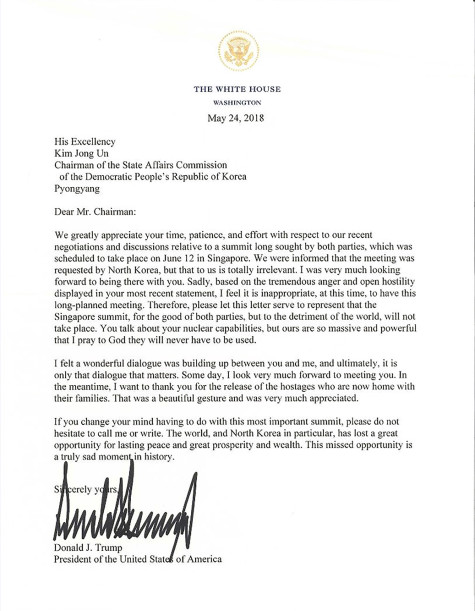
1. What? Negotiation competence? Boy, we haven’t seen THAT for a while. President Trump just pulled out of the scheduled summit with North Korea, a public lesson in Negotiation 101. If only Barack Obama had taken the Art of the Deal seminar before capitulating to Cuba and Iran. the letter the current elected President just sent to North Korea could not be more obvious in its devices, but I guarantee you that my negotiations professor at law school, Dean Adrian Fisher, one of the negotiators of the SALT treaty, would have approved. Here’s the letter, released this morning.
This is another ethics test, by the way. Take note of who criticizes the President for this, for they will be revealing themselves as either reflex-Trrump haters or the kind of people used car dealers love to see walking in the door.
2. “A Nation of Assholes” update. It is now beyond dispute that the concept was right but that I badly misjudged the population that I thought would be primarily affected. My theory in the 2015 essay was that that having an ethics-challenged boor like Donald Trump as President would degrade the ethical standards of the public through the “rotting fish head” process: people follow the leader. Well, that has happened too, but the worst asshole transformation has beset progressives and “the resistance.,” as their behavior gets worse by the hour. Continue reading →
1. What is so hard to understand about the concept of Freedom of Speech and Freedom of Assembly? The Daily Beast negligently covers a story about how some alt-right groups are planning some kind of anniversary/reunion event in Charlottesville. (Funny, I thought we celebrated anniversaries of good things) and how some activists are plotting to block them. I especially like this sentence:
“Activists warned Charlottesville last year that the Unite the Right rally could turn violent. Now they’re determined to keep neo-Nazis out of their city for the anniversary.”
The rally turned violent because the counter-demonstrators turned it violent with help from authorities, who couldn’t, couldn’t, or didn’t want to keep the alt-right and the antifa demonstrations away from each other. This is the Berkeley trick: “Your speech will incite violence from us, so its irresponsible for you to speak. This issue was supposedly settled when the ACLU fought to allow Nazis to march in Skokie, Illinois 40 years ago. In the end, the Nazis didn’t march but the principle that they couldn’t be blocked because of their message was made clear. I wonder if the self-righteous, speech-restriction fans represented by Black Lives Matter activist Lisa Woolfork even know about that case, given such ignorant quotes as,
“[Charlottesville authorities] seem to have gotten the message that white supremacist ideology is dangerous, but they are not willing to take, I believe, the truly moral step to say Kessler’s rally is a white supremacist Nazi rally, and therefore is inimical to our values and that we can ban that.”
No Lisa, you can’t ban that. You can’t ban ideas, no matter how dangerous you think they are, or how dangerous they in fact may be. The theory that the government should ban speech based on morality is infinitely more dangerous than anything these alt-right jerks say, but you still have the guaranteed right to promote such democracy-rotting garbage. Another Lisa quote:
“We did not ignore the white supremacists and let them proceed to go about their business undisturbed without any censure. These ideas are harmful, and they lead to horrible consequences in the real world.”
And I repeat: What is so hard to understand about the concept of Freedom of Speech and Freedom of Assembly? It sure seems to be especially hard to understand for the Left recently. Continue reading →
There is this big, white-yellow, ball-thing in the sky overhead..not sure what it is.
The sky is also this weird bluish color.
Very strange…
1. The news media actually calls this creep a moral authority...which itself is significant. On his late-night talk show, Jimmy Kimmel said, “President Trump said he is with the people of Santa Fe in this tragic hour and will be with them forever—except for when it comes time to do something. Then he will not be with them.”
Trump’s post shooting statement was standard issue President-after-tragedy stuff, neither unusual nor objectionable to anyone not seeking to manufacture offense. “We grieve for the terrible loss of life, and send our support and love to everyone affected by this absolutely horrific attack,” Trump said. “To the students, families, teachers, and personnel at Santa Fe High: We’re with you in this tragic hour, and we will be with you forever. My administration is determined to do everything in our power to protect our students, secure our schools, and to keep weapons out of the hands of those who pose a threat to themselves and to others. Everyone must work together, at every level of government, to keep our children safe.”
Kimmel :“They care more about the support of the NRA than they do about children.”
Kimmel’s statement is signature significance for an ignorant, unscrupulous asshole, and one who either has never read the Constitution, or doesn’t care what it says. There is absolutely nothing that the President of The United States, (or “they”) could or can do to prevent school shootings like the one in Santa Fe.
2. Who wants to join me in a sit-in at Starbucks? It will have to be a lily-white sit-in to make the point. Starbucks’ desperate, pandering, virtue-signaling, deranged new policy that allows anyone to sit in its stores or use its restrooms, even if they don’t buy anything, immediately guarantees the Tragedy of the Commons, which the silly, social justice warrior-run company apparently felt was a preferable disaster than to be accused of racism for enforcing a reasonable and necessary rule when blacks were the violators. If all the tables and space are taken up by non-customers, loiterers and free-riders, Starbucks can’t do any business, but it is literally saying, “We don’t care!” Why? Well, even if they ordered white freeloaders to leave, every time the freeloader was black, Hispanic, gay or in a wheelchair, a YouTube video would appear, go viral, and Starbucks would be tarred as corporate bigots. The police could try this same strategy: announce that officers will not fire on any individual resisting arrest or threatening an officer’s life. I’m sure that will work out well too.
3. Yes, this was the quality of the people running the country during the Obama years. Obama’s Education Secretary Arne Duncan argued on Twitter that parents should pull their children out of school until elected officials pass stricter gun control laws. He really did. Let’s have a contest: List how many ways this suggestion is unethical. I’ll get you started: it is irredeemably stupid, and thus an abuse of influence, making the naive and easily gulled believe that because this man ran the Education Department, he is a respectable authority whose bone-headed utterances can be trusted and taken seriously. (I see at least five more.) Continue reading →
He was the star and author of a bizarre incident at a restaurant in Manhattan. Schlossberg, who is a midtown Manhattan lawyer, freaked out beyond all reason when a customer began conversing in Spanish with employees at the restaurant. “Your staff is speaking Spanish to customers when they should be speaking English,” he protested. “Every person I listen to — he spoke it, he spoke it, she’s speaking it. This is America! “My guess is they’re not documented, so my next call is to ICE to have each one of them kicked out of my country.If they have the balls to come here and live off of my money — I pay for their welfare, I pay for their ability to be here — the least they can do is speak English…I’m calling ICE.”
Naturally, this was captured on a phone video. Naturally, it was posted to social media. Once upon a time a person could behave like a jackass and only have the immediate witnesses to his conduct know about it. No more. Now, thanks to omnipresent cell phones, everyone is under more or less constant surveillance, and a bad moment, a sudden outburst or an ill-considered word can and will be wielded by steely-eyed social justice enforcers to destroy a miscreant’s life to the maximum extent possible.
Is that the kind of society you want to live in? It would be wise to consider the fate of Aaron Schlossberg.
Yesterday I did a pro bono ethics presentation for a local lawyer group. During the lunch, which, as usual in such situations, I never got to eat, I was seated next to a lively, intense, talkative young man, like the rest of my audience, a corporate counsel. The discussion was oddly tentative for a long time, which the lawyer’s body-language suggesting wariness and his verbal choices suggesting unusual care. He was probing for something, and I couldn’t tell what. What was it that they vibe reminded me of? Poker? A job interview? Suddenly I realized what it was: the conversation had the tenor, though not the implied subject matter, of those awkward conversations I recalled from parties and encounters where a new male acquaintance was trying to figure out a) whether I was gay and b) whether, if I wasn’t, he could trust me enough to say that he was.
In this case, however, the young man was probing to see if I hated President Trump. I don’t know which comment of mine put him at ease, but suddenly it all poured out. This lawyer and Haitian-American immigrant was an enthusiastic supporter of the President’s policies and leadership style. Once he was certain that I would not look at him like he was the spawn of Satan for daring to express such a view—which he explained extremely logically and eruditely—we had a fascinating discussion, covering illegal immigration, the news media’s bias, the “resistance,” racism, muscular foreign policy leadership, the 2016 campaign, and more.
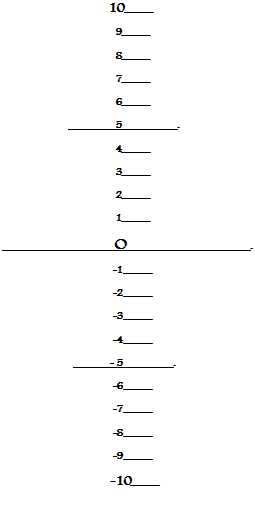
However, the fact that simply expressing support for the elected President of the United States, even limited support, indeed even the absence of affirmative contempt, is considered such a perilous social stance that citizens are afraid to express it among their peers demonstrates the monstrous—I think that’s a fair adjective here—intimidation and speech suppression that has been perpetrated by the Left since the 2016 election. Hate is such a powerful emotion that even when it is unjustified, the threat of it being focused on you now keeps Americans from openly expressing their opinions. This is a thought and attitude control strategy, weaponizing the Cognitive Dissonance scale (above) to achieve power and control. If you have this position, we will hate you. Be warned. The message goes out in a thousand ways, especially on social media, but in face-to-face encounters as well, with family, in the workplace, and in social situations. Some—I think a surprising number–have the strength to resist it as the unethical compelled political conformity tactic that it is. Still, many capitulate, at least in public. The tactic is even turned on experts and analysts with integrity as well, as in this Politico essay about Alan Dershowitz, which carries the message that a good liberal should not be making the case that the criminal law is being abused and civil libertarian principles discarded as the Left attempts to undo an election by any means necessary. The effectiveness and intimidating weight of the implied threat of shunning is acknowledged by what one blogger describes as the “Trump Bump”—“that little obligatory hiccup in which the speaker on any given topic must pause to make a pejorative reference to Donald Trump before going on, in order to establish his or her bona fides as a good person. ” Continue reading →
(I am grimly soldiering on, despite the horrifying Red Sox loss to the Yankees last night. Duty calls...)
1 From the “Facts don’t matter to Trump, and facts don’t matter to Trump enemies” files:
1)The New York The Times reported that Secretary of State Pompeo was absent from Washington when Trump announced he was pulling the U.S. out of the nuclear deal with Iran, and framed it as a gaffe, headlining the story, “At a Key Moment, Trump’s Top Diplomat Is Again Thousands of Miles Away.” The paper knew why Pompeo was absent, though: he was heading to North Korea make sure that three imprisoned Americans got released and returned home without a hitch. The story under the accusatory headline said so. Pompeo also went to North Korea to arrange a date and venue for Trump’s meeting with Kim Jong Un. And, of course, Pompeo arriving with some of the benefits of Trump’s tough policy toward North Korea was an excellent backdrop for the Iran announcement.
Ethics verdict: bias and misrepresentation.
2)Stormy Daniels attorney Michael Avenatti included transactions by one or more Michael Cohens who have nothing to do with Donald Trump in a report Avenatti released about the President’s personal fixer’s alleged banking transactions. There are already questions being raised about how the lawyer acquired any banking records before legal discovery, but this is just rank incompetence.
3) Yesterday the President tweeted,
“The Fake News is working overtime. Just reported that, despite the tremendous success w”e are having with the economy & all things else, 91% of the Network News about me is negative (Fake). Why do we work so hard in working with the media when it is corrupt? Take away credentials?
Huh! I didn’t know this was traditional Chinese business attire! Imagine: This is what Marco Polo must have seen!
The most amusing reaction to the apotheosis of progressive silliness that was the attacks on Utah high-schooler Keziah Daum for wearing a Chinese-style prom dress came from China, where the South China Post’ s Alex Lo, who authored a column titled, “Go ahead, appropriate my culture.” He wrote in part,
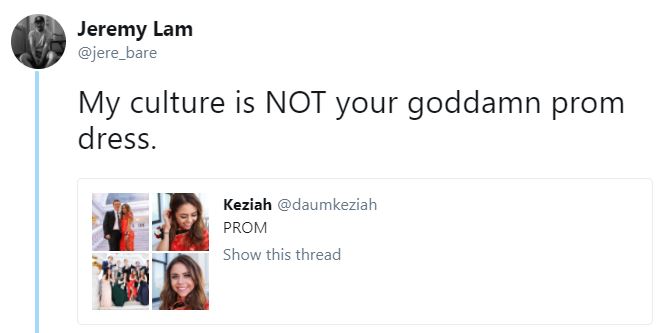
If anyone thinks social media is harmless, this incident should prove otherwise. A person called Jeremy Lam apparently first tweeted about her transgression, which is now being called “cultural appropriation”. “My culture is NOT your goddamn prom dress,” he posted…I apologise in advance for contributing to the silliness, but just needed to get it off my chest. A publication as esteemed as The Independent of London ran a column supportive of the criticism.“The debate her prom pictures have prompted is justified,” the columnist wrote. “Cultural appropriation is about power, and to many she is the embodiment of a system that empowers white people to take whatever they want, go wherever they want and be able to fall back on: ‘Well, I didn’t mean any harm’.”
I would argue those who scream loudest about cultural appropriation are themselves after power…Why does Jeremy Lam think Chinese is his culture? Is his the same as mine? Is it some kind of property like an inheritance? If so, where is the will, written in our DNA, perhaps? And is it taxable or payable, and by whom? Why did Lam write in English? Isn’t he inappropriately appropriating English-speaking culture? …SJWs turn culture into some kind of finite asset, a zero-sum rather than a growing-sum game. They are oblivious or ignorant of how human cultures actually work: culture is cultural appropriation.
It’s worth noting the issue of what I can only call — with much irony — aggregation bias here. There _has_ to be a term for it that doesn’t rely on punning off a statistical concept, though…”
In reflection, I suppose that what’s going on is technically a variant of the ecological fallacy — but it’s manifesting as a form of bias (in the non-statistical sense) based on the aggregation of behavior… so the term isn’t quite right, leading me right back to punning off of the statistical concept. I can’t explain the issue without a massive amount of technical language (e.g. “the emergent nature of many features of a complex system”).
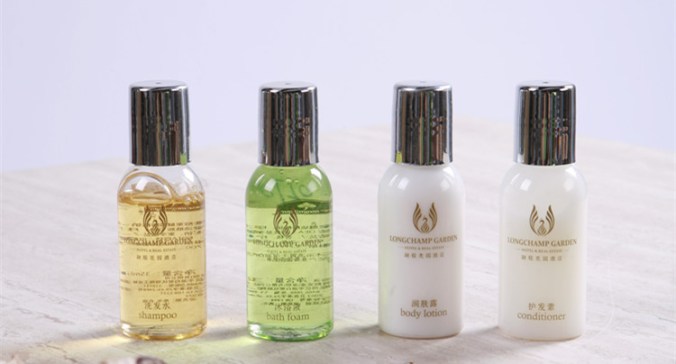
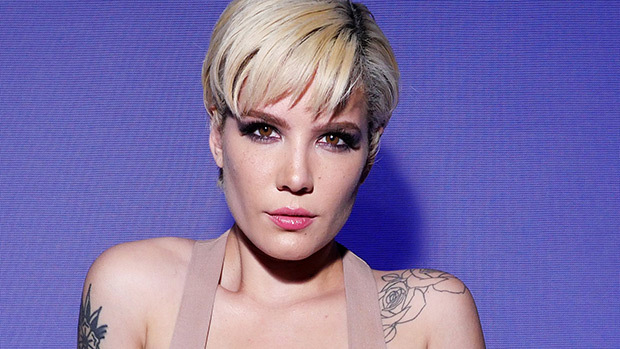
When pop star Halsey took to Twitter to complain that the shampoo and conditioner typically made available to guests in hotel bathrooms are useful, if at all, only to women with “white people hair,” the immediate reaction in many quarters was that the race-victimization industry must be running out of outrages. “I’ve been traveling for years now and it’s been so frustrating that the hotel toiletry industry entirely alienates people of color,” she tweeted. (No, I never heard of her before either.) “I can’t use this perfumed watered down white people shampoo. Neither can 50% of ur customers. Annoying.” First she was accused of being white—she isn’t, believe it or not—
—then she was mocked for being ridiculous: surely the rich celebrity can afford to travel with her own hair products! But when one ponders a bit, Halsey has raised an interesting ethics dilemma.
After the commentary got rolling on social media, black women and women who were of mixed race genetic make-up spoke up to say that the singer was right: unless a woman had generic Caucasian hair, those little bottles make a mess of her coiffure. “We’re not all millionaires, yet we all do stay at hotels and would appreciate if the shampoo didn’t turn our hair into Brillo pads,” wrote a Twitter user.
“Who knew me acknowledging that white hair care products are the national standard (while POC are confined to a tiny aisle) would piss so many people off. Not sorry,”Halsey persisted. “If white ppl can enjoy the luxury/convenience, there should be an option for everyone to. It’s an ‘insignificant’ example of a bigger problem. That’s all!”
Another fan wrote: “You need to remember this is one of the many small things that POC go through that makes them feel like we don’t matter enough to be catered to. It’s a microaggression.”
Is it really a microaggression? Or is it it just one of those realities of not being the majority that minorities have decided they should protest to bend society to their will? Is the fact that so many tools, appliances and other daily necessities are made for right-handed people a sign of hostility, or just a rational business decision? Hotel shampoo isn’t great (being bald, I find it makes good bubble bath, however), but it’s provided for those who want to use it. The “we’re not all millionaires” argument for the average person staying in a luxury hotel like the ones Halsey stays in is a stretch, but nonetheless, is it fair that hotels cater to the needs of the majority of women while ignoring the special needs of a minority? On the other hand, is it reasonable to expect hotels to spend the extra money to make multiple varieties of conditioners and shampoos available so no one feels discriminated against? Should I have to pay extra so Halsey isn’t offended?
Coincidentally, this week also brought the news that many hotels, as a cost saving initiative, were eliminating the small bottled entirely in favor of wall dispensers. I could easily see enough social justice warrior indignation being raised over racist shampoo that hotels decide, “Oh the hell with it. Let’s just stop stocking the stuff.” Would minority activists consider this a victory? Jack can’t enjoy his bubble bath any more because hotels had to choose between providing a tiny amenity to the vast majority of its guests and getting accused of “microaggression,” or spending a fortune to stock their bathrooms with sufficient varieties of hair products that nobody could complain of discrimination?
The controversy is really a smaller and more trivial version of the wheelchair-accessible transportation problem that I last wrote about here. I concluded then,
There are now 655 wheelchair accessible taxis in the New York city area. I’d love to see statistics on how often they are used by the passengers they are designed to serve. My guess: not that often. As much as anything else, this is an interest group power-play. It is discrimination, they insist, if handicapped passengers have to wait longer than non-handicapped. New York’s Taxi and Limousine Commission has proposed broad new requirements for wheelchair-accessible service for the entire for-hire industry including Uber and the other ride-hail companies. Naturally: they want to put ride-sharing companies out of business, and this could do it.
Government has a legitimate interest in making basic public accommodations reasonably and sufficiently accessible to citizens with handicaps, to the extent this is possible and financially feasible without reducing reasonable access for the non-handicapped majority, or putting companies out of business that can’t reasonably be expected to make expensive mandated adjustments. The government does not have an obligation to spend taxpayer dollars and to bully businesses so the handicapped can avoid all of the inconveniences attendant to their misfortune. Nor is it the government’s function to ensure that handicapped citizens don’t have to plan their days.
Or that people with frizzy hair don’t have to carry their own shampoo and conditioner when they travel.
I can’t see without my glasses, and can’t wear contacts. If I go to a 3-D movie, I am very uncomfortable wearing the 3-D specs over my own glasses. Isn’t that unfair? Isn’t that a microaggression against my handicap? Shouldn’t the theaters be forced to provide 3-D glasses that I can use as comfortably as anyone else? How is that argument any different from the protests of the Frizzy Hair Activists?
Halsey put her Twitter-finger on an ancient questions that divides nations, religions and ideologies. Is fairness possible, when everyone’s needs and expectations are different?
New York-based lawyer Lina Franco had missed a November 23, 2016 filing deadline for a motion for class certification in a wage-and-hour law suit. Missing deadlines is a lawyer n0-no, and can get you sanctioned, sued, fired, or worse. Luckily, Franco had an excuse, or so she thought. She filed for an extension 16 days past the deadline, claiming that she had been forced to leave the country for the family emergency. She even submitted a flight itinerary showing she had flown from New York City to Mexico City on Thursday, November 21, and had remained there until December 8.
Let’s call this particular social media gaffe Ferris Bueller’s Mistake. For Instagram photos from Franco’s public account indicated that she was in New York City and later Miami during that period. You know, like when Ferris turned up on TV at a ball game when he was supposedly sick in bed? Like that. There was another teeny problem: November 21, 2016 was a Monday, not a Thursday, as the judge sanctioning Franco $10,000 pointed out in his ruling.
Franco now admits that she had gone to Mexico City earlier in November than she said, but that her mother’s medical diagnosis sent her “into a tailspin” causing her to miss the deadline and to submit the false itinerary.
Now watch Instagram posts show up from Franco’s mother, with photos of her winning a seniors kickboxing tournament. Continue reading →
Utah high school student Keziah Daum posted a picture of herself looking lovely in a prom dress, and thanks to the warped values and cracked ethics of a young social justice warrior tweeter named Jeremy Lam, was set upon by the social media Furies.
Here is the tweet:
The tweet received 179 THOUSAND likes, and was retweeted 60 thousand times. Yes, a young woman going to her high school prom was condemned by all those strangers for liking and wearing an Asian-themed dress.
I don’t know what broken-chromosome mutation of progressive thought creates Americans like Jeremy—who is living in our culture, which is an amalgam of all cultures, but better—but the fact that he could attract such support with his divisive, segregated version of what our society should be is one more sign that the hard-Left is getting more anti-American by the hour. David French nicely puts this episode in perspective:
“Just so we’re clear, the radical progressive position is (1) America’s borders should be flung wide open to people from every culture in the world; (2) when American white people encounter people from those hundreds of different cultures, they need to stay in their lane; and (3) white people staying as white as possible will help our nation totally unify and diversity will be our strength.”
That’s about right. Kaziah Daum is the victim of racism here. Reasonably for someone unfairly thrust into the culture wars without justification or warning, she responded that she wasn’t trying to upset anyone; she just thought it was a pretty dress. The rest of us, French suggests, need to be more assertive: Continue reading →
 This is another ethics test, by the way. Take note of who criticizes the President for this, for they will be revealing themselves as either reflex-Trrump haters or the kind of people used car dealers love to see walking in the door.



 Ethics Alarms