From The EA Archives: The Trump Presidency And “The Caine Mutiny”—A Reminder

I watched “The Caine Mutiny” last night with a friend who had never seen it. I realized that I had written during Donald Trump’s first term about how the rebuke Navy lawyer Barney Greenwald (Jose Ferrer) delivers to the acquitted mutineers fit 2019’s “resistance”  like the proverbial glove. It fits today’s  Axis of Unethical Conduct even better. I’ll have some brief comments after the post.

* * *

Turner Movie Classics ran “The Caine Mutiny” again last night. It reminded me of what I wrote two years ago, when I really didn’t think that the “resistance” and the Democrats would continue on the destructive path they have for this long. I even wrote, foolishly, “This is the last time I’m going to try to explain why the fair, patriotic, ethical and rational approach to the impending Presidency of Donald Trump is to be supportive of the office and the individual until his actual performance in the job earns just criticism. Attempting to undermine a Presidency at its outset is a self-destructive act, for nobody benefits if a Presidency fails.” Of course, it was far from the last time I returned to the topic. In my defense, how could I know, at a point where the term “the resistance” hadn’t even surfaced yet, that the unparalleled assault on a President would not only continue, but escalate to the point where a newly minted Congresswoman would announce to a cheering mob, “We’re going to impeach the motherfucker!”?

Watching the movie, however, was striking. I know it well; I can recite many of the lines from memory. Yet the parallel with the Trump Presidency struck me smore powerfully than ever before, and sent me back to that previous post, in which I wrote,

“In The Caine Mutiny, a film version of the stage drama and novel “The Caine Mutiny Court Martial,” Captain Queeg (Humphrey Bogart), a man whose war-shattered nerves and self-esteem problems have rendered him an erratic and an unpopular officer, falters in his command during a storm. His officers, frightened and already convinced that their captain is unfit for command, mutiny. At their military trial, their defense attorney causes Queeg to have a breakdown on the witness stand, winning the case for the accused mutineers. Later, however, at the post trial victory party, the lawyer, Barney Greenwald (Jose Ferrer),  shames his clients. He represented them zealously, but he tells them that they were, in fact, at fault for what occurred on the Caine:

Ensign  Keith: Queeg endangered the lives of the men.

Greenwald: He didn’t endanger any lives.You did. A fine bunch of officers.

Lt. Paynter: You said yourself he cracked.

Greenwald: I’m glad you brought that up, Mr. Paynter, because that’s a very pretty point. I left out one detail in court. It wouldn’t have helped our case. Tell me, Steve, after the yellow-stain business, Queeg came to you for help, and you turned him down, didn’t you.

Lt. Maryk: Yes, we did.

Greenwald: You didn’t approve of his conduct as an officer. He wasn’t worthy of your loyalty. So you turned on him. You ragged on him, you made up songs about him. If you’d given Queeg the loyalty he needed, do you think all this would have come up in the typhoon? You’re an honest man, Steve, I’m asking you. You think it would have been necessary to take over?

 Maryk: It probably wouldn’t have been necessary.

Keith:  If that’s true, we were guilty.

Greenwald: Ahhh, You’re learning, Willie!  You don’t work with the captain because of how he parts his hair…you work with him because  he’s got the job, or you’re no good.

Exactly.

      Or you’re no good.

Donald Trump is in over his head. He knows it, I think. Maybe, just maybe, with a lot of help, a lot of support and more than a lot of luck, he might be able to do a decent job for his country and the public. It’s a long-shot, but what’s the alternative? Making sure that he fails? Making him feel paranoid, and angry, and feeding his worst inclinations so he’s guaranteed to behave irrationally and irresponsibly? How is that in anyone’s best interest? That’s not how to get someone through a challenge, especially someone who you have to depend on.

Continue reading →

Through A Rear-View Cultural Mirror: Ethics Observations on “Bye Bye Birdie” (1963)

In the weekend’s interview on The Steven Speirer Show, I explained the distinction between morality and ethics in part by noting that ethics, unlike morality, is constantly evolving over time, and thus requires constant reflection and reassessment. This was the theory behind my now defunct professional theater company in Northern Virginia, The American Century Theater, which revived older American plays and musicals now considered “dated” by the theater community. Old art is never dated, because we have to know where we have been in order to understand how we got where we are and where we are going.

A fascinating time capsule in this vein is “Bye Bye Birdie,” the 1963 film of the hit 1961 Broadway musical. That show, the “Grease” of its generation, was a current events satire of the rock idol phenomenon, inspired by the cultural uproar when Elvis Presley, at the peak of his first wave popularity, was drafted. The Broadway show launched the careers of Dick Van Dyke and Paul Lynde, and included several hits songs (“Put on a Happy Face,” “I’ve Got a Lot of Living To Do,” and others by Adams and Strouse, who later wrote “Applause” and “Annie”) as well as one of the most famous opening numbers in musical theater history, “The Telephone Hour.”

For a number of reasons, I was moved to watch the movie again for the first time since I saw it in a movie theater. Naturally, when the only tool you have is a hammer, everything looks like a nail. I’ve got some other tools to evaluate performance art, but the ethical issues raised by the film are many.

Most notably, the casting of Janet Leigh in the role of Rosie DeLeon, struggling songwriter Dick Van Dyke’s long-suffering girlfriend, would be castigated today. The role on Broadway was played by Chita Rivera, and this was considered a break-through: no Latina had ever played the romantic lead in a musical before. Rivera was already a major stage star and was nominated for a Tony for her performance as Rosie, but while Dick Van Dyke and Lynde from the original cast were carried over to the film version, Rivera was replaced by Janet Leigh of “Psycho” fame, in an unbecoming black wig.

Leigh was a movie star and considered good for the box office, and Rivera was not movie close-up beautiful by Hollywood standards. Nevertheless, this would be called “whitewashing” today. Rivera was crushed by the decision, but such injustices in the translation of shows from stage to screen were and still are standard practice, one of the most famous being Audrey Hepburn taking Julie Andrews’ place as Eliza in the movie version of “My Fair Lady.”

In Trying To Show SCOTUS Was Wrong, NYT Proves SCOTUS Is Right

Naturally the New York Times did its best to make the case that the 6-3 majority decision in Louisiana v. Callais, which I wrote about last week here, was an example of the political Right denying the reality that the United States remains a racist society requiring special protection (and privileges) for African American citizens. Its “best” was pathetic; indeed I’m amazed an editor didn’t 86 the piece because it was so self-refuting.

The headline is “Behind Voting Rights Case, a Clash Over the Reality of Racism” (Gift link!) The subhead reads, “The Supreme Court ruling said there must be proof that a racial group was “intentionally” disadvantaged. The dissent called it ‘well-nigh impossible.’” How anyone could objectively think the wan, confirmation bias argument Times reporter Richard Fausset puts forth could be persuasive to a reader who hadn’t already made up his or her mind that the decision was, as one of my Trump Deranged Facebook friends wrote, a disastrous blow to “legal provisions that for 60 years have helped ensure that you could not be denied political representation because of your race” is beyond me.

The mordantly amusing question Fausset poses to frame his analysis is “Has anti-Black racism eased, or has discrimination against African Americans simply become more subtle, disguised as a web of rules embedded in regular partisan politics?” It’s risible because he correctly describes the Southern racism that the 1965 Voting Rights laws thusly: “Senator James Eastland, a Democrat from Mississippi who wanted to kill the landmark legislation, once openly stated that Black people were an “an inferior race.” During his 1963 inauguration speech, Gov. George C. Wallace of Alabama, a Democrat, infamously declared, “Segregation now, segregation tomorrow, segregation forever.” In the early Sixties, black churches were burned and the KKK was still active in parts of the South. Three civil rights workers were murdered in Mississippi in 1964.

The Ethical Obligation To Confront People When They Literally Don’t Know What They Are Talking About And Are Opining Anyway

A very good friend whom I respect tremendously (but who lives in a bubble: he is a theater artist) just posted on Facebook:

“I’m heartsick that the Supreme Court–in a 6-3 decision along ideological lines–has now thoroughly gutted the Voting Rights Act. The right-wing majority has just upended legal provisions that for 60 years have helped ensure that you could not be denied political representation because of your race. Republicans will now be free to gerrymander districts with the intent of minimizing Black representation. It’s a disgraceful decision, undoing one of the major accomplishments of the Civil Rights Era.”

Naturally this standard issue progressive lament received immediate hosannas and replies about evil Republicans and racist SCOTUS Justices. Neither my friend, who is not a lawyer, nor any of the angry commenters had read the opinions in the decisions, and it was obvious from their content. I have read the decision and the opinions in Louisiana v. Callais, which struck down a clearly racially motivated Louisiana gerrymander. I also discern that only the dissenters, the Wise Latina, the DEI black female, and the smart lesbian who apparently feels obligated to back her progressive sisters even when they are dead wrong, decided on their position based on ideology and partisan loyalty. The six Justices in the majority decided the case based on the law and reality.

The ignorance and bias of the non-lawyers attacking the decision is depressing. Yes, the Voting Rights Act was one of the major accomplishments of the Civil Rights Era, based on the conditions that prevailed during that era. 1965 was 62 years ago. The civil rights workers who were murdered in Mississippi ( the core of the film “Mississippi Burning”) died in 1964, the year before. To understate the case, Southern states are different now, but Democrats have been using the outdated formulas prescribed in a 1965 law to justify anti-white racial discrimination to this day.

In the majority opinion, Justice Alito correctly wrote,

“The question before us now is whether compliance with the Voting Rights Act should be added to our very short list of compelling interests that can justify racial discrimination. To answer that question, we must understand exactly what §2 of the Voting Rights Act demands with respect to the drawing of legislative districts…. §2 imposes liability only when the evidence supports a strong inference that the State intentionally drew its districts to afford minority voters less opportunity because of their race…. In [Rucho], we held that claims of partisan gerrymandering are not justiciable in federal court. The upshot of Rucho was that, as far as federal law is concerned, a state legislature may use partisan advantage as a factor in redistricting. And litigants cannot circumvent that rule by dressing their political-gerrymandering claims in racial garb…. [T]he Voting Rights Act did not require Louisiana to create an additional majority-minority district, [so] no compelling interest justified the State’s use of race in creating SB8….”

The whole opinion is worth reading. If one is going to opine publicly about how terrible the decision is, it has to be read: one is ethically obligated to know what the decision was and what the law is supporting it before offering criticism. None of those fuming over the case had read the decision, and neither had my friend. They just listened to MSNOW and read indignant protests by race-hustlers like Barack Obama. They are exactly like George Costanza in a memorable “Seinfeld” episode where he is too lazy to read “Breakfast at Tiffany’s” for his book club so he watches the movie instead. That George! What a lazy idiot. How could he think the movie would be an accurate version of the book?

I asked everyone on the thread whether they had bothered to read what they were condemning and being “heartsick” about. Crickets.

Comment of the Day: “Predictable Aftermath To Assassination Attempt #3 That Still Must Be Aggressively Addressed…Somehow”

I was hoping that Ethics Alarms history buff and house deep-diver would weigh in on the latest Presidential assassination attempt, and he didn’t disappoint.

Here is Steve-O-in NJ’s Comment of the Day on the post, “Predictable Aftermath To Assassination Attempt #3 That Still Must Be Aggressively Addressed…Somehow”:

* * *

What makes me wonder is that the Secret Service didn’t appear to have run everyone staying in the hotel at the time of the event through whatever databases they had. The would-be assassin didn’t have a criminal record, but recent firearms purchases might have popped, which might have made them look again, see that he hadn’t gone through airport-level security, and made them at least check him out. Be that as it may, there is pretty clear evidence of intent here, between the manifesto, the carefully managed trip, and the hotel stay.

This actually makes four tries for Trump, if you count the one before he was elected the first time where the guy tried to grab a security guard’s gun but got grabbed before he could do much. We still know probably the least about Crooks, the guy who came the closest in Butler, PA, because he was shot and killed at the scene and he didn’t leave a clear paper trail.

I’m aware that few of the presidents were universally popular, and that a lot were divisive and had strong opposition. Andrew Jackson was disliked enough (especially in the Carolinas) that three people tried to kill him, although only one while he was president. Lincoln of course was killed by a Confederate bitter-ender (there were supposedly four other attempts to kill him, including one to kill him as he took the train to his inauguration). Garfield was killed by someone clearly crackers. McKinley was shot dead by an anarchist. Taft, Hoover, FDR, and Truman were all targeted for one reason or another. The two PR independence activists who tried for Truman killed a White House policeman. The anarchist who tried for FDR failed but did get the mayor of Chicago. Then of course there is the murder of JFK, the shooting of Reagan, and failed attempts on the next four presidents. As far as I know, Biden was never targeted.

Most of the presidential assassins and would-be assassins were either insane (Guiteau, Hinckley) or extremists of a lost cause or a cause that never was (Booth, Czolgocz, others). There’s nothing insane about this guy. Either that or most of the Democratic Party has gone over the edge. I don’t think that’s the case, though. A lot of it is just cold hate and arrogance. It’s easy to hate someone in the heat of anger. If you still hate someone when the heat of anger has cooled down, or if you were never all that angry when you decided to hate that person, that’s really a problem.

It’s completely normal to dislike Trump. It’s completely normal to believe that his policies are the wrong ones. It’s completely normal to think he is leading the country in the wrong direction. All of that is at least reasonably debatable and there is room for disagreement. It’s not normal to believe Trump is a pedophile, there is no evidence of that, and in fact there’s more evidence that Biden is (getting too close to young girls, showering with his daughter). It’s not normal to believe Trump is a rapist, there are no findings of any court convicting him of that. It’s not normal to believe Trump is a traitor, because if he could have been charged with treason they had four years to do it in.

Unethical People Making Unethical Arguments Being Treated By An Incompetent Journalist As If They Could Possibly Be Something Other Than Unethical

Wow. Great job, New York Times!

That’s a gift link to this head-exploding piece: “‘The Rich Don’t Play by the Rules. So Why Should I?’ ” That states pretty clearly an example of Rationalizations #1, #2, and #2a on the Ethics Alarms Rationalizations List: 1. The Golden Rationalization, or “Everybody does it,” 2Whataboutism, or “They’re Just as Bad“and 2 A. Sicilian Ethics, or “They had it coming.” These rationalizations aren’t so high on the list by random chance. They are near the top because they are ancient, popular, invalid and obvious rationalizations that have been rotting society for thousands of years. Yet the New York Times thinks its worth pondering whether such anti-ethical reasoning is justified.

I hate to repeat myself, but this exemplifies how today’s Left thinks.

Left-wing “influencer” Hasan Piker and New Yorker writer Jia Tolentino did a video interview with culture editor Nadja Spiegelman on “the ethics of theft.”

[Pssst! There is no “ethics of theft.” Theft is both unethical and immoral, as well as illegal (you know, that Ten Commandments thingy).] This is a podcast that should have lasted,oh, ten seconds or less. Nadja begins with this fatuous intro: “I’m proposing a new term: Microlooting. People are taking small things from big corporations and they’re feeling justified. But is it a slippery slope? What’s going on with our moral code?”

Of course it’s a slippery slope, and if you even have to ask that question, you’re too clueless to moderate the topic!

Then we get quotes like these:

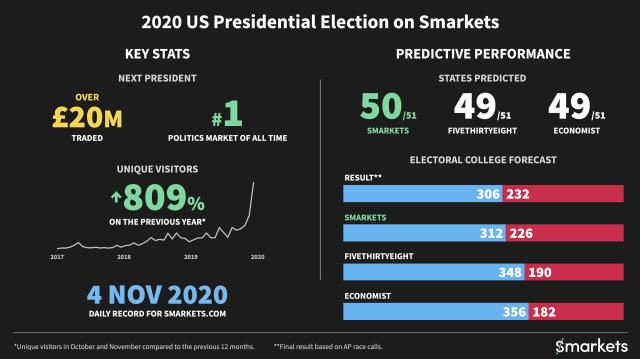
“Insider Prediction Market Betting”

Ah, new and different ways to cheat! Is this a great country, or what?

Kalshi is an online prediction gambling operation where users can bet on everything from how long the government shutdown will last to Oscar winners to what show will top Netflix’s streaming numbers in a given week. Naturally political bets are particularly popular.

And, also naturally, some users will try to cheat by betting on matters they have some control over or insider information about. Last week Kalshi slapped down and fined three political candidates who tried to bet on their own races: Mark Moran, an independent running for U.S. Senate in Virginia, Ezekiel Enriquez, a former Republican congressional candidate in Texas, and Matt Klein, a Democratic Minnesota state senator who is running for Congress.

Kalshi’s head of enforcement and legal counsel said that the sanctions are part of Kalshi’s “proactive engineering solutions” to “identify illicit trading activity.” Kalshi’s rules were recently updated to ban politicians from betting on their own candidacies. I see no difference between a candidate doing this and a baseball player (like the late Pete Rose) betting for or against his own teams. The New York Times fatuously writes, “It’s unclear if they were trading in a manner that was relying on inside information.” What? By definition the bets were based on inside information: every candidate is an insider regarding his or her own race! What if the candidate knows a personal scandal is ready to break? What if he or she knows money is running out, or the campaign’s polls look dire?

Today’s “Nah, There’s No Mainstream Media Bias!” Note of the Day, Starring, Naturally, The New York Times…

“How the Southern Poverty Law Center Drew the Ire of Conservatives”

That was the Gray Lady’s headline yesterday regarding the Southern Poverty Law Center’s scheme that had it supporting violent hate groups “under the table” so the SPLC could raise money from dupes and saps to defeat them.

What do you think, the most flagrant “Republicans pounce!” example ever?

I am moving ever closer to a policy that will require a ban from the EA comment section for anyone who dares to insist that the mainstream news media isn’t consistently and despicably biased in its reporting. That position has shifted from the realm of spin, stupidity and partisan gaslighting into straight-up lying and signature significance.

Ethics Alarms Marked The Southern Poverty Law Center As A Racket and a Hate Group Years Ago. What Took Everyone Else So Long?

Because, you know, it was flamingly obvious.

From the Department of Justice’s indictment:

“Starting in the 1980s, the SPLC began operating a covert network of informants who were either associated with violent extremist groups, such as the Ku Klux Klan, or who had infiltrated violent extremist groups at the SPLC’s direction. These informants were referred to by some individuals within the SPLC as the “field sources” or the “Fs.” Between 2014 and 2023, the SPLC secretly funneled more than $3 million in SPLC funds to Fs who were associated with various violent extremist groups.

  • F-37 was a member of the online leadership chat group that planned the 2017 “Unite the Right” event in Charlottesville, Virginia and attended the event at the direction of the SPLC. F-37 made racist postings under the supervision of the SPLC and helped coordinate transportation to the event for several attendees. Between 2015 and 2023, the SPLC secretly paid F-37 more than $270,000.00.
  • F-9 was affiliated with the neo-Nazi organization, the National Alliance and C. served as an F for the SPLC for more than 20 years. F-9’s activities included fundraising for the National Alliance. Between 2014 and 2023, the SPLC secretly paid F-9 more than $1,000,000.00. In 2014, F-9 entered the headquarters of a violent extremist group and stole 25 boxes of their documents. F-9 coordinated payment for the copying of the materials with a high-level SPLC employee who had knowledge the documents had been stolen. The original stolen materials were returned to the violent extremist group in a second illegal entry by F-9. Thereafter, the high-level SPLC employee utilized the documents, in part, as the basis for a story published on the SPLC’s Hatewatch website and authored by the employee. Another F, F-39, was blamed for the theft and was paid approximately $6,000.00 by the SPLC to falsely take responsibility for the theft.
  • F-27 was reported as an officer in the National Socialist Movement and the Aryan Nations affiliated Sadistic Souls Motorcycle Club. Between 2014 and 2020, the SPLC secretly paid F-27 more than $300,000.00.
  • F-42 was the former chairman of the National Alliance. The SPLC website contained an “Extremist File” webpage about F-42 from which the SPLC solicited donations. Between 2016 and 2023, the SPLC secretly paid F-42 more than $140,000.00. This overlapped the time period in which F-42 was featured on the SPLC’s “Extremist File” webpage.
  • F-30 led the National Socialist Party of America, was the former director of a faction of the Aryan Nations, and a former member of the Ku Klux Klan. The SPLC website contained an “Extremist File” webpage for F-30 from which the SPLC solicited donations. Between 2014 and 2016, the SPLC secretly paid F30 more than $70,000.00. This overlapped the time period in which F-30 was featured on the SPLC’s “Extremist File” webpage.

In addition to directly paying leaders and others associated with the same violent extremist groups that the SPLC sought donations ostensibly to “dismantle,” the SPLC also used Fs to indirectly funnel money to other violent extremist group leaders. This included the SPLC 5 funneling more than $160,000.00 from a fictitious entity to F-11 who then sent funds to various violent extremist group leaders including the former Grand Wizard of the Knights of the Ku Klux Klan.”

The SPLC was giving millions to leaders and member of what it termed “hate groups” because the organization needed active hate groups to justify its existence and to feed its ravenous fundraising machine, which, in turn supported a progressive Democrat hit group weaponized to discredit conservative organizations. I knew the SPLC was unethical and a scam, but I didn’t see this coming. What I saw was bad enough, though…

In 2017, I wrote in part,

D. James Kennedy Ministries of Fort Lauderdale, Florida, an evangelical Christian ministry, is suing the Southern Poverty Law Center for calling the ministry a hate group because of its stance against LGBT rights. The SPLC is an Alabama-based, self-styled  watchdog group that tracks tracks what it considers extremist organizations, and it publicly names organizations it considers hate groups. It considers hate groups to be any group that is sufficiently aggressive in opposing certain core progressive positions. The entire operation is a masterpiece of self-validating virtue. The name was carefully chosen to signal unimpeachable virtue: it’s “Southern,” so its stance against discrimination is obviously defient and in opposition to its surrounding culture and biases. Though little of its activity involves poverty, the name also signals charity and virtuous motives.  What’s a law center? Well. I grdauted from one, and that was a law school. The Southern Poverty Law Center isn’t a law school, but doesn’t the name sound impressive? Originally, the SPLC acted as a public interest law firm (I would call its use of “law center” misleading, and a breach of several states’ legal ethics rules if it were still a law firm), but now it is a progressive activist and propaganda organization. Not that there’s anything wrong with that, but part of its schtick is to designate organizations as hate groups because, well, they say so. Then the left-leaning news media accepts their verdict as fact. You will read articles saying that there are 917 hate groups in the U.S. No, there are 917 groups the Southern Poverty Law Center calls “hate groups.” .Many of the organizations on the SPLC’s list are undeniably racist and violent. Many are not, or may not be. Lumping them all together as “hate groups” is an effective way to demonize dissent. “Hate group” has no accepted definition, but SPLC defines a ‘general hate group” thusly: “These groups espouse a variety of rather unique hateful doctrines and beliefs that are not easily categorized.”

Got it. The Southern Poverty Law Center is a hate group by its own definition. To be a reliable arbiter of whether a group is promoting hate rather than a just a controversial policy position, a group would have to be non-partisan, objective and politically neutral. all things that the SPLC is not. This is an organization that designates groups that espouse views that it hates as hate groups….

From the Washington Free Beacon:

“The Southern Poverty Law Center (SPLC), a liberal, Alabama-based 501(c)(3) tax-exempt charitable organization that has gained prominence on the left for its “hate group” designations, pushes millions of dollars to offshore entities as part of its business dealings, records show.

“Additionally, the nonprofit pays lucrative six-figure salaries to its top directors and key employees while spending little on legal services despite its stated intent of “fighting hate and bigotry” using litigation, education, and other forms of advocacy….

“The SPLC has turned into a fundraising powerhouse, recording more than $50 million in contributions and $328 million in net assets on its 2015 Form 990, the most recently available tax form from the nonprofit. SPLC’s Form 990-T, its business income tax return, from the same year shows that they have “financial interests” in the Cayman Islands, British Virgin Islands, and Bermuda. No information is available beyond the acknowledgment of the interests at the bottom of the form.

“However, the Washington Free Beacon discovered forms from 2014 that shed light on some of the Southern Poverty Law Center’s transfers to foreign entities.

“The SPLC’s Form 8865, a Return of U.S. Persons With Respect to Certain Foreign Partnerships, from 2014 shows that the nonprofit transferred hundreds of thousands to an account located in the Cayman Islands.

“SPLC lists Tiger Global Management LLC, a New York-based private equity financial firm, as an agent on its form. The form shows a foreign partnership between the SPLC and Tiger Global Private Investment Partners IX, L.P., a pooled investment fund in the Cayman Islands. SPLC transferred $960,000 in cash on Nov. 24, 2014 to Tiger Global Private Investment Partners IX, L.P, its records show.

“The SPLC’s Form 926, a Return by a U.S. Transferor of Property to a Foreign Corporation, from 2014 shows additional cash transactions that the nonprofit had sent to offshore funds.

“The SPLC reported a $102,007 cash transfer on Dec. 24, 2014 to BPV-III Cayman X Limited, a foreign entity located in the Cayman Islands. The group then sent $157,574 in cash to BPV-III Cayman XI Limited on Dec. 31, 2014, an entity that lists the same PO Box address in Grand Cayman as the previous transfer.

“The nonprofit pushed millions more into offshore funds at the beginning of 2015.

“On March 1, 2015, SPLC sent $2,200,000 in cash to AQR Managed Futures Offshore Fund Ltd., which the SPLC marked to an address in Greenwich, Ct., on its form. However, the entity is located in Canana Bay, Cayman Islands, according to Securities and Exchange Commission (SEC) records. Individuals at AQR Capital Management, a global investment management firm, act as executive directors of the fund and are located in Connecticut.”