Ethics Quiz: The Movie Star’s Daughter

I have no idea what’s right or wrong in this scenario, so it makes an appropriate topic for an ethics quiz. The realm is high fashion and modeling. There are few things I know less about than those subjects. I’m kinda weak on metallurgy and thoracic surgery too.

That’s Nicole Kidman and Keith Urban’s daughter, Sunday Rose, above. The teen recently became the object of vicious social media scorn following her appearance at New York Fashion Week on February 13, 2026.

The 17-year-old’s big time modeling debut at a Calvin Klein show put her under a harsh spotlight. Many mocked her runway demeanor and declared that her qualifications for high-profile modeling opportunities consisted of famous parents and a movie-star mother, and nothing else. The central ethics issue is nepotism. One social media critic wrote, “Remember when models were stunning, unique and natural? Not just some celeb’s child.”

To be honest, no, I don’t remember when models were natural. Were they ever? Most of them look like freaks, with odd proportions that resemble newspaper drawings of women wearing dresses, and too many of them have looked like recent concentration camp escapees in make-up. But again, I don’t get the whole fashion thing, why it exists, or why anyone pays attention to it.

To my untrained eye, I see nothing about Sunday Rose (what an awful name!) that explains why she is a model except her Hollywood pedigree. Do you? She’s not particularly pretty, seems sullen, and resembles the original “Young Sherlock” in drag. See?
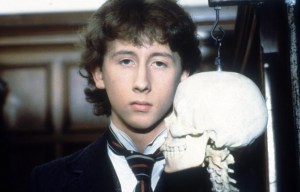
Some models resemble whomever that is with Young Sherlock…

But the real question is how to treat the children of the rich, famous and powerful fairly. Surely the fact that she is Nicole Kidman’s daughter shouldn’t prevent a young, talented, aspiring model from pursuing her dream, but how can unfair advantages be avoided? Nepotism is even more advantageous in Hollywood. Acting success is normally based more on luck and opportunity than stand-out talent, but the children of already established stars are born lucky.

Should they be blamed for accepting what their lineage hands them? Horror writer Joe Hill deliberately used a fake name on his first attempts to follow in his father’s footsteps (Dad is Stephen King) so he could be sure that his work was judged on its own merits. He’s an ethics hero for that, but the list of the offsprings of movie stars who used their names to get on screen and went on to respectable careers, sometimes even surpassing their parents, is too long to publish.

Still, if the the daughter of a movie star puts herself out in range of public judgment, is it unfair for critics to take aim? Does it change the question if she is only 17, like Sunday Rose?

Your Ethics Alarms Ethics Quiz of the Day:

What is ethical treatment for the beneficiaries of nepotism in modeling or any other competitive field?

 

Open Forum Friday!

What amazing ethics stories will you uncover today?

I’m going to let Prof. Turley handle the follow-up to this post, which he did yesterday quite nicely. In “You’re Not Alone”: Reporters Comfort Those Triggered and Traumatized by Scenes of Patriotism” the red-pilled George Washington University Law School professor expressed his dismay and disgust at “how some in the media found the entire demonstration of patriotism to be intolerable and triggering.” He was speaking of the Axis media’s Trump Derangement that the Mad Left transferred to the U.S. hockey team. Turley wrote in part,

“The HuffPost even published an article with therapeutic advice for liberals triggered by seeing so many American flags. The liberal publication ran an article titled “There’s a Name for the Discomfort You’re Feeling Watching the Olympics Right Now.” It then published it a second time before the gold-medal hockey game with Canada — presumably to prepare its readers for the nightmare of the United States actually winning. The subheading read, “If waving the American flag or chanting ‘USA!’ turns you off right now, you’re not alone.”

“Senior writer Monica Torres began the article with this line: “While President Donald Trump’s deportation agenda separates families, and federal agents detain 5-year-olds and kill unarmed civilians, American athletes are winning medals on behalf of the nation at the Olympics right now.”

“Torres goes on to interview three therapists for this “story” about how the celebration of the United States team has forced many liberals into therapy over their trauma and “the cognitive dissonance of rooting for U.S. sports.”

“Los Angeles-based licensed clinical social worker Aimee Monterrosa explained that the “atrocities” of the United States can trigger feelings of guilt, despair, shame, anger” in seeing the country celebrate these sports victories.

“Expert Lauren Appio echoed how “waving the American flag or chanting, ‘USA!’ [can make] us feel grossed out or ashamed.”

I was going to write a follow-up to this post centering on the amazing comments by The Athletic, the New York Times owned sports website, which criticized the U.S. hockey team for taking a congratulatory call from their President and coming to the SOTU address. “This isn’t a neutral climate,” he wrote. “This isn’t a neutral president. And in a nation this polarized, the proximity carries weight whether the players are being intentional or merely naive.” Both The Athletic and Vox claimed the star of the Olympics was…wait for it…Elaine Gu, the American who accepted millions to skate for China, an international criminal and enemy of the U.S.

Trump is, of course, being criticized for saying in Tuesday’s performance, “These people are crazy.” I believe that statement was one of his best, and should have the same delayed effect as Ronald Reagan’s pronouncement that the Soviet Union was an “evil empire.”

Because, you know, they really are crazy.

Over to you, Clarence…

I Can’t Let This Pass…

As long as ABC News persists in making Americans dumber by presenting the biased, silly, incompetent panel of women on “The View” as a news program, that network has to rank third from the bottom of the journalism barrel, slightly above MSNOW and CNN. Its commentary on the SOTU speech, however deserves some kind of prize for being the most ludicrous of all. If you’ve been paying attention, that’s quite an achievement.

Co-host Amanda Carpenter got the gold by complaining that Trump had an “unfair dynamic” while delivering the speech:

CARPENTER: He got that split screen. And when he was talking about Minnesota and saying we’re not going to go easy on them. Who thinks he’s been easy on them? And so, she was shouting back, ‘you’ve killed Americans’ but you couldn’t see what she said!

WHOOPI GOLDBERG: No.

CARPENTER: And so, it’s such an unfair dynamic that I just – We got to find ways not to participate in that and give him that kind of advantage. I just can’t believe we haven’t learned this lesson after ten-plus years.

Uh, see, it’s the President’s speech, see, and the members of Congress are there to sit, listen, show respect for the Presidency, and maybe applaud. This is like saying that an actor playing “Hamlet” has an “unfair dynamic” if members of the audience aren’t welcome to run up on stage and dance.

The Trump Deranged think the fact that Trump exists and is the President is an “unfair dynamic.”

These people are crazy.

From Georgia State, A Woke Indoctrination Smoking Gun

Rob Jenkins, a tenured associate professor of English at Georgia State University, recently wrote at Campus Reform about his interaction with a “gender studies” professor who took umbrage at his January op-ed criticizing Georgia’s university system for its “public syllabi head-fake.”

His point was that many professors hide their course’s political and social agendas behind sketchy course syllabi released publicly that don’t accurately represent what is being taught. In response, the state’s Board of Regents declared that instead of merely filling in a template with selected information, now faculty at public universities must publish the entire syllabi that they distribute to students.

Prof. Jenkins was pleased, but received an email from a colleague who described herself as a “gender studies professor.” She grilled him on why he put “transgender” in scare quotes, and what he thought were appropriate topics “in classes that discuss gender, sexuality, identity, and racial politics.” Jenkins answered that he puts “transgender’ in quotation marks because he believes people can’t change their sex and that the whole fad is manufactured. He also said that he doesn’t believe any topic is appropriate for classes that discuss gender, sexuality, identity, and racial politics because he thinks “gender studies” are a phony discipline that should not be taught at all.

The female professor didn’t like that, She accused Jenkins of promoting “right-wing” ideology and implied that he would be biased against LGBTQ students in his classroom. Jenkins wrote that her assumption is demonstrably false; I would add that it tells me that the “gender studies” prof is biased against students in her classroom who don’t toe the progressive line.People who can’t tolerate dissenting opinions and whom bias has made stupid usually assume everyone else is the same way.

Then, Jenkins writes, he discovered his woke critic wasn’t a “gender studies professor,” but a “history professor teaching mostly sophomore-level survey courses.” She just turned her history courses into propaganda on “gender, sexuality, identity, and race politics.”

“That’s exactly the sort of thing the state’s public syllabi policy is intended to expose: professors using their classroom to advance a political agenda that has, at best, a tenuous connection to the subject matter,” Jenkins writes. But how many state colleges around the country allow and facilitate woke ideological propaganda? How many glassy-eyed, brainwashed, doctrinaire progressives lurk on faculties, seeing the indoctrination of our rising generations as their sacred duty?

My guess: far too many. A daunting number. For society, the culture and our nation, a crushing number.

Unethical Quote of the Day, (Also Stupid): Theater Critic Nuveen Kumar

“But I don’t think it’s necessarily antiwoke to tell an all-white story or to relegate nonwhite characters to the margins, if that’s where they fit the creative intentions.”

—Former Washington Post theater critic Naveen Kumar in the paper’s “Whitewashing ‘Wuthering Heights.'”

Oh, well that’s really big of the critic, don’t you think? How generous of him! He is willing to concede that a director might still be regarded as a good person if he or she doesn’t cast actors “of color” (you know, like the critic) to play characters written as white, visualized by the playwright as white, in a story obviously about white people!

Yes, this fatuous, offensive statement came late in an essay that was already obnoxious, with the biased and reductive headline, “Whitewashing ‘Wuthering Heights’.” [Gift link!] The Post post was defending, sort-of -but- not-really, Emerald Fennell’s “Wuthering Heights” film, in which Heathcliffe, Emily Bronte’s hormonal romantic anti-hero, is played…

…by a white actor. Never mind that previous film adaptations have cast Heathcliff as white, notably the classic starring Lawrence Olivier in the role, probably because he was the best actor alive at the time.

Yes, it is true that the ethnicity of Heathcliff has always been a matter of debate: with Bronte describing him as “dark-skinned,” a “gypsy,” and a “little Lascar,” a term for South Asian sailors. The idea is that he is an outsider and at the bottom of the social ladder; that certainly would justify casting a black, Indian or other non-white actor, but certainly doesn’t mean he has to be played that way. (I would not think that casting Heathcliff as Swedish would work, but you never know: I could see one of the Skarsgaard boys pulling it off.)

Ethics Quiz: Oh No, Not Legalized Prostitution Again…

In Colorado, a bill that would decriminalize prostitution statewide is moving through the legislature. Its sponsor, member of the Party of Terrible Ideas (at least lately) Sen. Nick Hinrichsen, argues that the measure “would improve safety and health outcomes for sex workers.” More about that presently.

Senate Bill 26-097 would eliminate criminal penalties for consensual commercial sexual activity between adults, repealing existing laws against prostitution, soliciting for prostitution, keeping a place of prostitution and patronizing a prostitute. Pimping would remain illegal.

Commenter JutGory flagged the story for me and the commentariate with a post on yesterday’s Friday Open Forum, where it sparked some lively and thoughtful responses. I decided that the issue was complex and contentious enough to move the discussion here, under its own banner via an ethics quiz.

I recognize that quizzing on this topic is a departure for Ethics Alarms. Ethics quizzes are usually prompted by ethics close calls, dilemmas and conflicts where I lack my usual certitude about their ethical standing. That’s not the case with legalized prostitution. Way back in 2009, I began a post,

“A stimulating ethics alarm drill surfaced over at Freakonomics, where Stephen Dubner challenged the site’s  readers to help him compile a list of goods, services and activities that one can legally give away or perform gratis, but that  when money changes hands, the transactions become illegal. It is a provocative exercise, especially when one ponders why the addition of  money should change the nature of the act from benign to objectionable in the view of culture, society, or government. It is even more revealing to expand the list to include uses of money that may not create illegality, but which change an act from ethical to unethical.

Sometimes commerce turns the act wrongful only for the individual do the paying. Sometimes only the individual accepting the cash becomes unethical.  Money doesn’t corrupt these transactions for the same reasons in all cases. I see three distinct categories:

1.Abuses of economic power: situations where an individual or organization uses money to coerce or induce people to do something that is bad for them, those to whom they have duties, or society, such as prostitution…“

I stated thatwith prostitution, both the payer and the payee were engaging in unethical conduct. And they are.

Ethics Quote of the Month: Jill Foster in “The Telegraph”

“Far from being isolated incidents, the two attacks are just the latest mass shootings involving trans-identified perpetrators in recent years. And they will doubtless reignite speculation among Republican figures in the US that transgender treatment is making people more likely to carry out such attacks.”

—-Freelance journalist and long-time UK editor and life-style reporter Jill Foster in “Are cross-sex drugs driving trans shooters to kill?”

I love this quote! It’s a “bias makes you stupid” all-time classic. It’s a self-awareness void all-time classic! It’s a “My mind’s made up, don’t confuse me with facts” all-time classic! It’s a “Yoo’s Rationalization,” or “It isn’t what it is” all-time classic!

What a perfect example of the Left’s woke delusions and amazing ability to see only what it wants to see. I want to frame that quote. I want to put it on T-shirts and coffee mugs.

Never mind pondering whether trans individuals are mentally ill: what does it say about progressives who can read that statement and react by shaking their heads, tut-tutting, and thinking, “How true, how true. Those hateful Republicans, and conservatives of course, will definitely speculate that because a tiny sliver of the population has been disproportionately engaging in mass murder, there might be a reason related to the radical treatment we good and rational people call “gender affirming care. What’s the matter with those bigots?”

Funny, I have been wondering, since so many individuals of dubious gender identity have been killing people lately while the news media, in its coverage that emphasizes the only their favorite anti-gun angle, never mentions the possibility that there may be a link between trans murderers snapping and their…what can I call it? Malady? No, that’s pejorative. Condition? Confusion? Delusion? Medical abuse?…if I’m the only one whose Holmesian instincts detect a possible cause and effect.

Now, thanks to Jill’s incisive reportage, I realize that my politically incorrect thoughts are simply attributable to the fact that I would rather have an orangutan rip my face off and eat it than vote for a Democrat in November.

I’m gradually viewing Jill’s matter of fact statement that only U.S. Republicans are capable of processing reality as excellent reporting. Far from being the unethical, biased, incredibly stupid assertion it appeared to be at first reading, I realize this is a factual assertion. Democrats will deny even an unavoidable conclusion if it in any way undermines their favored world view. If it is an inconvenient fact, they will made sure their captive propagandists in the media bury it or deny it, or better still, demonize those who dare to utter such Wrongthink out loud.

Thanks, Jill! You’ve given us a lot not to think about.

A Psychology “Expert” Reveals “the No. 1 Phrase to Shut Down a Manipulator” [Bad Link Fixed!]

And to that I say, “Bite me.”

Shadé Zahrai, a CNBC contributor, weighs in with her advice regarding “one of the most effective ways to stop a manipulator.“ She says that the magic phrase is: “That’s interesting. Tell me more.”

This is passive-aggressive weenieism, as well as dishonest. I don’t tell people that I find something interesting unless it is, in fact interesting. Doing so is a lie. If I’m using “interesting” sarcastically but want “the manipulator” to think I’m sincere, that’s deceit, another form of dishonesty. Much of the time the “expert’s” use of “That’s interesting” is just another version of “Why bless your heart!”

So the expert says that the way to foil “manipulators” is to be manipulative. How expert of her! She recommends versions of her all-purpose defense if someone is trying to subtly coerce you, if someone is trying to guilt-trip you, and if someone is trying to gaslight you. Her discovery is nothing but warmed over 70’s era versions of the obnoxious (and and manipulative) deflections “I hear you” and “I acknowledge the validity of your feelings.” It’s conflict avoidance when conflict is needed.

If someone attacks me with an unfounded or unfair accusation, I might say, “Ok, produce your evidence, if you have any.” I might say, “That doesn’t deserve a response.” I might say, “What’s the matter with you?” But “That’s interesting” isn’t in the cards.

I don’t find it interesting when someone denies what I know to be true. I’ll say, “Nope, you’re wrong; your memory has betrayed you, or you’re lying. Which is it?” If someone says, “After everything I’ve done for you, this is how you repay me?” I will say, “I’m not repaying you. I’m doing what I believe has to be done, and our past interaction has nothing to do with it. I’m sorry my decision upsets you.” If someone says, “If you really cared, you’d agree with me, ” I’ll respond with, “Don’t try that emotional blackmail on me. It’s insulting, and I resent it.”

All around us now we are under psychological attack by people who want us be passive, fearful wimps, terrified on taking on liars, bullies and jerks directly. Don’t let them get away with it.

Dear Prof. Turley: Clean Up Your Comments Section

I check Jonathan Turley’s blog “Res Ipsa Loquitur” a couple times a week. Why? First, he often covers a topic I am already focusing on; second, he writes well and scrupulously tries to give a balanced analysis. He also knows his lane, and generally stays in it. The professor has definitely been red-pilled in the Trump era; he is as disgusted with Democratic Party’s deceit and double standards as I am, and the Axis news media’s bias has become evident to him as well, as in this recent post.

Yes, it’s true, I also enjoy Turley’s column because I almost always agree with him (and he with me), as in his expressed disgust with Representative Roe Kahana.

But I come to admonish Turley, not to praise him. His reader comments are a disgrace. The comments on every post typically deteriorate into general Trump derangement screeds, non-substantive snarking, and rants about topics not even slightly related to Turley’s post, with an occasional substantive contribution buried in there somewhere if one is willing to scroll through meters of garbage.

In addition, most of the comments are anonymous, with three or four commenters named “Anonymous” sometimes arguing in the same thread. Turley, as a national figure with periodic columns in The Hill and New York Post as well frequent appearances on Fox News, has a lot of readers on his blog and consequently many comments, usually over a hundred per post. Today I spent over an hour on an extensive post of over a thousand words, and as of this minute, a grand total of 63 people have bothered to look at it. But quantity doesn’t mean quality on Turley’s blog because he doesn’t bother to moderate comments beyond removing spam. For the most part, the readers comments add nothing to his site. In fact, they diminish its value.

I am very proud of the tough, substantive, perceptive and thought provoking comments I see on the Ethics Alarms posts. I don’t pretend that my work here can match the professor’s for scholarship and erudition, but the commentariate laps any other blog I have encountered.

I’m in debt to you all. Thanks.

On Lincoln’s Favorite Poem, and the Poems’ We Memorize…

This topic is almost tangential to ethics, but not entirely. I give Althouse credit for raising it: she sometimes comments on crossword puzzles—I hate crossword puzzles and have never finished one in my life—and was set off into one of her tangents by the clue, “8 letters: “Poem so beloved by Abraham Lincoln that he carried it in his pocket and memorized it.” As it happens, I know the answer (Ann did not): it’s Poe’s “The Raven.” No surprise there: Abe was a depressive, and that dark poem about lingering suicidal thoughts fits his character and also his taste in poetry. I think “The Raven” is doggerel, and so were Lincoln’s poems: yes, he wrote poems, and was always puzzling to me that such a poetic writer would write such pedestrian poetry. He’s nt the only one who fits that description: Herman Melville’s poems, save for the one that ends “Billy Budd, ” is also shockingly bad. But I digress…

Ann guessed that the poem was “Invictus,” which would make sense if Abe favored a poem that inspired him, as, I believe, many of us do. That one ends with the famous verse,

“It matters not how strait the gate,

How charged with punishments the scroll,

I am the master of my fate,

I am the captain of my soul.”

Teddy Roosevelt loved that one, as you might guess. The topic got me thinking about how our schools used to teach ethics as well as literature, not to mention mental acuity, by requiring us to memorize poems. I’m sure they don’t do this now, and I’m also confident that the declining ethical instincts as well as literary competence of today’s youth are in part rooted in this sad development.

Poetry is becoming a dead genre. Althouse excluded songs from her musings about what favorite poems say about our values and character, and I find that strange. Song lyrics are poems, at least the best of them. No unscored poem touches me as much as Irving Kahal’s lyrics to Sammy Fain’s haunting melody, one of my late wife’s favorites….

I’ll be seeing you
In all the old familiar places
That this heart of mine embraces
All day through

In that small cafe
The park across the way
The children’s carousel
The chestnut tree, the wishing well 

I’ll be seeing you
In every lovely summer’s day
In everything that’s light and gay
I’ll always think of you that way

I’ll find you in the morning sun
And when the night is new
I’ll be looking at the moon
But I’ll be seeing you
…

Similarly, the touching Longfellow poem about his depression during the Civil War over the death of his wife, the wounding of his son and the conflict dividing his country was set to music, making it classic Christmas song that has endured in the culture beyond most of his poems. Putting a poem to music shouldn’t disqualify the poem as a poem, though the melody can enhance its power and popularly.

My favorite poems were narrative poems the celebrated heroism, courage, sacrifice, devotion and nobility. I have written several times about my father’s favorite poem, Rudyard Kipling’s “If” : the lines “If you can meet with Triumph and Disaster…And treat those two impostors just the same”; has become my credo over the years, and served me well. This past Halloween I posted my favorite poem, “The Highwayman,” which I memorized when I was 10 and have recited to audiences many times since. It is about a young woman who gives her life to warn her lover. I also memorized Longfellow’s “Paul Revere’s Ride,” an inspiring poem about an American patriot.