Observations On That Disturbing Trump Cabinet Meeting

Yesterday’s weird, televised segment of the Cabinet meeting was troubling in many ways. If you missed it, and I am envious if you did because it will haunt my nightmares for a long time, here is what happened:

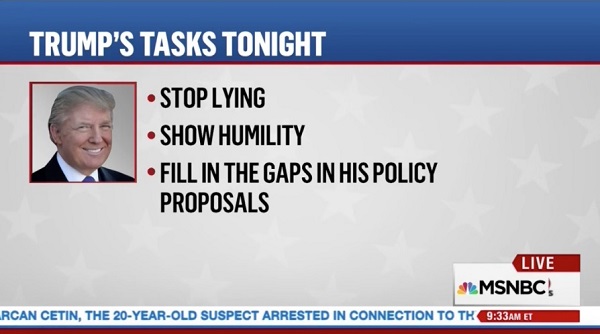
Trump began by giving a positive assessment of his first 143 days and said,”Never has there been a President….with few exceptions…who’s passed more legislation, who’s done more things than I have.” Bad start. Trump, in fact, has signed very few bills. “Never—with few exceptions”—is classic Trump-speak, aka gibberish. This is also the kind of statement Trump’s Furies call “lies.” This was not a lie. In some convoluted way, the President thinks its sort of true. THAT’S the problem, not that he’s lying.

This was just the appetizer, though. The full course was the Cabinet officials, one by one, around the table, taking turns praising their boss.  This could not have been spontaneous. It reminded me of “King Lear”s” opening when the old, fading monarch requires each of his three daughters to tell him how much they love him as the price for getting a piece of his kingdom.

The charade began with Vice President Pence, who called it the “greatest privilege of my life” to serve in the Trump administration. Then Attorney General Jeff Sessions said it was an “honor” to serve Trump, and the rest of Trump’s Cabinet more or less aped what Pence or Sessions had said. Maybe they had all been given talking points. As a final inducement to projectile vomiting, Lackey-in-Chief Reince Priebus gave us a suck-up for the ages:

“On behalf of the entire senior staff around you, Mr. President, we thank you for the opportunity and the blessing that you’ve given us to serve your agenda and the American people And we’re continuing to work very hard every day to accomplish those goals.”

And may I fellate you here, sir, or later?

Disgusted and depressed observations:

1. This is exactly the kind of self-destructive fiasco  a top Chief of Staff who has a proven record running successful government operations on the state or national level could and would prevent. Instead, Trump has a Chief of Staff who actively made it worse. In February, Ethics Alarms featured my post calling for the appointment of such a figure as “the single most ethical thing President Trump could do.” That was four months ago, and this is more desperately needed now than ever.

2. Since this horrible display did happen, we now can say with certainty that none of the President’s inner circle has the influence, guts or common sense to stop him when he yields to his worst instincts.

3. We can also conclude that not a single member of the President’s Cabinet possesses  sufficient integrity, courage, principle or self respect to be trusted by the American public. These are billionaires and generals, and not one said to Trump, “I’m sorry, Mr. President, but this will make you look weak and me look like an ass-kissing yes-man. I won’t do it, nor will I remain in a Cabinet stocked with lapdog sycophants who would debase themselves and their high offices by doing it.  Do you discard this idiotic charade, or do I resign now?”

Shame on them, every one. Continue reading

Case Study In How When Ethics Fail And The Law Steps In, The Law Will Screw Things Up Beyond Repair

Like Title IX, like Obamacare, like so many well-intentioned laws and regulations designed to assist and protect vulnerable citizens or traditionally oppressed groups, the Americans with Disabilities Act (ADA) opened the door for abuse, absurd taxpayer costs, and unanticipated consequences. The ADA was rammed into law by activists compassion bullies who proclaimed that any attention to proportion and cost-benefit analysis was mean and heartless. Here is an example of what else came in that open door:

From the LA Times::

ADA lawsuits are now as common as sex-discrimination lawsuits, with more than 26,000 new claims filed against employers each year. The latest litigants have their sights on the most innovative segment of our domestic economy: e-commerce.In this trend, people sue businesses because their websites aren’t sufficiently accessible to the disabled — because the websites lack assistive technologies for the blind or hearing-impaired, say. It began in 2000, when Bank of America became the first entity to settle a web-accessibility lawsuit. Safeway and Charles Schwab soon followed suit. In 2008, Target paid $6 million to settle a class-action suit brought by the National Federation of the Blind, and nearly $4 million more to cover the plaintiffs’ attorney fees and other costs. More than 240 businesses across the country have been sued in federal court over website accessibility since the beginning of 2015. Similar litigation has been brought against universities on the grounds that the free online courses they offer aren’t captioned for deaf users, and against ride-sharing services because their smartphone apps lack text-to-speech capability for blind users.

…According to the demands of disabled users, in order for a website to be accessible, it must use fewer pictures, present text in a format that is compatible with text-reading software and employ design that allows for easy navigation. But the features that make a website more accessible for one disabled group are bound to be objectionable to another.

They may also conflict with other needs. Consider bank websites, which often employ timers that will shut down an online session for security reasons after a particular time period is exceeded. Such “timeouts” could present problems for some disabled users, but eliminating them in the interest of accessibility could impair security for all.

In the process of making a website accessible, questions invariably proliferate. Do certain color combinations violate the ADA because they confound the colorblind? Are certain layouts inaccessible if they’re confusing to users with a limited field of vision? Do the accessibility requirements apply only to the websites themselves, or do they also apply to Web content, such as advertising on a third party’s website? Will website hosts be responsible for the compliance of third-party sites? Must archived Web content be revised to comply? What about mobile apps? Do temporary technical bugs in an otherwise compliant website constitute a violation? What physical and mental conditions will require accommodation? So far, Web accessibility lawsuits have concerned the vision- and hearing-impaired, but future cases could be brought on behalf of plaintiffs diagnosed with dyslexia, ADD/ADHD, narcolepsy, cognitive impairments, paralysis and many other conditions.

The game is to sue deep pockets website owners and extort settlement pay-offs. That’s fine for the Bank of America, but not for, say, Ethics Alarms. This blog could be put out of business by such a lawsuit, and so could hundreds of thousands of others. Continue reading

Comment Of The Day: Why That “We’re Glad You’re Our Neighbor” Sign Is Unethical (As Well As Obnoxious)

Mrs. Q, who is keeping Ethics Alarms current on the oppressive politically correct environment slowly poisoning Portland, Oragon, was moved to issue another report in reponse to the Ethics Alarms post about a virtue-signalling sign popping up live wild-flowers on yards across America here is her Comment of the Day on the post, “Why That “We’re Glad You’re Our Neighbor” Sign Is Unethical (As Well As Obnoxious)”…(I’ll be back at the end.)

This yard sign is just about everywhere in the city including businesses, churches, schools, and city offices.


This one is also popular. I love how the “Science is real” part is in green.

Black Lives Matters signs often accompany the 2 above. Also on businesses, schools, etc.

This one is mostly on businesses/community centers but some residents have this sign taped to their living room windows.

What’s most interesting is that all the problems this town suddenly has with “hate” came after the anti-Trumpers started putting these signs up. I told a (former) friend that I thought these signs were virtue signaling and devisive and smug I didn’t appreciate that every day everywhere an average citizen can’t take a walk or go to the gym without knowing the political opinions of the home/business/agency owners.

She promptly quoted Eleanor Roosevelt’s “No one can make you feel inferior” mantra. Funny enough she’s white, I’m not, and instead of actually listening to me, you know as a special downtrodden minority, she dismissed my concerns altogether about how such signs may negatively affect a community (and then she cut me out of her life. Yep, so tolerant). Continue reading

Morning Ethics Warm-Up: 6/10/17


1. In the category of “Good!”, or maybe “Better late than never!” was the news that CNN, after a a full week of pondering, determined that maybe it wasn’t sufficiently professional for a host to call the President of the United States a “piece of shit,” or anyone a “piece of shit,” really, or use “shit”  under the CNN banner, so it fired “Believer” host Reza Aslan. I don’t know why CNN can’t figure out that an immediate firing sends the message that the organization has professional standards and enforces them, and the way CNN handled this says, “We were hoping this would blow over, but guess not.”

Aslan’s tweet after his hook raised other questions:

  • Wait, CNN is trying to be an unbiased new outlet???
  • Oh, is “piece of shit” how scholars express themselves now?
  • “I need to honor my voice” by being able to use vulgarity to express his measured views. Got it.
  • The “tenor” of discourse is entirely within the control of the speaker.
  • Why does CNN put people on the air who don’t understand or respect their professional obligations to the network or the audience?

2. Fox News’s Sean Hannity got web headlines yesterday by tweeting to Aslan: “I do not think you should be fired. You apologized.” Sean Hannity is really too dumb to be allowed out without a leash. His theory is that an apology magically returns everything to where it was before the conduct in question, as if there were no effects. This was serious breach of professionalism and responsibility showing the Aslan was too untrustworthy to be allowed to have his own TV show. It proved that he was a threat to CNN’s reputation (Crude News Network” is the current successor to “Clinton News Network,” and no organization can function if its announced policy is “Go ahead, do anything; as long as you apologize, your job is safe.” Continue reading

Public Servant Ethics, Employment Ethics, Baseball Fan Ethics, And Senator John McCain

A sub-plot of yesterday’s fizzled firecracker of a “bombshell testimony” by James Comey was Senator John McCain’s bizarre questioning. When I saw how many of my “resistance” member Facebook friends were talking about it, I knew how disappointed they were that Comey produced no smoking guns or even a soggy water pistol. Poor John picked the wrong day to stop taking Ginkgo Biloba. Still, Democrats and Republicans alike were bothered by a senior senator and former Presidential candidate sounding confused and semi-coherent.

Here was the whole exchange: Continue reading

Ethics, Motives, Killing With Kindness, “Amadeus” And Related Matters

On a thread about the hysterical doom-sayers in response to the US’s exit from the Paris accords on climate change, one dedicated defender of progressive orthodoxy, lacking a genuine rebuttal for the proposition that the social media and pundit panic was nonsense (for there is none), defaulted to the argument that the withdrawal was unethical because the President’s stated motives for it were untrue. This raised two issues, one centuries old, and the other, an irritating one, of more recent vintage.

In order to sanctify many of the Obama administration’s policy botches, many people have adapted  aggressive versions of three prime rationalizations on the Ethics Alarms List: #13. The Saint’s Excuse: “It’s for a good cause”; #13A  The Road To Hell, or “I meant well” (“I didn’t mean any harm!”) and #14. Self-validating Virtue. To refresh your memory:

13. The Saint’s Excuse: “It’s for a good cause”

This rationalization has probably caused more death and human suffering than any other. The words “it’s for a good cause” have been used to justify all sorts of lies, scams and mayhem. It is the downfall of the zealot, the true believer, and the passionate advocate that almost any action that supports “the Cause,’ whether it be liberty, religion, charity, or curing a plague, is seen as being justified by the inherent rightness of the ultimate goal. Thus Catholic Bishops protected child-molesting priests to protect the Church, and the American Red Cross used deceptive promotions to swell its blood supplies after the September 11, 2001 attacks. The Saint’s Excuse  allows charities to strong-arm contributors, and advocacy groups to use lies and innuendo to savage ideological opponents. The Saint’s Excuse is that the ends justify the means, because the “saint” has decided that the ends are worth any price—especially when that price will have to be paid by someone else.

13A  The Road To Hell, or “I meant well” (“I didn’t mean any harm!”)

This sub-rationalization to the Saint’s Excuse is related to its parent but arguably worse. Rationalization 13 is one of the really deadly rationalizations, the closest on the list to “The ends justified the means”:

 The Saint’s Excuse is that the ends justify the means, because the “saint” has decided that the ends are worth any price—especially when that price will have to be paid by someone else. 

But while the wielder of the Saint’s Excuse typically at least has a beneficial or valuable result to claim as justification for unethical and inexcusable acts, the desperate employers of 13A only have their alleged good intentions, which may be the product of emotion, misunderstanding, ignorance or stupidity. How a bad actor intended his unethical conduct to turn out is no mitigation at all. The underlying logic is that the wrongdoer isn’t a bad person, so the wrongful act shouldn’t be held against him or her as harshly as if he was. The logic is flawed (it is the same logic as in The King’s Pass, #11, which holds that societal valuable people would be held to lower standards of conduct than everyone else) and dangerous, encouraging the reckless not to consider the substance of a course of action, but only its motivations.

The Saint’s Excuse attempts to justify unethical actions that accomplish worthy goals The Road to Hell attempts to justify unethical conduct even when it does undeniable harm, just because it was undertaken with admirable intent.

14. Self-validating Virtue

A  corollary of the Saint’s Excuse  is “Self-validating Virtue,” in which the act is judged by the perceived goodness the person doing it, rather than the other way around. This is applied by the doer, who reasons, “I am a good and ethical person. I have decided to do this; therefore this must be an ethical thing to do, since I would never do anything unethical.” Effective, seductive, and dangerous, this rationalization short-circuits ethical decision-making, and is among the reasons good people do bad things, and keep doing them, even when the critics point out their obvious unethical nature. Good people sometimes do bad things because they are good people, and because of complacency and self-esteem they begin with a conviction, often well supported by their experience, that they are incapable of doing something terribly wrong. But all of us are capable of that, if our ethics alarms freeze due to our environment, emotions, peer pressure, and corrupting leadership, among many possible causes. At the end of the movie “Falling Down,” the rampaging vigilante played by Michael Douglas, once a submissive, law-abiding citizen, suddenly realizes what he has done. “I’m the bad guy?” he asks incredulously. Indeed he is. Any of us, no matter how virtuous, are capable of becoming “the bad guy”…especially when we are convinced that we are not.

This has led to the seeming absurdity of recent arguments, some accepted in court, that the same conduct can be right or wrong, depending on whether the conduct is based on “good” motives, and who is the actor. Since, to take one random example, Barack Obama is obviously good and means well, even inept, poorly planned and irresponsible policies are ethical. Because President Trump is a villain, the same conduct emanating from his dastardly motives would make the same conduct unethical. I have dealt with this biased approach before and will again, but not today.

It is the second, older question that concerns me at the moment, and that is whether human motives should be used in the analysis of whether conduct is ethical or not. The conundrum come up repeatedly in one of my favorite ethics books,  “The Pig That Wants To Be Eaten.Continue reading

Comment Of The Day: “The Ethics Of Responding To Inconvenient Truths: Colleges Aren’t Working…Now What?”

More thoughts on the U.S.’s college problem, from Ryan Harkins, in his latest Comment of the Day on the post, “The Ethics Of Responding To Inconvenient Truths: Colleges Aren’t Working…Now What?“:

Growing up in Casper, WY, the expectation among my peers was that after graduating high school, you either went to college our you stayed in your home community to work low-wage, service industry jobs. On very rare occasions, there was mention of going to WyoTech, if you really liked working on cars and could pay the tuition, which was quite a bit more than tuition at the University of Wyoming. I can’t say I ever heard anything promoted at my high school about apprenticeships in a craft, or any other kind of traditional skilled labor.

At the University of Wyoming, a great many people I met, a portion of which never made it past their freshman year, only went to college because it was expected, not because it was what they wanted to do or were interested in. I can understand going to college when you are searching for what you want to do with your life, and I think most people going to college either know what they want to do or want to find what they want to do at college. But for so many people that I saw, a trade school or an apprenticeship would have been worlds of improvement over drifting through campus, failing classes, drinking, partying, and essentially wasting thousands of dollars to go nowhere. Continue reading

The Ethics Of Responding To Inconvenient Truths: Colleges Aren’t Working…Now What?

From the Wall Street Journal:

Freshmen and seniors at about 200 colleges across the U.S. take a little-known test every year to measure how much better they get at learning to think. The results are discouraging.

At more than half of schools, at least a third of seniors were unable to make a cohesive argument, assess the quality of evidence in a document or interpret data in a table, The Wall Street Journal found after reviewing the latest results from dozens of public colleges and universities that gave the exam between 2013 and 2016. …At some of the most prestigious flagship universities, test results indicate the average graduate shows little or no improvement in critical thinking over four years. . . .

Some academic experts, education researchers and employers say the Journal’s findings are a sign of the failure of America’s higher-education system to arm graduates with analytical reasoning and problem-solving skills needed to thrive in a fast-changing, increasingly global job market. In addition, rising tuition, student debt and loan defaults are putting colleges and universities under pressure to prove their value.

Some?

What’s the other side saying, that the results are cooked? That critical thinking is over-rated or a sexist, racist, xenophobic construct? How can any objective individual who has followed the news, listened to activists babble incoherently on  campuses like Dartmouth, Yale, Columbia, University of Missouri and hundreds of others, been aware of higher ed apocalypse stories like this one , or notice that the overwhelming majority of college students enthusiastically supported the fact-, math-, economics-, foreign policy-, history-and Constitution- challenged candidacy of Bernie Sanders  be surprised at these findings? They aren’t even new.

The scam that is U.S. higher education poisons the American dream in too many ways to count.  50% of employers say that college graduates they hire aren’t ready for the workplace because of inadequate critical-reasoning skills.  Yet virtually every institution cites this as the prime benefit of paying it a king’s ransom for four years, with brochure proclamations like…

“The university seeks to foster in all its students lifelong habits of careful observation, critical thinking, creativity, moral reflection and articulate expression.”

and

“… University fosters intellectual inquiry and critical thinking, preparing graduates who will serve as effective, ethical leaders and engaged citizens.”

and

“The college provides students with the knowledge, critical-thinking skills and creative experience they need to navigate in a complex global environment.”

“At most schools in this country, students basically spend four years in college, and they don’t necessarily become better thinkers and problem solvers,” said Josipa Roksa, a University of Virginia sociology professor who co-wrote a book in 2011 about the CLA+ test, that littel-known test the Wall street Journal referred to. . “Employers are going to hire the best they can get, and if we don’t have that, then what is at stake in the long run is our ability to compete.”

Even the arguments used to defend college lack evidence of critical thinking. Today’s New York Times special Higher Ed section highlights this quote: Continue reading

Rudy Huxtable Lets Desperate Dad Use Her As A Stage Prop

Bill Cosby’s sexual assault trial began yesterday in Norristown, Pennsylvania,  but Bill’s enabling and complicit wife didn’t appear with him. Smart move by defense counsel: Camille Cosby’s almost certain knowledge of her husband/meal ticket’s infidelity and worse makes the pair seem like a couple of monsters, and the jury would be conflicted seeing Mrs. Cosby  sitting in court as women described being drugged and assaulted by Funny Bill while her husband’s defense was not “I didn’t do it” but “it was consensual.”  Still, having Cosby  entering the Montgomery County courtroom without family present would send the message that he was being shunned by those who know him best. What to do?

Eureka! Have the accused serial sexually predator accompanied by a member of the family the public knows and loves best, his TV family from “The Cosby Show! Perfect! It sends the message that he is still supported and loved by those who know him. It proves that he has not been abandoned and shunned. Best of all, such an entrance makes Cosby appear to be the nice, ethical, fatherly Bill Cosby everyone thinks they know, the one who raised four adorable girls and who had a beautiful feminist wife, a noble and moral man who would never, never do the things that over 50 women say he did to them, the money-grubbing sluts.

So instead of his real-life wife, Cosby was guided into the courtroom  by former television daughter Keishia Knight Pulliam, who played the cute little one, adorable Rudy, from 1984 to 1992. Pulliam agreed to be a prop, in other words, a prop designed to help implant reasonable doubt in a case where reasonable doubt will be hard to come by. Bias and cognitive dissonance helps, though. Rudy is there to help “Dad” by nourishing bias as a jury considers Andrea Constand’s lon-standing accusation that Cosby drugged and molester her.

Of Knight Pulliam’s presence, Cosby’s spokesperson Andrew Wyatt said: “She’s not here to proclaim guilt or innocence. She’s here to finally hear the truth for herself in the courtroom. She wants people to stop listening to the sensationalism and come hear the truth.” Nonsense. If Pulliam wanted to do just that, she could have arrived at the courtroom like anyone else, and sat quietly among the spectators. Instead, she was playing a role calculated to make it harder for a jury to see through Cosby’s celebrity and public persona. She knew it, too.

Why would an alleged feminist ally herself with a sexual predator and against so many women? Well, it can’t hurt Pulliam’s career any, since she barely has a career. She has been languishing in post-child star Hell for sometime now, going the “She’s all grown up and she’s bad’ route that worked out so well for Lindsay Lohan; the Cosby trial gig—no, I don’t think its unfair to ask if she was paid—at least reminds people that Rudy is 38 and still around. Maybe a reality show producer is watching.

Last year, Pulliam had Amber Rose on her podcast “Kandidly Keshia”I’m sure you never miss it-to promote Rose’s “Slut Walk” event designed to end slut-shaming. When he mentioned Cosby, she responded,

“I feel you, and everyone’s entitled to their opinion, but we still live in a country where you’re innocent till proven guilty. And I understand everything that’s happened, and me being a feminist and believing women—no means no and I get that—but, just so you know, I did work with him for a really long time. I love him dearly still and that isn’t the man that I know.”

Translation: My mind’s made up, don’t confuse me with facts. Maybe this statement led to the phone call from Cosby’s lawyer. Continue reading

Facebook User Ethics : Don’t Spread Panic, And Don’t Make Your Friends As Ignorant As You Are

The eruptions of frantic doomsaying and apocalyptic fantasies on Facebook following President Trump’s announcement that the U.S. would no longer consider itself a party to the Paris accord on climate change. Seldom have I been more tempted to write, “Have you taken leave of your senses?” on so many of my friends’ walls. The statements are hyperbolic in the extreme. “I am glad that I won’t be alive, but fear for my children and grandchildren, when the effects of this catastrophic decision arrive!” wrote one hysteric. “What can we do to save the earth?” wrote another, in all caps. Naturally there were links to similarly over-heated blog posts and op-eds, and the routine amount of Trump vilification and hate. “Is he trying to destroy us all?” wrote one usually rational acquaintance who appears to be headed for a padded room and a guardian ad litem. 

These people are all circulating among similarly oriented citizens increasingly emotional outcries unhinged to facts or reality, and making each other stressed, anxious and miserable. This is the cyber-equivalent of running around in a crowd screaming that something horrible is about to happen. What happens when you do that? Reason vanishes, fight or flight instincts take over, and people get hurt. These Facebook posts, and similar messages on other social media platforms, are at best shameless virtue-signalling–-I care about the environment! I’m a believer in everything I’m told that scientists are saying even though I really don’t understand anything about it! I hate Donald Trump like every other decent human being! Love me!-–and at worst, they are societal napalm.

Both President Obama’s 2016 signing of the Paris Agreement on climate change and President Trump’s withdrawal from that agreement had minimal policy impact, if any.  The  advocates are arguing about symbolism as if it were substance.  Is it possible that the people writing that Trump has destroyed the future while cackling maniacally in his White House lair know how non-substantive, unspecific, self-defining, voluntary and unenforceable the thing is?  I have to assume they have not, in which case  everyone is reading climate change doomsday predictions from friends who they trust and assume they know what they are talking about, when, in fact, they don’t. Continue reading