Ethics Quiz: Should Flat Earthers Be Mocked And Ridiculed? Never Mind, Just Kidding! Of Course They Should…

The Denver Post has an alarming article on the Flat Earthers, a group of Americans who deny astronomy, physics and other known and proven facts about the physical world and universe. They are, says the Post, “thousands strong — perhaps one in every 500 — and have proponents at the highest levels of science, sports, journalism and arts.”

It would be an amusing article, were it not so sad and frightening. These people, who might be nice, kind, and otherwise great neighbors and patriots, are so suspicious and so committed to their own ignorance that they say astounding things, like Cami,  who explains,

“Our YouTube channel gets people to critically think,” she said to the Fort Collins group. “The heliocentric model says that we’re spinning at 1,038 mph. They say you won’t notice it because it’s a continual motion. But you should be able to feel it. You shouldn’t be able to function allegedly spinning that fast.”

Good point, Cami. Continue reading →

Morning Ethics Warm-Up: 7/9/17

GOOD MORNING!

1. The Pope gave an interview saying, in Italian of course, that the United States of America, which he offensively grouped with Russia, China, North Korea and Syria, have “a distorted vision of the world.”

The Pope, who has spent the bulk of his adult life seeing the world through the narrowly focused lense of the Catholic Church, and who hails from a South American leftist state, thinks that the United States has a distorted view of the world. Wow. Besides the stunning hubris of this pronouncement, the Pope is engaging in an abuse of position and influence, and a remarkably short-sighted one. If he wants to exercise any influence at all over citizens of the world who have not been indoctrinate since childhood to regard him as a godly sage by virtue of a secret political vote by a bunch of superannuated Cardinals, he has to earn credibility by the evident quality of the statements he makes. Later on, in the same interview, the Pope made it clear that his  undistorted vision of the world involves endorsing open borders.

I think the Pope has a distorted view of the trustworthiness of celibate men who have access to young boys, so I really couldn’t care less what he thinks about U.S. policies when he can’t objectively and responsibly process the terrible realities in his own organization.

2. I’ve been reading and  listening to sportswriters since I was ten, and I have to say that I have little respect for the critical thinking skills of most of them. I was gobsmacked by an example of why this morning, as Steve Buckley, a long-time baseball reporter for the Hub’s #2 paper The Boston Herald, opined in a virtue-signaling mess of a column that “War heroes, not David Ortiz, deserve streets named after them.” David Ortiz, in case you live in a fallout shelter, is the recently retired iconic slugger of the Boston Red Sox. The team recently retired his number, and in a related honor, the city of Boston re-named a small street near the park after him. It had earlier named one of the many bridges in the city after him.

“We should reserve the streets, the corners, the squares, the playgrounds, to remember the men and women who died serving our country.” Buckley writes. Why? He never really gives a reason, he just tells us that this is the way it should be.  Why are the veterans who die in military service more honor-worthy than those who risked their lives but survived? Since when are society’s only real heroes military heroes? Is he a time-traveler from Ancient Sparta? Do contributions to society during peacetime or on the home front matter less to a community than what happens on a foreign battlefield?

What about fallen police officers and fire fighters? Not worth a street name? Philanthropists, inventors and innovators who made life better for all, launched businesses, created jobs, helped families and neighborhood thrive—these don’t warrant a little bit of  local immortality?  David Ortiz made millions of people happy. In a racially divided city, Ortiz, a black man, became the face of Boston sports, at least for those who were nauseated by Tom Brady’s smug countenance.  That was as important as his clutch home runs. Trivializing Ortiz’s contributions to Boston (the relationship of Bostonians to their infuriating baseball team is too complex to explain quickly to anyone who hasn’t been part of it) is trivializing the importance of entertainment and popular culture, which is nothing short of ignorant, especially in the United States. In the District of Columbia, a school is named after Duke Ellington. Good. In Los Angeles, for decades until California leftists finally removed it, a major airport was named after John Wayne. Excellent. And in Boston, the largest tunnel is named after Ted Williams, but maybe Buckley thinks that’s OK because Williams was a combat flier in two wars. (Pssst! Ted’s tunnel isn’t bearing his name because he crash-landed that jet, Steve!)

As a society and a species, we have a duty to remember those who have contributed to the culture we enjoy. There aren’t enough streets, schools, bridges and parks to honor them all, but they all deserve to be honored. Continue reading →

Ethics Quiz: The Neglectful Mom

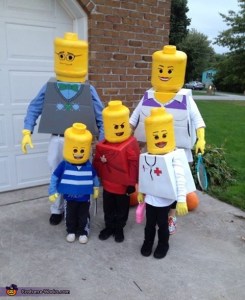
An upstate New York mother allowed her 10-year-old child to shop alone at the LEGO store as she shopped at a different store in the same mall. It appears that the LEGO store’s personnel called the mall’s security, and the child’s mother was arrested and charged with endangering the welfare of a child. The store does have a sign that states that children under the age of 12 must be accompanied by an adult.

Arresting the mother is obviously absurd over-kill. Obviously also, the LEGO store has a right to have whatever policy it chooses regarding unaccompanied children. However the question remains, and is the Ethics Alarms Ethics Quiz of the Day…

Is it irresponsible for a mother to allow her 10-year-old to shop alone if the mother is shopping in the same mall?

Related questions as you ponder: Continue reading →

Morning Ethics Round-Up: 7/7/17

Good Morning!

Well this has been the deadest week of traffic Ethics Alarms has seen for a long time. Thankfully those who have visited have kept the quality and quanity of comments high. Thanks, everybody.

1. I am pretty sure that if Donald Trump delivered the oratorical equivalent of the Gettysburg Address, most of the media would find some way to find it offensive and worthy of mockery. On Vox there is an essay titled “Trump’s speech in Poland sounded like an alt-right manifesto.” Sarah Wildman found President Trump’s  call for “family, for freedom, for country, and for God’” ominous, and was especially bothered by his rhetorical question of  “whether the West has the will to survive.”

This is where the Left is heading, apparently. Appealing to Western values and endorsing “family, for freedom, for country, and for God’ makes you a crypto-fascist. Add this to the list of  reasons Donald Trump is President of the United States. Again I ask, how do people like Wildman grow up here and end up like this, and more amazing still, have a widely read forum?

By the way, the odds of President Trump delivering an oratorical equivalent of the Gettysburg Address are about the same as the odds of Flipper singing The Major General’s Song. Continue reading →

Whatever Else Can Be Said About President Trump, He Has Caused CNN To Expose Its Abandonment of Ethical Journalism. GOOD. [UPDATED]

“All the news media would have to do to have a shot at beating Trump would be to act in a measured, professional fashion. Trump has revealed that they’re incapable of that; it seems as if that option has never even occurred to them.”

Thus wrote Glenn Reynolds, the Instapundit, yesterday. I almost made it the Ethics Quote of the Day. The poster child for the malady that Reynolds describes is, of course, CNN. What has happened to that once respected news source in the last few weeks, and accelerated in the last few days, should, in a rational world, be reveille for the others who easily could fall into similar self-baited traps, and probably will. As we have seen, however, most of the similarly infected have either defended CNN or tried to bury its disgrace.

During the campaign for the Republican nomination, the assumption was that eventually Donald Trump would snap, engaging in some ugly conduct or rant that would sink his prospects and decimate his support. It never happened. Then in the general campaign, the same assumption reigned. He was a narcissist without ethics alarms. Goad him, frustrate him, and he would eventually crumble like Humphrey Bogart on the witness stand in “The Caine Mutiny.”  That theory worked well. Never mind: since his election, Trump has been subjected to unprecedented hostility from the news media, disrespect from elected officials, journalists and popular culture like no one before him, and a barrage of hate and insults.  Is part of the impetus behind the tactics of “the resistance,” Democrats and the news media the theory that relentless frustration and abuse will finally provoke that elusive “snap!” that results in an impeachable offense? I think it is. So far, as before, this tactic has failed. Ironically,  it is Trump’s most relentless foe, the mainstream media, that is snapping instead, driven to humiliating unprofessional and unenthical conduct by the President’s juvenile trolling. One wag recalled Wilford Brimley’s classic interrogation of Paul Newman’s character in “Absence of Malice” after Newman had maneuvered a district attorney, a federal agent and an unethical reporter into destroying themselves and their careers,

“Mr Gallagher…I seem to want to ask if you set all this up. If I do, you ain’t gonna tell me, are you?

I don’t think Trump’s sophomoric and undignified tweets were brilliant stratagems; he’s not that smart. He does, however, have the immense benefit of loathsome and inept enemies, and moral luck has been on his side. It is very possible that CNN’s over-the-top, thuggish and ugly response to the President re-tweeting a stunt GIF showing an image of him wrestling with a figure symbolizing CNN will prove to be a tipping point for both the network and the news media generally.

The network’s efforts to defend the indefensible, a senior CNN reporter intimidating and threatening to dox the ordinary web troll who made the GIF, has made it clear to anyone paying attention that CNN simply employs too many awful, unprofessional  people, prone to liberal fascism and habitual contempt for fairness and decency.  This, in turn points to a sick and unethical corporate culture, which was hinted at recently by the James O’Keefe sting videos featuring a producer mocking the concept of journalism ethics.

Today on her Twitter feed, CNN political analyst Kirsten Powers argued that Americans “do not have a right to stay anonymous” if they are expressing offensive views, meaning views that she/CNN/ progressives—you know, the good people who are always right?— find offensive.

Powers was responding to the uproar surrounding CNN’s report on the Reddit user believed to be responsible for the famous WWE meme of President Trump body-slamming the network’s logo. The CNN article included a threat to reveal the meme maker’s name if he doesn’t comply with the outlet’s demands.

The CNN commentator took issue with the people from all sides of the political aisle taking the side of the Reddit user, who goes by the pseudonym “HanAssholeSolo,” and argued he didn’t deserve any sympathy due to his past “anti-semitic racist, and anti-gay” posts. “People do not have a ‘right’ to stay anonymous so they can spew their racist, misogynist, homophobic garbage,” she added, noting that she would have published the GIF-maker’s name for all to see.

“Racism and misogyny is not an ‘opinion'” she said.

Bingo. There it is: the watermark of a leftist fascist, an anti-free speech hypocrite, and the rotting, stinking soul of CNN. Continue reading →

The Tangled Ethics Of Men, Women, Sexual Harassment,Sexual Discrimination, Romance, Common Sense, And “Vive La différence!”

Mike Pence would not have a business dinner with Debrahlee Lorenzana. What’s wrong with him?

Many years ago I did a sexual harassment seminar for a New York law firm. Afterwards, the partner responsible for handling the firm’s EEOC and workplace matters told me that my ethics-based approach to the topic wasn’t sufficiently rigorous, since he believed that innocent contact between employees in the firm could spawn lawsuits. “I refuse to travel with female associates,” he told me. “I can’t be sure what they will think is harassment.”

“Wait,” I asked. “So because you’re afraid of being accused unjustly of sexual harassment, you engage in sexual discrimination?”

He sputtered something and left to arrange his sock drawer.

I think of this conversation often. I thought of it when Vice-President Mike Pence was reported as saying in 2002  that he never had a meal with a woman who was not his wife, and was promptly savaged for it by feminists and the news media. Because the new rules and practices of the workplace have developed amid contradictions and rigid doctrine rather than with attention to whether they were workable or not, Pence and that hypocritical lawyer years ago are both victims and victimizers. It is often impossible to know what ethical workplace conduct is.

The New York Times was happy to bash Pence for his candor as part of a requirement of membership in “the resistance,” but then, as is often the case for the schizoid paper, later competently and objectively examined the issue away from politics. A Morning Consult poll conducted for the paper  found that there is widespread fear of one-on-one situations, male-female interactions in the workplace.  About 25% think private work meetings with colleagues of the opposite sex are inappropriate. Almost 2/3  say it is prudent to be especially wary and sensitive around members of the opposite sex at work. A majority of women, and nearly half of men, say it’s unacceptable to have dinner or drinks alone with someone of the opposite sex other than their spouse. Continue reading →

Oh, Fine. Now I have To Defend Kathy Griffin…

Hahaha! Boy, this just fractures me every time…

From LawNewz:

Comedian and actress Kathy Griffin has reportedly been interviewed by the U.S. Secret Service for more than an hour. The investigation is connected to a recent photograph which showed her holding the bloody head of Donald Trump.

Griffin’s attorney contends that the actress was just exercising her constitutional rights.

“She basically exercised her First Amendment rights to tell a joke,” Dmitry Gorin, a criminal defense attorney representing Griffin said. “When you look at everything in the media, all the times entertainers make videos or express themselves in other ways, you’ve never seen an entertainer, let alone a comedian, be subject to a criminal investigation.”

Ugh.

Griffin’s attorney doesn’t have to “contend” that she was “exercising her constitutional right” of free speech, she was exercising that right—-irresponsibly, recklessly, unethically, stupidly, hatefully, but she was still exercising it. There is no question that her disgusting photo was inappropriate and pure hate posing as humor, but never mind: people choosing to be hateful and irresponsible in their public speech should expect consequences, but not from the feds. Of course it chills freedom of expression for Griffin to be subjected to this kind of secret police-style grilling. It is a matter of public record that she is a comedian. It is a matter of public record that she is a professional jerk. Thus it is a matter of public record that she is a no threat to the President….just to a civil culture and good taste. Continue reading →

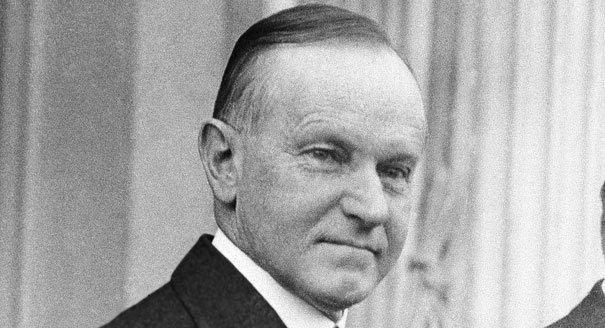
Ethical Quote Of The Day: President Calvin Coolidge

“About the Declaration there is a finality that is exceedingly restful. It is often asserted that the world has made a great deal of progress since 1776, that we have had new thoughts and new experiences which have given us a great advance over the people of that day, and that we may therefore very well discard their conclusions for something more modern. But that reasoning can not be applied to this great charter. If all men are created equal, that is final. If they are endowed with inalienable rights, that is final. If governments derive their just powers from the consent of the governed, that is final. No advance, no progress can be made beyond these propositions. If anyone wishes to deny their truth or their soundness, the only direction in which he can proceed historically is not forward, but backward toward the time when there was no equality, no rights of the individual, no rule of the people. Those who wish to proceed in that direction can not lay claim to progress. They are reactionary. Their ideas are not more modern, but more ancient, than those of the Revolutionary fathers.”

—President Calvin Coolidge

For no particular reason, this is the third post in less than 24 hours to reference Silent Cal. As this speech, on the occasion of the 150th anniversary of the signing of the Declaration of Independence, shows, Cal wasn’t so silent, and when he has something to say, he was often worth listening to. Coolidge’s reflections are thoughtful and characteristic.  His ultimate point is that the document is rooted in spirituality and morality, which is to say that it is virtuous and right. Morality, along with religion, has been in steep decline in the public square, academia and in the culture since 1926, but Coolidge’s argument is no less valid and persuasive if transferred to the realm of ethics. Though they were, as Coolidge says, guided by their understanding of religious principles, the Founders were also students of philosophy and ethical analysis. The Declaration, the Constitution and the United States of America are all the offspring of ethics, as well as morality.

Here and below is the whole speech. (Pointer, and gratitude, to Instapundit) Continue reading →

Comment Of The Day (2): “Observations On Britain’s Charlie Gard Ethics Fiasco”

This is the second outstanding comment on the Charlie Gard post, and it boldly ventures into the ethics jungle of euthanasia. The discussion must go there, for if society has limited resources, and we have more limited resources than Paul Krugman and Bernie Sanders admit, then when people use up their allotted portion, they either have to die or someone else has to pick up the bill. The recent surge in popularity for single-payer health care is due in part to the old saw about how soldiers think when going into battle. It’s everyone else who’s at risk, not you. Or as my dad liked to put it, “Gee, I’m going to miss those other guys!”

Increasingly, as I get older and think about how different my family’s life would be if both Mom and Dad hadn’t contrived to pop off quickly after relatively short illnesses and minimal hospitalization, I see the same consideration in planning for my loved ones. I don’t want to waste my son’s inheritance to pay for the last and worst years of my life; indeed, I think it would be unconscionable to do so. However, that needs to be my choice, not the Death Panel’s.

Here is Mrs Q’s Comment Of The Day on the post,  “Observations On Britain’s Charlie Gard Ethics Fiasco”:

When medical care is socialized, nihilism & scientism combine to control those who can be useful to the state & those who need to be eliminated from it.

Dutch lawmakers are looking at a Completed Life Bill that would allow those 75+ in age to choose medical euthanasia. The lawmaker pushing the bill, Alexander Pechtold, said it would allow the Netherlands to…

“take the next step for our civilization.”

And what step is that exactly?

The Gard case highlights the dark workings of Marxism for what it is by defining life in terms of how much of a burden it supposedly is to others. That the “greater good” is better served when certain people s lives are considered “complete.”

Baby Gard, as Jack noted, cannot continue to be a financial burden in the context of socialized medicine because in such a paradigm, there are not enough resources to support all of those represented by it. Remember socialism ALWAYS promises more than it can ever deliver and always spends more than it has.

I love it when people tell me how great the health care in France is, while many there complain the immigrants are a drain on the system because they have not put their money into it for years. Or Canada, where our friends cannot afford private insurance and go without certain medications & treatments because they’re not covered by state. Or Europe, where rates of Downs Syndrome are jarringly low because doctors have advocated so severely for abortion of these unborn, that in some countries it has literally been years since such a child has been born. Continue reading →

Comment Of The Day (1): “Observations On Britain’s Charlie Gard Ethics Fiasco”

I thought that the Charlie Gard story would stimulate some excellent thoughts on ethics and public policy from readers, and for once I was right. This is the first of two superb Comments of the Day it generated, and there were several others as well.

Here is Ryan Harkins’ Comment Of The Day on the post,  “Observations On Britain’s Charlie Gard Ethics Fiasco.”

The idea of the state telling me I could not seek medical aid for my child when I had both the money to pay for it and a provider willing to give me the services is terrifying. My sixteen-month-old daughter has been receiving the majority of her sustenance through a feeding tube for the past six months. Prior to that, we had been struggling to get her to eat enough calories so that she would gain just an ounce or two, only to find that weight gain vanish when she caught a cold or a stomach bug. Granted, the gastroparesis she suffers is not a severe condition, but without the feeding tube she would risk starving. The thought that the state might step in, tell me that they not only would not pay for my daughter’s tube and care any more, but also expressly forbid me from feeding my daughter through the tube, makes me shake uncontrollably. If I have to fight for my daughter without the state’s help, fine by me. But for the state to forbid me from fighting for my daughter? That is unconscionable.

However, at this time, I don’t have to face that issue. I live in a place and a time when I don’t have to contend with general threat, and my daughter’s condition is not terminal and readily treatable. I hope that my child-rearing and my fear for my daughter helps me to have empathy for the parents of Charlie Gard. I also hope that I can step back away from the emotional turmoil this issue raises and try to understand what is happening here.

The principle dilemma in the case of this poor baby boy lies in the fundamental tension between the fact that human dignity demands we do fight for life, while at the same time we know that we will all ultimately die. Because human life bears an intrinsic dignity, its wrong to deprive a human being of what it needs to survive. Because all humans ultimately die, it can become, through the use of extreme or unethical means, against human dignity to fight against death when death is inevitable.

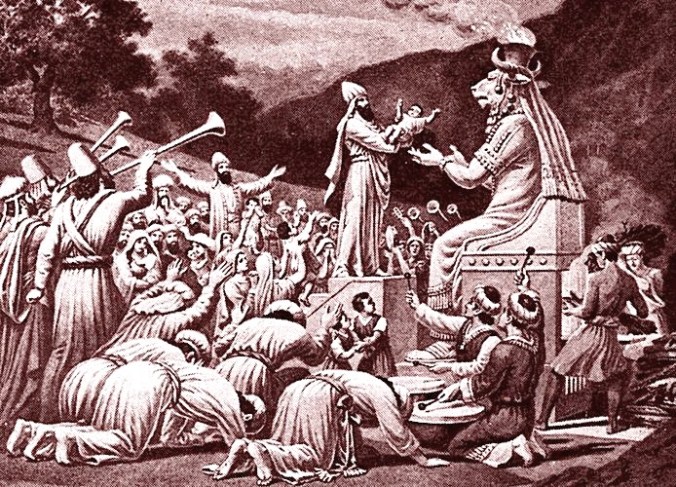
Why would it be wrong, in some circumstances, to keep fighting against death? The most clear-cut examples are when the means of preserving life are unethical. Bathing in the blood of virgins, selling one’s soul to the devil, killing an innocent to harvest his organs, transferring one’s consciousness into the unwilling body of another — all these (fantastical as some of them are) represent tactics to extend life that obviously violate ethical principles.

What about less obvious examples? Let’s consider a man in a coma. His state is persistent, perhaps even vegetative, but his body is capable of processing food and drink, although he is incapable of eating and drinking orally. A feeding tube could provide him with all the nourishment he needs, and he could be kept alive for years in such a fashion. To stop feeding him through the tube would be to deliberately deprive him of sustenance he needs to survive, and thus would be unethical. Death is not inevitable in this case, except in the most sweeping sense.

In times past, a feeding tube would not have been possible, or if possible, not recommended because of infection, and thus this would not have been a serious alternative. Absent any means of delivering food to the man in the coma, no one could be faulted for not providing food. And if trying to use a feeding tube would actually kill him quicker, or have negligible effect, then the extreme measure of using a feeding tube would not be ethical. However, since we are at time with the technology that makes the use of a feeding tube fairly easy and safe, we no longer have that excuse to deprive a person of nutrients.

What about a slightly different case, when the man in the coma can no longer process foods even through a feeding tube? Then providing food actually causes harm without any gain. Perhaps nutrients could be provided through an IV, but one would be justified, and perhaps is even obligated, to stop providing food through the feeding tube.

Now, the most challenging cases are when a person is terminally ill, but there are procedures that exist that can extend life. To what extent are we obligated to provide care? It depends on the nature of the treatment, the cost of the treatment, and the effects of the treatment. A person is fully justified in accepting that death cannot be stopped and let the terminal illness run its course. A person is not justified in taking steps to deliberately end that life, but is justified in procuring palliative care that eases the pain of the dying, even if it hastens death. But one is not obliged to pay for or undergo an extensive, dangerous, expensive procedure that will not provide a cure, but only a short extension of life.

It should be clear, though, that just because one is not obliged to pay for or undergo extreme care, it does not follow that one is obliged to never pay for or undergo such procedures. If a person has the money and desire to attempt such care, and that care is available, that person should not be denied.

Is there any instance, then, when that person could be denied that extraordinary care? Again, we are assuming that the person can pay for it and the care is available, so we aren’t discussing an instance in which the terminally ill patient is displacing someone else’s care.

I personally cannot think of an instance in which we could rightly deny that care. What I do know is that, in Catholic theology, death does not mark the end of the existence of a person. The soul survives death, and the soul will be reunited with the body at the Resurrection. There is danger in pursuing treatments at any cost, and that danger lies in the denial of the afterlife. That has consequences for one’s eternal soul. Continue reading →