War and the Military
President Lincoln’s Misunderstood Ethics Crisis: The Great Sioux Uprising
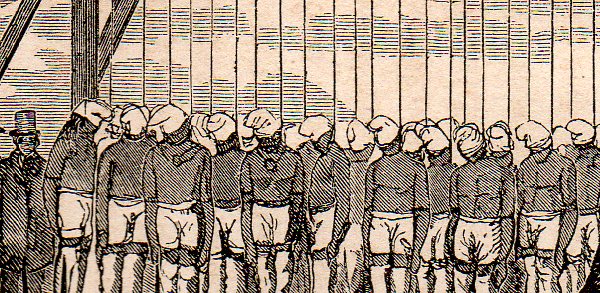
As part my so-far futile efforts to leave Ferguson in the rear view mirror, let’s revisit one of the Abraham Lincoln’s great ethical dilemmas during the Civil War, in which today’s date, December 1, was pivotal.
Minnesota’s Great Sioux Uprising, now usually called the Dakota-U.S. Conflict, was among the bloodiest Indian wars in the West, with hundreds of Native Americans, settlers and military casualties. The Sioux were defeated soundly, and the U.S. Army tried 303 Native Americans by military commission, finding them guilty of war crimes and sentencing them to death by hanging. Federal law required Presidential approval of the death sentences, and this was a problem Abraham Lincoln, the President at the time, did not need.
For it was 1862, and the Civil War was raging. This was a year full of Union defeats, indeed, disasters, like Fredericksburg, and both the war and Lincoln’s ability to lead it were in peril. Lincoln was also calculating all the political angles before issuing the Emancipation Proclamation. On top of the burdens of war and politics, he was coping with personal tragedy: his young son Willy had died nine months earlier, and Mary Todd Lincoln was teetering on emotional collapse from grief.
Now he had to decide whether to allow the execution of more than 300 Indians convicted in trials that were no better than kangaroo courts. Few Americans were concerned about the fate of the Native Americans, but Lincoln, with all of his other worries, took on the task of reviewing the trial records. What he found was manifest injustice. Continue reading
Incomprehensible Ethics Quote Of The Month: Rep. Charles Rangel (D-NY)
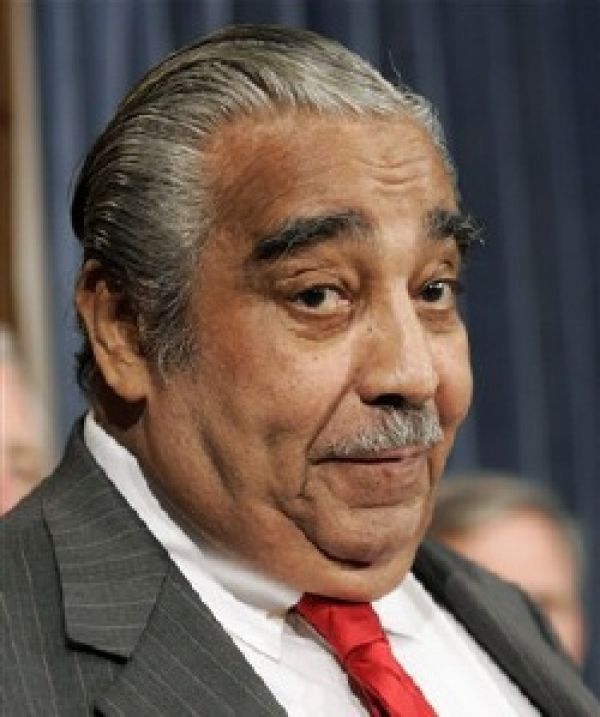
“I always try to find something good that comes out of conflicts like this, and perhaps people realize that this is not a Ferguson problem at all; it’s a problem around the country. And as long as people feel awkward and embarrassed in talking about the racism that exists, we can never, never, never attack it…The indifference of the patrol officer’s an indication that good people ought to say that you should be sorry when you take anybody’s life. It’s not just the question of what you thought of whether you were afraid…. his total indifference just polarized that community, and I only wish that — that they had not vented themselves in a violent way and taken advantage of people coming together, white and black, and saying that you should at least be able to say you made a hell of a big mistake at least.”
—–Rep. Charles Rangel (D-NY), wandering confused in the ethics wilderness while discussing the Ferguson mess on MSNBC.
I supposed we should expect Rep. Rangel to be completely muddled when it comes to ethics, given his own history. Still, seldom have I seen such a dog’s breakfast of responsible sentiments and ethics ignorance in the same set of comments:
- Congratulations are due to Rangel for admitting that this Ethics Train Wreck unfairly settled in Ferguson, which is being made to suffer disproportionately for the conduct of many communities and elected officials across the country, as well as the political opportunism of civil rights activists.
- However, public officials have an obligation to be clear. What “racism that exists,” exactly? Anywhere in the U.S.? Absolutely: let’s talk about it. In the shooting of Brown? No racism is in evidence at all: if that’s what Rangel is referring to, and many will assume its is, the statement is irresponsible. Was he talking about the grand jury decision, which was the context of the interview? Prove it, Charlie. Otherwise, stop planting distrust with a population that is paranoid already.
- Michael Brown’s actions, from Wilson’s point of view, forced him into a situation that has resulted in his career being ruined and life being permanently marred….and Rangel thinks Wilson should apologize? This is completely backward. Wilson owes no apologies to Brown, and certainly none to Brown’s parents, who have been carrying on a vendetta against him, calling him a murderer while expressing no acknowledgment that the son they raised had any responsibility for the confrontation that took his life. If anyone owes anybody an apology, it the parents who owe Wilson. Rangel thinks Wilson should apologize for trying to do his job, for not letting Brown take his gun, for not letting him resist arrest, for not letting himself be attacked, and that is ridiculous.
Obama Fires Hagel: The Flat Learning Curve Budges
Sniffs the Weekly Standard:
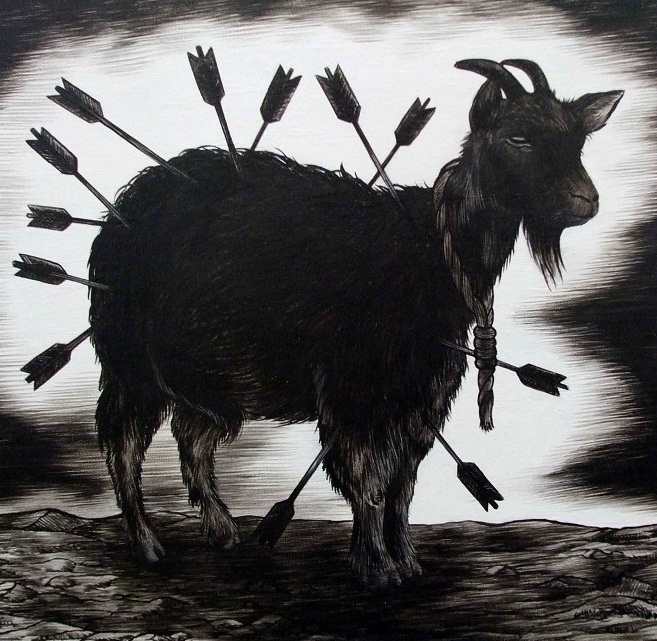
How Do You Spell Scapegoat? H-A-G-E-L.
Chuck Hagel, apparently fired as Secretary of Defense, was exactly who and what Obama wanted, a weak Defense Secretary willing to carry out the President’s plan of demilitarizing of the U.S. and reducing U.S. power abroad. But that plan has led to rapidly deteriorating stability around the globe, and with ISIS appearing to be winning while the U.S. has restricted itself to bomb runs and “advisors,” Obama had a choice. He could, as he has consistently done for six years, refuse to acknowledge that his policies were misfiring and that his team was failing, thus giving the public no reason to believe that he knew, or perhaps even cared, that his ideology didn’t translate into desirable real world results. He could continue blaming others—Republicans, bad luck, Bush—for failures, and keep his loyalists in their jobs no matter how incompetent they appeared. In the alternative, he could signal that he was not satisfied with the status quo, and let heads roll—you know, like real leaders do. Continue reading
Case Study In Cultural Ethics Rot: “Bin Laden Shooter” Robert O’Neill

Yes, dead, but still helping to corrupt our culture…
Do you remember all those World War II, Korean War and Vietnam veterans who published books and gave interviews taking personal credit for the successes of the United Armed Services? No, neither do I, because there weren’t very many. The ethical culture of military organizations has always been that the unit is what matters, not the individual. For a soldier to seek credit, accolades and celebrity through his own disclosures was regarded as disgraceful conduct, and a betrayal of military honor and tradition.
Those values, and the important larger cultural values that they reinforce, are crumbling rapidly. Former Navy SEAL Robert O’Neill, one of many U.S. special forces members to storm Osama bin Laden’s compound on May 2, 2011, confirmed to The Washington Post that he was the unnamed SEAL who fired the fatal bullet at the terrorist leader. His decision to make himself an instant celebrity and speaker circuit star comes nearly two years after another Seal in the mission, Matt Bissonnette, published his account of the raid, “No Easy Day.” The Post says that O’Neill has endured “an agonizing personal struggle, as he weighed concerns over privacy and safety against a desire to have a least some control over a story that appeared likely to break, with or without his consent.” There is no struggle if O’Neill accepted that fact that his ethical obligation is to shut up, and not dishonor his colleagues, his profession and his country by choosing celebrity over preserving a vital ethical standard.
Will future Seals jeopardize the success of their missions as each tries to deliver the “money shot” that will literally result in millions? Why wouldn’t they, now that soldiers are absorbing the American culture’s obsession with cashing in and becoming famous as the primary objective of human existence? Like all ethical standards, the tradition of soldiers neither seeking individual credit nor wanting it had strong practical reasons for its existence. A military unit is the ultimate team, and no team can function at maximum efficiency if the members regard themselves as competing for glory. Continue reading
Comment of the Day: “Make Voting Compulsory, Because We Can’t Let THAT Happen Again”
Maybe Ruth Marcus would like this system better…
Theories of democracy and political science, Robert Heinlein, minimizing bias from self-interest, scientist suspicion, GIANT BUGS…okay, it doesn’t quite get to the bugs. But what’s not to like about texagg 04’s reflections and exposition sparked by the post on Ruth Marcus’s plug for compulsory voting? Here is his Comment of the Day on the post, Make Voting Compulsory, Because We Can’t Let THAT Happen Again: Continue reading
“Boobs on the Ground” Ethics
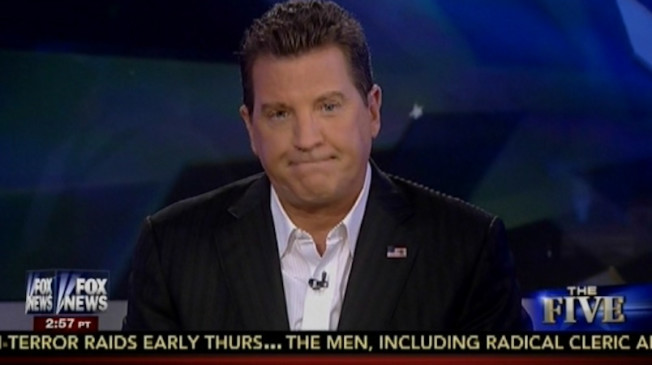
“We have met the boob, and it is me.”
I was going to make this an Ethics Quiz, but that dignifies Eric Bolling’s crude and disrespectful comment on Fox’s “The Five” more than it deserves. Would I accept such a sophomoric “quip” at a dinner party of close friends, at a bachelor party, in a group of women who knew me and could tell when I was intentionally tweaking them, in a setting where groans and objects thrown at my head were appropriate? Oh, probably. I’ve made worse jokes myself, knowing how bad they were, knowing they were offensive, knowing that I had the good will of my companions and that they would take them the right way. But as a presenter in a seminar? As a panel member? In an auditorium? Over the radio? On TV? Never.
Any statement is defined to some extent by the audience it was intended for (See: Sterling, Donald) For a supposed broadcast professional to say what Bolling said about the United Arab Emirates‘s first female pilot who served as the flight leader during air strikes in Syria (“Would that be considered boobs on the ground, or no?”) can’t be excused or justified: Continue reading
If Someone Praises The Job Eric Holder Did As Attorney General, That Tells You All You Need To Know
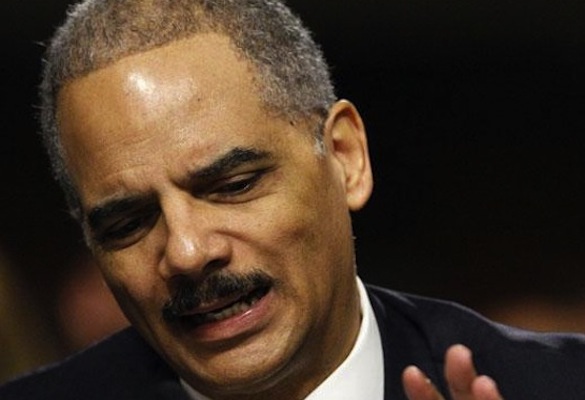
Eric Holder was the most political, biased, inept and undemocratic U.S. Attorney General in at least 70 years, with the exception of Nixon’s AG, John Mitchell, who went to jail. And the Attorney Generals have been uniformly terrible in this period; being one of the two worst takes talent, determination, broken ethics alarms and wretched judgement.
Those who praise Holder either are doing so without any idea about his record, or because they want the justice system in the United States to be racially and ideologically biased. The results of the latter, which is Holder’s real legacy, can be seen in the rising distrust between races, and the frequent description of Holder as being Obama’s “scandal goalie.” The latter isn’t completely fair, because the news media has also been the President’s scandal goalie. The proof: few of the mainstream media retrospectives on Holder’s tenure mentioned the Justice Department’s refusal to hold a thorough and open investigation of the still unfolding I.R.S. scandal, which should have, and under any Republican administration, would have, included an independent prosecutor, because the news media would be screaming for one. This abdication of duty and naked partisanship by Holder alone condemns him. Unfortunately, there is a lot more.
You can begin with the “inside baseball” reports that Justice, under his administration, is a confused mess. That’s hardly surprising, for since the President eschews management and oversight, this is the tendency up and down the system. Without well-regulated policies and oversight, partisan meddling flourishes.
I have neither the time nor the energy to detail each and every example of Holder’s toxic racial and partisan biases, or his flat out ineptitude; there are too many to list, and I am sure I don’t know about some whoppers. Never mind: a fraction of the list would have made the resignation of any other Attorney General mandatory and beyond debate. Holder is black, and this guaranteed that short of setting fire to the Supreme Court, he would only leave when he was ready. That alone is disgusting.
Here are some other Holder achievements:
1. “If Holder had his way, Khalid Sheikh Mohammed, the mastermind of the Sept. 11 terrorist attacks, might now be on death row,” says ABC. This is the media spinning for Holder: his efforts to have the terrorist tried in New York City was when I first realized how out of his depth he was.
In the contentious Congressional hearings on the matter, Holder told the nation that“Failure is not an option. These are cases that have to be won.” “That have to be won”? Failure, as in acquittal, is “not an option”? This was a confession of the muddled, simultaneously alpha and omega false logic that would become a hallmark of Obama World. Holder proclaimed that the world had to see the United States give its enemies a fair trial, then told Congress that the “fair trial” he was proposing was a show trial, a kangaroo court, in which justice meant a guilty verdict. It was a stupid, stupid thing for any lawyer, much less an Attorney general to say. Tragically, it was no aberration.
2. Holder refused to defend the Defense of Marriage Act, though it was a law passed by Congress and signed by a Democratic President. I think he should have been impeached for that. Slate, among others, says that he was “vindicated” because the Supreme Court held the law unconstitutional. They didn’t vindicate his refusing to do his job. It is not the prosecutor’s duty to veto laws duly passed by the legislature and signed into law, nor should he have the power to do so. Holder’s precedent took a bite out of the rule of law, and stood for stunning arrogance. He viewed DOMA as a civil rights incursion: gee, what other laws don’t you like, sir? We found out: he didn’t like drug laws, because he sympathized with the poor, black criminals that tended to violate them. His solution? Minimize the penalties, and send the message that abusing illegal drugs was no big deal. Democrats wanted to curry favor with the Hispanic-American voting bloc? Holder was eager to assist by not enforcing the Federal laws, and by doing everything he could to prevent the states from policing illegal immigrants as well. In a system of laws, favoring authorities that pick and choose which to enforce according to their political beliefs is endorsing obstruction over process, and politics over justice.
3. When acting unconstitutionally suited Holder’s partisan masters, however, he would do it. In 2013, the Justice Department seized Associated Press phone records, and monitored Fox News reporter James Rosen following a story he published in 2009 on Iran.
4. Holder oversaw specious and intellectually dishonest justifications for the U.S. policy of assassinating suspected terrorists without providing them with a trial, and or any evidence that they were planning imminent attacks. By defining the word imminent in the broadest possible way, this advocacy for the elimination of due process equaled the worst deceits of the Bush Torture Memos, the only difference being an official pass from the Obama-enabling press. The policy, basically a license to murder, ensured that assassinations could be carried out against anyone who the U.S. government feared if the person was located on foreign soil and could not be captured.
5. Then there is Operation Fast & Furious, the proof positive that Holder was going to get away with anything and everything. The Bureau of Alcohol, Tobacco, Firearms and Explosives lost an estimated 1,400 weapons in Mexico, among them: two guns that were used to kill U.S. Border Patrol agent Brian Terry in December 2010. Holder is the supervisor of the ATF, but testified before the House Judiciary Committee that he had only known about the sting named “Operation Fast & Furious,” for a few weeks. Then investigators uncovered memos on Fast & Furious sent to Holder in July 2010. A reasonable conclusion was that Holder had lied under oath. Oh, no, Holder “explained,” he never read the memos. He was incompetent, not culpable. Despite all evidence to the contrary, Holder indignantly denied a DOJ cover-up, saying that“This operation was flawed in concept, as well as in execution,” and refusing to be held accountable for his own department’s deadly botch. Bolstered by Obama’s assertion of executive privilege, which prevented future prosecution, Holder refused to turn over documents related to the fiasco. Congress held Holder in contempt in June 2012, and he thoroughly deserved it, because the American people had a right to know the extent of the bungling in the highest reaches of the Obama Administration.
6. Although the supporters of Holder claim that his legacy was built on a dedication to civil rights, this was only in the narrow areas where the Democratic Party saw political advantage. He was not concerned, for example, in the civil rights of Americans when the government wanted to use modern surveillance technologies to spy on them. In the 2012 Supreme Court case U.S. v. Jones, Holder’s Justice Department argued that the police did not violate the Fourth Amendment by attaching GPS devices to cars so they could know where they were going and where they had been, with that evidence used to acquire evidence. incriminate, try and imprison. The Supreme Court rejected that position unanimously, because it was a mark of a burgeoning police state.
7. When Democrats wanted to create racial divisions, however, to rile up the base, Holder reported for duty. He assisted the unconscionable effort, still ongoing, by Democrats to characterize a responsible and necessary protection of the integrity of the voting process—photo IDs—as a racist plot, though the measure had long ago been approved by liberals, and only recently became stigmatized as “voter suppression.”
8. Holder’s major wound that he inflicted on the nation was his clear intention to project the image of a black Attorney General whose concern was minorities, whose assumption was that whites were the enemy, and whose biases were front and center. An early cue was his department’s abandonment of charges against two New Black Panthers who stood armed outside a Philadelphia polling place. The controversy, assisted by the media, devolved into an argument over whether this was an example of Justice receiving orders from the political Machiavellis in the White House, or just a lousy, bigoted example of “discretion.” A long official investigation found the latter, but either way, the message sent to white Americans was that this Justice Department was not especially interested in protecting their rights. In the Trayvon Martin shooting and the Ferguson episode, two local issues that should not have been his concern, Holder made statements, engaged in gestures and took actions that signaled his allegiance to the black victims, and opposition to the white (or “white Hispanic”) individual accused. He repeatedly spoke collaboratively before Sharpton’s followers, endorsing their diagnoses of a racist nation, and, by extension, a white population aligned against African Americans. Especially revolting was his repeated attempts to duck legitimate accountability for, you know, being terrible at his job, by race-baiting, such as when he explained Congressional criticism of his handling of Fast & Furious—a career-ender for any white Attorney General, or an appointee of any President who believed in accountability, by saying in 2011…
“This is a way to get at the president because of the way I can be identified with him, both due to the nature of our relationship and, you know, the fact that we’re both African-American.”
It shouldn’t have to be said, but I’ll say it anyway: the job of Attorney General, like the job of President, must be, and must be seen as being, absolutely neutral regarding race. Holder intentionally projected himself as an AG who cared more about minorities than non-minorities, increasing distrust, undermining respect in the justice system, and dividing the nation.
9. Not that he wasn’t feckless and incompetent too: for example, Holder’s Justice Department, almost certainly to ensure later campaign support, allowed multiple corporate criminals to escape serious punishment. For example, the Justice Deportment made a ridiculous plea deal to allow Halliburton executives to avoid jail time after they destroyed evidence of their culpability in the Deepwater Horizon oil spill. The company agreed to pay the maximum allowable fine of $200,000, accepted a three-year probation; continued its cooperation with the government’s criminal investigation (which it had to anyway), and made a voluntary contribution of $55 million to the National Fish and Wildlife Foundation to clean off those oil-covered sea birds and otters. It could do this with the confidence that hard-core Democrats, being total hypocrites, would still attack the Republican party as a cadre of soulless corporate fat cats and insist that any criticism of Holder’s Justice Department and his boss’s administration was rooted in racism.
And again, the amazing thing is: That’s not all.
Any politician, elected official, pundit, columnist, civil rights leader or President who declares that Eric Holder was a wonderful public servant and a great American is telling you one of three things, or all of them:
- They are liars.
- They don’t know anything about Eric Holder, or
- They believe the integrity of the nation’s laws should be warped and the public trust should be forfeited for a race-based, partisan agenda.
I don’t know about you, but I’ll be taking names.
Indocrinating Our Students With Apathy, Cowardice and Selfishness: No Wonder We Won’t Help The Ukraine…
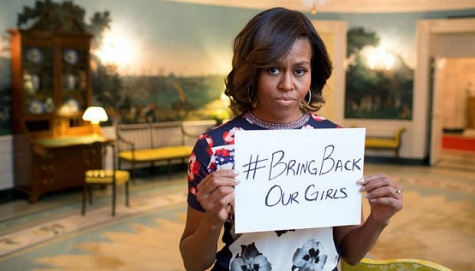
THIS, however, is perfectly acceptable, because it’s perfectly ineffective.
Day by day, moment by moment, our ethically incompetent schools inculcate the wrong values in our young, undoing centuries of American traditions and unraveling the unique character that made the United States the hope of the world.
When he witnessed another student at Chicago’s Elmwood Park High School beginning to bully a smaller, weaker colleague, high school athlete Mark Rivera pulled the aggressor aside and said something in the manner of “Do that again, and you’ll have to deal with me, got it?” As a result, he was suspended.
The principal told reporters, “You can say stop it or leave him alone but if that doesn’t work, get an adult involved.” Ah. Object without intending to do anything to back up the objection. Do nothing, and, say, go play golf. Or leave it to someone else.
Sounds familiar.
Mark Rivera is an Ethics Hero, even though, if the cultural polluters in chrage of our institutions aren’t stopped and replaced, future generations of the wan, timid, self-absorbed nation that was once the United States won’t think so.
Obama’s Coffee Cup Salute “Gotcha!”
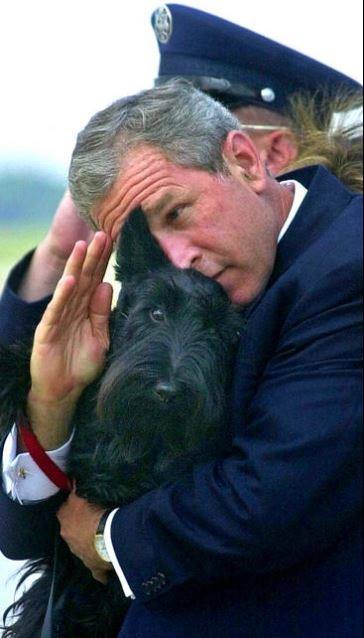 Some controversies instantly inspire everyone on all sides to be petty, stupid, and unfair. This is just such a controversy.
The White House posted a video of President Barack Obama awkwardly saluting a Marine as Obama exited the presidential helicopter, Marine One. He did so while holding a styrofoam coffee cup, which he brought to his forehead as well. This sparked critical comments from Republicans, conservatives and veterans that Obama was showing disrespect for the military.
This is the epitome of a petty “Gotcha!” that guarantees sympathy for the President. I would be surprised if there are not examples of most Presidents botching return salutes, especially those, like Obama and Clinton, who had no experience in the military. (President Eisenhower presumably never had this salute problem.) Obama also was pretty pathetic when he had to throw out the first pitch in a major league baseball game. Oh, so what? Republicans really think that these deficiencies prove Obama is disrespectful of the military, or of the National Pastime? There are so many stronger indications. Continue reading
 Ethics Alarms
ABC News Political Analyst and former Bush advisor Matthew Dowd said on ABC’s This Week that the recent cases of police violence involving unarmed African Americans were as much due to the militarization of police forces as race.
“We basically dress up officers as if they’re machines,” Dowd said. “And then we expect them to act like human beings. So what happens is, they confuse power with force. Most of the officers in this country do a great job. But when we militarize our police force and dress them up like machines, they act like machines.”
Technically, he was right: there is no evidence that those tragedies were caused by race or militarization. He had exactly no evidence or documentation that the “militarization of police” caused these deaths, or that alleged militarization has caused any deaths. This appears to be emerging conventional wisdom, just one of those things someone says and everyone nods in agreement with no real thought. Why is the so-called “militarization” of police forces such a threat or cause to distrust police? If police are not trustworthy, that’s a reason not to give them fire-power, but having more fire-power doesn’t make them less trustworthy. It simply makes it more important than ever that police be well trained and responsible.
I was preparing a post about this emerging theme as an example of bias, in this case, pre-existing anti-police bias, being translated into false and discourse-warping assumptions by activists and the police when stalwart commenter dragin_dragon delivered this, the Comment of the Day, on the post The Perils of Over-Regulating the Police: A Case Study: