
I smell fish.
1. Question: Has “Mark Owen,” the Navy SEAL from Team 6 who has written an account of the Osama bib Laden kill mission (real name: Matt Bissonnette), engaged in unethical conduct by doing so? Continue reading
I smell fish.
1. Question: Has “Mark Owen,” the Navy SEAL from Team 6 who has written an account of the Osama bib Laden kill mission (real name: Matt Bissonnette), engaged in unethical conduct by doing so? Continue reading
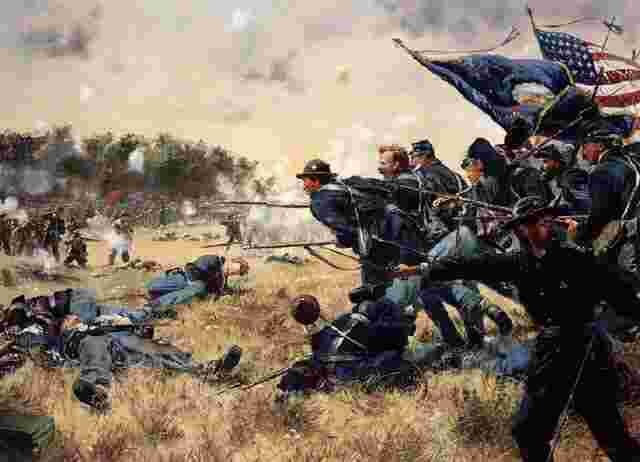
Last year on this date, I posted about the injustice of historical memory, and how the heroic exploits of the Maine soldiers on Little Round Top commanded by Col. Joshua Chamberlain on the second day of the Battle of Gettysburg have all but obliterated recognition of the even more remarkable sacrifices made by the First Minnesota Volunteer Regiment that same day, when it took on the suicide mission of blocking a hole in the Union line against a Confederate force that outnumbered it five to one. Those Minnesotans quite possibly saved the United States of America at the price of their lives.
I see that some readers are finding that post today: let me make it easier for everybody. Here is the link. This a day for all of us to honor the heroism of the First Minnesota, and indeed all of the Americans, North and South, who fought for their nation, their states, their ideals and the soul of America in the Pennsylvania town of Gettysburg, on July 2, 1863. Continue reading
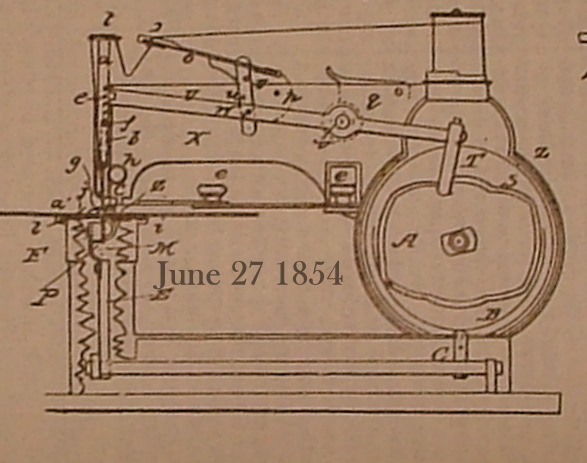
Nope. No sewing machine. It will cause too much “harm.”
A blogger for the Lindau Nobel community asks, as a follow-up to a discussion raised in one of the august group’s recent meetings, whether scientists should have to take an oath similar to that traditionally (but not universally, by the way) taken by physicians, a pledge to “do no harm.”
No. Next question!
This is not merely a bad idea, but an arrogant and ignorant one. The medical profession is dedicated to healing, without regard to who is being healed. “First, do no harm” is a rational and excellent absolute principle, one that relieves the profession of the burden of many (but not all) complex utilitarian dilemmas that doctors and other health professionals may not be equipped to solve. Medicine is much narrower than science, and its limitations more clear. Most people would agree with doctors on what constitutes “harm” in 99% of the situations where the issue would be raised. Not so science, where one man’s monstrosity is another’s giant step for mankind. Continue reading
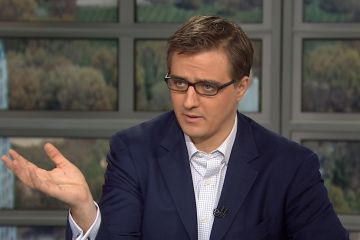
To be fair, while Chris Hayes is ill-informed, ungrateful and arrogant, at least he’s incoherent.
As anyone could have predicted, MSNBC host Chris Hayes had to issue an apology after his fatuous and inarticulate comments about Memorial Day. If you were lucky enough to miss them, here they are:
“I think it’s interesting because I think it is very difficult to talk about the war dead and the fallen without invoking valor, without invoking the words “heroes.” Why do I feel so [uncomfortable] about the word “hero”? I feel comfortable — uncomfortable — about the word because it seems to me that it is so rhetorically proximate to justifications for more war. Um, and, I don’t want to obviously desecrate or disrespect memory of anyone that’s fallen, and obviously there are individual circumstances in which there is genuine, tremendous heroism: hail of gunfire, rescuing fellow soldiers and things like that. But it seems to me that we marshal this word in a way that is problematic. But maybe I’m wrong about that.’
With so many interesting, thoughtful, perceptive and provocative statements being written and uttered every day that vanish forever, never to be repeated or published, it is cruel irony to confer immortality on cretinism like that, but I digress. My commentary on Hayes’ statement is here. His apology was pre-ordained, because he insulted so many, so deeply, so pointlessly and so arrogantly, at the worst possible time, that a national outcry was guaranteed, and the eventual directive, “Apologize or pack!” from his MSNBC overlords was a forgone conclusion.
As forced apologies go, how did Hayes’ rank? Continue reading

My hero.
Yesterday, the day before Memorial Day, MSNBC host Chris Hayes said this:
“Thinking today and observing Memorial Day, that’ll be happening tomorrow. Just talked with Lt. Col. Steve Burke , who was a casualty officer with the Marines and had to tell people [inaudible]. Um, I, I, ah, back sorry, um, I think it’s interesting because I think it is very difficult to talk about the war dead and the fallen without invoking valor, without invoking the words “heroes.” Um, and, ah, ah, why do I feel so comfortable about the word “hero”? I feel comfortable, ah, uncomfortable, about the word because it seems to me that it is so rhetorically proximate to justifications for more war. Um, and, I don’t want to obviously desecrate or disrespect memory of anyone that’s fallen, and obviously there are individual circumstances in which there is genuine, tremendous heroism: hail of gunfire, rescuing fellow soldiers and things like that. But it seems to me that we marshal this word in a way that is problematic. But maybe I’m wrong about that.”
Well, yes, Chris, you’re wrong about quite a lot.
Chris was wrong, for example—as well as disingenuous—to say that “you don’t want to obviously desecrate or disrespect memory of anyone that’s fallen” and then come out with this insulting and fatuous gibberish that disrespect the memories of the fallen. And to do it on the very weekend when millions of families across the nation are honoring their fallen, or, in the case of my family, a father who braved combat in World War II, was wounded, decorated, and regarded his service in defense of his country the greatest achievement of his life.
Hayes was also wrong, as well as incompetent and unprofessional, to utter such a half-baked and incoherent opinion without having the respect to think it through carefully, express it articulately, and in general without meeting his obligations as a broadcaster to be worth listening to. If a commentator is going to make a statement that he knows will offend and upset grieving families, he should at least know what he wants to say and have the skill and courage to say it clearly. As it was, all he managed to do was to make a gratuitous slur against patriots who put their lives at risk because their nation asked them to, instead of taking morally craven positions from the security of a TV studio that only exists because of the sacrifices such heroes made. Continue reading
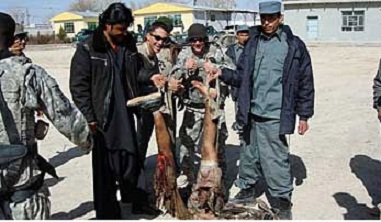
The Los Angeles Times feels that you need to see this photo, and sensationalism has nothing to do with it. No, really.
Our national news media, which is as biased as ever, more untrustworthy than ever, and less professional than ever, is also more self-righteous than ever, which, I suppose, figures. The most recent display of self-righteousness, along with gratuitous recklessness and arrogance, is the Los Angeles Times’ decision to publish photos of American soldiers posing happily next to the bloody mess that had been the bodies of Afghan suicide bombers. The Pentagon asked the Times not to run the photos, for obvious reasons. The mission in Afghanistan is hanging by a thread as it is, our relationship with the government and the populace serially wounded by a series of unnecessary events that placed the U.S. in a terrible light: in January, a video of Marines urinating on dead Taliban soldiers; in February, the botched disposal of copies of the Quaran, and shortly thereafter, the rampage of a deranged U.S. soldier, who went door to door killing Afghan civilians. Such episodes, and the publicity they receive, jeopardize American interests and cost lives, as Secretary of Defense Leon Panetta explained while condemning the Times’ irresponsible decision. Continue reading

Thank you for your service, and of course you can board the airplane before I do. By the way, Bill Ayers says you don't work.
Barack Obama’s friend Bill Ayers and his wife Bernadine Dohrn, the now retired terrorists, found their way to Occupy Wall Street yesterday, which figures, and these murderous Sixties socialists were welcomed as heroes by the OWS crowd, which figures even more.
In the course of their joint rant about how doomed and terrible the United States is, Ayers, who apparently resented not being in the first group to board a recent commercial flight by virtue of his first class ticket, posed this question:
“We’ve got a militarized society and its become so common sense that, getting on the airplane coming out here, the first thing they said was let all the, uhh, let all the ya know, uniformed military get on first and thank you for your service. And I said as I always do: let’s let the teachers and nurses get on first and thank them for their service. I mean, why is it that everything military has got to be good and everything that has to do with actual work, real work, not jobs, real work for people, that stuff gets discouraged and marginalized?” Continue reading
 There are those who say that human beings are incapable of truly altruistic conduct, and that everything we do, no matter how outwardly generous and selfless, is in fact self-serving. There are others, and I am among them, who believe that human beings have natural ethical instincts that lead them to sacrifice for the benefit of society generally, those in peril, and those who are weaker than themselves, especially children. Those instincts can be nurtured by our culture or extinguished by it, but I believe that they are there in most of us….for a while, at least, sometimes weak or dormant, but there, nonetheless.
They were obviously there in Specialist Dennis P. Weichel Jr. of Providence, Rhode Island, a National Guardsman serving in an Afghan province east of Kabul. On March 22, he left the 16-ton gun truck he was riding in to disperse local children who were wandering in front of his heavily armored convoy, searching for treasure, the brass shell casings that could be melted down for other uses or be sold. Suddenly a small girl saw a casing and ran into the path of one of the huge military vehicles. Weichel, a father of three, dashed to her, grabbed her, and threw her to safety unharmed. The gun truck struck the Guardsman instead, fatally injuring him.
Weichel was engaged to be married. He is the first member of the Rhode Island National Guard to die in Afghanistan.
Nothing can erase the tragedy of the U.S. serviceman who turned mass murderer in Afghanistan a month ago, and Weichel’s heroism is unlikely to change any hearts and minds there. That wasn’t Weichel’s objective anyway. He saw a young life in danger and acted, risking his own. It would be a better United States if all of us were raised to react as he did, and if our culture more unambiguously encouraged our best instincts rather than our worst ones. The cliché mouthed by politicians is that our military combat personnel are fighting for American values. Dennis Weichel demonstrated that they also carry American values with them, and in his case, he displayed the very finest.
Weichel was promoted posthumously from specialist to sergeant and awarded the Bronze Star, which is appropriate, and Rhode Island’s flags are being flown at half-mast. The honor he most deserves, however, is to be remembered and emulated by the rest of us.
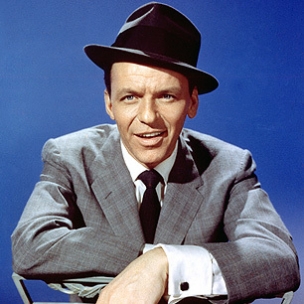
If Ol' Blue Eyes was worthy, why not Whitney?
New Jersey Governor Chris Christie ordered New Jersey’s flags flown at half-staff in official mourning for Whitney Houston, and a lot of people are outraged. The critics of the honor fall into two categories: those who believe that the honor should be reserved for military heroes and high government officials, and those who believe that Houston is especially unworthy because of her well-documented substance abuse problems.
For his part, Governor Christie defiantly declares that Houston, as a daughter of New Jersey, deserves the state honor because of her contributions to the culture.
Technically and officially, Christie is out of line. Federal law is very specific about the proper treatment of the flag, including when it can be flown at half-staff. Simply put, celebrities don’t qualify, no matter who they are. A state governor can proclaim that the flag be flown at half-staff in his or her state for fallen soldiers, but not for non-military individuals. But governors ignore the law routinely, and have for decades. Tennessee’s governor lowered the flag when Elvis died. Massachusetts did the same for Red Sox great Ted Williams, though he was also a war hero, so no one was going to object. The law, in terms of custom and enforcement, is a dead letter, and probably should be.
True, some governors have abused the spirit of the law, including Christie, when he lowered the flag for Clarence Clemons, the saxophonist for Bruce Springsteen’s E Street Band—a great musician, but hardly a figure of transcendent national significance. If 4 USC Section 7 isn’t going to be followed or enforced, then we need some new standards, or before we know it they’ll be lowering the flag for Joan Rivers. Continue reading
Bear with me—this story has a point, and besides, it’s funny.
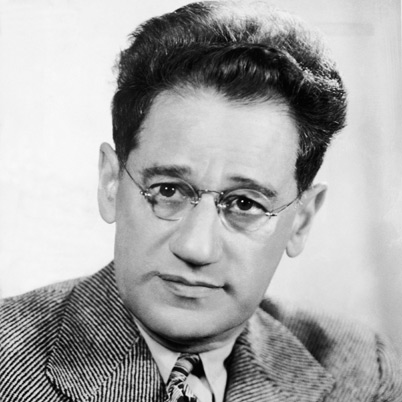
George S. Kaufman had the right idea.
Playwright George S. Kaufman (“The Man Who Came To Dinner”, “You Can’t Take It With You”, and many more) was a panelist on the long-forgotten early TV program, “This is Show Business.” One of its features was to have a celebrity consult the panel members about a personal problem. On one show, singer Eddie Fisher ( father of Carrie) complained to the panel that some women refused to go out with him because of his youth. Kaufman replied with this immortal expression of complete disinterest:
“Mr. Fisher, on Mount Wilson there is a telescope that can magnify the most distant stars to twenty-four times the magnification of any previous telescope. This remarkable instrument was unsurpassed in the world of astronomy until the development and construction of the Mount Palomar telescope. The Mount Palomar telescope is an even more remarkable instrument of magnification. Owing to advances and improvements in optical technology, it is capable of magnifying the stars to four times the magnification and resolution of the Mount Wilson telescope.
“Mr. Fisher, if you could somehow put the Mount Wilson telescope inside the Mount Palomar telescope, you still wouldn’t be able to see my interest in your problem.”
This is how I feel about the controversy over the removal of a reference to God on an Air Force unit’s patch, and it is how, I believe, everyone should feel, from the atheists who agitated for the patch to be changed, to the ridiculous Republican House members who are opposing the change. Continue reading
 Ethics Alarms