The Wrestler, the Girl, and Cultural Confusion

"Wanna wrestle?"

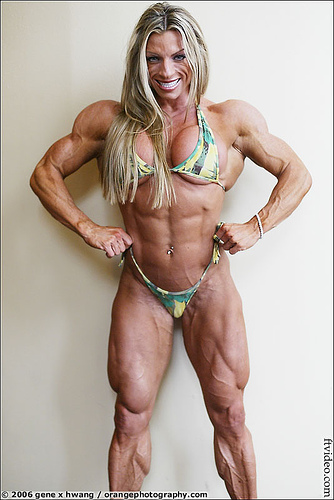
Sixteen-year-old high school sophomore wrestler Joel Northrup forfeited his match against a fourteen-year-old wrestler with two X chromosomes, Cassy Herkelman, at the Iowa state wrestling championships, saying that “As a matter of conscience and my faith I do not believe that it is appropriate for a boy to engage a girl in this manner.” Obviously Herkelman didn’t require protection from anyone or anything. She was her district’s 112-pound champion wrestler, and she won the Iowa championship for her class as well.  Cassie had won 20 of 33 matches, all against male wrestlers, on her way to the state championship. Maybe Northrup didn’t want to risk being ridiculed for losing to a girl; maybe he was uncomfortable with the sexual overtones of an inter-gender contest. All we can do is assess his conduct by taking him at his word: he believes a young man wrestling a young woman is morally wrong, and was willing to forfeit a match he might have won. Joel was, after all, the fifth-ranked wrestler in the state at 112 pounds, and had a 35-4 record.

Was his decision admirable, or sexist? Was it gentlemanly, or demeaning? Continue reading
Are GOP Leaders Obligated to Condemn Doubters of Obama’s Birth and Beliefs?

No.

But NBC’s David Gregory thinks so. Here was his exchange with Republican Speaker John Boehner on “Meet the Press” yesterday: Continue reading

Aesop’s Unethical and Misleading Fable: “The North Wind and the Sun”

Today, by happenstance, I heard an Aesop’s Fable that I had never encountered before recited on the radio. Like all Aesop’s Fables, this one had a moral, and it is also a statement of ethical values. Unlike most of the fables, however, it doesn’t make its case; it is, in fact, an intellectually dishonest, indeed an unethical, fable.

It is called “The North Wind and the Sun,” and in most sources reads like this:

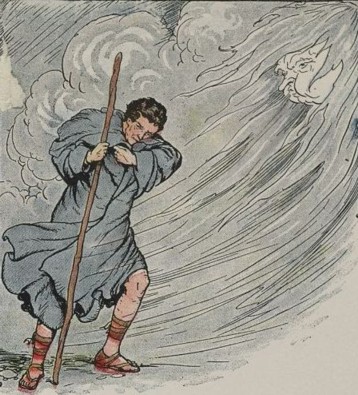
“The North Wind and the Sun disputed as to which was the most powerful, and agreed that he should be declared the victor who could first strip a wayfaring man of his clothes. The North Wind first tried his power and blew with all his might, but the keener his blasts, the closer the Traveler wrapped his cloak around him, until at last, resigning all hope of victory, the Wind called upon the Sun to see what he could do. The Sun suddenly shone out with all his warmth. The Traveler no sooner felt his genial rays than he took off one garment after another, and at last, fairly overcome with heat, undressed and bathed in a stream that lay in his path.”

The moral of the fable is variously stated as “Persuasion is better than Force” , or “Gentleness and kind persuasion win where force and bluster fail.”

The fable proves neither. In reality, it is a vivid example of dishonest argument, using euphemisms and false characterizations to “prove” a proposition that an advocate is biased toward from the outset. Continue reading

The Status of Dismissed Gay Troops: An Ethics Test For The GOP

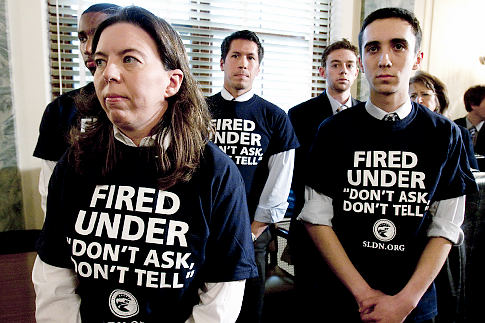
Stars and Stripes reports that a group of House Democrats has proposed that troops  dismissed under the now repealed “don’t ask, don’t tell” law should be able to apply for honorable discharge status if it had been initially denied to them, thus permitting them to receive veterans benefits. Continue reading

Maybe Lies Aren’t Protected Speech After All…

This week, in United States v. Robbins (W.D. Va.); a district court disagreed with previous court opinions this year holding that the Stolen Valor Act, which makes it a criminal act to falsely represent that one had been awarded a military honor for valor on the field of combat, was a violation of the First Amendment guarantee of free speech: Continue reading

The Second Annual Ethics Alarms Awards: The BEST of Ethics 2010

The Best in Ethics 2010. Not nearly long enough…but still a lot of men, women and deeds worth celebrating.

Most Important Ethical Act of the Year: Continue reading

One More Addition to 2010’s Worst in Ethics: Sen. John McCain

I inadvertently left a category out of the Ethics Alarms year end awards for 2010, perhaps because it is such a discouraging one. I just remedied the omission, and added this:

Integrity Meltdown of the Year: Sen. John McCain. A sad spectacle indeed: since losing his run for the presidency in 2008 and having to face a strong challenge from the Right in seeking re-election to the U.S. Senate, the celebrated Arizona maverick reversed long-held positions in favor of creating a route to citizenship for illegal immigrants, reversing “Don’t Ask, Don’t Tell,” and ending the low Bush tax rates on upper-income Americans. He didn’t change his mind because of sudden epiphanies of clarity, either. He just wants to stay in the Senate. True, McCain held fast to other principles, like opposing earmarks, but those were the ones his critics on the Right supported too. Integrity means being true to your core values even when it is inconvenient or unpopular. Once upon a time, that description fit Sen. John McCain. As of 2010, this was no longer true.

Hero, Villain or Hypocrite: The Dilemma of the Undercover Dog-Fighter

The limits of absolutism and the drawbacks of utilitarianism both come under scrutiny in assessing the strange saga of Terry Mills, whom the ASPCA recently appointed as its Animal Fighting Specialist.

Beyond question, this is a job he is uniquely qualified to hold. In 2008, Mills worked for the FBI’s domestic-terrorism task force, and went under-cover for more than a year to expose and break up a national dog-fighting ring. His efforts resulted in many arrests, and the rescue of more than 500 animals. Accomplishing all of this, however, required Mills to become part of the culture he was attacking. He trained and fought his own dogs, engaging in the very cruelty he was working to prevent. Continue reading

Ethics Fouls and Julian Assange’s Rape Case

Well, well, well, Mr Assange!

How does it feel to have your own embarrassing and confidential information leaked to the media and publicized to the world?

On the sound ethical principle that two wrongs doesn’t make a right, The Guardian acquiring and publishing the leaked police report relating to Assange’s rape charges in Sweden is no less unethical because Assange is a smug foe of confidentiality. Nevertheless, it is hard to recall an instance when seeing the tables turned on someone was so satisfying. Ethics foul: Whoever leaked the records, and The Guardian for printing them. But thanks anyway.

It is satisfying for reasons other than delicious irony. Continue reading

The Ethics Of Refusing To Help Wikileaks

Do private corporations have an ethical obligation to allow Wikileaks to use their services? MasterCard, Visa and PayPal stopped processing Wikileaks donations. Amazon kicked the site off its server. Twitter stopped its tweets; Facebook stopped its interfacing.

Columbia University Professor Tim Wu rhetorically asked them:

“Since when are you in the business of deciding who is and who isn’t a good civil disobedience movement?”

Before I address the Professor’s question, let’s make some distinctions. Continue reading