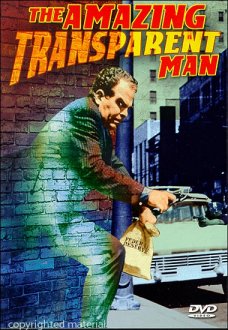
“An Army of Fake Personas”? I DO Trust the Military, I DO Trust the Military…

Why does the Air Force want to recruit these people?

Raw Story reports that a United States Central Command spokesman recently confirmed that the US Air Force had solicited private sector vendors for something called “persona management software.” The technology would allow an individual to “command” virtual armies of fake, digital personas across multiple social media portals.

The “personas” would have detailed, fictionalized backgrounds to make them undetectable as fake to outside observers, and there would be sophisticated identity protection to support the deception,  preventing suspicious readers from uncovering the real person behind the account. The program would also fool geolocating services, so these “personas” could be virtually inserted anywhere in the world, providing ostensibly live commentary on real events, even while the operator was not present.

Hmmmm. Continue reading

Ethics Heroes: The U.S. Supreme Court

As the perfect tonic for all the attempts to silence Gilbert and Sullivan songs with controversial lyrics, reject bus ads espousing controversial positions, and declare that words like “target” are just too darn inflammatory for the sensitive, politically-correct ears of CNN viewers, here comes the U.S. Supreme Court, galloping to the rescue with a near unanimous (8-1), ringing reaffirmation that free speech is a bastion of American democracy, even when the speaker or speakers are vicious, unfair, cruel, radical and deluded. Continue reading

United Nations Ethics


After the U.N., Plan B

Ah, the United Nations—can’t live with it, can’t live without it!


But I think it may be time for the U.S., having tried to live with a corrupt, hypocritical, impotent monument to how disastrous a one-world government would be—while supplying the lion’s share of its funding— to try living without it.

The U.N. Human Rights Council has issued a 23-page report praising the Gaddafi regime’s human-rights record. Continue reading

The Remarkable Character of George Washington

Today is George Washington’s birthday, and it is appropriate for every American, and certainly every ethicist, to pause in awe of this unique and indispensable man. Ethics Alarms honors him today with his own words, showing the depth of his good character, good judgment and commitment to ethical conduct in a letter to a man who later betrayed his trust, Benedict Arnold. This is the letter sent to Arnold, then his most trusted subordinate in the Revolutionary War, as Arnold was preparing to invade Quebec.

Happy Birthday, General Washington. More than three hundred years later, you lead us still.

George Washington to Benedict Arnold
September 14, 1775. Continue reading

Ethics Dunce: Crane Interiors in Woodbury, Tenn.

"Hi! I can't answer the phone now, but please leave a message!"

Teresa Danford’s son, Lance Cpl. Mark Rhyne, is deployed in Afghanistan, where he is only able to call home once or twice a month. He has been overseas for seven months. On Valentine’s Day, Teresa, an employee of Crane Interiors in Woodbury, Tennessee, received one of her son’s precious phone calls at her job, on her personal cell phone. She was promptly suspended for three days without pay, for Crane has a no cell phone call policy for employees. Her manager informed her that she would be fired if it ever happened again. Continue reading

The Wrestler, the Girl, and Cultural Confusion

"Wanna wrestle?"

Sixteen-year-old high school sophomore wrestler Joel Northrup forfeited his match against a fourteen-year-old wrestler with two X chromosomes, Cassy Herkelman, at the Iowa state wrestling championships, saying that “As a matter of conscience and my faith I do not believe that it is appropriate for a boy to engage a girl in this manner.” Obviously Herkelman didn’t require protection from anyone or anything. She was her district’s 112-pound champion wrestler, and she won the Iowa championship for her class as well.  Cassie had won 20 of 33 matches, all against male wrestlers, on her way to the state championship. Maybe Northrup didn’t want to risk being ridiculed for losing to a girl; maybe he was uncomfortable with the sexual overtones of an inter-gender contest. All we can do is assess his conduct by taking him at his word: he believes a young man wrestling a young woman is morally wrong, and was willing to forfeit a match he might have won. Joel was, after all, the fifth-ranked wrestler in the state at 112 pounds, and had a 35-4 record.

Was his decision admirable, or sexist? Was it gentlemanly, or demeaning? Continue reading

Are GOP Leaders Obligated to Condemn Doubters of Obama’s Birth and Beliefs?

No.

But NBC’s David Gregory thinks so. Here was his exchange with Republican Speaker John Boehner on “Meet the Press” yesterday: Continue reading

Aesop’s Unethical and Misleading Fable: “The North Wind and the Sun”

Today, by happenstance, I heard an Aesop’s Fable that I had never encountered before recited on the radio. Like all Aesop’s Fables, this one had a moral, and it is also a statement of ethical values. Unlike most of the fables, however, it doesn’t make its case; it is, in fact, an intellectually dishonest, indeed an unethical, fable.

It is called “The North Wind and the Sun,” and in most sources reads like this:

“The North Wind and the Sun disputed as to which was the most powerful, and agreed that he should be declared the victor who could first strip a wayfaring man of his clothes. The North Wind first tried his power and blew with all his might, but the keener his blasts, the closer the Traveler wrapped his cloak around him, until at last, resigning all hope of victory, the Wind called upon the Sun to see what he could do. The Sun suddenly shone out with all his warmth. The Traveler no sooner felt his genial rays than he took off one garment after another, and at last, fairly overcome with heat, undressed and bathed in a stream that lay in his path.”

The moral of the fable is variously stated as “Persuasion is better than Force” , or “Gentleness and kind persuasion win where force and bluster fail.”

The fable proves neither. In reality, it is a vivid example of dishonest argument, using euphemisms and false characterizations to “prove” a proposition that an advocate is biased toward from the outset. Continue reading

The Status of Dismissed Gay Troops: An Ethics Test For The GOP

Stars and Stripes reports that a group of House Democrats has proposed that troops  dismissed under the now repealed “don’t ask, don’t tell” law should be able to apply for honorable discharge status if it had been initially denied to them, thus permitting them to receive veterans benefits. Continue reading

Maybe Lies Aren’t Protected Speech After All…

This week, in United States v. Robbins (W.D. Va.); a district court disagreed with previous court opinions this year holding that the Stolen Valor Act, which makes it a criminal act to falsely represent that one had been awarded a military honor for valor on the field of combat, was a violation of the First Amendment guarantee of free speech: Continue reading