Ethics Quiz: Censorship At The U.S. Open [Corrected]

Touchy-touchy!

During his a match at the US Open yesterday, German player Alexander Zverev complained that he heard a fan sing out, “Deutschland über alles!” Zverev went to umpire James Keothavong and said, “He just said the most famous Hitler phrase there is in this world, it’s unacceptable. This is unbelievable.”

The phrase, which translates to “Germany above all,” has been removed from the German national anthem, which is sung to melody composed by Haydn, (NOT Handel. as was initially posted). The original lyrics were written way back in 1800, but “Deutschland über alles” is associated with Hitler, the Nazis, the Holocaust, WW II, all sorts of bad things. It’s a casualty of the cognitive dissonance scale.

Continue reading

“Ick” vs. Ethics: The Nazi Gems Collection

Once again, we encounter the conundrum of so-called “dirty money.”

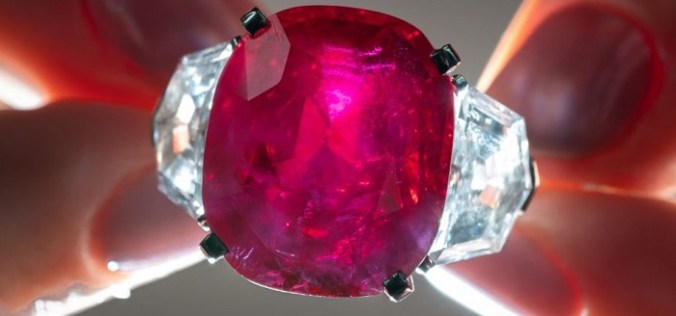
In May, the auction house Christie’s sold a collection of jewels and jewelry from the estate of Heidi Horten, an Austrian philanthropist. The auction earned $202 million, establishing the Horten sale as the biggest precious gem sale ever. There was, however, an ethics controversy: all that jewelry had been bought with a fortune amassed by Horten’s husband Helmut, a Nazi who bought up Jewish businesses in forced sales during the Holocaust.

The Holocaust Educational Trust called the May auction a “true insult to victims of the Holocaust.” Yoram Dvash, president of the World Federation of Diamond Bourses, wrote, “In a time of Holocaust denial and the resurgence of antisemitism around the world, we find it especially appalling that a world-renowned auction house would engage in such a sale.” David Schaecter, president of Holocaust Survivors’ Foundation USA, which represents support groups for victims’ families in the U.S., called the sale “appalling” and said it had perpetuated “a disgraceful pattern of whitewashing Holocaust profiteers.” But Christie’s officials argued that the proceeds of the sale would go to the Heidi Horten Foundation, which supports medical research and a museum containing her art collection. The auction house also pledged to donate some of its own profits arising from the sale to Holocaust research and education.

Since May, however, attacks on the collection, Chistie’s, and the money paid for the jewels at auction have escalated. Christie’s announced this week that a scheduled November sale of more lots of jewelry from the Heidi Horten collection would be canceled, citing the “intense scrutiny” from Jewish organizations and some critics. The Jerusalem Post reported that other Jewish groups had rejected Christie’s donations from the May auction.

Continue reading

Ethics Hero (And Most Ethical Use Of “Asshole” of 2023): Gold Star Father Mark Schmitz

Mark Schmitz, a Gold Star father, testified before the House Foreign Affairs Committee yesterday regarding the deadly suicide bombing in August 2021 that left 13 U.S. servicemembers dead, including Mr. Schmitz’s son, Marine Corps Lance Cpl. Jared Schmitz. The cruel, irresponsible and incompetent American withdrawal from Afghanistan and its aftermath ordered by President Biden has been largely forgotten by most American voters, since they have the attention span of ADD kittens. Perhaps Schmitz’s no-hold-barred attack on Biden’s conduct in this episode will remind them.

What am I talking about? The mainstream news media will make sure as few of the kittens see his testimony as possible, and there’s still more than a year for them to forget again.

His full statement:

Continue reading

Comment Of The Day: “An Ethics Alarms D-Day Mission…”

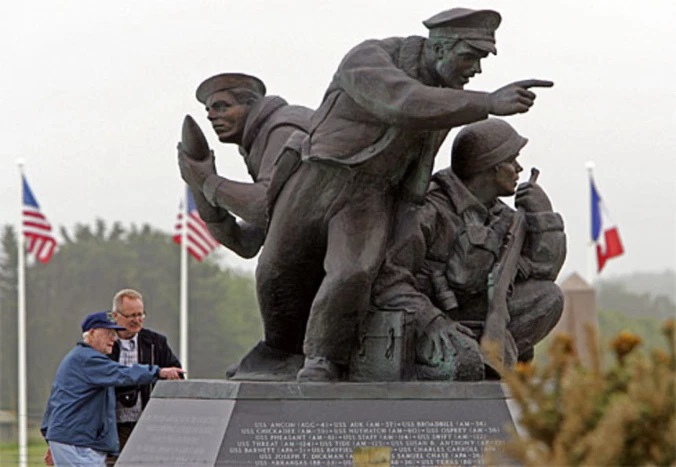
Michael, whose whole family is very dear to me, occasionally contributes a thoughtful comment here and this time brought me to tears with this Comment of the Day, his D-Day-inspired remembrances of his visits to Normandy. Those are some of his photos above: EA is honored to post both them and the post they represent.

***

Went to the beaches, yet again (been many times and always took guests who visited when we lived in France). I remain impressed by the outpouring of positive feelings from the residents of Normandy.

Although generations change, the memories are kept alive in the families. That is, no doubt, why the headstones at the American Cemetery have American and French flags planted by volunteers from the region.

Continue reading

An Ethics Alarms D-Day Mission: I’m Going To Post This Every June 6

navy-memorial-normandy

I first posted this essay on Veteran’s Day three years ago, and I re-posted it on the anniversary of D-Day two years ago. The crucial facts of the June 6, 1944 invasion of Normandy that it discusses are still never mentioned, or at least when I’m around to read or hear it, in any news media or historical features about the battle for Omaha Beach.

I don’t understand this, and the ongoing mystery sparks one more “duty to remember” crusade by your windmill-tilting host. So up the post goes again this June 6 and every D-Day anniversary henceforth, until readers start complaining, “Hey! Everybody knows about this!”

***

Continue reading

Push-Up Ethics

I don’t know why this took so long…

The Washington Post reports that there is a movement afoot to stop allowing young women to substitute so-called “girls’ push-ups” (with the knees on the floor) for the actual toes-on-the-ground exercise while males are still required to do the real thing. The American College of Sports Medicine (ACSM), which provides guidelines for exercise testing by fitness and medical professionals, still uses the modified push-up to assess women’s upper-body strength in its latest exercise testing textbook, published in 2021. Male strength is measured in part using the full push-up.

But Melanie Adams, a professor of exercise science at Keene State College in New Hampshire, told the Post that based on a 2022 study of female college students and push-ups that she led, the assumption that women could only do the weenie version was unwarranted. Some female college students could perform more than 20 full push-ups in succession, a total many men can’t match. Because the root exercise builds strong, important muscles in the upper-body and core, however, starting boys on real push-ups while girls are told to use the inferior version gives males a head start on superior strength that women will have a hard time overcoming.

Continue reading

Ethics Quiz: Axis Sally

Mediocre movies can still raise important ethics questions, and so it is with a 2021 bomb called “American Traitor: The Trial of Axis Sally.” The film dramatizes the bizarre tale of Mildred Gillars, a Maine-born American woman of modest looks and talents who rode her aspirations for a Hollywood career into an infamous gig as an infamous Nazi German radio propagandist during World War II. My father told me about her broadcasts from Berlin, and how she used sexy tones to tell American servicemen that they were doomed, that the Jews, not Germany, were their real enemy, and that their wives and girlfriends were cheating on them while they were in Europe fighting Hitler’s “invincible army.”

Her last broadcast was just a few days before Germany surrendered; Gillars was arrested and charged with being a traitor. In 1948, “Axis Sally” faced a very real threat of being hanged as she went on trial for eight counts of treason. Thanks in great part to a vigorous (if reluctant) defense by famed criminal defense attorney James Laughlin, played by Al Pacino in the film, the jury found her guilty of only one, and what could have been a 30 year jail term turned into ten.

Dad said that American GIs thought “she”Axis Sally” was hilarious, that no soldiers took her seriously, and that her singing was terrible. Her broadcasts were popular in the U.S., as she often relayed news of American prisoners of war to show how well they were being treated by their German captors.

Although I suspect that Pacino’s ringing closing argument in her defense was punched up considerably from the original by Laughlin and maybe even contained some arguments Laughlin did not make, the points he raises in the movie are fascinating:

Continue reading

Ethics Quiz: The USS Chancellorsville

In a final flurry of Black History Month pandering by the Biden administration, the missile cruiser USS Chancellorsville was renamed USS Robert Smalls. A US government Naming Commission reviewed military bases and vessels that appeared to honor the Confederacy and made recommendations regarding which should to be renamed. Secretary of Defense Lloyd Austin approved the commission’s recommendations in October 2022, and this was one of the results. Secretary of the Navy Carlos Del Toro announced that the Ticonderoga-class guided missile cruiser would lose its previous name and henceforth would bear the name of Smalls, a former slave who took over a Confederate ship and delivered it to the Union navy.

Esteemed reader Steve-O-in NJ brought this story to ethics Alarms’ attention, and makes this argument:

It used to be we would name carriers after battles, but, for whatever reason, when these cruisers, once the most expensive and most sophisticated non-carrier vessels afloat in the US Navy, were built, they decided to name them after battles instead (with one exception, the USS Thomas S. Gates, which left active service long ago because it was not built with the vertical launch system).  I questioned this choice of names from the get-go, since as far as I know all US ships named after battles were named for US victories or at least battles where our forces gave a good account of themselves (one of the other ships in the class is the USS Chosin, another the USS Anzio).  Why did they decide to name this one after a disastrous US defeat?  Well, presumably the same reason the names USS Semmes, USS Buchanan, USS Waddell, and USS Barney found their way into the Charles F. Adams and Spruance classes of destroyers, but are unlikely to be used again.
 
I can think of a long list of names that would not break the class tradition, nor stick out like a sore thumb, and speak to the entire US.  Notably the names USS Saratoga and USS Lexington are not presently in use, nor the names USS Coral Sea or USS Midway.  Give me a few minutes and I’ll come up with a dozen more.  But of course this couldn’t be just a switch of names to something more universally admired, it HAD to be the name of a former slave, as a rebuke to those evil racists who dared name a ship after a legendary victory led by Robert E. Lee, and now everyone who sees it or hears the name will know of the rebuke.  
 

A two-part Ethics Quiz of the Day arises from this discussion:

Continue reading

The Murder Of Private King

My father told me he was certain that there were incidents like this during World War II, but that the military covered them up.

The Army Board for Correction of Military Records has changed the death record of African-American WWII Private Albert H. King to list him as having died “in the line of duty.” King, a 20-year-old black soldier with the Quartermaster Corps, was in fact murdered on March 23, 1941, by a white member of the military police, Sgt. Robert Lummus, who shot King five times as he walked on the main road at Fort Benning toward his barracks. King had tried to escape a mob of whites intent on beating him on a bus. Sergeant Lummus claimed self-defense and just 13 hours after shooting King, was found not guilty by a military court.

A thorough investigation had taken place, clearly.

Continue reading

Comment Of The Week #3 on”Open Forum (11/11/22)” Re: Armistice Day

Other Bill raised another aspect of Armistice Day ethics: is there such a thing as war ethics? Ethics Alarms has barely touched on the subject, as I absorbed the values of my father on this topic among so many others. He believed, like General Sherman, that war was such hell that the only ethical way to fight it was in a manner that would end it as quickly as possible. Dad supported the dropping of the first atom bomb (he was less certain about the second), admittedly with a bias: he was preparing to be part of the U.S. invasion force when Hiroshima was destroyed. He strongly felt that the Nuremberg Trials were hypocritical, and our many debates and arguments about that controversy led to my directing “The Andersonville Trial” twice and producing “Judgment at Nuremberg” at my late, lamented professional theater company. My father also thought the Geneva Convention was unenforceable, disingenuous, and naive.

Here is Other Bill’s Comment of the Week from this week’s Open Forum:

***

Armistice Day has me thinking about war ethics. How’s that for an oxymoron? Russia has been getting crap for targeting civilian infrastructure, including apartment buildings and the electrical grid. There has been talk about the Russians destroying a dam to flood an area and deprive the Ukrainians of a river crossing.

What’s the deal? What did the U.S. destroy during shock and awe in Iraq? Other than regime change, why did the U.S. invade Iraq? During WWII, the Allied strategic bombing campaign, which included bombing cities, was intended in large part to “discomfit” the German populous, thereby reducing Germany’s industrial output (not to mention the firebombing of wooden Japanese cities, purporte ly to destroy dispersed manufacturing facilities). A famous British operation “busted” a dam and flooded large parts of the Ruhr flood plain.

Continue reading