Ethics Quiz: The NFL Turns Compassionate

This past Saturday night in Green Bay, Wisconsin, Isiah Bolden, a cornerback for the Ne England Patriots, collided with a teammate, lay motionless on the ground, and was put on a cart to be rolled off the field. Though there was little more than 10 minutes to play, the NFL canceled the rest of the game. Patriots coach Bill Belichick praised the NFL for acting quickly. Patriots players then praised Belichick. Bolden was released from the hospital the next morning and appeared to be in good health, but the Patriots canceled a pair scheduled of joint practices anyway.

Conservative political pundit and sports commentator Jason Whitlock wrote of the episode, “The enemies of football and masculinity have won. They killed football. They won the long war of convincing men that the key to happiness is choosing safety over freedom, safety over everything.” Whitlock is saying, in essence, that the incident has greater significance beyond football, that it demonstrates that the progressive weenification of the culture has reached a critical and dangerous level that has ominous implications for American society at large.

Continue reading

And Yet Another Baseball Great Chooses Money Over His Team, Fans, Integrity and Honor…

Over the weekend, I got to watch (again) the nauseating spectacle of Detroit Tigers firstbaseman Miguel Cabrera disgracing his own legacy as one of the greatest players of all time. A guaranteed first ballot Hall of Famer with over 3,000 hits and more than 500 career homers, Cabrera is no longer even a passable performer at age 40, and hasn’t been since 2017. That year and every year since, Cabrera has been paid an average of $30 million a season for production that the Tigers could have gotten from a mediocre minor league journeyman playing for the Major League minimum salary. All weekend, the TV broadcasters were blathering on about what a wonderful human being “Miggy” is. If he were really wonderful, he would have retired as soon as he realized he was stealing his salary and hurting his team in the process.

Cabrera has graciously announced that this will be his final season, as if he had any choice in the matter. His long term contract is up: he’s squeezed over $200 million out of it without having a single season worthy of his reputation or his salary. He has one (1) home run this season, with less than a third of the schedule to go. The year he signed his contract, he hit 44.

But Cabrera isn’t the subject of this post; I already complained about him and other greedy, fading players here. There’s a worse offender in baseball now, believe it or not. The current miscreant is St. Louis starting pitcher Adam Wainwright, who had announced before this season that it would be his last. [Wainwright, by the way, has one of the more varied and interesting Ethics Alarms dossiers among pro athletes.] He is 41, and not only are 40+-year-old pitchers who still belong in the Major Leagues rarer than star sapphires, Wainwright’s 2022 season at 40 was not a harbinger of optimism, though he still was getting batters out, albeit not as he once had. But Adam Wainwright has pitched for the St. Louis Cardinals and only them for 17 years , winning just short of 200 games along the way. He is regarded as a hometown hero to Cardinal fans, who also wanted him aboard for one more campaign because they had reason to think their perennial play-off team had a real chance to get to the World Series again in 2023, and nothing is more valued on such teams as a grizzled old veteran who has been through the wars before.

It was a good theory, anyway. Unfortunately, Wainwright was done, through, cooked, out of pitches and excuses. This season his earned run average is almost 9 runs a game, which means he is pitching batting practice to the opposition. A starting pitcher without a long-term contract and with no reputation as a team legend is usually cut if he can’t keep his ERA below 6; under 4 runs a game is good, under 4.5 is considered acceptable. But 8.78, which is what Wainwright has delivered in 15 starts? A decent college pitcher could do that well, maybe a top high school pitcher too. And for this consistent failure, Adam Wainwright is being paid $17,500,000.

Continue reading

You Can Make Your Own Decision, But I Won’t Be Patronizing Best Buy From Now On…

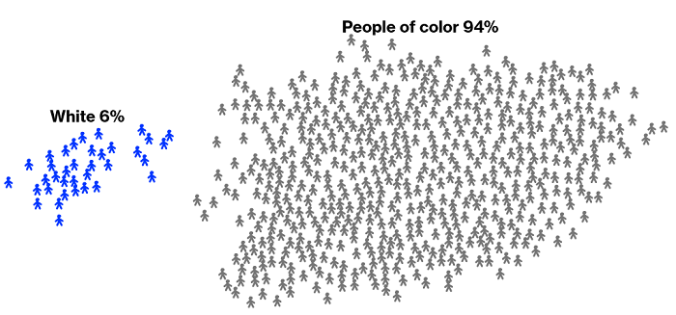
A whistleblower revealed the above screen shot of an internal Best Buy company memo regarding “management leadership academy programs” with the O’Keefe Media Group. The programs are a partnership between Best Buy and global management consultant McKinsey & Company, and, as you can see in the third bullet point under “Candidates must meet the requirements below,” white employees need not apply.

That’s illegal and racially discriminatory, or course, But to be fair, this is “good racism” in Woke World.

Continue reading

From The Res Ipsa Loquitur Files…Ethics Hero: Elon Musk (Again)

(See: “It’s Come To This: “Liking” A Politically Incorrect, Bad Taste Joke On Social Media Can Get You Suspended In The United States Of America”)

Bravo.

I Know It’s Too Easy But I Can’t Resist: “An Irish Actor Playing Oppenheimer Proves Once Again That Jews Don’t Count” May Be The Most Hilariously Confused Casting Ethics Rant Yet

There is only one ethical way to cast a play, musical or movie: pick the actor whose portrayal will most entertain the audience and realize the full potential of the script. Casting is not the place (if anywhere is) for political correctness, quotas, “diversity,” or affirmative action.

Ethics Alarms is full of discussions of this issue, most recently here, in the post just last week about how Disney decided it was offensive to cast seven little people as the Seven Dwarfs in “Snow White and the Seven Dwarfs.” Hollywood and Broadway are completely confused and hypocritical in this area, because the people who run both places are 1) desperate to be seen as progressive and to signal their virtue at every opportunity, 2) terrified of being branded as non-woke, giving extreme activist groups representing various tribes and interests groups the upper hand in their bullying efforts, and 3) not very bright, frankly.

This is why a Samoan-African American actor was found insufficiently black to play folk legend John Henry, but a black woman was cast as red-headed fish-girl Ariel in “The Little Mermaid,” and the Founding Fathers ended up being portrayed by black, Asian, and Hispanic women and “non-binary” performers in the revival of “1776.” Tom Hanks now says only gay actors should play gay characters, but a director who refused to cast a gay actor as a non-gay character would be run out of the business. It is, as I have written here before, Calvinball.

All of which brings us to the head-exploding essay by Malina Saval, editor in Chief of Pasadena Magazine, titled “An Irish Actor Playing Oppenheimer Proves Once Again That Jews Don’t Count.”

Continue reading

Ethics Hero (Corporate Division): In-N-Out Burger

Among the many ways the last few years of Wokemania has reduced the quality of American life and our access to the pursuit of happiness is the creation of the ideology-linked addiction to virtually useless masks and a near-crippling phobia regarding the threat of air-borne illnesses created by fearmongering during the pandemic.

Continue reading

And Still More From The A.I. Ethics Files: “Looker” Again Raises Its Perfect Virtual Head In The Hollywood Actors Strike

Back in March, Ethics Alarms discussed the ethical issues implicated when marketing departments begin using Artificial Intelligence to “increase the number and diversity of our models for our products in a sustainable way,” as one retailer phrased it. The scenario echoed the plot of “Looker,” a 1981 Michael Crichton science fiction thriller in which a high-tech research firm convinces companies that real, live models, even after cosmetic surgery, can’t approach the physical perfection that will optimally influence consumers. In its diabolical scheme, models are offered a contracts to have their faces and figures scanned to create 3D computer-generated avatars, indistinguishable from the live versions, which would be animated by A.I. programs for use in TV commercials. Once their bodies are duplicated digitally, the human beings get lifetime paychecks and can retire, since their more perfect CGI dopplegangers will be doing their work for them. As he did so often during his brilliant, too-sort life, Crichton anticipated a serious ethical crisis arising out of developing technology. “Looker” is almost here.

Last week,the 160,000-member union SAG-AFTRA announced that it would join the the screenwriters union in its industry strike after failing to secure a new contract with movie studios and streaming services.  The Screen Actors Guild and American Federation of Television and Radio Artists President Fran Drescher—yes, “The Nanny” herself—- condemned the AMPTP’s “shameful” and “disgusting” treatment of the union’s members. Among the major points of dispute is how to preserve acting and writing jobs that could soon be imperiled by the rapid development of computer technology and artificial intelligence.

Continue reading

“Curmie’s Conjectures” #3: Confucius and the Fourth Circuit

by Curmie

Twentysomething years ago, a few months after completing my PhD, I got a phone call from my mentor in Asian theatre, who, upon learning job search wasn’t going as well as I might have hoped, asked if I wanted to teach a couple sections of the university’s Eastern Civilizations course.  I asked if I was really qualified to teach such a course.  His response: “You know something, and you can read.” 

Based largely on his recommendation, I got an interview for the position.  I made no attempt to conceal my ignorance of a lot of what I’d be teaching.  But the department had struggled with grad students who had lost control of their classrooms, and I’d taught full-time for ten years before entering the doctoral program; I got the job.  The head of the Eastern Civ program closed the interview with “There are some books in my office you’ll want to read before you start.”  I knew something, and I could read.

That’s relevant to my consideration of the recent ruling of the Fourth Circuit Court of Appeals in Porter v. Board of Trustees of North Carolina State University, in which a tenured faculty member claimed to have been punished for arguing against certain initiatives undertaken by his department.  I’m no lawyer, so there’s some legalese I’m not so sure about, and I have no interest in chasing down all the precedents cited by either the majority or the dissent to see if they really say what these judges say they say.  But I know something and I can read. 

More to the point, one of the texts I taught in that Eastern Civ course was Confucius’s Analects, which I had to get to know a lot better than I did previously in order to teach it to someone else.  One of the central tenets of Confucian thought was his argument against having too many laws, as no one could possibly predict all the various special circumstances surrounding every dispute.  Context matters; timing matters; motives matter.  Confucius’s solution was to turn everything over to a wise counselor (like him) who would weigh all the relevant elements on a case by case basis.  That’s not the way our justice system works, nor would it be practical, but it’s easy to see its appeal… in theory, at least.

Significantly, Confucius’s reservations about laws’ inability to anticipate all the possible combinations of circumstances are the first cousin if not the sibling of what Jack calls the “ethics incompleteness principle” which asserts that there “are always anomalies on the periphery of every normative system, no matter how sound or well articulated.” 

Continue reading

A.I. Ethics Updates

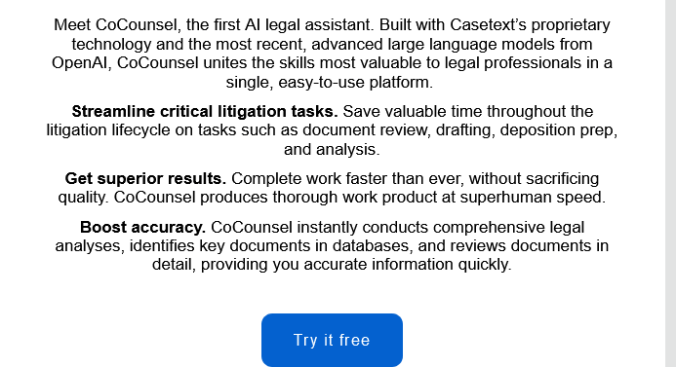
1. Apparently Alexa and its ilk are causing heartburn among legal scholars. How should conversations over-heard by virtual assistants be treated when they are offered as evidence in court? Among the analogies that are being run up the metaphorical flagpole is a comparison with …parrots, as an eavesdropper who can accurately repeats information it overheard but was not expected to disclose. Courts have refused to admit testimony by parrots. In one case, a parrot named Max repeatedly cried out, “Richard, no, no, no!” after the murder of his owner. The defense attorney in the case wanted to have this evidence admitted the accused murder’s name was Gary. The attorney argued, unsuccessfully, that the “testimony” was not hearsay, but rather like a recording device. Despite expert testimony that that breed of parrot had the ability to accurately repeat statements, the evidence was excluded.
In another case, Bud the Parrot, began incessantly repeating, “Don’t fucking
shoot!” after one of his owners shot the other.

Continue reading

The Weenie Mandate

Elsewhere on Ethics Alarms are a few posts defending the decision by employers to fire employees who have physically intervened in attempted robberies, sometimes to the extent of capturing the thieves. Such individuals are usually hailed as heroes by the media and the public, and the stores that discipline them are assailed as heartless ingrates. The companies are on solid ground, ethically, legally and practically. Typically, there are policies in the employees handbook specifically laying out how robberies are to be handled. Physical intervention not only risks the would-be hero’s well-being, but the welfare of other employees as well. When a staffer’s amateur law-enforcement act goes well, it is still just moral luck.

Unfortunately, this sensible policy has had illicit relations with the “shoplifting should be a crime” mutants, and the result is one frightening deformed offspring. Thanks to woke brain rot seeping through San Francisco and other urban areas, viral videos show staff just standing by politely as people forage through store shelves, sometimes returning several times.

The woman above, Mary Ann Moreno, had worked at Circle K for 18 years. Moreno was behind the counter when Tyler Wimmer walked into the convenience store with a knife, and asked Mary if she would give him a pack of cigarettes for free. Moreno declined. When he grabbed a pack anyway, she instinctively reached out and touched him, then pulled away. Based on the surveillance tapes, the company fired her for violating the company’s “Don’t Chase or Confront Policy” regarding shoplifters and robbers. Moreno is now suing Circle K Stores Inc. Her attorney, Iris Halpern, said the footage clearly shows that Moreno acted in self-defense and made no real effort to stop or chase Wimmer. “Companies have not sufficiently thought through the nuance in these situations,” she says.

Continue reading