A Rare Ethics Hero-Ethics Dunce: Maine Attorney General Janet Mills

I looked everywhere to find a picture of a combination Hero-Dunce. This was the best I could locate: the Maine Atty. Gen.

I looked everywhere to find a picture of a combination Hero-Dunce. This was the best I could locate: the Maine Atty. Gen.

If one’s only point of reference were Eric Holder, one might get the impression that the job of an attorney general is to use the influence and power of the office to pursue the executive’s political and policy objectives. That is not what an attorney general is supposed to do, however, because the top lawyer of a city, a state or the U.S. is pledged to represent all the people, not just those who patronize a particular party, and the top lawyer’s client is not the executive, but the entire government entity. If that entity becomes corrupt, then the client becomes the public that is being betrayed.

Maine’s Attorney General Janet Mills illustrated how the job should be done and can be, if the lawyer holding it is ethical and not merely a serving as a political yes-man. Governor Paul LePage, a Republican, wanted to appeal the federal government’s  denial of his request to remove about 6,000 low-income young adults, 19- and 20-year olds,  from Maine’s Medicaid program. Normally the Attorney General would handle the litigation, but Mills refused, insisting that it was  a case that could not be won, and would waste state resources. Excellent. Continue reading →

Vote For The Curmies: The Worst In Unethical Education, 2014

Rick Jones2

Every year, blogger Rick Jones (above) announces his “Curmies” (he is the Curmudeon, after all) nominations for “the person or persons who most embarrass the profession of educator.”

I encourage Ethics Alarms readers to vote over at Rick’s blog. Here are his worthy nominees, with Rick’s commentary:

1. James Miller, President B. Kaye Miller, and their co-conspirators at Bergen Community College, who suspended and demanded a psychiatric evaluation of art professor Francis Schmidt for tweeting a photo of his seven-year-old daughter wearing a t-short reading “I will take what is mine with fire and blood” even after it was proven that the line is a well-known pop culture reference to the Game of Thrones. They did finally back off several months later, but it was too little, too late. In mitigation: if you’re both an idiot and completely unengaged in popular culture, that line might actually make you think about recent school shootings. In aggravation: the shirt is obviously inoffensive, the process was obviously flawed, and the school’s defense of their actions is the perfect balance of irrationality and pomposity.

2. A cadre of incompetents at Harley Avenue Primary School in Elwood, NY, who cancelled the school’s traditional kindergarten show because of concern with making their charges college-ready. In mitigation: I can think of none. In aggravation: these people have no comprehension of child development, of what goes into making a show, of real college-readiness, or indeed of anything other than their own hubris, from what I can tell.

3. Secretary of Education Arne Duncan is likely the worst cabinet member of the 21st century, but he outdid even his own high standards of incompetence and arrogance with the proclamation that even students with disabilities will be expected to attain basic standards of reading and math: “We know that when students with disabilities are held to high expectations and have access to a robust curriculum, they excel.” Actually, no, Arne, we know no such thing, and if you think we do, maybe you should get off the hard stuff. In mitigation: I got nothing. In aggravation: Duncan’s plan has no upside, will cost pots of money, and ignores differences between students’ innate ability and preparation while pretending to privilege individuality.

4. Wasatch (UT) High School officials, for puritanically altering female students’ yearbook photos without as much as giving the girls the opportunity to fix their alleged transgressions. In mitigation: there was indeed a sign warning students of the need to obey the school’s dress code. In aggravation: the policy was enforced inconsistently and apparently whimsically. More significantly, the level of sexism involved is positively stunning: boys had their pictures taken with shirts gaping open, tattoos, copious amounts of visible boxer shorts… and a cutline “Studs doin’ what studs do best.” I couldn’t make this up.

5. There were plenty of cases of schools’ and universities’ over-reacting to the Ebola pseudo-crisis. We’re going to give the specific nomination to Cline Elementary in Friendswood, TX, not because their craven stupidity was any worse than that exhibited by several other schools, but because of the distance the teacher in question was from an actual outbreak while traveling in Africa relative to the distance to the nearest confirmed case to the district itself: roughly 11 to 1. In mitigation: there was lots of false information circulating, and parents (especially) were nervous. In aggravation: you’re supposed to be a school. Educate. When people are being paranoid idiots, it is your responsibility to keep your collective heads and do the right thing.

6. The administration of Rhame Avenue School in East Rockaway, NY, for taking teacher Vuola Coyle out of her classroom because her students’ test scores were too good. Yes, too good. It costs the school because students supposedly learn too much in 4th grade and therefore don’t show enough improvement as 5th graders. In mitigation: we haven’t really heard the school’s side of this story. In aggravation: even if everything else is false, the school’s addiction to testing, and to practice testing, is demonstrable.

7.The University of North Carolina for allowing a corrupt system of allowing athletes (especially) to enroll in “paper courses” for the sole purpose of keeping them eligible or off suspension to continue for nearly two decades. In mitigation: the real offenses are in the past, as are the worst of the offenders. But if the release of an investigator’s report marks a new event in the minds of SACS accreditors, it can for Curmie, too. In aggravation: it is impossible to believe that a lot of people currently in powerful positions at UNC didn’t know exactly what was going on and did nothing. And if “everyone does it,” it is the portent of very bad things to come, indeed.

8.Assistant Principal Paula Johnson and the rest of the administration of Bayside Middle School in Virginia for suspending 6th grader Adrionna Harris, who took a razor away from a classmate who was cutting himself, immediately throwing it away. But she dealt with the problem instead of calling a teacher. In mitigation: Adrionna was technically in violation of a rule that actually makes sense if not applied irrationally. In aggravation: the administrators wouldn’t have known about the incident if Adrionna hadn’t told them, so she was punished for being honest as well as being heroic.

In part because Rick was very busy this year, his nominations do not include as many subjects of Ethics Alarms posts as usual: only #2, #7 and #8 of Rick’s nominees were discussed here. On the other hand, Rick left un-nominated some truly awful examples of unethical teachers, administrators and institutions that flipped my bippy, such as, these, currently being assessed as I prepare my Best and Worst of Ethics 2014 list. They are a miserable list too, and include… Continue reading →

The Absolute Worst Of The Terrible Arguments For Putting Barry Bonds In The Hall Of Fame

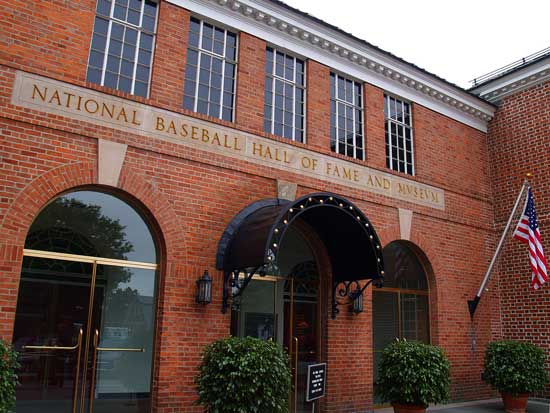
815-Baseball-Hall-of-Fame-CEvery year at this time, I issue commentary on the “steroid-users in the Major League Baseball Hall of Fame” controversy. I’m not going to disappoint you this year.

Today the Hall will announce who the baseball writers deemed worthy, and, as usual, the acknowledged steroid cheats with Hall of Fame statistics will be resoundingly rejected. I don’t feel like revisiting this subject in depth again right now: I have done so before, many times. However, yesterday I nearly drove off the road listing to MLB radio commentators Casey Stern and Jim Bowden, supposedly baseball experts, give their reasons for voting for the entire range of steroid cheats, from Barry Bonds and Mark McGwire to Roger Clemens and the despicable Alex Rodriquez.

Baseball’s Hall of Fame, alone among the sports Halls,  includes ethics in its criteria for entry: a player must exhibit sportsmanship, integrity and have been a credit to the game. The average sportswriter who votes for candidates is about as conversant in ethics as he is in Aramaic, leading to an endless debate involving every rationalization on the list and  analogies so terrible that they melt the brain.For example, I constantly hear and read that the evidence that Barry Bonds used steroids is “circumstantial” so it is unfair to tar him as a steroid user. Such commentators don’t know what circumstantial evidence is. Criminals can be justly convicted beyond a reasonable doubt by circumstantial evidence, which is also known as indirect evidence. Direct evidence, if believed, proves the existence of a particular fact.  Circumstantial evidence proves facts other than the particular fact  to be proved, but reason and experience indicates that the indirect evidence is so closely associated with the fact to be proved that the fact to be proved may be fairly inferred by existence of the circumstantial evidence. There is direct evidence that Bonds was a steroid-user, but the circumstantial evidence, as the well-researched book “Game of Shadows” showed, is so voluminous that it alone is decisive. Literally no one thinks Bonds is innocent of using steroids. [You can read my analysis of the case against Bonds here, here, and here.]

Stern and Bowden, however, claim that it is unfair to refuse the honor of Hall of Fame membership to suspected steroid users because it is inevitable that some players who used steroids and were never caught or suspected will make it into the Hall, if there aren’t such undetected cheat in the Hall already. Continue reading →

Black James Bond Ethics

Fleming's Bond (l) and Bond-in-Waiting Idris Elba

Fleming’s Bond (l) and Bond-in-Waiting Idris Elba

There’s really no denying it: some conservatives have persistent hang-ups about race, and it undermines their more rational, perceptive views on other matters. A relatively trivial but revealing example occurred in the aftermath of the Sony computer hack by North Korea (or Hacker X). One of the revelations was that Sony, which owns the James Bond franchise, was seriously considering re-booting the character, currently played by the estimable, but aging, Daniel Craig, with a black  British actor (be sure to mock anyone who calls him an “African-American), Idris Elba.

If you are unfamiliar with Elba, you should watch the British series “Luther” on Netflix. He’s terrific: athletic, sexy, charismatic and passionate, not to mention his  aura of cold-bloodedness and danger—in short, perfect for James Bond. But Rush Limbaugh, apparently seeking to retroactively validate the title of Al Franken’s book, “Rush Limbaugh Is A Big Fat Idiot,” decided to use the threat of non-traditional casting to make liberal heads explode, his mission in life:

“That’s NOT who James Bond is, and I know it’s racist to probably even point this out: We had 50 years of white Bonds because Bond is white. Bond was never black. Ian Fleming never created a black Brit to play James Bond. The character was always white. He was always Scottish.”

It is hard to pack so much idiocy into five sentences, but Rush is up to the task. James Bond is a British secret agent: race doesn’t factor into the stories at all. We’ve had 50 years of white Bonds because that’s the conventional way of portraying the character, that’s all. Rush’s argument here is just “Everybody does it.” So what? James Bond movies are entertainment, and if an entertaining James Bond film can be made with Elba as Bond, and there is no reason in the world why not, then James Bond can be black. Continue reading →

Can’t Win, Can’t Break Even: If You Need To Apologize For Saying “All Lives Matter,” Why Not Apologize For Resolving To Challenge Racism?

We have a reverse Smith in Pittsburgh.

You will recall that Smith College president Kathleen McCartney attempted to  show support for her students  protesting racism and police brutality by sending a campus-wide email titled, “All Lives Matter, ” and came under fire by campus activists because the protest slogan was “black lives matter.” She quickly apologized,  saying that she didn’t intend for “all lives matter” to be interpreted as rebuttal to “black lives matter.”

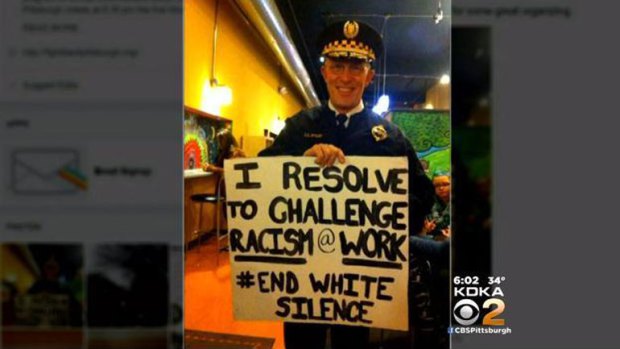
Now, in Pittsburgh, the Chief of Police is being attacked by his own officers who say that this photograph, posted on Facebook…

mclaybanner

…accuses them of being racists.

Touchy, touchy….?

The problem is that the Chief is endorsing a slogan of a group called Fight Back Pittsburgh, which has engaged in anti-police rhetoric in the past and carried signs saying “End White Silence” in protest marches.  It describes itself as a Pittsburgh-based collective (I would call it a Marxist group) with the mission of creating a world that is free of destructive white privilege and oppression. OK, Fight Back Pittsburgh sounds like a group of racists to me. But the message of the sign is hard to take offense at. Who isn’t obligated to challenge racism at work? Continue reading →

Palin’s Trap: Is Baiting Critics To Expose Their Double Standards And Hypocrisy Ethical?

1618609_10153003604393588_4015203188305261638_nWell, well, well!

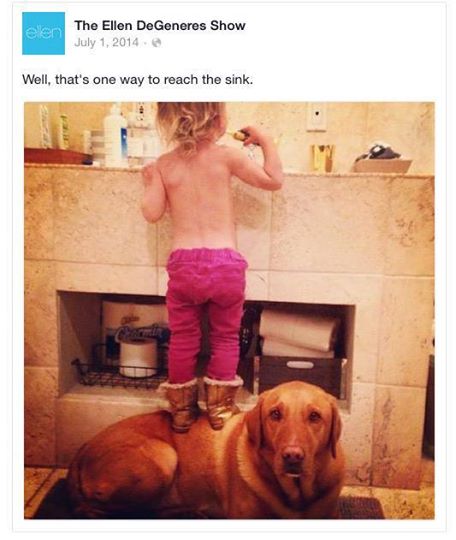
It seems that Sarah Palin had a ready response to the critics, including PETA, who attacked her for her Facebook post featuring son Trig using the family dog as a stepping stool. She immediately posted a photo tweeted by darling of the left, gay comic Ellen DeGeneres. last summer. Amazingly, PETA, which made Ellen its 2009 Person of the Year, and the others who were horrified at Trig’s actions and his mother’s endorsement of them, didn’t find DeGeneres’s photo sinister in the least.

Imagine that!

I agree with those who believe that Palin set up her enemies for this smoking gun proof of their hypocrisy and double standards. Palin and Rush Limbaugh are more skilled at baiting liberals than any public figure since William F. Buckley.

Was it unethical for Palin to set this trap? Emphatically no, and not because Palin has been the victim of more vicious and unfair double-standard bias than any political figure within memory. Exposing hypocrites is a public service.

Well played, Sarah.

Next time, though, try to avoid having to step on the dog to make your point.

__________________________

Pointer: Althouse

Abortion, “The Fly” and the Ethics Incompleteness Theorem

"AWWW! He looks just like his father!"

“AWWW! He looks just like his father!”

The most interesting aspect of ethics is at the margins, those situations where absolutists are challenged to hold to their principles because of unforseen variations that no general analysis could anticipate. The absolute ban on torture as unethical becomes shaky under the “hidden nuclear bomb” scenario.  Capital punishment opponents find that their compassion evaporates when asked whether Hitler or bin Laden deserved execution.

This is the Ethics Incompleteness problem, which I last wrote about at length in March of 2014:

“The human language is not sufficiently precise to define a rule that will achieve its desired effects, that is work, in every instance. There are always anomalies around the periphery of every normative system, no matter how sound or well articulated. If one responds to an anomaly by trying to amend the rule or system to accommodate it, the integrity of the rule or system is disturbed, and perhaps ruined. Yet if one stubbornly applies the rule or system without amendment to the anomaly anyway, one may reach an absurd conclusion or an unjust result. The Ethics Incompleteness Principle suggests that when a system or rule doesn’t seem to work well when applied to an unexpected or unusual situation, the wise response is to temporarily abandon the system or rule and return to basic principles to find the solution. No system or rule is going to work equally well with every possible scenario, which is why committing to a single system is folly, and why it is important to keep basic ethical values in mind in case a pre-determined formula for determining what is right breaks down.”

I was watching the Jeff Goldblum remake of “The Fly” (written and directed by David Cronenberg) last night, and rather than being properly horrified by Geena Davis’s nightmare of giving birth to a yard long fly larva, I found myself wondering how anti-abortion absolutists would handle her unusual dilemma. The film follows the tragedy of scientist Seth Brundle (Goldblum ) who has developed a means of teleportation. The process involves a computer breaking down a body, then transmitting the atoms electronically to a receiving “pod,” and reassembling them there. Unfortunately, when Seth tests the device on himself, an unnoticed fly gets into the sending pod, and the result is a version of Brundle that has fly DNA mixed in. (In the memorably campy Vincent Price original, what arrived in the receiving pod was a man with a giant fly head and a fly with a tiny human head.) Gradually Brundle mutates in form and mind into a monstrous hybrid, but before he knows what has happened to him, he impregnates girl friend Davis. Soon she realizes that something with insect DNA is gestating inside of her, though all tests show a healthy human embryo. Not surprisingly, she wants an abortion.

Would those who argue that abortion is murder maintain that she shouldn’t be able to have one, or that aborting the fetus is wrong? Let’s make the problem harder: let’s say she only learns that she has a fly-baby in the third trimester, when our laws wil not permit abortions unless the mother’s life is in peril. Some questions: Continue reading →

The Estefanía Isaías Scandal: See, This Stuff Shows The Ethics Rot In Our Government, And We Don’t Even Notice It

You have no idea who this woman is, do you?

You have no idea who this woman is, do you?

On December 4, the New York Times reported this:

MIAMI — The Obama administration overturned a ban preventing a wealthy, politically connected Ecuadorean woman from entering the United States after her family gave tens of thousands of dollars to Democratic campaigns, according to finance records and government officials.

The woman, Estefanía Isaías, had been barred from coming to the United States after being caught fraudulently obtaining visas for her maids. But the ban was lifted at the request of the State Department under former Secretary of State Hillary Rodham Clinton so that Ms. Isaías could work for an Obama fund-raiser with close ties to the administration.

It was one of several favorable decisions the Obama administration made in recent years involving the Isaías family, which the government of Ecuador accuses of buying protection from Washington and living comfortably in Miami off the profits of a looted bank in Ecuador.

The family, which has been investigated by federal law enforcement agencies on suspicion of money laundering and immigration fraud, has made hundreds of thousands of dollars in contributions to American political campaigns in recent years. During that time, it has repeatedly received favorable treatment from the highest levels of the American government, including from New Jersey’s senior senator and the State Department.

Amidst the swirling controversies over police shootings, grand jury decisions, race-baiting, fake rape allegations, Obama’s unilateral reversal of U.S. Cuba policy, ISIS, the Sony hack, Jonathan Gruber and more, not to mention the holidays, this story received almost no dissemination, yet in its own, slimy way is more important than any of the rest. For it is the quietly growing tumor of government corruption, allowing money to confer special privileges on the wealthy and policy that undermines the rule of law, that saps the nation of its public trust, and that creates the cynicism that eats away at our democracy’s vitality and strength.

Why did this story avoid media and public attention? It was a perfect storm of factors that make a news story unattractive to journalists and unfathomable to the public: Continue reading →

Comment of the Day: Prosecutor Ethics, “What The Hell Were You Thinking?” Dept: Dog-Whistling “Dixie” To The Jury

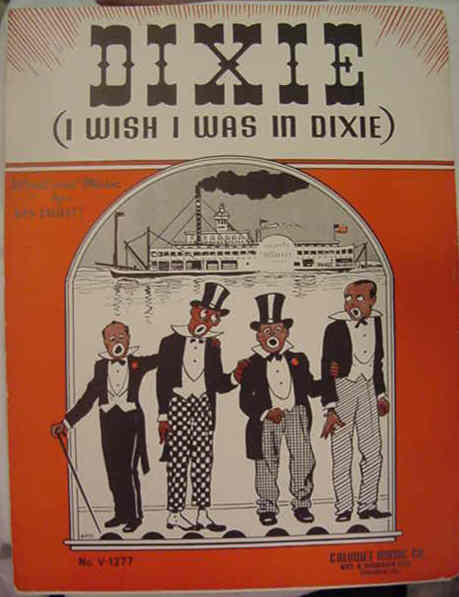
Dixie

I will introduce this fascinating Comment of the Day by one of the blog’s masters of the long form comment, Chris Marschner,  by saying that I think it is only tangentially related to the post, though he would disagree. Chris is writing about the history of “Dixie” and why it should not be associated with racism. Whether I agree with that analysis or not, the fact is that the public does overwhelmingly associate the song with a longing for the simplicities of the Old South, when the darkies were singing in the cotton fields and those Northern folks weren’t sticking in their noses where they don’t belong. This is the basis of an Idaho court’s decision to overturn the conviction of a black defendant after the prosecutor gratuitously and needlessly quoted the lyrics of the song in her closing argument.  That decision was correct, because the issue is whether the comment could reasonably have been an appeal, or seemed like an appeal, or have had the effect of an appeal, to racial bias. I don’t think that conclusion is arguable.

Here is Chris’s Comment of the Day on the post, Prosecutor Ethics, “What The Hell Were You Thinking?” Dept: Dog-Whistling “Dixie” To The Jury:

The prosecutor failed her client – the people- not because she used the words of an 19th century song but because she failed to come to understand that history and culture of the US has been so bastardized that even an appellate court has no understanding and context of the origins of the song and the history and culture of the south. And, because of its misunderstanding believes the lyrics to be racially prejudicial.

“Maybe Erica is so young, color blind and historically ignorant that she had no idea that “Dixie” has been played at Klan rallies and used as the campaign theme for states rights, segregationist, white supremacy candidates since the Civil War. Maybe she didn’t recognize the cotton reference as racial.”

This song was written by a northerner named Daniel Decatur Emmett and performed in New York in an 1859 minstrel show by Emmitt in blackface. The reference to cotton is geographic in nature because cotton represented the primary agricultural commodity and wealth creator of the southern states – nothing more unless one is predisposed to finding anything related to the antebellum south as racist

Many songs have been coopted by various groups but to suggest that lyrics of Dixie are inherently racial because they are used by White supremacists is faulty logic. If a white supremacist adopted the image of Leonardo D’Vinci’s David or Venus d’ Milo or other classical work of art on their flag that would not mean that any such depiction suggests racial superiority. Continue reading →

Sarah Palin, The Animal Gene, and Some New Year’s Inspiration

Trig on dog

Gandhi famously said that the greatness of a nation can be judged by the way its animals are treated. I’m not sure that’s true, but it certainly is true that respect for the lives and welfare of animals is a useful symptom to diagnose sound ethical values, and the tendency toward animal cruelty is signature significance for a human being that I would not turn my back to in the dark.

The issue is complicated by the divergence of humans into “animal people” and “non-animal people,” with the latter claiming, with some justification, that they are not cruel or callous toward animals, just willing to recognize that they are, well, animals. These are the people who cannot understand someone wanting to take a sick day to mourn the passing of a cat. On the other hand, they are also clear-eyed about those animal lovers who dress their parrots in elaborate costumes and who hold birthday parties for their dogs. Those who live in the country or on farms are an interesting case: they are not prone to sentimentalize of anthropomorphize animals like city folk. Dogs and cats sleep outdoors unless there’s a freeze on, and they have jobs to do. My wife’s sister sold the family horse to a dog food company, and the two didn’t speak for months.

Sarah Palin blundered into this divide this week when she posted pictures (above) of her son Trig standing on the family dog in an inspirational post about overcoming obstacles. Now she’s being attacked for promoting cruelty to animals. Some points on this:

1. Many are always looking for justification to vilify Palin. This time, she gave them legitimate ammunition.

2. The sequence looks staged to me: otherwise, why was anyone taking photos of this?

3. If so, then this just wasn’t an innocent but mistaken choice by a special needs child, but the directive of someone who should know better.

4. Of course one doesn’t ever sit or stand on a dog, or allow or encourage a child to do so, unless we’re talking about a very small child.

5. We don’t know that Palin didn’t admonish Trig after the fact, while saluting his ingenuity.

6. It was still an irresponsible choice for the point she was making.

7. Assuming the dog isn’t ill, drugged of dead, however, he doesn’t seem in distress. One thing about dogs: if you are hurting or ignoring them, they aren’t shy about letting you know.

8. Trig is developmentally disabled. Animals, particularly dogs, have incredible tolerance and intuitive kindness in such situations. That was the real lesson of the photos.

Now, to wipe those images out of your mind, here are a group of photos showing normal, non-celebrity, non-Palin, human beings here and elsewhere demonstrating the kind of kindness and compassion for animals that we all should aspire to. Continue reading →