Ethics Quiz: Virginia’s Forced Vasectomy

"Well, they can't all be "shouting fire in a crowded theater," Oliver. So you had an off day....it happens.

“Well, they can’t all be “shouting fire in a crowded theater,” Oliver. So you had an off day….it happens.

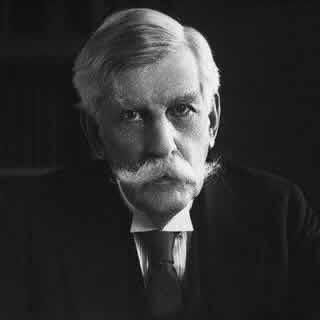
One of the skeletons in the Old Dominion State’s closet is the 1924 “Virginia Eugenical Sterilization Act,” a  law allowing the sterilization of citizens adjudged to be in a long line of mentally deficient idiots. The law was upheld in the infamous  1927 Supreme Court opinion in Buck v. Bell, in which the great Justice Oliver Wendell Holmes, to his undying shame, wrote,

“It is better for all the world if, instead of waiting to execute degenerate offspring for crime or to let them starve for their imbecility, society can prevent those who are manifestly unfit from continuing their kind…Three generations of imbeciles are enough.”

So approved, Virginia’s eugenics law lasted into the 1970s, allowing the state to sterilize more than 7,000 people in mental institutions. The law was repealed in 1979, and victims are seeking reparations. Now the ghost of that law is hovering over the resolution of a current case.

The only thing Virginian Jessie Lee Herald has done on his 27 years more than get in trouble with the law is have children: so far he has had seven (with six mothers) and his current wife says she wants more. He recently fled the scene of a car crash with his injured 3-year-old son. Herald pleaded guilty to felony child endangerment, felony hit-and-run, and misdemeanor driving on a suspended license. Investigators who went to his home found his child to have been neglected, with, among other things, shards of glass in his diapers.

A Shenandoah County prosecutor, Illona White, proposed a plea deal that would reduce Herald’s prison sentence to just four years: he would have to agree to a vasectomy. He took the deal, which also requires him to pay for the operation.

Your Ethics Alarms Ethics Quiz of the Day:

 Is it ethical for a state to make a convicted felon choose between prison time and sterilization?

Continue reading →

Ethics Dunce: Anyone Who Thinks Hillary’s “I Gave It All To Charity” Excuse Excuses Anything

Money-box-giftI apologize in advance for this, because I assume all of you are as sick of commentary on Hillary, her book promotion tour, and her endless stream of statements that validate everything her critics have been saying for over a decade. However, her latest ethically tone-deaf statement is a special category of dishonesty that I vowed long ago to flag every time it was tried by a public figure, and given a pass by the news media. So here we are.

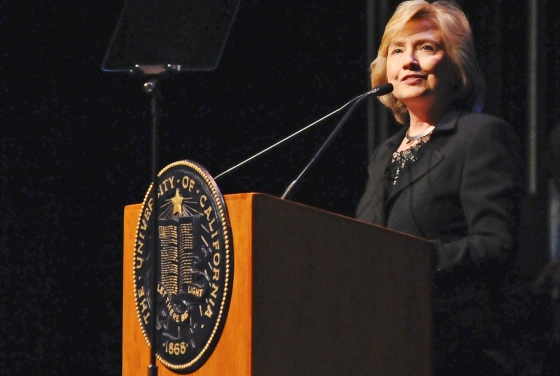
Hillary responded to the growing controversy over her absurd speaking fees, which she charges to universities as well as corporations, by saying this to ABC’s Ann Compton:

“All of the fees have been donated to the Clinton Foundation for it to continue its life-changing and life-saving work. So it goes from a foundation at a university to another foundation.”

Giving money to another individual’s charity of choice is indistinguishable from giving money directly to that individual. If a lobbyist gives corporate money to a politician’s charity, for example, that’s a crime in most states, and should be. The charity dodge is a popular one with corrupt individuals, because the average member of the public, being among those whom Abraham Lincoln noted that you can fool all the time, and also possessing the ethics analysis skills of the typical whippet, just nod and say, “Oh. Okay!” Continue reading →

Ten Movies For Independence Day Weekend

fireworks

I wasn’t going to do this until I ran across a few lists of “Most Patriotic  Films” that made me fear for the taste and the values of my fellow citizens. “Independence Day” ? “Armageddon”? “Rocky IV”?  When did “patriotic” start meaning “crappy”? “Born on the Fourth of July”? If Oliver Stone is your idea of patriotic fare, you and I are going to have a problem.

Here is my very personal list of ten favorite films that bring a patriotic lump to my throat and a remind me of how lucky I am to be born and raised in the U.S.A. Don’t mind the order: it was hard enough narrowing the list down to ten.

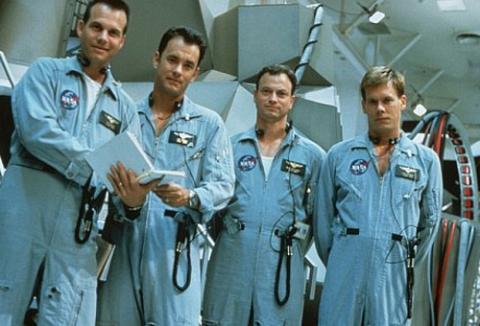
1. Apollo 13  (1995)

The only one of the movies on my list that I saw on the others today. Like many of the films here, it makes me wistful for American boldness and confidence that seem to be in retreat today. When the  Apollo re-emerges from radio silence, and Tom Hanks says, with perfect inflection, “Hello, Houston. This is Odyssey. It’s good to see you again,” I lose it, every time.

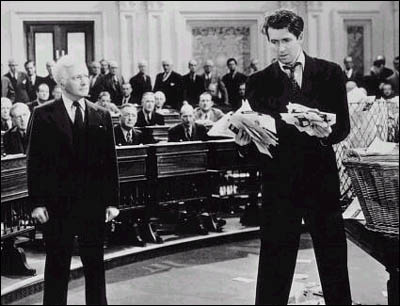
2. Mr. Smith Goes to Washington (1939)

Yes, this is Capra-corn at its corniest, but from Harry Carey Sr.’s sage and heroic Vice -President, to the power of the people triumphing, to the press trying to expose corruption rather than abet it,  this film reminds us of the best ideals of our government. When we get too cynical to enjoy Jefferson Smith’s struggle to make Washington work the way its supposed to, it will be time to pack it in.

3. The Longest Day (1962)

Longest Helm

Yes, it’s not just about Americans, but it is a great film about one of our country’s  finest achievements, all true, and inspiring without a lot of flag waving and sentiment. Best war movie ever—and my Dad’s favorite. Continue reading →

Euphemisms, Manipulation And Deceit On Illegal Immigration

Not that it isn't illegal for you to be here, but come on in anyway...

Not that it isn’t illegal for you to be here, but come on in anyway…

The U.S. needs to fix its illegal immigration policies, and deal with the millions of underground, and not so underground, illegals currently in the country, having children, getting benefits, often being abused and exploited while not integrating into U.S. society. This has been true for decades, and both parties, as well as the U.S. business community, Mexico, and the illegal immigrants themselves, share responsibility for allowing a major problem to metastasize into a crisis.

The proclivity of journalists to isolate blame to one participant in this fiasco to the exclusion of the others compounds the problem, by making a bi-partisan solution impossible and giving individuals a pass on accountability who deserve none. Even worse is the habit of the news media to adopt the misleading and dishonest terminology of open-border advocates and illegal immigrant activists. Attempting to use deceptive language, exaggerations and outright misrepresentations to make ethically dubious policies seem benign to the public has become standard practice among Democrats and progressives in the Obama era (Republicans and conservatives too, but at least at the present, less flamboyantly and with less success.) Abortion is promoted in terms that leave out any mention of the act at the center of the controversy: it’s about “choice.” Life? What life? As for the issue of how a nation maintains its security and rule of law when foreign citizens are entering the country in violation of those laws at will, the news media, like the President and others, works to make the central issue invisible. Continue reading →

Independence Day Ethics: Historian Hype, Liberal Bias, And The Great Punctuation Mystery

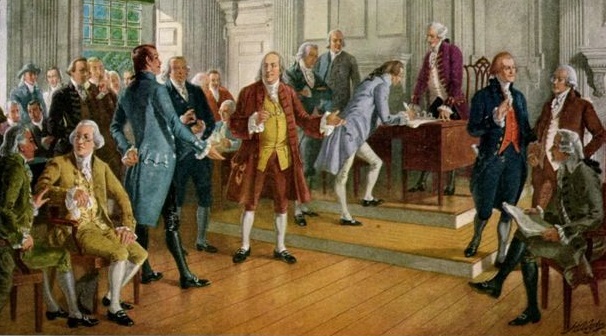
founding-fathers-declaration-of-independence

First, a little background…

I have often found it depressing that historians so often lack the ethical integrity necessary to do their jobs. If there was any profession in which avoiding bias would seem to be paramount, historical research and analysis would seem to be it, but that just isn’t the case. Because historians are academics and scholars, and because academia has become almost exclusively a hot-house of left-ward ideology for more than half a century, too many historians view their duty as using the past to manipulate the present and future.

My introduction to this came early, when I was a fifth grader suddenly fascinated with the U.S. Presidency as the first national election that I could follow approached. I read various assessments of who the greatest of our past POTUSes were, and there was near consensus, it seemed. Washington and Lincoln, naturally, were “the berries,” and they were joined as “greats” by Jefferson, Jackson, Wilson, FDR, and Truman, Democrats all. Teddy Roosevelt was “near great”; Eisenhower was a dud. What a great party this Democratic Party must be! Of course, Jefferson’s racial hypocrisy, Jackson’s lawlessness and persecution of Native Americans, Wilson’s racism and bungling of the peace after World War I and FDR’s complicity in locking loyal Japanese-Americans in prison camps was never mentioned. Over time, I learned that even the most respected American historians were likely to be pursuing partisan agendas. The classic example, of course, was Arthur Schlesinger, Jr., who carefully and unforgivably culled the facts he deemed worthy of revelation in order to add John Fitzgerald Kennedy to that list of brilliant Democratic Presidents. Was I surprised when a large number of prominent American historians signed a petition opposing the impeachment of President Clinton, a Democrat, thus asserting that a degree of dishonesty and lack of trustworthiness that was sufficient in every state in the union to mark a lawyer as unfit to practice was nonetheless not sufficient cause to remove a President from office?

I was not.

This brings us to the Case of the Missing Comma, brought to us by Danielle Allen, a professor at the Institute for Advanced Study in Princeton, N.J., aided and abetted by her left-leaning allies. Allen (who by the purest coincidence has a book out!) claims a major discovery. The iconic sentence in the Declaration of Independence—“We hold these truths to be self-evident, that all men are created equal, that they are endowed by their Creator with certain unalienable Rights, that among these are Life, Liberty and the pursuit of Happiness.–”—was not intended to end in a period, as all current quotations and reproductions show, and the official transcript produced by the National Archives and Records Administration indicates.  Allen claims that her extensive research indicates that the period at the end of that phrase almost certainly did not appear on the original parchment version of the Declaration, and was mistakenly included in later versions. Just in time for July 4th (when Allen’s publicist calculated that her “Eureka!” would get maximum exposure) Allen explained to the New York Times that the extra period contributes to a “routine but serious misunderstanding” of the famous document signed by the Second Continental Congress in 1776. Continue reading →

Comment Of The Day #2: “Nobody Should Be Cheering The Poll Showing President Obama As Regarded As ‘The Worst President Since World War II’”

Film-ProjectorI had barely posted the first Comment of the Day on the recent post regarding the explosive poll showing President Obama sinking below all previous post-war Chief Executives in the public’s estimation, when another excellent deserving one, by Mark, arrived.

Mark doesn’t comment often, but when he does, his posts are always eloquent and thoughtful. Here is his Comment of the Day on the essay, Nobody Should Be Cheering The Poll Showing President Obama As Regarded As “The Worst President Since World War II”.

I don’t go all the way with you on this one, Jack, but certainly a part of the way. A few years ago I learned about projections – how we project what we want/see/expect onto other people even when, or especially when, the projection has nothing to do with who they really are, and the consequence of not seeing clearly the person in front of us. If nothing else, President Obama has been a victim of that idea.

In 2008, he was a blank screen onto which people projected what they wanted to see after the Bush years and a rapidly tanking economy. He was HOPE, CHANGE, and perhaps worse, we ennobled him with the idea that he was something other than a standard-issue Washington politician. The fact that he was African American only amplified the idea of his actually making a difference in Washington because he was, indeed, so different from any other candidate we had seen since Kennedy and his Roman Catholicism. I think our ultimate projection might have been that if we could do this, elect a black man, then we would bring change to the country simply by “curing” the centuries-old race issues in the US or making a good run at it. Projections are powerful and in the hands of a collective even more so. After a time during the 2008 election, it didn’t matter what he said or did, he WAS hope and change, not a candidate.

And, in the absolute cynicism of American politics, all the pollsters, pundits, and creatures of his campaign knew and exploited this (and they’ll do it again for someone else come 2016).

In the moment he was elected, as an African American, I felt something incredible – a man like me in the White House, a supreme victory after slavery, Jim Crow, and the spilled blood of Till and King. I also felt an unease – could he govern? We knew he could run a crackerjack campaign, but could he replicate that kind of success from the Oval Office? In 2008, I figured only time would tell and to an extent it has. He was neither an outsider to Washington nor a maverick, both projections, not to mention a relative lack of experience compared to other presidents. I will say – and I know you agree – that he did not come to Washington to cause harm, but with a deep love for the country and an expectation that he could do what he had intended and promised. Perhaps those were his own projections upon a system that had no intention of bearing them out. I don’t know.

Like I said – I won’t go all the way with you on this and the points of disagreement are about perception of events and we each have our own. I will not say, either, that he is the worse president since WWII – that is, again, a matter of perception. Where we absolutely agree is a share of this lies with the American people who have not figured out how to counter systems – both political and governmental – that are increasingly cynical, unethical, and devoid of any sense of the common good for our nation. “Have you no sense of decency, Sir?” is truer today than it was in 1954 and should be asked of every politician in Washington from the President on down. In the last eight years everybody of every political stripe has some blood on their hands for this mess. We lay it at his feet because – unfortunately for him – the buck does stop there.

So now we wait for the curtains to part on another blank screen onto which we’ll project our hope for a country that is different from the one we’re living in now. We’ll hear from sincere, well meaning candidates who will tell us what we want to hear rather than what is true and doable, and we’ll buy it. The first woman in the White House is ripe for that, as is the first Hispanic, or a TRUE American Tea Party candidate. They’ll all present themselves and we’ll beam on.

Continue reading →

Some Ethics Comments On The SCOTUS Hobby Lobby Decision

Hobby-Lobby1. First, read the decision, here. When you do, you will be disgusted at the blatant exaggerations and outright misrepresentations by various pundits, advocates, activists and reporters. In the case of the latter, this is incompetence and a breach of duty to the public. In the case of the rest, it is either dishonesty and willful deception, or stupidity. For example, as an exercise, count the number of misrepresentations and misstatements inherent in this tweet, from MSNBC ‘s Cenk Uygur:

 “I love that conservatives are now on the record as against contraception. Brilliant move to be against 99% of women!”

I count five, but I could be off by one or two. Is this genuine misunderstanding, or just intentional rabble-rousing? Who can tell, with shameless partisans like Cenk? Continue reading →

Comment of the Day: “Nobody Should Be Cheering The Poll Showing President Obama As Regarded As ‘The Worst President Since World War II'”

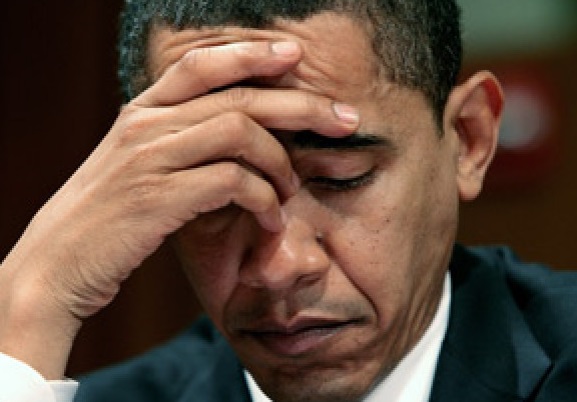
ObamaVeteran Ethics Alarms commenter Glenn Logan scores his fourth Comment of the Day, but his first in two years. (He’s been busy.) Here are Glenn’s observations on the recent post regarding a poll showing widespread public disappointment in President Obama’s performance, and the conservative gloating about it in some quarters. The post was Nobody Should Be Cheering The Poll Showing President Obama As Regarded As “The Worst President Since World War II”

Two things strike me about this:

1. The problem is, we put too much on Obama’s shoulders. We (collectively) asked him to change the culture of Washington in return for our vote. Failing to do that was inevitable, and our seeing is as his personal failure is more a reflection of our own incompetence as voters (we are the only ones who can change Washington) and the imputation of superhuman status to an iconic (i.e. “post-racial” president) than Obama’s.

2. There is a heck of a gap between failure and excellence. The problem is, Obama’s hubris, which is at the root of all his problems, has produced in his presidency exactly what it usually produces in other walks of life: Misjudgment, tone-deaf partisanship, arrogant dissimulation, and a complete failure to lead. This is objectively where he went wrong, rather than merely running afoul of unfairly elevated expectations and partisan infighting.

We asked Obama to do what we are charged with doing. That was our failure. President Obama failed to execute his office with even minimal competence, and then blamed everyone but himself. Not only that, the American people invested so much in the idea of “change” that his allies felt could not afford even a semblance of disagreement.

So collectively, they did what people almost always do in that situation — circled the wagons and acted like the failure was success in hopes of convincing as many people as possible. They are still certain (because they think they can’t afford not to be) that Obama’s presidency is fully dressed, despite the evidence of their own eyes.

It’s always bad for us when our leaders fail, and schadenfreude is an inevitable, if unfortunate reaction. The irony of celebrating failure and the concomitant lessening of our country is tragic comedy worthy of Shakespeare.

Those Huge University Speaking Fees: Hillary Clinton A Venal Hypocrite? Say It’s Not So!

To be fair, she really needs the money...

To be fair, she really needs the money…

Hillary Clinton has sounded the alarms (lest Sen. Elizabeth Warren sound it louder) over student dept and the high cost of college education. Then she has blithely accepted nearly two million dollars to give one hour canned speeches at eight universities, including four public institutions.

This is causing some anger on campuses, as it should. How can a school raise tuition, claim that it is strapped for funds, and then pay a wealthy woman over $200,000 to give a speech? It can’t—not responsibly or ethically. Nor is it responsible or ethical for the speaker, while stating publicly that she deeply cares about higher education, to ask for and accept such funds.

The issue came to light after University of Las Vegas students began protesting a scheduled speech by Clinton at her going rate of $225,000, asking her to return the fee. What has followed is a lot of rationalizing and lame defenses of the indefensible.

Fact: no school should be paying the equivalent of a student’s multi-year tuition for a one hour speech, even if Abraham Lincoln has agreed to come from beyond the grave to give it.

Fact: no decent, caring public figure should charge or accept such a fee. Continue reading →

Ethics Quiz (Inadvertent Offense Division): The Transsexual Vote

dancing-with-the-stars-paddlesIn a one of my ethics seminars last week before a large audience, my usual practice of polling participants using hand-held numbered ballots, was unwieldy. The client group did not color code them, and there were over 400 present, as opposed to the Dancing With The Stars panel, which is three. I got around the problem by segmenting the crowd and picking different groups to represent the whole. Sometimes just men voted; sometimes women, sometimes one of the four sections of the hall. In other cases, I asked groups that were involved in the case being discussed: family law attorneys. Government attorneys. Mothers.

One of the cases involved a transsexual individual, and I suggested that the transsexuals in the audience vote. Nobody volunteered. The group laughed.

Today I received a very nice note from one of participants, praising my session but criticizing my judgment in that incident:

“You asked the transsexuals to vote, and said you were sure there were some attending [I don’t recall doing this, and I suspect she is thinking of my comment about another potential group] , which produced laughter. Were I a transsexual, I would have felt ostracized and deeply offended. These are people with congenital/hormonal conditions that clash with our social constructs of gender identity. But most importantly, they are people. You are, of course, statistically right to guess that in a group of lawyers of that size, probably there were not many, probably not any, That does not make it OK to perpetuate their ostracism. This is not about political correctness, it is about acknowledging shared humanity.”

Your Ethics Alarm Ethics Quiz of the Day:

Is this a fair complaint?

Continue reading →