1. Related to my comment yesterday (I expected to get flack, but it never arrived) about how female commenters on Ethics Alarms tend to raise objections to the occasional pitched battles and harsh argument styles here, while the male participants largely take it in stride: I just saw an old interview with famed film director John Huston, in which he said, “One of the best ways to become friends with a man is to fight him.”
I don’t think a woman’s ever said that…or thought it. To be fair, neither have I.
2. Speaking of things women don’t do: Taunting, mocking, gloating and generally being what used to known as a bad winner is obnoxious, mean, bad sportsmanship (or course), a Golden Rule violation and wrong. Fans think its entertaining, however, so the various pro sports leagues tend to permit such antics. Football has, as with most matters, encouraged the most unethical conduct of the sort, but now the NFL’s officials have decided that on-field taunting is “out of hand.”
The new NFL rule: You can be an asshole, just not too much of an asshole. The league told officials to strictly enforce taunting rules, with automatic ejections of players who get two taunting penalties in a game. The player may also be fined or suspended, or both, depending on the severity of his transgression.
The renewed effort to enforce taunting rules will target “baiting or taunting acts or words” and “abusive, threatening or insulting language or gestures” toward players, coaches and game officials, as defined by the N.F.L.’s unsportsmanlike conduct rules.
I owe Ann Althouse for finding this; I never would have, especially since I’m disgusted with YouTube.
Above is a montage of all of the TV series offered to the public by ABC in the Fall of 1961. It’s worth noting that in 1961 the Fifties culture was still going strong, though JFK had replaced Ike as President. What we think of as the cultural Sixties didn’t really start until after Kennedy’s assassination in November of 1963. Also worth noting: ABC was the perennial least watched network on 1961. That meant they took the most risks, but ’61 was not a good year for ABC.
What can we learn from the montage? Culture is ethics and ethics is culture; this is a snapshot that shows what a large percentage of Americans watched at night, and what contributed to their worldview. It is fair to say, I think, that nothing in popular culture today influences an many people as even ABC’s prime time schedule did. The snap shot reveals where the nation has progressed, and what it has lost. In 60 years, there is a lot to consider.
Senator Rand Paul (R-KY), the U.S. Senate’s most passionate libertarian, was suspended from YouTube for expressing his strong opposition to Wuhan virus mandates and calling for widespread citizen resistance. This is res ipsa loquitur: Big Tech is using its corporate power to support government policies and prevent dissent. The argument that YouTube (that is, Google) is a private entity and not bound by the First Amendment is disingenuous, just as similar arguments defending Facebook, Twitter and other social media banning President Trump as well as posts that offer opinions and positions they don’t want the public to see. When corporations use their massive power and influence to suppress speech and control the flow of information, they pose an existential threat to democracy. When they exercise this power to advance the political agenda of a specific group, individual or party, that threat is worse. When they are censoring and distorting on behalf of the government, the threat is dire.
Paul released a rebuttal and condemnation of YouTube’s indefensible action, and it was also taken down by Our Video Masters. You can view it here, on Rumble. If I could embed it, I would.
Let me turn the floor over to Professor Turley, not as an appeal to authority, but because there is no reason for me to write in different words what he has said persuasively already:
Here’s the third of a run of three impressive Comments of the Day from two days ago: a dissenting take on the pandemic-linked Oregon law allowing students to receive a high school diploma despite not possessing documented proof of basic academic skills at the high school level. Since the author, the much esteemed Curmie, is a professional educator (and not in Oregon) his analysis carries due weight, and is worth pondering.
I’ll stipulate that the argumentation is stupid. That said, the actual change in policy is at the very least far less laughable than you suggest; indeed, I’d argue it’s a net positive.
What has actually happened is that Oregon has decided not to put all its faith in a standardized test run by a for-profit corporation. I don’t think that’s a bad call. Even the most professionally run of these exams have histories of major problems. Numerous math questions aren’t age-appropriate. (The people who write the exams aren’t educators–they’re often education majors who couldn’t get a job as a teacher.) There was a case few years ago where a reading comprehension problem was leaked, and a poet got two out of five questions “wrong” about his own work!
But the writing sections are the worst. Even the testing companies aren’t brash enough to argue that computers can score writing (although some are experimenting with the idea). So they hire graders. These jobs generally pay less than $12 an hour and require only a college degree… in anything! For that kind of money, you’re not going to get someone who can tell the difference between a sonnet and a laundry list.
So the company makes it easy for them: there’s a formula. Five paragraphs. First one says what you’re going to say. Next three, you say it (actually saying anything is more or less optional). Last paragraph: say what you just said. Follow this, without any enormous grammatical errors, and you’ll be fine. But woe betide the student who writes a coherent and persuasive essay… but wraps it up in four paragraphs. (The sonnet/laundry list line is an exaggeration; the five paragraphs or you fail part is not.)
The serious decline in writing skills I see in today’s students relative to their peers of even two decades ago (in the same courses at the same university) has occurred not despite the Great God Accountability (worshiped by both political parties, albeit in different ways), but because of it. I’ve seldom had students question their grades on essays, but when they do, I almost always have to control my urge to scream at them, “you got a bad grade because you didn’t freaking say anything.” But… but… it was five paragraphs, and…
Rhoda Wagner, 60, was killed by three dogs that appear to have been some variety of pit bull-type breeds or pit bull breed mixes. She was caring for the dogs for her roommate. Jonathan Turley flagged the story for his own purposes: he was interested in talking about how the law treats such attacks. This one was in Pennsylvania, which has no “dangerous breed laws” (yet), and the owner had the dogs euthanized. However, as in almost all of the tragedies exploited by dog bigots to cast any dog that looks like pit bull supposedly looks as dangerous monsters, this story is missing too many facts to know who to blame and what happened.
Turley doesn’t help, and reveals himself as a a dog breed tyro by referring to the dogs as “pit bulls.” “Pit bull” isn’t a single breed, and as I’ve written here already too often, incidents involving eight or more distinct breeds, as well as mixes, are routinely reported as involving “pit bulls.” This accounts for the extreme statistics reported by anti-pit bull breed propagandists like dogsbite.org (which was naturally used as an authority in several of the articles about the Pennsylvania attack).
The police called the dogs “pit bull terriers.” The American Pit Bull Terrier is a breed, but unless abused or trained to fight, not one known for aggression. The few, inconclusive photos I’ve seen of one of the dogs suggest a Staffordshire Terrier mix of some kind, but who knows? There is no information so far about whether the three dogs were even the same breed or mix or from the same litter: police don’t know dog breeds. An incident can’t be used to impugn a breed or breed of dogs without accurate identification of what they were.
Next, as Turley notes, we don’t know if any of the dogs had been abused or had any prior incidents of aggression. Were they rescues? Many, maybe most, pit bull breeds and mixes are. Rescues—of all breeds— have special issues and triggers. Most important of all, how well were the dogs trained? All of the pit bull breeds are intelligent and train relatively easily. They also often will obey only their master. Not training large dogs adequately is negligence. (No, I still can’t get Spuds to lie down.)
Laura Morris, a fourth and fifth grade teacher in the Loudoun County (Virginia) Public Schools resigned dramatically in front of the county school board yesterday as the climax of an emotional speech condemning its “highly politicized agendas.” “[I]n one of my so-called equity trainings, [I was told] that White, Christian, able-bodied females currently have the power in our schools and ‘this has to change,’”she said in part during the public comment period of the board meeting. “Clearly, you’ve made your point. You no longer value me or many other teachers you’ve employed in this county. So since my contract outlines the power that you have over my employment in Loudoun County Public Schools, I thought it necessary to resign in front of you.”
“I quit,” she said, her voice breaking. “I quit your policies, I quit your training, and I quit being a cog in a machine that tells me to push highly politicized agendas to our most vulnerable constituents – children.”
She also also alleged that the county ordered her not to express dissenting views. Several teachers in the system, anonymously (of course), have told news outlets that they were intimidated in the school’s mandatory equity trainings. Teacher Monica Gill, who also spoke at the meeting, told Fox News that the County’s embrace of Critical Race Theory, had damaged and divided the community. By her account, teachers like her and Morris were told their mission was to “disrupt and dismantle this systemic racism.” She continued, “And I can tell you, one thing that’s for sure, it has been disruptive because there are parents who disagree with this ideology, there are teachers who disagree with it, there are students who disagree with it — and it is harmful.”
Loudoun County is ground zero for CRT infestation in the public school battle in Northern, Virginia
Morris’ speech is less than two minutes long, and worth watching. It has gone viral, and should help spark public debate until YouTube takes it down. Vegas odds are running about 50-50 on whether it lasts the week. (I’m kidding. Those are my odds.)
Observations:
1. Quitting like that is grandstanding to be sure, and legitimately a cause for skepticism. If we find out later that Morris is getting married and was planning on quitting anyway, or had inherited a fortune, got a bonus from Christopher Rufu, or has a secret lobbying contract, such developments will put her performance in a very different perspective. It is one of the many tragedies of the digital age that we just can’t trust what we see, hear, and are told.
2. If, however, the speech is what it purports to be, Morris has to be deemed an ethics hero. She has made herself a target, quit her job, and said in a public forum what she had been unethically told she could not say. You never know when such moments become catalysts for important shifts in opinion and tipping points in policy debates. Usually, they are quickly forgotten. Sometimes, they are not.
3. It is unfortunate that Morris couldn’t avoid bringing her religion and her own beliefs into the discussion. This helps the censors, the indoctrinators and the demonizers of the religious, conservatives, and dissenters immensely. She is now subject to being classified as one more religious bigot who wants to discriminate against LGBTQ citizens. This is a trap too many conservatives fall into. The issue is schools, and local governments, that are dominated by political activists and ideologues forcing their beliefs and agendas on any student, any teacher, and anybody.
Ethics Alarms’ resident musician has a fascinating Comment of the Day humming with informative observations, and best of all, it has nothing to do with the Wuhan Virus vaccine
Jack, it makes perfect sense that you bring Heather Mac Donald’s very long, two-part screed to your readers’ attention. It’s gotten a lot of notice in the music world. Personally I respect Ms. Mac Donald’s place in the overall cultural and political discussion, whether I agree with her writings or not. I’ve noted either her research or simply her references to the variables of two-parent families and basic levels of educational attainment as fundamental explainers of personal achievement, independent of ethnic background. Her views are part of the overall discussion in America today, or should be.
All that said, her big article about classical music is flawed in at least three ways. Here are those issues:
1. A lot of the article confuses music with musicology. The latter field has been kind of nuts for a while, extending way back before last year. The principal educators of today’s and tomorrow’s performing artists are not theoretical musicologists. They’re a combination of distinguished performers themselves and effective pedagogues, often combined in the same person. I’m not going to excuse some of the crazier things that have recently come out of Juilliard and elsewhere, but conservatory education remains very rigorous and performance-focused, indeed arguably too much so given the supply-demand imbalance for classical music talent.
2. The article is not really fair to the Sphinx Organization. One of the things that Sphinx does is to deal with the same overwhelming problem of expenses for families of limited means that you see in sports such as baseball and soccer. This time of year they bring in, for example, string players – yes “black and brown” ones – to top schools and institutions for intensive education and opportunity for rehearsal and performance experience. An example of someone who came out of the Sphinx Organization is the fantastic violinist Melissa White – yes that’s her name. Melissa has performed in our region at the Phillips Collection in D.C. and the Richmond Symphony, and she has numerous recordings to her name with the Harlem Quartet (which actually performs a huge range of traditional classical and other, adventurous music). And as you know, I believe it is completely valid to assert that, just as in other fields of employment, classical music employers should assess the whole person and what they can bring to an institution, even if their performance chops are obviously the primary criterion.
1. Let’s begin with an update, Great Stupid Division...Remember this idiotic story? You probably don’t; at the time, I thought it was almost too silly to write about: a 70 ton boulder that students at the University of Wisconsin were protesting as racist because of what it was once called. I wrote in part,
“Over 10,000 years ago, pre-Cambrian bedrock drift from Canada left it on what would become the campus of the University of Wisconsin in Madison…The rock was extracted from the side of a hill in 1925, when Calvin Coolidge was President, and my father was five-years old, and placed in its current spot. It was dubbed “Chamberlin Rock” after Thomas Chrowder Chamberlin, a 19th century glaciologist and University of Wisconsin president, given its plaque memorializing him and placed at the university’s Washburn Observatory. Suddenly, after 95 years, the rock has become racist, and black students are demanding that it be removed. You see, long ago, the term “niggerhead” was commonly used to describe large dark rocks….Isn’t it also obvious that this is, like so many of the demands during the George Floyd Freakout, just a contrived power play, as in “Watch this! We’ll make Whitey move a 70 ton rock just because we ordered them to do it!” Why can’t University officials end the “controversy” by saying, “No, children, we are not going to move a 70 ton rock because you have made the calculated decision that it hurts your boo-boo. You’re here to grow up: start doing it.”? If society won’t reject demands this stupid, why would any demand seem unreasonable?…”
2. Here is a correction from CNN that tells us much about a lot of people and things, but especially CNN:
“After CNN aired a story about her potential eviction, Dasha Kelly clarified to CNN that she is not the mother of the three children featured in the story. CNN has verified she takes care of the children in her home for periods of time. She says she originally described herself to CNN as a mother because she considers herself to be like one to them. CNN has learned the children are also cared for by their mother, Shadia Hilo, and their father, David Allison, who is Kelly’s boyfriend. GoFundMe tells CNN they are in close contact with Kelly and funds will stay on hold until they verify her information. GoFundMe says no funds have been withdrawn.”
Kelly didn’t “clarify” her lie…here is how she presented herself and “her” children to CNN viewers…
…until after a GoFundMe page set up to help this poor, overwhelmed mother raised over $230,000. It did so in response to the scam CNN aided and abetted by being so eager to make an emotion-based case for the illegal eviction moratorium that it didn’t check before letting this women pull off her lucrative hoax.
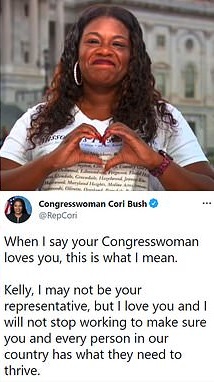
I especially like the “she considers herself to be like a mother to them” argument. In fact, it wasn’t even Kelly who exposed the scam, it was the kids’ real mother. CNN couldn’t even make its correction correctly. Before all this, the shameless news network even brought the fake mother back on live TV, with the children that weren’t really hers, for a follow-up interview. That one included Democratic Congresswoman Cori Bush, who has championed the scam being dishonest herself as well as dumb as a box of racist rocks:
I’m sorry to begin the day by reminding you of the quality of the people making our laws and the level of trustworthiness of the news media, but as Walter Cronkite used to say, “That’s the way it is.”
It has been a hugely informative and entertaining knockdown, drag-out comment battle over vaccine hesitancy the last few days on not just one but two posts on the topic. It’s time to add another. One irony of long comment threads, which make me happy as a blog proprietor, is that many readers don’t have the patience to pick through them. I’m sometimes guilty of that myself.
First, I want to take exception to conflating hesitancy to take the COVID-19 vaccines and anti-vaxxers. There’s a huge difference between being skeptical about one particular vaccine and being skeptical about all vaccines. And conflating the two blurs the issues and dismisses out of hand legitimate arguments and concerns.
I stand in an odd position, because I oppose getting any of the COVID-19 vaccines, and I have been vaccinated. I took the double doses of the Moderna vaccine when it became available at my workplace. Was it to protect my family (my wife is pregnant with our fourth)? Not at all. We’re all healthy, and the odds of the coronavirus having any effect other than a harsh cold for my household is surprisingly small. Was it because my workplace pressured me into it? No, though I will cite that the 14 days paid sick time goes away if I snag a sufficiently large batch of SARS-CoV-2 and I’m not vaccinated.
So why did I get the vaccine? At the time, I believed it the right thing to do to help the efforts of reaching herd immunity. So what has changed since then? Let’s consider my thinking, meandering as it is.
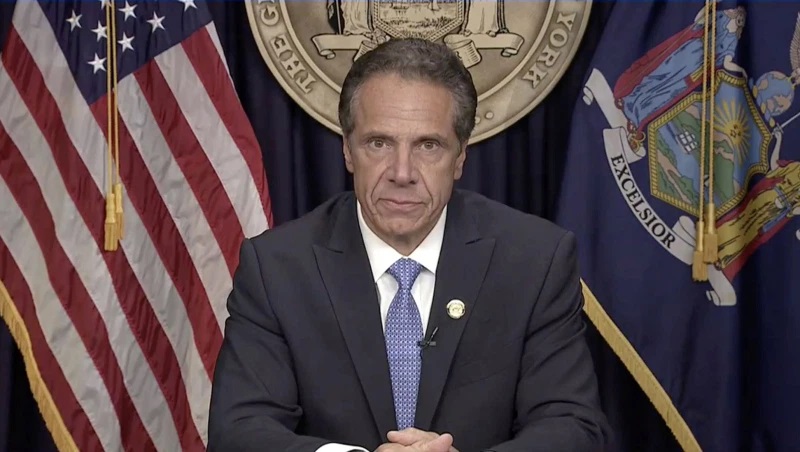
Just as the news media and others had convinced themselves that New York Gov. Andrew Cuomo was determined to draw out the impeachment process, insist on his innocence and remain defiant, he resigned, saying today that he would officially step down in 14 days.
I cannot find a full text of Cuomo’s resignation speech, not is there a video that WordPress lets me embed. You can watch it here.
Ethics Observations:
1. Good. Everything else aside, resigning was the right thing to do, and the best outcome for the state. It doesn’t matter if the resignation itself was graceful or appropriately contrite— it wasn’t—or whether Cuomo would have stayed on and roiled the government indefinitely if he thought he could survive. It’s the most ethical decision even if his reasons for it and his method of doing so were unethical.
2. Hanging around for two weeks after resigning is unusual for an elected official resigning during a scandal. Cuomo will be a kind of super-lame duck. In theory, saying two weeks to help with an orderly transition is responsible. In practice, I expect it to be chaotic. He may not last the full 14 days.
3. Cuomo began his announcement by attacking the accusations against him and the process that brought hum down. So much for accepting accountability and admitting wrongdoing. He blamed the political environment (“there are many motivations at play, if anyone thought otherwise they would be naive”), his political enemies, social media, and rapid cultural changes that were just too darn sudden. He never admitted that he did something wrong. Incredibly, Cuomo presented himself up as a victim.
4. And, incredibly enough, a selfless hero. “I work for you and doing the right thing is doing the right thing for you because as we say, it’s not about me, it’s about we,” Cuomo said, agreeing that fighting the wave of opposition in the wake of the sexual harassment accusations would throw New York into months of turmoil. “I cannot be the cause of that,” he said. “The best way I can help now is if I step aside and let government get back to government. And therefore that is what I’ll do, because I work for you, and doing the right thing, is doing the right thing for you” What a guy! This is, as we know by now, standard face-saving strategy. It’s still nauseating when it is not accompanied by a genuine apology and an acknowledgement of wrongdoing.