Law vs. Ethics #2: The Supreme Court Unanimously Says Colleges Can Use Tuition To Run A Professional Sports Business

In NCAA v. Alston, handed down yesterday, a unanimous Supreme Court ruled that the National Collegiate Athletic Association (NCAA) violated the rights of student athletes and the Sherman Antitrust Act by restraining colleges from compensating student athletes. Justice Gorsuch wrote the opinion, upholding the U.S. Court of Appeals for the 9th Circuit. Justice Brett Kavanaugh wrote a concurrence.

The decision was a slam dunk for the players. Gorsuch vivisected the NCAA argument that its compensation rules should not be subject to a “rule of reason” analysis because it is a joint venture to offer consumers the unique product of intercollegiate athletic competition. The NCAA has monopoly power in the market, Gorsuch explained, so it deserves no such deference. The NCAA’s argument that it should be exempt because it offers societally important non-commercial benefits is ridiculous on its face, and Gorsuch explained why.

Justice Kavanaugh’s concurring opinion went further:

Continue reading →

From The Signature Significance Files: A Question For “The Ethicist” That Proves The Questioner Is Ethically Obtuse

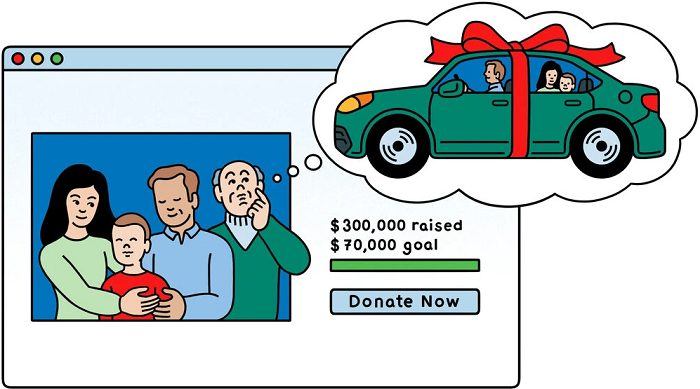
GoFundMe for car

When I read the headlined question in an April installment of “The Ethicist” advice column in the New York Times Magazine, I would have done a spit-take if I had just taken a sip of something. It was “Is It OK to Use Money Raised for a Child’s Cancer Care on a Car?” What? No it’s not “OK,” you idiot! The questioner has to write to a professor of philosophy like Kwame Anthony Appiah, who is the current version of the Times’ ethics expert, to puzzle out that query? Why not ask a neighbor, a minister, a friend who isn’t in jail, a reasonably socialized junior in high school?

Then I started wondering what percentage of American think that question is a really tough one, and I got depressed.

Here was the whole question:

My grandchild is being treated for leukemia. A friend of the child’s parents set up a GoFundMe page for them. They’re both well loved and have siblings who know a ton of people. So the goal was surpassed in three hours, and donations totaled more than double that amount. They plan to donate anything over and above direct hospital-related expenses to leukemia research organizations.This couple have some needs that aren’t strictly related to the child’s care, like a new car. Am I rationalizing by saying they need to drive the child to the hospital and should use some of this money for a dependable car? Is there a strict line you would not cross? And is it germane that they’re not extravagant and extremely honest?

I don’t need to discuss Appiah’s answer; he got it right. If he hadn’t, he would need to have his column, his teaching position at NYU and his degree in philosophy taken away. My concern is how hopelessly inept our culture must be at installing the most basic ethical principles if someone grows to adulthood unable to figure out in a snap that if one receives charity to pay for a child’s medical expenses, it is unethical, indeed criminal, to use the money to buy a car.

This isn’t hard, or shouldn’t be. Why is it? If the GoFundMe raised more money than is needed for the purpose donors contributed, the ethical response is to send the now un-needed fund back, with a note of thanks. (Appiah, after far more explanation and analysis than should be necessary—but he does have a column to fill—-eventually points this out.) No, you do not give the extra contributions to “leukemia research organizations,” because the donors could have contributed to those on their own, and didn’t give the money after a general appeal for all leukemia sufferers. They gave money for this particular child’s treatment. Doing as the family plans is a classic bait-and-switch. The questioner doesn’t comprehend that, either.

Then the rationalizations for theft start. “This couple have some needs that aren’t strictly related to the child’s care, like a new car.” “Strictly” is such a wonderful weasel word; it greases slippery slopes so well. Again, “The Ethicist” is forced to explain the obvious: the donors weren’t contributing to a needed car, they were giving to support leukemia treatment. If the family wants a new car, let’s see what that GoFundMe will bring in.

Which of the family’s needs couldn’t be sufficiently linked to the child’s welfare to support a rationalization for using the funds? “Am I rationalizing…?” Of course you’re rationalizing; in fact, I think even this ethically illiterate correspondent knows this is rationalizing, and is just hoping that an ethics authority will validate an unethical calculation. The tell is that she feels it necessary to add that they are only seeking a reliable car, not a Lexus. But come on. “Think of the children!”(Rationalization #58) Isn’t this desperately ill child worth, not just a reliable car, but the most reliable car?

As if any further evidence was needed that this reader of “The Ethicist”—and wouldn’t you think that if she did read the column, she might have picked up just a teeny smidgen of ethical thinking over time?—has no clue at all, we get, “[I]s it germane that they’re not extravagant and extremely honest?”

What is that, some kind of cut-rate version of the King’s Pass? Actually, it is: this is a blatant Rationalization #11A, ”I deserve this!“ or “Just this once!” (The King’s Pass is #11.) The theory is that ordinary, greedy, sneaky people shouldn’t use money intended to save the life of a child to get a new set of wheels, but thrifty, honest, good people deserve a little leeway.

What percentage of the population thinks like this? 25% 50%? 90%?

In his answer, “The Ethicist” does provide an unintended hint regarding how Americans end up thinking this way. Like most academics, he’s a socialist, so he writes, “It is immoral that anyone here has to borrow large sums of money for essential medical treatment, especially for a child….we need to expand the pinpoints of empathy to … light the way toward a country where health care is treated not as a privilege but as a right.” Bad Ethicist. Bad! That’s a false dichotomy, and he knows it, but he’s spouting progressive cant now. Health care is like many other human needs that we have to work and plan for as individuals, and recognize that the vicissitudes of fate sometimes turn against us. If health care is a right, surely a home, sufficient food, an education—heck, why not a graduate-level education?—a satisfying job, guaranteed income, having as many children as one’s fertility allows, child care and transportation also should be “rights.”

Why shouldn’t it be ethical to use other people’s money to get a reliable “reliable” car?

Law vs. Ethics #1: Harvard Screws Over Its Students, But It’s All Legal, So There

Harvard welsome

Two rueful thoughts before I begin:

  • One of my college graduating class’s big reunions is next year. Harvard always does an amazing job of throwing a party (having a bank account larger than the treasuries of some countries let you do that , I have many friends and room mates I yearn to see again, and I haven’t been back home to Boston in 17 years. But I’ll be damned if I’ll honor Harvard with my presence. It has been an ethics disgrace consistently for several years, and I am ashamed of my association with the institution, as well as my family’s association (my father and sister graduated from the college, and my mother worked there for over 20 years, culminating in her becoming an assistant dean.)
  • I could really enlighten NPR’s listeners about the difference between law and ethics in this case, if I hadn’t been blackballed for daring to explain how accusations of sexual harassment against public figures like Donald Trump were not necessarily fair even if they were sincere. Oh, well—NPR can bite me.

With that introduction, be it known that in the case of Barkhordar et al v. President and Fellows of Harvard College,  Harvard University won a dismissal today of a lawsuit by students over its decision not to partially refund tuition when it evicted students from dorms and moved classes online early in the Wuhan virus pandemic. Continue reading →

Unethical Quote Of The Month: American Bar Association President Patricia Lee Rufo

Rufo


“The American Bar Association is deeply troubled by the recent proliferation of hate speech directed against members of the Jewish faith and at LGBTQ, Asian American and Muslim communities. Such hateful behavior, coming in the wake of attacks on African Americans and other groups, have serious consequences as studies show a correlation between exposure to hate speech and the increase in hate crimes. Hate speech also serves to legitimize intolerance, reinforce stereotypes and further discrimination. We must not let any messages of hatred be normalized if we hope to advance the rule of law to achieve an inclusive society.“

Patricia Lee Rufo, the 2021 president of the American Bar Association, in an official statement last week.

This is disgraceful, and in so many ways. Imagine: the head of the largest lawyers’ association in the country authored that collection of vagaries, buzz words and wokisms in a naked virtue-signaling exercise with no substantive value at all, but with significant sinister potential. Worse, nobody at the ABA had the guts or integrity to tell her, “Uh, Patricia, that’s just plain embarrassing. We can’t put our name on that!” Also…

Continue reading →

Morning Ethics Warm-Up, 6/21/2021: Happy Birthday U.S. Constitution! [Corrected]

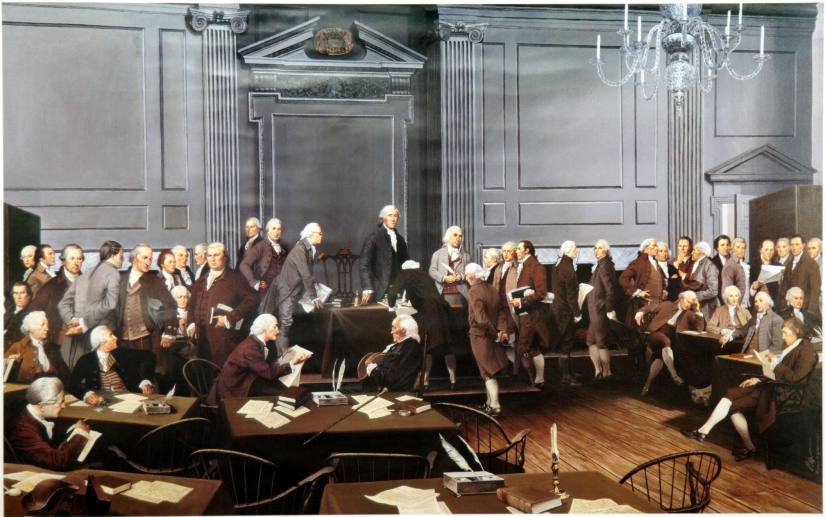
Constitution signing

On this day in 1788, habitually cantankerous New Hampshire became the ninth and last required state to ratify the Constitution of the United States and make it the law of the land. December 7 of 1787 had seen Delaware, New Jersey, Pennsylvania, Georgia and Connecticut quickly signed the document. But Congress had voted that at least 9 of the 13 former colonies had to sign on before the document was considered adopted. New Hampshire, Massachusetts and the remaining states opposed the document, as it failed to reserve sufficient powers to the states and did not protect individual rights like freedom of speech, religion,the press, and the right to bear arms. In February of 1788, New Hampshire, Massachusetts and other states agreed to ratify the document with the promise that necessary amendments would be developed and proposed. The Constitution was ratified based on the compromise by Massachusetts, Maryland and South Carolina, making 8. New Hampshire made nine. The first Congress under the new Constitution adopted 10 amendments, the Bill of Rights, and sent them to the states for ratification. Rhode Island, which opposed federal control of currency and was critical of compromise on slavery, was the last hold-out; the U.S. government had to threaten to sever commercial relations with the state to force it to sign on. Finally, on May 29, 1790, Rhode Island voted to become the last of the original 13 colonies to join the United States of America.

Today the U.S. Constitution is the oldest written constitution in operation in the world, and the only one predicated on ethical principles, thanks to the Bill of Rights.

I would have preferred to see Constitution Day made a national holiday over “Juneteenth,” since it was the principles laid out in the Constitution, along with the Declaration of Independence, that eventually led to the elimination of slavery, and the document has been the backbone of our republic’s epic success in other respects as well.

1. “Larry Vaughn Day”? I regret not noting yesterday that it was the anniversary of the release of “Jaws,” a milestone in American cultural history. It is also an ethics movie, and one that pops into my mind often, since the irresponsible conduct of the weaselly mayor of Amity, Larry Vaughn (Played by Murray Hamilton, who made a career of portraying human weasels), remains SOP for so many elected officials, locally and nationally, and also the leadership of corporations, associations, industries, sports, universities and <cough> religious organizations. Ethics Alarms has a Larry Vaughn tag, and I should have used it in dozens more articles than I have. He is the perfect symbol of leadership that, in the words of Matt Hooper (Richard Dreyfuss) will always “ignore this particular problem until it swims up and bites you in the ass.”

The U.S. could benefit greatly from a “Larry Vaughn Day” on June 20 in which every elected official and organizational leader be required to watch “Jaws.”

Continue reading →

Comment Of The Day: “Comment Of The Day: ‘Ethics Heroes: The US Conference of Catholic Bishops’”

Socrates

We have a veritable Comment of the Day chain. Sarah B.’s COTD yesterday on the Ethics Alarms post applauding the U.S. Catholic Bishops for preparing to hold Joe Biden accountable for his open support of abortion had inspired two excellent questions, in sequence, from reader Curmie. Both were answered with brio by Ryan Harkins.

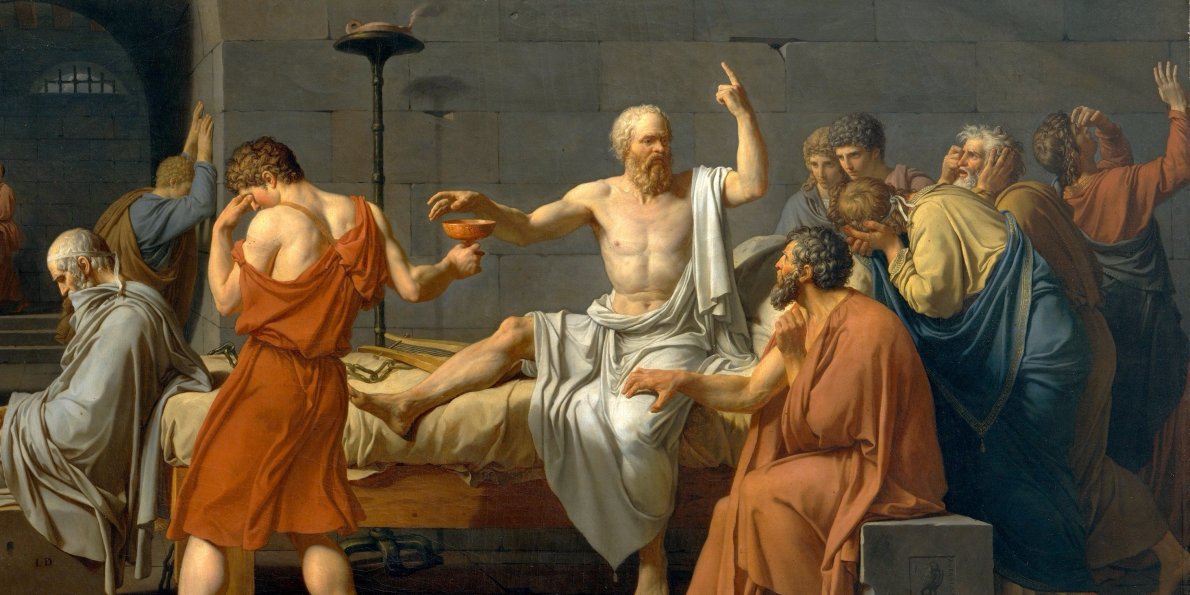
We’ve never had such a Socratic Comment of the Day exchange before, and maybe I should have a separate category for such delights, but I don’t. So I’ll just introduce this by saying, “Here is Curmie and Ryan Harkins collaborative Comment of the Day on the post, “Comment Of The Day: ‘Ethics Heroes:The US Conference of Catholic Bishops.” (Curmie plays Socrates.)

Curmie: One question, or rather series of related questions, for Sarah B, from a long-lapsed Protestant:

As respects “grave matter,” is there an inherent element of volition in the act itself (it wasn’t an accident), and if so, is there a distinction between literally not knowing the sinfulness of an act (had no idea the Church forbids a certain action) and deciding for oneself that the act is innocent, despite Church doctrine? And, assuming any of these distinctions are relevant, are we talking about a disjunctive yes/no, or something along the lines of a continuum?

I’m thinking of the Ancient Greek and Shinto (to name two) concepts of pollution (as opposed to sin), and wondering if Catholicism is closer to the former than I had hitherto believed.
In a pollution-based theology, Oedipus is still guilty of incest despite his active attempt to avoid it. In today’s world, according to this idea, a driver who hits and kills a child who ran out into the street is still guilty, although the event was entirely accidental, and the driver did everything possible to avoid hitting the child.

Ryan Harkins: In backing up, the Catholic Church teaches that a sin is mortal if it meets three requirements: first, that it is grave matter; second that the sinner knows that it is grave matter; and third, that the sinner consents, or intends, to commit that act. Grave matter is grave because of the extent of damage it does, and this is regardless of intent. Killing someone is grave matter; they are just as dead if you didn’t intend for them to die. I think St. Paul encapsulates this idea in his letter to the Romans when he writes, “Sin indeed was in the world before the law was given, but is not counted where there is no law. Yet death reigned from Adam to Moses (Rom 5:13-14).” The point is that even though you don’t know that what you are doing is wrong, because the act itself is inherently wrong, it will still cause harm. So the gravity of an action is not a matter of volition.

Where volition enters the picture is in the second two conditions. A person might not know that an act constitutes grave matter, but this could either be an unintentional state, in which he is not culpable for his ignorance, or it could be willful ignorance on his part. One aspect of being Catholic is the assent to the Church as authoritative, infallible on matters of faith and morals. A Catholic then has an obligation not just to follow the Church’s instructions, but to learn what the Church actually instructs. This touches on what Sarah B was saying on primacy of conscience: we should follow our consciences, but we have a duty to properly form our consciences as well. On some matters where the Church has not made any official pronouncements, the faithful are allowed flexibility of opinions. But on many issues that are hot topics today, the Church has made pronouncements, and those are, as far as any Catholic is concerned, infallible and made so through the protection and guarantee of the Holy Spirit.

A Catholic does not evade culpability by concluding privately that an action the Church condemns is actually innocent. His rejection of Church authority would actually be itself grave matter, on the order of the great sin of the Devil, who said, “Non serviam.” The sin of pride has long been held as the father of all other sins. It is the sin by which we seek to supplant God as the arbiter of good and evil. For a Catholic, who ought to know that the Church claims infallibility on matters of faith and morals, to reject Church teaching, he either has to deny the Church, or he has to believe he has some higher authority than the Church.

As for whether we are speaking of a disjunctive or a continuum, my answer is both. When it comes down the end of the day, either you have committed a mortal sin or you haven’t. But because of the third condition for a sin to be mortal, the question of whether one actually committed a mortal sin can become murkier. Take an addict, for example. It is a sin of gluttony to engage in debilitating drug use. So the use of hardcore, recreational drugs like meth, cocaine, and heroin is grave matter. (The use of lesser drugs like caffeine, alcohol, nicotine, and a few others do not fall into this category because the impact of moderate use is not very large. Drugs that have practically no “moderate” dosage are the ones that would constitute to grave matter.) But an addict has lost a great deal of his capacity to resist temptation. As he tries to quit, his falling of the wagon and using is of lesser severity than someone taking those drugs the first time. As he progresses, and he regains control over his appetites, then his culpability in slipping up and using again increases.

So there can be debate over whether a sin was actually mortal, due to the degree in which a person consents to a wrong. If someone resists temptation for a long time, but is eventually worn out by the struggle, did he really consent when he finally gave into temptation? However, this line of questioning can be destructive. Overly scrupulous people can argue themselves into condemnation over the slightest of offenses, and any of the rest of us would really like to rationalize our sins into the venial category, given the opportunity.

Of course, any of this is tangential to the question of public support of abortion. On this the Church is very clear. Abortion is a grave evil, perpetuated against the most defenseless and the most innocent members of the human race. Any Catholic politician who advocates for expanding access to abortion is defending an intolerable evil, and any excuse of being personally opposed is insufficient. A politician is to be held to a higher standard in this regard than a private citizen because of his capacity to influence legislation one way or another. Since the Church has expressed all this, there should be no excuse for any Catholic politician.

Continue reading →

Ethics Rant Of The Month: Ty Smith

A few notes:

  • Smith, a father attending a school board meeting in Illinois, gave his rapid fire dissection of Critical Race Theory, and the video has “gone viral.”
  • They have played it on Fox News, naturally. Why wouldn’t it be equally worthy of airing on other news shows? The show kitten videos on HLN, and SNL skits on NBC and CNN. I’d say this is more germane to understanding current events.
  • Smith is conservative radio talk show host, which, as I read some comments on line, means that his opinion here should be discounted. Why?

An Unethical Times Columnist Says Goodbye

frank_bruni

Let me begin with the obligatory “Good!” Frank Bruni, one of the New York Times’ stable of irresponsible left-biased op-ed writers, filed his final column in today’s Sunday Times. How bad is the Times’ opinion-writing team? This bad: I wouldn’t put Bruni in the same circle of Pundit Hell as his colleagues like Charles M. Blow, Thomas Freidman, Michelle Goldberg, Ezra Klein, David Leonhardt and Paul Krugman, and yet he has a substantial dossier at Ethics Alarms, including a well-deserved Ethics Dunce in 2015. He had had authored a near parody of a “this guy is conservative, so we know he’s stupid” rant about then Wisconsin Gov. Scott Walker, who had just dropped out of the GOP race for President. I wrote to conclude that post (this is long, but I forgot I had written it, and it’s good):

“Bruni clearly thinks Walker is stupid and evil. You can tell from various hints in his column that he had a slew of veiled slurs based on Walker’s lack of a college degree loaded and ready should Walker become a viable candidate, and of course opposing unions is evil. Actually, it’s nearly evil to pretend a public union is the same as a union, which Bruni does by not making the distinction. (This is the progressive way: immigrants and illegal immigrants are also the same thing, unworthy of distinction.) Public unions embody inherent conflicts of interest and a quid pro quo scam, which Walker, miraculously for a man with the intellect of a sea sponge, somehow grasps while brilliant progressives like Bruni do not.

“Biases—which make all people stupi, but do not necessarily make them Republicans, which is a puzzlement––lead Bruni to an embarrassing display of confirmation bias. Today Walker-kickers all over the web were mocking him for an incident years ago in which he intended to write “mazel tov” in a letter to a Jewish constituent, and instead wrote: “Thank you again and Molotov.” Bruni, like the other Republican haters I have among my Facebook friends, see this as smoking gun proof that Walker is a moron. When someone you respect says something equally stupid, of course, it’s a meaningless gaffe. Joe Biden says more idiotic things in a week than Walker has in a lifetime, and Bruni will never cherry pick one of his verbal meltdowns. Obama, infamously, pronounces the “ps” in corps, a trust-busting error for a Commander in Chief, and not funny like using Molotov for “mazel tov.” Well, never mind: we all know Obama’s brilliant, so it doesn’t count. And we all know Bruni has never had an equally embarrassing howler caught by an editor or an intern. Imagine a world where your worst typo or “speak-o” would be held against you for the rest of your life. In my case, I think I’d have to head for the woodchipper.

“Total lack of awareness of one’s own flaws, biases and blatant inconsistencies is the true mark of intellectual deficiency. Walker realized when he couldn’t cut it as a Presidential candidate: what’s Bruni’s excuse for not reading his own tripe and realizing, ‘Gee, maybe it’s time to open that sex toy shop?’ He writes, ‘I’m weary and wary of politicians whose ambitions precede and eclipse any serious, necessary preparation for the office they seek. Walker is a perfect example.‘

Walker is a perfect example? Scott Walker has served as a governor of a large industrial state for five years before running for President. Barack Obama had no leadership preparation whatsoever, domestic or foreign, before daring to call himself Presidential timber. Ah, but you see, being prepared isn’t required if you are intelligent, which is defined as “agreeing with Frank Bruni.”

Interestingly, Bruni’s last column suggests that maybe he did realize that much of his product was the aforementioned “tripe.” It’s in the form of a mea culpa for past excesses that he chooses to own up to when it’s too late to reform. Nice. I call this a “McCain,” an honor Sen. John McCain earned when he lost the South Carolina Presidential primary and then announced that it was wrong for the state to still fly the Confederate flag, a position he conveniently never expressed when it might lose him some votes. To say I detest such conduct is an understatement. The conveniently late apology is not accepted: it has been delivered to make the miscreant feel unburdoned by his guilty conscience, but is a telling ethics breach on its own.

Here are some of Bruni’s final admissions….and as you read them, consider this: the New York Times employed this hack and gave him a regular platform for 10 years.

Continue reading →

Oh, No! I’m INDOCTRINATED!!!

Hypnotist

Propaganda works; that one of the main reasons that having a national news media that does little else in its “reporting” is so dangerous and destructive. Naturally, planting slanted, shades, manipulated and biased versions of facts and reality in the minds of trusting citizens (not to mention children) works best on trusting, badly educated, pliant and gullible minds, especially those inclined toward conformity. Thanks primarily to my habitually skeptical and iconoclastic father, I am anything but inclined toward conformity, and I’m proud of that, though it has caused me much pain and inconvenience over the course of my life. That proclivity also kept me from wasting money and brain cells on pot, led me to cross student picket lines when the SDS tried to shut down my college classes, and is the reason why I cannot be embarrassed by old photos of me with hair to my shoulders, wearing pink-tinted John Lennon spectacles and a tie-dyed shirt and flashing the peace sign. There isn’t one. It’s also the reason I used my law degree to get a job running a health care organization and to become an ethicist.

So you can imagine my horror to discover that the relentless pounding on the news media, along with other segments of the culture, on the bonkers, deceptive and unethical concept that any activity that doesn’t end up neatly aligned with racial and ethnic demographics must be considered an example of systemic racism or bias is seeping into my consciousness despite my determined resistance to it. First, I read a feature in yesterday’s New York Times Business Section under “Personal Finance” in which the Times published a set of college application essays “on money and life.” Let’s ignore for the purposes of this post the fact that all five of the essays featured were endorsing the mandated woke agenda: a condemnation of unwanted sexual attention in public, a lament about the need to conserve money, a celebration of a stay-at-home mother who rejected the role, an ode to day care, and a swipe at a lack of caring in America and the fact that “sometimes the color of my skin speaks before I can.” They were all extremely, suspiciously, even, well written and interesting. But I was immediately distracted by the weird demographics. Four out of the five were women. Only one of the five wasn’t “of color.” Surely, this distribution was intentional. What did it indicate? A bias by the Times against whites and men? I found myself checking on the identity of the Times reporter, Ron Lieber. Yup, he’s white and Jewish. Did he feel he had to tilt his article way from men and white lest he be accused of sexism and not being sufficiently “antiracist?”

Continue reading →

Comment Of The Day: “Ethics Heroes: The US Conference of Catholic Bishops”

I have a few notes to clarify as I present Sarah B’s excellent Comment of the Day.

1. I should have been clear that the reason I judge the US Conference of Bishops as “Ethics Heroes” is that they are remaining true to their Church’s role as a moral authority, and not engaging in politics or utilitarian trade-offs.

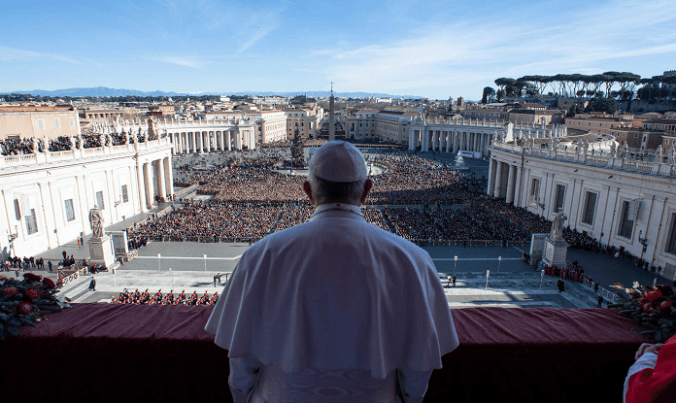
2. I do not want t get into debates over morality—this is an ethics site— or Catholic Church politics. However, denying that the Pope, and therefore the Vatican, is political is impossible. The Vatican is an independent state. The Pope is the head of state. By definition, his (or is it “His”?) words are political, like the statements of all heads of state. And like all heads of state, the Pope is responsible for the political impact of what he says.

3. From the COTD below: “This debate deals with the trouble of how to get sinners to deal with the consequences of their sin without driving them away from the church and the path to heaven.” If the Church believes that life begins at conception, and it says it does, then posing abortion as a utilitarian ethics conflict has one huge and irresolvable problem. Every year, there are an estimated 40-50 million abortions, or approximately 125,000 abortions per day. The Catholic Church says that those are all premeditated murders by definition. That’s the equivalent of eight Holocausts every year. If the Church believes that, then the choice of whether to strongly condemn those who enable, support and facilitate murders of the innocent—again, that is the Church’s position, not necessarily mine—or to “drive them away from the Church” should be pretty damn easy.

4. The Catholic Church is the wealthiest organization in the world, with estimated assets of more than 30 billion dollars. It pays no taxes. How does one fairly describe the head of an organization with 30 billion dollars who lectures against the evils of greed and capitalism, and emphasizes the moral duty to share property and wealth with the poor?

Here is Sarah B.’s Comment of the Day on the post, “Ethics Heroes: The US Conference of Catholic Bishops”:

Pope Francis is not a communist. He even condemns socialism (as does the entire Catholic Church) as a grave evil. (As a note, I do not personally care much for the Pope, but will defend at least this for him.)

As for why he would “shade important Catholic doctrine”, Pope Francis is the latest personification of one side of an age old debate in the Catholic Church, doctrine vs pastoral response. This debate deals with the trouble of how to get sinners to deal with the consequences of their sin without driving them away from the church and the path to heaven. I firmly fall on the doctrinaire side of the debate, so my explanation will certainly be biased, no matter how fair I try to make this explanation, but I will try my best. On one hand, if you are too harsh on sinners, you drive them away from the faith. On the other, if you are too lenient, you risk diminishing the realization of the evil they have done, and bringing scandal (definition below) upon the church. Permitting people to receive the Eucharist after having committed grave matter is, in most minds, far too lenient. However, if we look back to history, there was a time when penances for sin were so extreme, most people refused to get baptized until their deathbed to avoid such penances. When one considers that the Catholic Church believes in both justice AND mercy for any action, it also compounds the issue.

Continue reading →