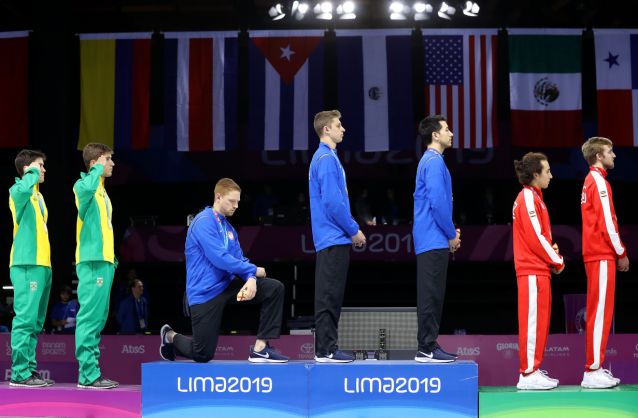
And the gold medal for obnoxious virtue-signaling goes to…
The International Olympic Committee’s rule on protests at the Olympics Games has been confined to one sentence in the Olympic Charter, and since that didn’t define what a “protests” were (the Committee appeared to be against them) that sentence had no practical effect. It reads, “No kind of demonstration or political, religious or racial propaganda is permitted in any Olympic sites, venues or other areas.”
.Recognizing, however, that the athletes of one of the teams likely to win a lot of medals also had a growing proclivity for protests against it own government and President—guess which country that would be?—the IOC published a detailed list of prohibited actions that would not be welcomed at the 2020 Tokyo Olympics. Among them…
Kneeling during national anthems.
No fist-raising.
No use political signs or armbands.
None of the above in stadiums, pools or at a finish line, not on podiums during medal ceremonies, norduring opening orclosing ceremonies.
No such protests in the Olympic Village, either.
This list was described as a “non-exhaustive list,” meaning that violations of the spirit of the prohibitions could also be judges a violation. The documents said that merely “expressing views” was not necessarily a protest.
Boy, I guess the Committee is counting on not many athletes being lawyers. Or Bill Clinton. Continue reading
 Ethics Alarms