“Baby-Killing” Ethics

No "moral right to life"?

Aided by Rick Santorum’s over-heated rhetoric, the concept of infanticide (I’m against it, by the way) has been hot in the marketplace of ideas lately.

A group of medical ethicists at Oxford made headlines by arguing that parents ought to have the option of killing their newborns because they are “morally irrelevant” and thus ending their lives is no different from abortion. After some recent examples of the press mangling the real message of scholarly papers, I was dubious about the news reports, but son of a gun, that’s what these ethicists wrote.

The article, entitled “After-birth abortion: Why should the baby live?”, was authored by Alberto Giubilini and Francesca Minerva, who argue, Continue reading

Unethical Quote of the Week: The Washington Post Editors

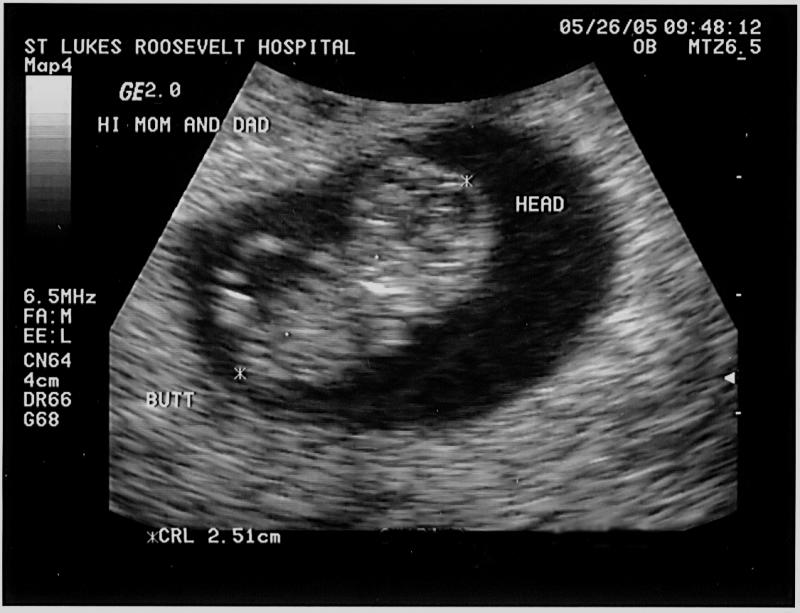
“In their anti-abortion fervor, they thought that requiring ultrasounds, even transvaginal ones, was justified if it would change the minds of some women who’d considered ending their pregnancies”

The Washington Post, in an editorial condemning the efforts of Virginia’s Republicans to pass a measure requiring an ultrasound scan of the fetus before a woman could get an abortion. The bill, which had been poised for passage, evaporated after it was revealed that women in the earliest stages of pregnancy would be required to suffer an invasive procedure, and Republican Governor Bob McDonnell announced that he would not sign it in its current form.

Seldom has an editorial managed to be so frighteningly dismissive of human life while being entirely correct on the issue it was discussing. Continue reading

The Susan G. Komen Foundation-Planned Parenthood Ethics Train Wreck

Unlike the 26 U.S. Senators who are unethically abusing their positions by presuming to demand that an independent non profit organization expend its funds according to their interests, I am not going to tell the board of the Susan G. Komen Foundation how to pursue its mission…because as with the Senators, it is none of my business. Ethics is my business, and the full-blown ethics train wreck surrounding the Foundation’s decision to end its substantial financial support of Planned Parenthood has been created by dishonesty, misrepresentation and a lack of fairness from all directions.

Here are some unpopular ethics truths in this fiasco. Continue reading

Obama, Sibelius and Plan B: Bad Science, Bad Ethics, Bad Policy

After FDA Commissioner Margaret Hamburg advocated that all women of child-bearing age be allowed to buy Plan B, the so-called “morning after pill,” without a prescription, Health and Human Services (HHS) Secretary Kathleen Sibelius overruled the FDA with President Obama’s imprimatur. Sibelius said..

“After careful consideration of the FDA Summary Review, I have concluded that the data, submitted by Teva [the Plan B manufacturer], do not conclusively establish that Plan B One-Step should be made available over the counter for all girls of reproductive age. The average age of the onset of menstruation for girls in the United States is 12.4 years. However, about ten percent of girls are physically capable of bearing children by 11.1 years of age. It is common knowledge that there are significant cognitive and behavioral differences between older adolescent girls and the youngest girls of reproductive age. If the application were approved, the product would be available, without prescription, for all girls of reproductive age.”

What’s going on here? What’s going on here is that the Administration wants to avoid a direct clash with those who regard human life as being created from the moment of conception. Sibelius’s implies without saying that a pill that ends an unwarranted pregnancy within 72 hours is an abortion pill, or at least she is crafting HHS policy for the pleasure of those who believe this. No science supports the contention that a fertilized egg that has yet to travel to the uterus—what Plan B prevents— is a human being; the position is a moral/religious one that exists independently of science. Continue reading

“Walking Dead” Ethics

American Movie Classics’ excellent, if harrowing, zombie apocalypse drama “the Walking Dead” finally raised the ethical issue looming like a zombie Woolly Mammoth over all zombie films: Is it ethical to kill zombies? Are they still human beings?

Nobody seriously disputes that killing a zombie who is about to eat you or your compatriots is self-defense, justifying deadly force. But what about the common practice in every George Romero-inspired zombie epic: shooting the shambling things (or the sprinting variety, as featured in the re-make of “Dawn of the Dead”) on sight—in the head, naturally? Is it murder? Euthanasia?

The issue was raised in this Sunday’s episode of “The Walking Dead,” as it was revealed that the prickly doctor who presides over the remote farm where our zombie-fleeing heroes are currently taking refuge keeps a batch of captive “walkers,” including his rotting wife, locked in a barn. He feeds them chickens, which are presumably finger-lickin’ good. The doctor regards zombie killing as an atrocity, the equivalent of killing a sick person. “They are humans,” he says. Continue reading

Herman Cain’s Unethical Abortion Doubletalk

Republican presidential contender Herman Cain’s explanation of his position on abortion while chatting with CNN’s Piers Morgan is causing his growing legion of fans and supporters discomfort, and with good reason. It was ethically incoherent at best, unethical at worst. In either case, his comments show that he hasn’t devoted sufficient serious analysis to the issue to allow him to have a responsible and consistent approach. That is status quo for most Americans. It is not acceptable for a President of the United States.

Here is the relevant section of the interview (emphasis mine):

PIERS MORGAN: Abortion. What’s your view of abortion?

CAIN: I believe that life begins at conception. And abortion under no circumstances. And here’s why —

MORGAN: No circumstances?

CAIN: No circumstances. Continue reading

Stacy Crim, Ethics Hero…and the Hardest Choice

Last week in Oklahoma, Ray Phillips fulfilled a promise to his sister Stacy, taking home from the hospital 5-pound Dottie Phillips, born prematurely in September, to become the newest member of his family.  Stacy died last month of brain cancer, just three days after holding her infant daughter for the first and only time. Dottie was able to come into the world only because Stacy, 41, had made the choice to reject chemotherapy for her rapidly spreading cancer that was diagnosed after she learned that she was pregnant.

When life places one of us in a “Sophie’s Choice” dilemma like Stacy’s, no one has standing to question or challenge whether the ultimate choice is “right.” There is no right choice. Stacy was faced with deciding whether to sacrifice the unborn child she had never met, a child whom many in America choose to regard as a neither a life or a being with any individual rights, but rather only as an ephemeral potentiality made of cells, similar to a pay-off at the races or a stock dividend. Even those who take the opposite view, that Dottie was a human life even at the earliest stages of her development in the womb, would never assert that a mother would be wrong to choose life-saving cancer treatments for herself at the risk of the unborn child. In such a case the right to choose is nearly unanimously accepted, and it is the hardest choice of all. Continue reading

Law, Ethics, and the One-legged Baby Who Never Should Have Lived But Is Glad He Did

It's a wonderful, wrongful, life. Wait..what?

A Palm Beach County jury has awarded $4.5 million to couple Ana Mejia and Rodolfo Santana in an unusual “wrongful life” lawsuit.  Their child Bryan was born with only one limb, a leg, and their lawsuit on his behalf alleged that Dr. Marie Morel and OB/GYN Specialists of the Palm Beaches Hospital botched an ultra-sound procedure that should have detected the abnormality.If it had accurately told them what Bryan would be like, they argued, they would have had him aborted.

The jury-awarded damages will cover prostheses, wheelchairs, operations, attendants and other needs it is assumed that Bryan will have during his estimated 70-year life.  “It will give piece of mind to these people that no matter what happens to them, their son will be all right,” Mejia’s attorney told the jury.

The legal issues are interesting; the ethical issues  more so. Continue reading

Comment of the Day: “Unethical Quote of the Month: Canadian Judge Joanne Veit”

The Comment of the Day, by Eric Monkman, is one of many excellent comments on yesterday’s post on the words of a Canadian judge in allowing a woman who murdered her newborn infant to go free.

There are many threads in the discussion, and I am not caught up. I officially apologize to combatants Eric and tgt especially for not being able to respond in sufficient detail, or in some cases at all, to their thoughtful posts. This an example of the limitations of the blog comment format. I wish I could organize a conference call.

The discussion went into so many directions that the initial post’s point was distorted, in part by me. Here is how I would summarize it:

Judge Veit’s quote, the actual focus of the post, strikes me as ethically offensive because 1) the statement that “many believe” abortion is a less than ideal solution to unprotected sex suggests that abortion is acceptable as a primary method of birth control. The commenters object to my interpretation of the judge’s phrasing to mean that she personally believes the adverse of the statement, that abortion is an ideal solution to unprotected sex. (The ideal solution to unprotected sex is not to have unprotected sex.) OK. I see their point. I still read it differently, and my comments are based upon my reading. At best, it is a sloppy, imprecise statement. 2) The comparison, and equivalency, between grief for the child—who is dead, and who was killed by the person who was most responsible for her welfare—and grief for the murderous mother, who is alive, and who is avoiding legal sanctions for her crime, shows a warped set of ethical values. The implication is that the life of a child is no more important, nor has any more regard from the society, than the emotional comfort of the mother. I know that is the standard in Canada, and in much of the US. It is wrong.

The subsequent discussion about how acceptance of abortion leads to acceptance of infanticide was focused on the U.S., but mistakenly assumed that this was the order of events in Canada. It was not; I think that is affirmatively strange, as one would assume that a human life would not be less valued in a society as it became more viable. It doesn’t change my analysis regarding the U.S., however.

Eric asks some good questions which I will address at the end. Here is his Comment of the Day, on “Unethical Quote of the Month: Canadian Judge Joanne Veit”: Continue reading

Unethical Quote of the Month: Canadian Judge Joanne Veit

“…While many Canadians undoubtedly view abortion as a less than ideal solution to unprotected sex and unwanted pregnancy, they generally understand, accept and sympathize with the onerous demands pregnancy and childbirth exact from mothers, especially mothers without support…Naturally, Canadians are grieved by an infant’s death, especially at the hands of the infant’s mother, but Canadians also grieve for the mother.”

—- Canadian Judge Joanne Viet, announcing that Katrina Effert, who strangled her newborn child and threw the body over a fence into the neighbor’s yard when she was 19, will serve a three-year suspended sentence with no jail time for the murder, reflecting a “fair compromise of all the interests involved.”

This is a cautionary ethics tale indeed for those who deny that a callous attitude toward human lives in the womb, giving them no standing against a mother’s desires and convenience, will gradually, inevitably, coarsen and warp a culture’s respect for life and its comprehension of wrong. [Addition: Many commenters have pointed out that Canada had designated infanticide as a relatively minor crime before fully legalizing abortion. That is a strange progression, though once infanticide had been declared “understandable,” abortions days were numbered. In the US, the gradual de-valuing of young life is moving in the more obvious way, from younger to older. The process, however, is the same.] Continue reading