Vox’s Hypocritical Attack On President McKinley

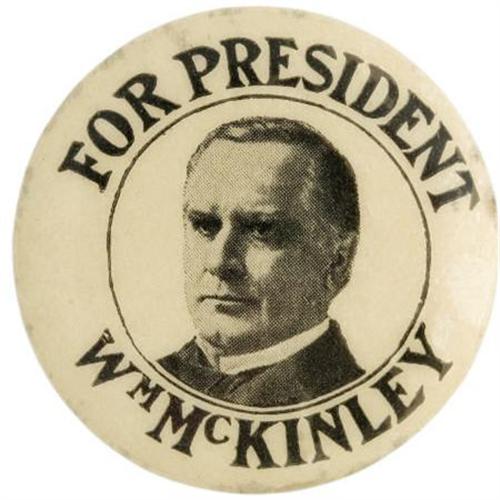
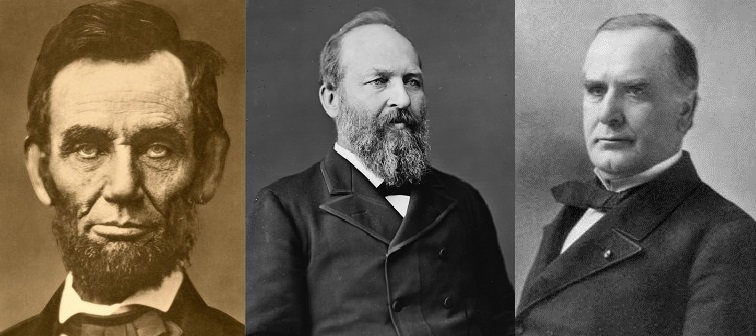
Mckinley ButtonNow we get to it: William McKinley doesn’t “deserve” to have a mountain named after him. That’s the hilarious argument of progressive-mouthpiece Vox, and it really is the height of hypocrisy, naked partyism, and a window into the corrupt and shameless mentality of the liberal pundit establishment.
President McKinley led the nation out of a terrible depression, and Vox explains that he deserves no credit for it at all because he was lucky. Well, in leadership and history, you get credit for luck,  because doing everything brilliantly and still seeing your army, organization or nation go down the tubes isn’t being a great leader no matter how you spin it. This, as I have written before, is the central, operating myth being drummed into Americans’ minds by President Obama’s minions and journalist-enablers: it isn’t what really happens that matters, it’s what the President wanted to happen. It’s not the bad consequences of policies that we should pay attention to, but the good intentions under which they were undertaken.

That is, in a word, batty. But that’s what the echo chamber wants us to believe. It has reached its apotheosis of absurdity with the proposed Iran deal, which is being defended on the grounds that it is aimed at preventing a nuclear armed Iran, even though that is a goal it can’t plausibly achieve. But it is intended to make the world less dangerous, and that’s what matters.

I have tried to assess how many past Presidents would respond to this theory with “What?,” how many with “You must be joking!” and how many with, “Oh, sure, it’s worth a shot.” In the latter category, so far, I have Carter, Pierce, because he’d be drunk, maybe Ford, because he might not understand the question, and perhaps Wilson—certainly after his stroke. Continue reading

A Presidents Day Celebration (PART 2): The Good, The Over-matched, And Then There’s Abe

presseal

The Presidents between #7, Jackson, and #16, Lincoln, are almost entirely unknown to most of the public: not one in a hundred can name them all, and of those almost none can name them in order. Eight one-term Presidents, all trying to stave off the civil war in various ways, and all failing that mission.

I will never understand why learning the Presidents in order isn’t a standard requirement in the public schools. It’s not hard; it is a useful tool in placing events in American history, and it prevents embarrassments like the Cornell law grad I once worked with who couldn’t place the Civil War in the right century. Besides, we’re Americans, damn it. The least we owe the 43 patriots who have tried to do this job, some at the cost of their lives, many their health, and many more their popularity, is their place in our history and their names.

On with hailing the Chiefs with some of my favorite facts about them:

James K. Polk

“Hail to the Chief,” which had been sporadically in use since Madison’s day, became the official anthem of the office during the Polk Administration. Polk was a small, unimpressive man, and it was said that he needed the musical announcement when he entered a room or no one would notice him. Looks can be deceiving. James K. Polk was as wily, tough and as ruthless as they come. One reason may be that he was another Presidential survivor of an ordeal that would kill most people: as a teenager, he underwent a bloody frontier operation for gallstones with no anesthesia, tied to a table, biting on a rag.

Zachary Taylor

zachary-taylor

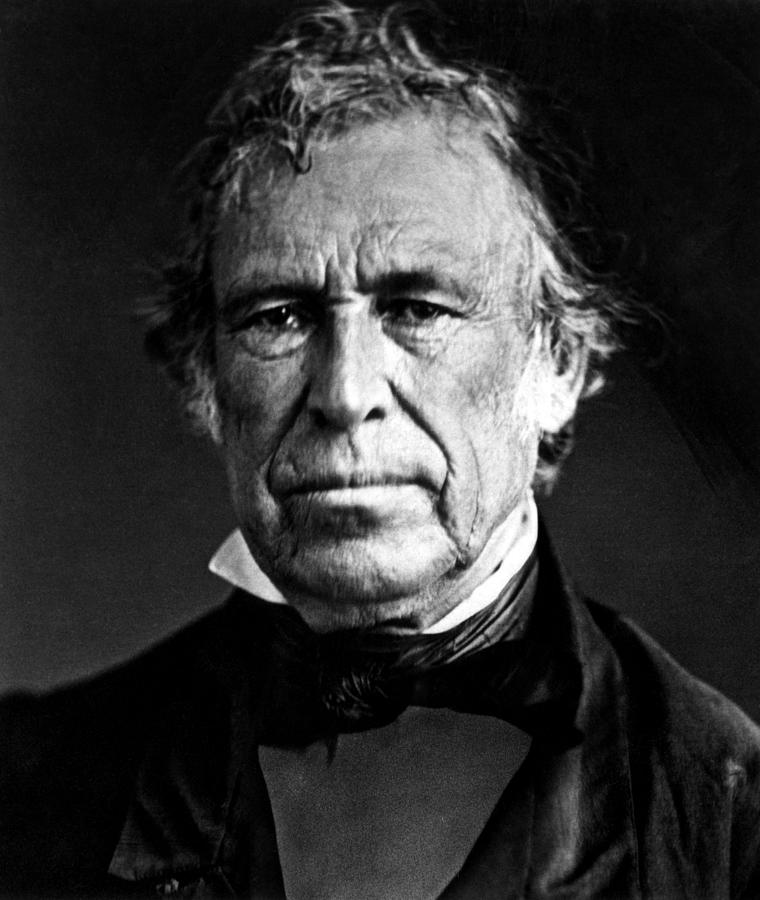
General Taylor, who was pursued by both the Whigs and the Democrats who both wanted to nominate him for President, was a great experiment  He was not a member of any political party, had never held public office prior  to becoming President, and had never even voted before becoming Chief Executive. He was also nearly illiterate. We often long for an apolitical President, a true, rather than a pretend, “outsider.” Taylor would have been an interesting test case, though the pre-Civil War political and social chaos was hardly the most promising period to try out the theory. Unfortunately he died of cholera less than half-way into his administration.

And he wasn’t even elected in a year ending in a zero! Continue reading

President Lincoln’s Misunderstood Ethics Crisis: The Great Sioux Uprising

Dakota hanging

As part my so-far futile efforts to leave Ferguson in the rear view mirror, let’s revisit one of the Abraham Lincoln’s great ethical dilemmas during the Civil War, in which today’s date, December 1, was pivotal.

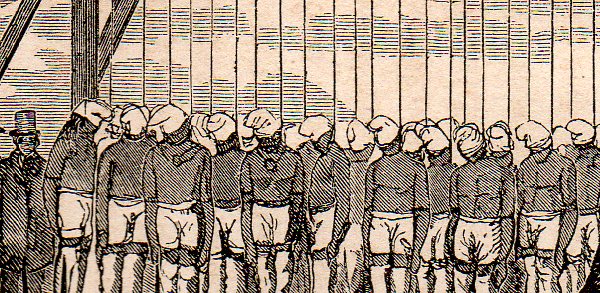
Minnesota’s Great Sioux Uprising, now usually called the Dakota-U.S. Conflict, was among the bloodiest Indian wars in the West, with hundreds of Native Americans, settlers and military casualties. The Sioux were defeated soundly, and the U.S. Army tried 303 Native Americans by military commission, finding them guilty of war crimes and sentencing them to death by hanging. Federal law required Presidential approval of the death sentences, and this was a problem Abraham Lincoln, the President at the time, did not need.

For it was 1862, and the Civil War was raging. This was a year full of Union defeats, indeed, disasters, like Fredericksburg, and both the war and Lincoln’s ability to lead it were in peril. Lincoln was also calculating all the political angles before issuing the Emancipation Proclamation. On top of the burdens of war and politics, he was coping with personal tragedy: his young son Willy had died nine months earlier, and Mary Todd Lincoln was teetering on emotional collapse from grief.
Now he had to decide whether to allow the execution of more than 300 Indians convicted in trials that were no better than kangaroo courts. Few Americans were concerned about the fate of the Native Americans, but Lincoln, with all of his other worries, took on the task of reviewing the trial records. What he found was manifest injustice.  Continue reading

Ethics Observations on the 2014 Mid-Term Elections

election 2014

1. After the 2006 election, in which a Republican majority in the House and Senate became a well-deserved minority, the losing Republicans, in sharp contrast to their Democratic brethren after their losses in 2000 and 2004, were remarkably frank and gracious. I wrote on November 15, 2006…

When the Democrats were rejected at the polls in 2004, they and many of their supporters in the media declared that it was proof positive that the U.S. public was stupid, ignorant, and reckless. Many claimed that the election must have been rigged; others announced that the U.S. was a lost cause and that good people should consider moving to Canada. Some actually did.

The Republicans, who were resoundingly punished at the polls for everything from corruption to arrogance to incompetence, could not present a more dramatic contrast to their Democratic counterparts. They overwhelmingly placed responsibility for their losses squarely on their own mistakes and transgressions, where it belongs. They congratulated their victorious opponents. They avoided making legal challenges or suggesting that any elections were “stolen.” Defeated Republican Senator George Allen, whose race was close enough to demand a recount, did not. And no Republicans, as far as we know, have fled the country. They will be staying around to contribute to the process of democracy, because they respect both it and its results. In short, the Republicans have demonstrated the honorable and ethical was to lose.The deportment of the losers in a democracy is every bit as important as the behavior of the winners. As the Democrats attempt to teach their rivals something about how to govern when you win, let’s hope that they learned from the GOP’s lesson in how to behave when you get throttled. Some recent Canadian immigrants might think about it as well.

Will Democrats be model losers as well?

We shall see.

2. This “concession speech” by losing Kentucky Senate candidate Allison Grimes does not bode well: Continue reading

Abraham Lincoln: Good Lawyer, Bad Lawyer, Conflicted Lawyer

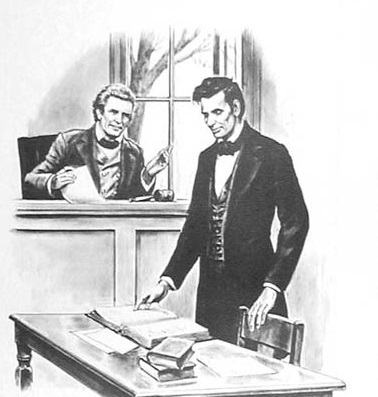
Lincoln in trialI recently quoted a fairly well-known section from some notes Abe Lincoln made for a lecture he was to present to young lawyers in 1850. Some of you asked if would post the whole document, which I am happy to do. Here it is:

I am not an accomplished lawyer. I find quite as much material for a lecture in those points wherein I have failed, as in those wherein I have been moderately successful. The leading rule for the lawyer, as for the man of every other calling, is diligence. Leave nothing for to-morrow which can be done to-day. Never let your correspondence fall behind. Whatever piece of business you have in hand, before stopping, do all the labor pertaining to it which can then be done. When you bring a common-law suit, if you have the facts for doing so, write the declaration at once. If a law point be involved, examine the books, and note the authority you rely on upon the declaration itself, where you are sure to find it when wanted. The same of defenses and pleas. In business not likely to be litigated, — ordinary collection cases, foreclosures, partitions, and the like, — make all examinations of titles, and note them, and even draft orders and decrees in advance. This course has a triple advantage; it avoids omissions and neglect, saves your labor when once done, performs the labor out of court when you have leisure, rather than in court when you have not. Extemporaneous speaking should be practised and cultivated. It is the lawyer’s avenue to the public. However able and faithful he may be in other respects, people are slow to bring him business if he cannot make a speech. And yet there is not a more fatal error to young lawyers than relying too much on speech-making. If any one, upon his rare powers of speaking, shall claim an exemption from the drudgery of the law, his case is a failure in advance.

Discourage litigation. Persuade your neighbors to compromise whenever you can. Point out to them how the nominal winner is often a real loser — in fees, expenses, and waste of time. As a peacemaker the lawyer has a superior opportunity of being a good man. There will still be business enough.

Never stir up litigation. A worse man can scarcely be found than one who does this. Who can be more nearly a fiend than he who habitually overhauls the register of deeds in search of defects in titles, whereon to stir up strife, and put money in his pocket? A moral tone ought to be infused into the profession which should drive such men out of it.

The matter of fees is important, far beyond the mere question of bread and butter involved. Properly attended to, fuller justice is done to both lawyer and client. An exorbitant fee should never be claimed. As a general rule never take your whole fee in advance, nor any more than a small retainer. When fully paid beforehand, you are more than a common mortal if you can feel the same interest in the case, as if something was still in prospect for you, as well as for your client. And when you lack interest in the case the job will very likely lack skill and diligence in the performance. Settle the amount of fee and take a note in advance. Then you will feel that you are working for something, and you are sure to do your work faithfully and well. Never sell a fee note — at least not before the consideration service is performed. It leads to negligence and dishonesty — negligence by losing interest in the case, and dishonesty in refusing to refund when you have allowed the consideration to fail.

There is a vague popular belief that lawyers are necessarily dishonest. I say vague, because when we consider to what extent confidence and honors are reposed in and conferred upon lawyers by the people, it appears improbable that their impression of dishonesty is very distinct and vivid. Yet the impression is common, almost universal. Let no young man choosing the law for a calling for a moment yield to the popular belief — resolve to be honest at all events; and if in your own judgment you cannot be an honest lawyer, resolve to be honest without being a lawyer. Choose some other occupation, rather than one in the choosing of which you do, in advance, consent to be a knave.

This is uniformly excellent, and justly cited to show Lincoln’s high ideals as a man and a professional. This quote, however, is also cited for that purpose, and I am not so fond of it. Since it comes to us second-hand, a.k.a as hearsay, from Lincoln’s law partner, friend and biographer William Herndon, I hesitate to hold it against him too much, for it may be a misrepresentation. I am more concerned with the fact that what follows is sometimes packaged with the notes above, as if they are equally worthy of emulation. No, they are not. Continue reading

What’s The Ethical Response To Giving Birth To A Mixed-Race Child You Didn’t Bargain For? If Only Abe Lincoln Was The Lawyer…

What does Abe have to do with a sperm bank mix-up in 2014? Read on...

What does Abe have to do with a sperm bank mix-up in 2014? Read on…

I can certainly sympathize with the plight of Jennifer Cramblett, the birthing half of a loving, and white, same-sex couple who sought the assistance of a sperm bank to conceive a child, and who ended up giving birth to a mixed-race baby girl because of the kind of clerical error that sets up movie comedies starring Adam Sandler or Cedric the Entertainer. This is like what happened to Chevy Chase in “Vacation,” when he ordered one car and had a different one arrive at the dealer’s months later. Well, the car was a lot worse, because it was ugly, but it drove fine. Well, let me think about that: lots of babies, even babies sired the usual way by attractive parents without alien sperm, are ugly. This baby wasn’t ugly: Cramblett says she’s beautiful. Has all ten fingers and toes. No apparent deformities.

Hmmm.

Maybe this situation is more like the cherry red Nova that got delivered as my first car, when I had ordered something else. I got a discount for going ahead and taking the Nova, and never regretted it: best, most reliable car I ever had, and I had it in the days when I was still having fun in cars.

Come to think of it, what’s Cramblett so upset about? She has a healthy, lovely child and a stable family. OK, that sperm bank owes her a refund, and maybe some “I’m sorry you got the wrong color” money. But would I not only sue the sperm bank for the lifetime of pain it had supposedly subjected me to by causing me to have a mixed race child, but also use the law suit to garner media fame? Of course not. There is no way to simultaneously claim that having a mixed-race daughter is a hardship worthy of substantial damages, and to argue that the race of her daughter doesn’t matter, because she is unconditionally loved.

The couple’s lawsuit against the sperm bank screams “Hey! This could be a jackpot for us!”  The couple’s lawsuit explains that Jennifer Cramblett was raised to accept stereotypical beliefs about blacks. It says she is culturally unprepared to raise a mixed-race child. It argues that their community is, in effect, bigoted, and that—get this—it’s hard to get their daughter’s curly hair cut. In other words, it’s just hell having a mixed-race daughter, but they love her very much and would never trade her for anything in the world.* Got that? Continue reading

The Cruelest Month And The Duty To Remember

sultana-ablaze

If we have the education, curiosity, perspective and respect for our origins and those who have gone before us, the calendar is a source of constant reminders of what matters in life, and how we can be better citizens and human beings. It is a common belief among Millennials, and a lot of older Americans too, that history is irrelevant to their lives, and this is both a fallacy and a self-inflicted handicap. Not that keeping history in mind is easy: in this month, which T.S. Elliot dubbed “the cruelest,” paying appropriate respect by remembering is especially difficult.

Still, respecting history is our duty. It won’t be remembered, perhaps, but in April, 2012, a 23-year-old drunken fool named Daniel Athens was arrested for climbing over a barrier to urinate on a wall at the Alamo. Monday, a Texas judge threw the book at him, sentencing him to 18 months in state prison for vandalizing a National Monument and a shrine. The sentence seems extreme, and is a good example of how the law is a blunt weapon with which to enforce ethics. The Alamo has near religious significance in Texas, brave men died there, and the ruins serve as a symbol of critical virtues like loyalty, sacrifice, dedication, courage and patriotism. Athens, himself a Texan, defiled the memory of the fallen and symbolically rejected the values and heritage of his community and fellow citizens. Unfortunately, the harshness of the sentence will create sympathy for him: 18 months for peeing? But how else does a culture reinforce the importance of respect for the past? I don’t have an answer. Perhaps I would have sentenced him to take an exam on the lives of Travis, Crockett, Bowie, Seguin and the rest, as well as the siege itself, and imposed the jail term only if he flunked.

Yesterday, Major League Baseball celebrated the heroism and transformative life of Jackie Robinson, who broke baseball’s color barrier on April 15, 1947 by becoming baseball’s first black player, setting in motion powerful forces that propelled the cause of civil rights. Every player wore Robinson’s now retired uniform number 42, and there were commemorative ceremonies in the ball parks where it wasn’t too cold and wet to play ball. This remembrance had a difficult time competing with tax day, as history usually does when our immediate life concerns beckon.

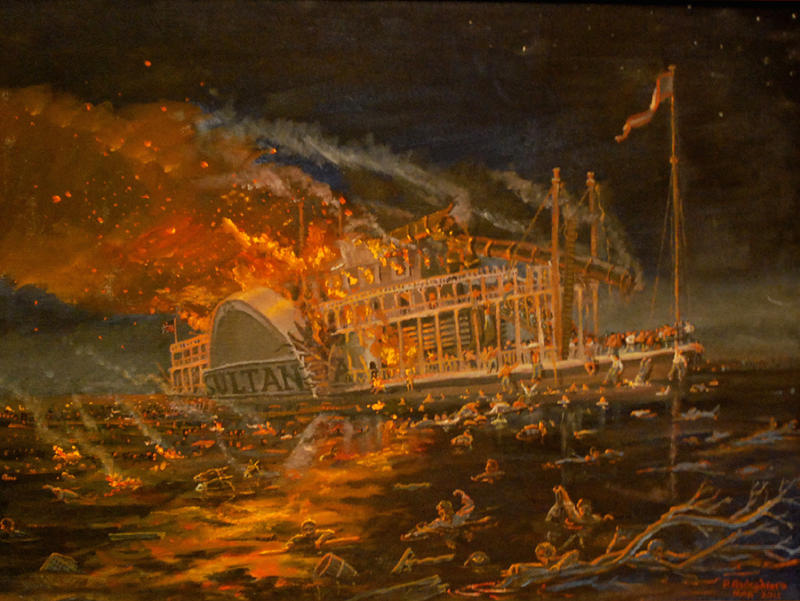
Other important historical events deserving reflection, however, were more or less ignored entirely, for April 15 is a historically awful day: Continue reading

Unethical Quote of the Week: “Face the Nation” Host Bob Shieffer

“The nation was plunged into shock. Nothing like this had ever happened.”

—“Face the Nation” host Bob Shieffer, looking forward to the 50th anniversary of President Kennedy’s assassination, and describing the aftermath of the murder in Dallas on November 22, 1963.

Wait…what???

Hey Bob...do any of these guys ring a bell?

Hey Bob…do any of these guys ring a bell?

As it is, younger generations have a tendency to assume that what is happening now is unprecedented, that every crisis is the worst crisis, that what they are experiencing is unique. The remedy to this self-centered, ignorant and crippling cognitive malady is education, resulting in perspective. Unfortunately, the schools are doing increasingly little to provide useful historical context, and our leaders find it useful to exploit the low-information voter (worker, driver, patient, parent, student) for its own devices.

That leaves the field of journalism. Journalists, however, do not generally go into the arena of describing the present because of any particular respect or appreciation for the past, so their ability to convey perspective is usually limited as well. Fortunately, there are still older, veteran, experienced pros like Bob Shieffer,  76 years young, who…who…who appears to be as irresponsibly ignorant of basic American history as the college goofs Jay Leno makes look silly on his “Jay Walking” segments. How is this possible?

What could Shieffer possibly mean by saying of JFK’s assassination that “Nothing like this had ever happened” that is not flagrantly misleading, careless, ignorant and wrong? For those of you as bad off as Bob, there had been three previous Presidential assassinations before JFK, and all of them were big deals. Lincoln’s was a bigger deal than Kennedy’s in fact, because the U.S. had barely finished a war, and Lincoln’s assassination caused legitimate fears that it was part of a second Southern assault. Let’s see…maybe we can give Bob the benefit of the doubt and find an explanation for his statement that doesn’t involve having to shop for rest homes: Continue reading

The Ethics Attic: Notes From Around The Web

messy attic

[I’m still feeling lousy, so in an effort to conserve some energy while keeping the torch high, I’m presenting a few links that the ethics-minded might enjoy visiting. Normally I would write about some of these, so consider yourselves lucky.]

  • Historian Paul Finkleman delivers that harshest verdict yet on the hypocrisy of Thomas Jefferson regarding civil rights and slavery. You should then read David G. Post’s splendid contra essay here. (The last two sentences in Finkleman’s op-ed are pretty much indefensible.)
  • A fascinating reflection, inspired by the movie “Lincoln,” on Utilitarianism and “the ends justifies the means.”
  • In fact, the program is a benign one, but considering the issue raised in my last post, it is hard to imagine more perfect symbolism for the American public trading self-sufficiency for government protection than the trade described here.
  • If you missed the recent George Will column, a frightening one, about the assaults of free speech and thought around the campuses of American universities, you have another chance to read it, here.
  • I only recently learned that 3-D copiers are a reality, and Dr. Chris MacDonald, on his always excellent Business Ethics Blog, has some insight on their ethical implications here.
  • Once again this year, I have an essay in The 2013 Hardball Times Baseball Annual, and publisher Dave Studenmund references my analysis of the Stephen Strasburg affair here.
  • Finally, thanks to Mary Wright on the HR Gazette for posting the Ethics Alarms Apology Scale.

Ethics Quote of the Day: Abraham Lincoln (And a Happy Birthday to You, Mister Lincoln!)

“Neither let us be slandered from our duty by false accusations against us, nor frightened from it by menaces of destruction to the Government nor of dungeons to ourselves. Let us have faith that Right makes Might, and in that faith, let us, to the end, dare to do our duty as we understand it.”

Abraham Lincoln, 16th President of the United States, on February 27, 1860 in his Cooper Union Address expounding on the Founders’ beliefs regarding the regulation of slavery.

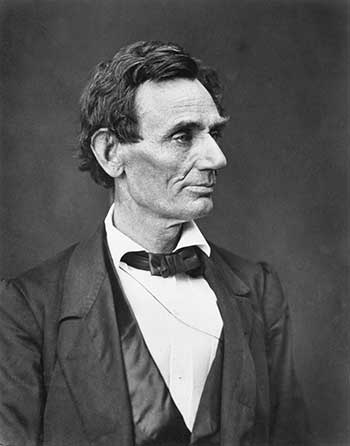
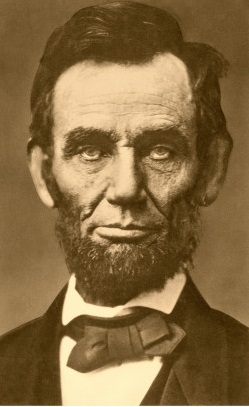
February 12 is the birthday of America’s most brilliant, bold and eloquent leader, Abraham Lincoln, born this day in 1809. You would hardly know it from the apathy of most of the news media, which is happy in its laziness to defer any honor of the man who saved the Union and ended slavery to “President’s Day,” which is still officially a celebration of George Washington’s birth. No slight against George, but Abe deserves better from us.

Happy Birthday, Abe. The nation can never repay its debt to you, but it can make itself better by striving to meet the aspirations you set for us