Baseball Ethics: More ABS Notes [Corrected]

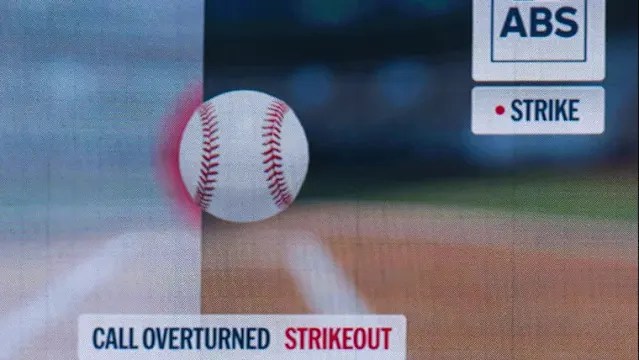
The major ethics issues animating discussion early in the baseball season are arising from the new computer ball and strike calling system, or ABS. Each team begins with two challenges. A batter, pitcher or catcher may challenge any strike or ball call at home plate, but must do it immediately by announcing “Challenge!” and touching his cap. Challenges that are made after two seconds elapse may be disallowed by the umpire. If a challenge results in a changed call, that challenge is preserved. If not, it is lost.

Already, game results have been affected by the rule. That’s not a surprise at all. Major League Baseball (MLB) umpires miss an average of about 10 to 15 calls per game; the overall accuracy rate was around 92%. in 2025. Every game generally includes at least one incorrect call, and it is estimated that 8.5% of all games have bad calls that alter the score. The accuracy of the umpires has increased since computers started double-checking them, but umpires still made 26,567 incorrect ball and strike calls during the 2025 MLB regular season, and any one of them might have altered a game’s outcome. Some early results:

1. The younger players are better at challenging than the veterans, because the system was used in the minor leagues the last couple of years. Red Sox player Trevor Story was called out on strikes on a pitch that looked well out of the strike zone, but didn’t challenge. Sox TV color man Lou Merloni, an ex-player, said that after a career of thinking that an umpire’s call was final, veteran players are likely not to remember that they could challenge until the two seconds have passed. Now players are being criticized for their strike-challenging skills.
The Umpire’s Wish

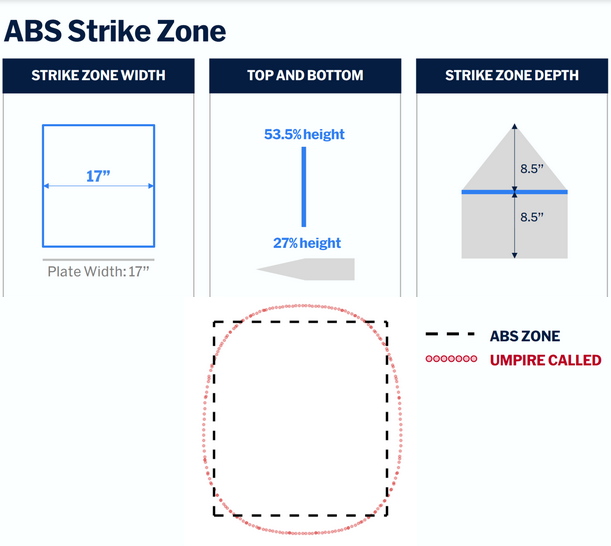
As explained here, this baseball season the new ABS system is in play, meaning that batters, catchers and pitchers can challenge ball and strike calls by the home plate umpire and have an electronic plate coverage system instantly reveal if the call was correct or wrong. No longer does the ancient rationalization protecting umpires who have botched crucial pitch calls provide cover: “The pitch is what the umpire says it is.” Not necessarily.

During a spring training game in Scottsdale, Arizona, the San Francisco Giants were leading the Cleveland Guardians 3-0 in the fourth inning. Giants pitcher Robbie Ray faced Guardians third baseman Alex Mooney with two outs and runners on first and second. After Mooney took an 0-2 sinker that home plate umpire Bill Miller called a ball, Giants catcher Patrick Bailey tapped the top of his helmet to signal for a challenge.

“San Francisco is challenging the ‘ball’ call,” Miller announced to the crowd on his microphones. Then the crowd heard him say, “Please be a strike!”

The ABS system confirmed that the pitch was a ball, as Miller had said. The guessing is that the umpire wanted his call to be over-turned because the temperature was over 100, this was a meaningless exhibition game, and he, like everyone else, wanted to get out of the sun.

That raises questions about the integrity of umpires, though maybe not Miller’s, who called the pitch a ball even though a strike might have allowed him to escape the heat sooner. His ad lib also could have been interpreted as a sign that he wanted the Guardians to win, except that nobody cares who wins Spring Training games. Even gamblers don’t bet on them.

The incident brings up a question about the challenge system that I have been musing about lately: why can’t umpires challenge their own calls?

I agree that you don’t want to have umpires second-guessing their pitch calls, saying, “Steee-rike THREE!…well, wait a minute…I think that was a ball. Yeah, let me change that. Ball three.” But former players all have anecdotes about umpires confessing to a batter or a catcher after a missed call, “Yeah, I missed that one.” If an umpire thinks his call was wrong, why shouldn’t be get to challenge his own call?

A Brief But Trenchant Baseball Ethics Note…[Updated]

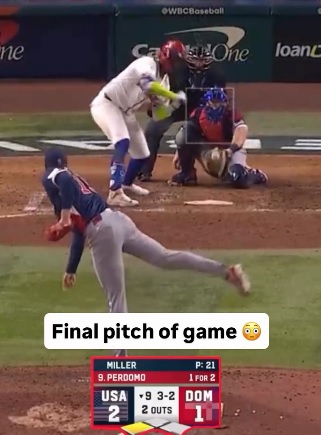
Above you can see the final pitch of the USA-Dominican Republic semi-finals last night in the ongoing World Baseball Classic. That 2-out, 9th inning pitch was called a strike on a 3-2 count, meaning that the Dominican shortstop Perdomo was out, and the U.S. had won a tight 2-1 victory sending it into the championship game against either Venezuela or surprise “Cinderella” squad Italy.

Winning is nice; winning legitimately is better. That pitch was a ball, as you can see. if the umpire had called the pitch correctly, Perdomo would have advanced to first, and the DR’s best player in the tournament, Fernando Tatis, would have come to the plate with the tying run on third base and the winning run on third.

In the 2026 MLB season that starts soon, the new ABS system will be underway. After a botched call like that one, the batter will touch his cap and say “Challenge!” and the image of where the pitch was relative to the strike zone will flash on a screen, showing that the umpire was wrong, reversing the call.

No baseball game, especially an important one, should end on a terrible call like the one that eliminated the Dominican Republic team. If this doesn’t convince the bitter-enders and “traditionalists” who oppose getting ball and strike calls right when the technology exists to do so, nothing will.

UPDATE: ESPN’s Jeff Passan just posted,

“That was a wonderful baseball game. Tension. Drama. Passion. Pride. Everything baseball can be. Everything you want baseball to be. So, for it to end on a called strike three by home plate umpire Cory Blaser on a Mason Miller slider that was clearly below the zone was such a gut punch, not just to the Dominican Republic players, whose country cares more about the WBC than any, but to a game that deserved better. ABS cannot come soon enough because this should be about the quality of the game, which was tremendous, and not the bitter taste left due to human fallibility.”

Robo-Umps Are Officially In Major League Baseball, and It’s An Ethical Development

Finally, Major League Baseball has conceded that with technology available to call balls and strikes accurately, it makes no sense to permit bad calls by human umpires to change the results of at-bats, games, careers and even whole seasons. In 2026 the “ABS” system will be in play, adding integrity, accuracy and, yes, strategy to the game. Good. It’s about time.

I’ve been advocating computerized ball and strike calls at least since 2017, when I wrote,

In the top of the eighth inning of a crucial Dodgers-Cubs NLDS game, Dodger batter Curtis Granderson struck out. The pitch hit the dirt, and Cubs catcher Willson Contreras, as the rules require when a strike isn’t caught cleanly, tagged Gunderson for the final out of the inning. Granderson argued to home plate umpire Jim Wolf that his bat had made slight contact with the ball. It didn’t. The replay showed that his bat missed the ball by at least four inches. Nonetheless Wolf, after conferring with the other umpires agreed that the ball was a foul tip. Gunderson’s at bat was still alive….

After the game, Wolf watched the video and told reporters that he had indeed, as everyone already knew, blown the call.

As it happened, his embarrassing and needless botch didn’t matter. Gunderson struck out anyway. That, however, is just moral luck. The call and the umpire’s refusal to reverse it was just as inexcusable whether it resulted in ten Dodger runs or nothing. The point is that such a call could have changed the game, and the series. If it had, the screams from Chicago fans and anyone who cares about the integrity of the game would have persisted and intensified until baseball abandoned its archaic rationalization that “human error is part of the baseball,” and made use of available technology to make sure such a fiasco can’t happen.

This scenario will occur. Human beings being what they are, however, it won’t play out until a championship has been lost after a strike three right down the middle of the plate is called a ball by a fallible human umpire, and then the lucky batter hits a game-winning, walk-off grand slam on the next pitch. Then, after the horse has not only fled but trampled the barn-owner’s children, Major League Baseball will put a lock on the door.

The barn door, however, is wide open now, and the lock is available.

Two years later, I complained about this foolish attitude by the baseball powers- that-be again, writing,

Moral Luck and Baseball: The High-Profile Ruinous Ball-Strike Call Comes AFTER The Problem Has Been Addressed


Next season, Major League Baseball will implement the Automated Ball-Strike (ABS) Challenge System. For the first time in regular-season history, batters, catchers and pitchers will have the right to challenge balls and strikes. Teams will begin each game with two available challenges and can continue challenging until they lose challenges twice.

The system has been desperately needed for many years, ever since each player’s strike zone could be seen on television screens during game broadcasts. As usual, baseball dragged its metaphorical feet addressing the problem, with the idiotic “bad calls by the umpire are part of the game” argument that traditionalists and ex-players are still using. That logic makes as much sense as defending medical malpractice because “everyone makes mistakes.” Sure, before video technology could prove a key ball or strike call was a bad one, tolerating home plate umpire mistakes (like the one that cost the Boston Red Sox Game 3 of the 1975 World Series and conceivably the Series itself) were part of the game, because nothing could be done about it. Now something can.

Continue reading