Ethics Bob Asks: “Did Torture Lead Us To Bin Laden”? My Answer: “So What If It Did? It Was Still Wrong.”

It's all for the best.

It’s all for the best.

The last time my friend “Ethics Bob” Stone blogged about ethics, it was way back in August, and he was writing about some guy named “Romney.” Now he’s back on the job, thank goodness, with a comeback post titled “Zero Dark Thirty: Did torture lead us to Osama bin Laden?”. And he’s ticking me off.

“Zero Dark Thirty” is Hollywood’s treatment of the search, apprehension and execution of Osama Bin Laden. The film suggest that methods of torture were employed by the CIA to uncover crucial intelligence that led to the terrorist mastermind’s demise. Torture opponents, including some U.S. Senators, are alarmed by this, and disputing the film’s account. (Imagine that: a movie that misrepresents history!) Meanwhile, conservatives, neocons, Bush administration bitter-enders, talk radio hosts and admirers of Dr. Fu Manchu and James Bond villains are citing the film as confirmation that they were right all along: torture is a wonderful thing.

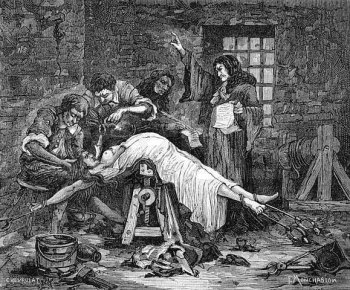
I am puzzled that Bob got in the middle of this debate as an ethicist. “It worked!” and “It came out all right in the end!” are not valid ethical arguments or justifications. The first is an embrace of a pure “the ends justify the means” rationale, a favorite tool of Auric Goldfinger and Dr. No. The other is consequentialism. When ethicists and principled opponents of torture allow the issue to be adjudicated on this basis, they are surrendering their principles at the outset. “Torture doesn’t work” is a pragmatic argument, not an ethical one. If the societal consensus regarding torture is going to be determined by how much we can benefit by returning to the rack and wheel, then ethical considerations have already been jettisoned. Continue reading

The Zumba Instructor’s List and Public Shaming In Maine: Choose Your Ethical System

What those Zumba ads never told you…

Kennebunk, Maine’s popular Zumba dance instructor Alexis Wright and her “business partner” are being charged with solicitation and prostitution. Now the Maine Supreme Judicial Court is about to decide whether  Wright’s substantial client list should go on the public record, as it will unless the court agrees to put it and its names under seal.  Defense attorneys will argue that the harm that will result from allowing Wright’s “johns” to be outed to their families, employers and neighbors is too great. “We think there’s a really important principle at stake here: These people are presumed innocent,” defense attorney Stephen Schwartz said. “Once these names are released, they’re all going to have the mark of a scarlet letter, if you will.” Continue reading

The Ethics Incompleteness Dilemma and MLB’s Melky Cabrera “Solution”

Who cares what Melky wants?

[ When we last visited the messy Melky Cabrera situation, people were clamoring for baseball to rule Cabrera ineligible for the National League batting championship he seemed destined to win because the Giants outfielder had been suspended for the rest of the season for testing positive for steroids. The suspension froze his average, then as now leading the NL, and because he had already amassed sufficient at bats to qualify for the title, this meant that 1) he would benefit from what was supposed to be a punishment and 2) the most prestigious of all baseball season titles would be won by a proven cheater. I explained why taking the title away from Melky would be unethical as well as unwise:

“…There is a very good reason why the Constitution bans ex post facto laws—laws that make something illegal retroactively, so someone can become a criminal for something they did that was legal when they did it. Allowing such rules is an invitation to an abuse of power, culminating, in the worst case scenario, with the modern day equivalents of the Russian or French Revolutions, where people are executed for “crimes” that were not crimes at all. Even cheaters have rights, and one of them is to know what their risks are when they cheat. Cabrera knew that he risked suspension, a loss of millions in income, and permanent harm to his reputation and career. He did not know that he risked not winning a batting championship if he qualified for it, or being put in the stocks, being exiled to Portugal, or having his children subjected to human medical experiments. Should a player suspended for performing enhancing drug use after testing positive be disqualified from winning a batting championship that season? That seems fair and reasonable, but because Major League Baseball didn’t think of it when they were making the rules, it would be unfair for Cabrera to be subjected to such a penalty, which would embody the inherently unfair principle of an ex post facto law. Some people just can’t process this. People just shouldn’t get away with intentional bad conduct, they say. …Such people are unwittingly willing to dismember the bedrock principle of due process, which requires that we know by what rules and laws our conduct society will use to judge our conduct, and that we know what the penalties for violating them will be, or at least have a the opportunity to find these things out. No, of course it’s not fair for Melky Cabrera to win a batting championship by cheating, but a society that allows him to be penalized in ways he could not have anticipated using a rule imposed after the fact is an unfair society, and ethics is ultimately about building a more ethical society.”

Bud Selig, the Commissioner of Baseball who is always as likely to make a terrible decision as a good one, said that he would not take any action on the matter. But that was not the end of the story…]

Yesterday, Major League Baseball announced that Melky Cabrera would not be eligible for the batting title after all. Continue reading

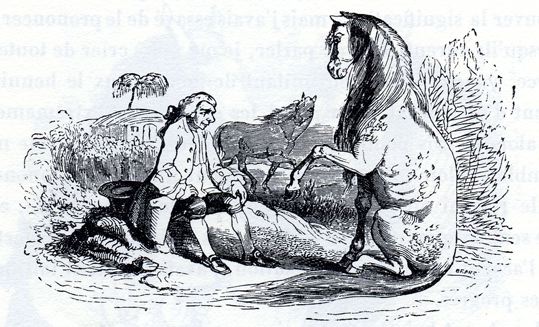
“The Truth About Human Nature”: Gulliver, Horse People, Absolutism and Lies

Gulliver among the Houyhnhnms

As I recuperate from air travel hell and try to gather my wits, here is a provocative essay examining how Jonathan Swift explored the complex function of lying in human nature. The essay is by Prof. Lee Perlman, in the New Atlantis, and you can read it here.

___________________________________

Source: The New Atlantis

Graphic

Comment of the Day: “The Ethics of Bloomberg’s Soft Drink Ban”

Peter, who is a physician, a libertarian, and one of my oldest friends (we met in the 6th grade) from Arlington, Massachusetts, generously responded to my request for his professional expertise and philosophical perspective regarding the New York City soda ban.  Here is his thoughtful response, the Comment of the Day, on the post The Ethics of Bloomberg’s Soft Drink Ban: 

“It has become a reflex response to answer adverse circumstances with more regulation. To a lawyer, there is always a law, or regulation for any and every misstep in human behavior. Of course, we forget that we cannot predict the unintended consequences, not even to mention reviewing the effects of the laws we pass to determine if they are even having the INTENDED effect. Somehow, we believe that it is appropriate to pass laws to deny other people’s freedoms due to the “discomfort” of whiny types who have the connections and persistence to keep whining until they can get someone to pass a law. The consequence of such legislation’s continued passage, at ever more confiscatory levels of our liberties, is that we are legislating our way into a police state, and the widespread acceptance of the idea that it’s OK to deny personal liberty because it makes someone else “uncomfortable.” Again, as RR so aptly pointed out, “the government that is big enough to give you everything you want, is big enough to take away everything you have.” And this goes for not just your personal assets, but your freedoms as well.

“That said, in this context, yes, drinking lots of sugary sodas will make you fat, smoking will kill you, too much alcohol will kill you, doing extreme sports can kill you, and so on. And as long as one’s decisions affect only himself, have at it. However, when you want me to pay, through my insurance premiums, and my taxes, for the consequences of your stupidity, you cede the sovereignty of your decision to others beside yourself. If you want to ride your motorcycle without a helmet, while drunk, sure, do it. Just don’t expect me to pay the costs of your head injury. Continue reading

The Ethics of Bloomberg’s Soft Drink Ban

It’s a serious problem.”

“Something needs to be done.”

“This is a public health issue.”

The media defenses of New York Mayor Bloomberg’s controversial decision to ban the sale of large soft drink servings in New York City, and Bloomberg’s defense as well, set up a classic utilitarian argument for a government intrusion into personal choice and lifestyle. It is, simply, that the ends justify the means, and as we all know, sometimes they do.

Sometimes, however, those means sacrifice too much: lives, dignity, fairness, liberty, fun. Sometimes employing those means require crossing lines that have not been crossed before, opening the door to more and greater sacrifices that even advocates of the particular measure would find objectionable and wrong. This leads to the slippery slope dilemma, and invokes absolutism. Some things must never be considered as just means, no matter what the ends being sought may be. Immanuel Kant’s philosophy of absolutism declared that it was always wrong to use human beings against their wills to solve problems, no matter how great the problems are. The Declaration of Independence holds that a human being’s rights to life, liberty and the pursuit of happiness must never be breached by government. Continue reading

Poll: 84% Don’t Have a Clue What “Ethical” Means

Was Norman Bates unethical or sentimental? Well..wait, WHAT?

OK, that was a somewhat misleading headline. According to a poll run by ABC News, 84% of the public thinks that cloning dead pets is unethical. But since there is absolutely nothing unethical about cloning dead pets, I think the headline above is accurate. Well, maybe 84% accurate.

The story is over at Sodahead, which is dedicated to dumb polls. The analysis of the poll, if one can call it analysis, is almost totally bereft of anything remotely connected with ethics or ethical theory. In a previous poll on the subject, Sodahead asked those polled to choose whether the practice was “unethical” or “sentimental”, which is a choice akin to, “Do you like baseball, or can you swim?” Of course cloning a pet is sentimental—why else would someone do it? Who came up with the boneheaded idea that sentimental and unethical were mutually exclusive? Norman Bates dressing up as his beloved mother and killing people was sentimental, but I’d also say it was less than ethical. Continue reading

Comment of the Day: “Another Santa Assassin”

The Comment of the Day is a short and pithy one from Fred, inspired by the essay from 2005 I posted in response to yet another report of a Scrooge-like elementary school teacher taking it upon herself to enlighten young children about the non-existence of Santa Claus. That essay involved a substitute teacher named Theresa Farrisi.

Here is his Comment of the Day, on “Another Santa Assassin”:

“The three ages of man: He believes in Santa Claus; he does not believe in Santa Claus; he is Santa Claus.

Farrisi obviously never made it to the third stage and discovered the ultimate truth about Santa Claus. For me, each stage had its own appeal: First the magic; then maturing and being let in on the literal truth while protecting the magic for my younger brother; then being Santa and bringing the magic to my kids. That was by far the most rewarding.”

Another Santa Assassin

In Nanuet, New York, a teacher ruined Christmas for her  second-grade class this week by presuming to alert them that their parents were liars, and that there is no Santa Claus. This presumptuous act occurred during a lesson about the North Pole. You can read the whole story here. This occurs every Christmas season, in many locales and perhaps with increasing frequency. I stated my position on the matter in 2005, in an essay entitled, “The Attack of the Santa Assassin.” The recent story prompted me to revisit it. My opinion hasn’t changed:

“The parental conspiracy to support Santa Claus mythology as an excellent rebuttal to the Kantian contentions that all lies are unethical. Here is a fantasy told to the very young that imbues them with a sense of magic and wonder, and greatly enhances their enjoyment of a holiday having great social, historical, and cultural significance. It draws families together, and produces a uniquely memorable series of annual rituals that become a focal point of childhood: the late night parental setting of the scene around the tree, a child waking parents at dawn to see what Santa has brought, the first sight of the presents, and the subsequent ecstatic moments of unwrapping, surprise, and discovery. If there are children who feel that they had been mistreated by their parents perpetuating the Santa fantasy until it was no longer credible, they are a distinct and peculiar minority. Even Natalie Wood in “Miracle on 34th Street” wanted to believe in Santa Claus.

“But Theresa Farrisi, a substitute music teacher at Lickdale Elementary School in Lebanon, Pennsylvania, just couldn’t bring herself to participate in this vile falsehood. So as part of her assigned duty of reading “The Night Before Christmas” to a first grade class (!), Ms. Farrisi took it upon herself to explode the myth, spill the beans, and break the spell. Continue reading

When The Ethics Alarms Don’t Sound: A Cautionary Tale From Seattle


%$#@*#!!!

Like all of us, Seattle attorney Ronald Clarke Mattson was infuriated when he found cars parked straddling the lines in crowded parking lots and garages.

It really is rude, inconsiderate, obnoxious and unethical behavior, especially when it is blatant, as when the owner of the Lexis or the Jaguar intentionally takes up two spaces to guard his baby against any accidental dings. This is a statement that rings out loud and clear: “My car is more important than your convenience, and I’ll take up two spaces, robbing you of your right to one, because I matter, and you don’t.” 

I’ve left nasty notes for these jerks, for all the good that does. I’ve complained to stores, and even had them make announcements over their public address systems. On a couple of occasions, when one was handy, I’ve recruited a police officer, and several times I’ve waited for the owner of the car so I could tell him off (if he wasn’t armed or too big).

Once, when the car was a brand new, loaded, shiny  sports convertible, I engaged in the intentional infliction of emotional distress, leaving a note that said that I had used a tool to leave a fairly deep, but small, indentation on his now no-longer-pristine car, and I hoped he had fun looking for it. (There was no such wound, but I am not proud of this.)

If I had a momentary desire to really harm the car, as I may have had once or twice, several considerations set off my various ethics alarms. The Golden Rule alarm wouldn’t sound, because this isn’t a Golden Rule situation: I would never take up two spaces.  Others, however, would:

  • The “Two Wrongs Don’t Make a Right” alarm.
  • The “It’s Against the Law” alarm.
  • The “What If Everybody Did This?” alarm
  • The  “Don’t Take Action That Has No Purpose Other Than To Do Harm” alarm
  • The “Sons of Maj. Jack Marshall Sr./ Lawyers/Ethicists Don’t Act Like This” alarm
  • The “I Would Be Ashamed If Anyone Found Out” alarm, and most of all,
  • The “You Know This Is Wrong” alarm.

And if they all failed to sound, due to poor installation and maintenance? Then I might have done as Ronald Clarke Mattson did, more than once. He pleaded guilty this week to a reduced count of attempted second-degree malicious mischief, a gross misdemeanor, for keying three automobiles in retribution for their owners’ parking misconduct.  He received a one-year suspended sentence, 240 hours of community service, restitution for the three victims, and has to attend an anger-management class.

But his problem isn’t anger management. His problem is malfunctioning ethics alarms.

Mattson has been a lawyer since 1972, and could now face punishment from the Washington State Bar Association, which is charged with making sure that attorneys with faulty ethics alarms seek immediate repairs.