Ethics Dunce: Texas Elector Christopher Suprun [UPDATED]

Shut up, Chris; shut up, Alexander.

Oh, shut up, Chris; you too,, Alexander.

Another faithless Texas elector has announced himself. This time, it’s Christopher Suprun, the latest previously anonymous figure to exploit the 2016 Presidential candidacy of Donald Trump for 15 minutes of fame. Let’s see: there was Trump’s former lawyer, who breached or nicked several legal ethics duties to get a column in the Huffington Post, Trump’s ghostwriter, and all of the women who never saw fit to complain of being sexually assaulted by the President Elect until their accusations could do maximum harm and spark maximum exposure. Now we have Suprun, who penned a self-righteous op-ed for the New York Times explaining why he feels he is entitled, all by himself, to ignore the will of the people and cast his vote as elector for someone other than the candidate Texas insisted he pledge to vote for: the winner of the most votes by participating Texas citizens in the November 12 election.

The measure of Suprun’s gravitas and qualifications to take this responsibility on himself is aptly illustrated by the first of his justifications for his untenable position: “Mr. Trump goes out of his way to attack the cast of “Saturday Night Live” for bias.” Naturally, he appeals to the authority of Alexander Hamilton, whose various employments in the post-election train wreck has convinced me that he, not Old Hickory, really should move off the currency and make way for someone with the right number of chromosomes. If I hear one more quote from Federalist Paper 68—which no one is 100% certain that Hamilton even wrote—I may strip off my clothes and run screaming Norse epithets into the night. Assuming, as most do, that the author was Hamilton, so what? The paper was written after the Constitutional Convention. Hamilton’s concept for that document and the structure of the government was rejected. He didn’t trust the public, or democracy, wanted George Washington to be king, and championed a system the resembled Great Britain’s. Using him to justify a concept of the Electoral College that has never been employed or accepted in the United States is a classic logical fallacy. Continue reading
The Jerk On The Plane: Boy, I Hate It When My Hypotheticals Come To Life…

It would have been OK, if he was black and his rant was scripted by a genius...

It would have been OK, if he was black and his rant was scripted by a genius…

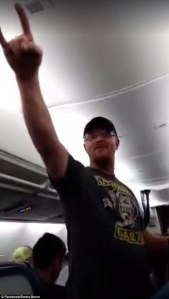
On a recent Delta flight from Atlanta, a young man stood up before take-off and started harassing his fellow-passengers with a pro-Trump rant,  yelling “Donald Trump baby!” and “We got some Hillary bitches on here?” while pointing at individual travelers. He also said, “Donald Trump is your President. Every god damn one of you. If you don’t like it, too bad.” Delta initially removed him, but returned him to the cabin. According to one witness, upon returning the man said, “This is what you get for being a patriot.”

He’s an idiot, of course, and there’s no excuse for his conduct. And yet…

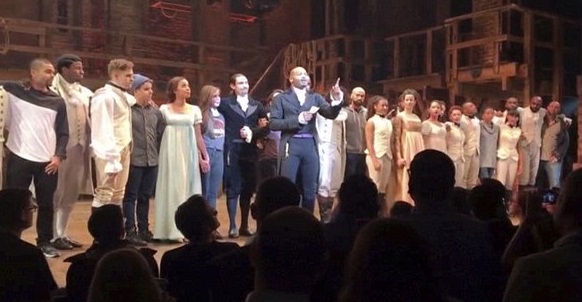
How different is what he did, and what the “Hamilton” actors did? Not much. Neither the “Hamilton” audience members nor the passengers bought tickets to be subjected to this. Both were captive audiences. The conduct in both cases constituted harassment. The clearest distinction was that the jerk on the plane wasn’t an employee; if he had been a flight attendant, the incidents would have been even more similar. The jerk on the plane didn’t single out a particular passenger by name, making his conduct better, not worse, than what the “Hamilton” cast did.  On the plane, passengers hadn’t previously jeered the Hillary Clinton voters among them, so the intimidation factor Pence experienced was absent, and it was only one passenger, not a passenger with an imposing  line of others backing him up, like the wall of actors behind Brandon Victor Dixon. Continue reading

Note To Conservatives On The “Hamilton” Cast’s Harassment Of Mike Pence: I’ve Got This. You’re Not Helping.

grandstand-hamilton

The problem is that, as you might guess, Trump-supporting Republican and conservatives are as ethically clueless as the Democrats attacking them.

Now there is a backlash against the “Hamilton” actors who singled out an audience member (who happened to be the Vice-President Elect) for specific abuse last week, because, the theory goes, elected officials who a cast doesn’t like shouldn’t be able to attend live theater without entailing the risk of being harassed. Ethics Alarms has been very clear about why this is wrong in every way, and all rebuttals have boiled down to “But we don’t like Mike Pence or Donald Trump, so we should be able to suspend ethics!”

Keep telling yourselves that.

Now it has been discovered that some of the “Hamilton” grandstanders probably didn’t vote in the election, and the actor whose mouth was used to issue the lecture to Pence had himself authored some Trump-like misogynist  rhetoric in a tweet or two. This is supposed to prove hypocrisy, and undermine the legitimacy of the cast’s ambush.

It doesn’t do this, because the cast’s stunt had no legitimacy at all, votes or not, hypocrisy or not.

Is the whole Trump term going to be like this? I fear so, since the incoming President literally is bewildered by all concepts ethical, and his defenders appear to be similarly disabled.

Look: if it is per se unethical and wrong for a theatrical production to turn on audience members without consent or warning to humiliate, threaten or accost them, the qualifications of the cast members engaging in this harassment can’t make the unethical act more or less so. Continue reading

Opening The Door, Tit-For-Tat, And The Drunk In The “Hamilton” Audience

opening-the-door

All right, all right, maybe this is the final word on the “Hamilton” controversy.

What do we make of this?

A supporter of President-elect Trump reportedly interrupted a Saturday-night performance of “Hamilton” in Chicago with profane shouts at the show’s cast. According to BroadwayWorld, somebody seated in the balcony shouted, “We won! You Lost! Get over it! Fuck you!” during the number “Dear Theodosia,” which is about Alexander Hamilton and Aaron Burr coming to terms with what being a father meant in the newly formed United States. The audience member was escorted out of the theater by security after a brief altercation.

Rueful thoughts: Continue reading

The Last Word On The “Hamilton” Cast’s Harassment Of Mike Pence

death-of-a-slaesman

In the end, after several posts and a large number of comments about this incident, I am convinced that, more than anything, it shows how little the American public, even well-educated, culturally-engaged members of the public, and even participants in the entertainment profession understand and respect the importance of live theater.

This, at least, is no surprise. The New York Times recently reported that a survey had revealed that symphony orchestras no longer are viable without charity: fewer and fewer, mostly aging, patrons bother to attend concerts any more. Live theater is heading down the same path, probably irreversibly. Theater will never hit rock bottom, of course; it will always be possible to put on a show like Judy and Mickey, and live theater can exist as long as there is a single talented performer, a street corner, and a crowd. But theater is dying as something relevant to society, and that is a tragedy. Each generation goes to live theater events less and less. I have not seen the up-dated figures, but in the Nineties a study showed that Americans under 30 were more likely to have called a phone psychic at least once in the past year than to have attended a single live theater performance in their entire existence on earth.

The role of theater in society has  been extolled by Aristotle and social critics through the centuries as a unique and important community activity in which citizens of all social strata engage in the ancient ritual of sitting together in a darkened theater, and not only experience the events being portrayed on stage but experience it communally, hearing and feeling the reaction of others. Now that social force has receded to the vanishing point. A vacuum has taken its place. Movies seldom explore serious issues any more, and younger audiences have increasingly retreated to watching films online, and often alone. The potentially life-altering experience that is being lost is hard to describe when someone hasn’t experienced it. The power of the medium to communicate ideas and concepts vividly and to change minds and lives is unmatched, and unmatchable. I have seen it. I have experienced it. I have even helped make it happen.

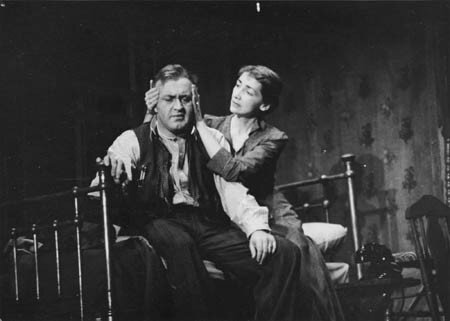
The department store mogul Bernard Gimbel attended an early performance of Arthur Miller’s “Death of a Salesman” on Broadway in 1949. The plight of Willy Loman, an aging traveling salesman being pressured out of the only employment he had ever known, so shattered Gimbel’s world view that he couldn’t sleep. The next day, he called his managers together and told them and all of his stores that no over-age employee was to be fired. Alfred C. Fuller of the Fuller Brush company asked Miller to dinner to seek his guidance on how to  keep his Fuller Brush salesmen from quitting. That’s power. That’s wonderful. We should want influential people, elected officials, business owners, policy-makers, bankers, investors and corporate executives to see that kind of theater. In today’s New York Times, Ben Brantley, the Times drama critic, explains…
Continue reading

Ethics Hero: Stevie Van Zandt

van-zandt

There is at least one liberal, Donald Trump-hating celebrity performer who has the integrity to insist that wrongful conduct is still wrongful regardless of the target.

Bruce Springstein guitarist Stevie Van Zandt, an inductee to the Rock and Roll Hall of Fame (and a memorable actor on “The Sopranos”), used a series of tweets to criticize the cast of the musical “Hamilton” for targeting Vice-President Elect Mike Pence  from the stage when Pence was in the show’s audience. Van Zandt wrote:

“Lin-Manuel is a genius. He has created the greatest play since West Side Story. He is also a role model. This sets a terrible precedent…When artists perform the venue becomes your home. The audience are your guests. It is nothing short of the same bullying tactic[s] we rightly have criticized Trump for in the past. It’s taking unfair advantage of someone who thought they were a protected guest in your home…There never has been a more outspoken politically active artist than me. Everyone who is sane disagrees with [Pence’s] policies…He was their guest. You protect your guests. Don’t embarrass them.”

Boy, just wait, Stevie: now you’ll get all the good progressives explaining to you that Pence had it coming, that he doesn’t deserve to be treated like a guest, that these vile Republicans should be treated like they will treat others, that these are not ordinary times, that ethics is a luxury we can’t afford right now, that the cast was nice about it (actually, I just saw the video, and they weren’t nice at all; they were strident and  confrontational), that everybody does it, that the ends justified the means, on and on. Just check the “Hamilton” defenders’ excuses on the threads here and here.

Van Zandt is 100% correct, of course, and courageous to oppose the approved unethical cant from the Left.  Unfortunately, most of his ideological mates have decided that standards of decency, respect, fairness and professionalism were suspended by an election result they disagreed with.

“Hamilton” Ethics Follow-Up: Somewhere In The Multi-Verse, I Am In The Audience At “Hamilton” When The Cast Decides To Abuse Its Position And The Audience’s Trust By Harassing Mike Pence, And This Happens…

hamilton-logo

Luckily, I had been tipped off by a friend in the production regarding what had been planned.

As Brandon Victor Dixon stepped forward and called out Pence, thanking him for attending, and then began his planned statement with We hope you will hear us out. We, sir…, I stood up from my seat in the center of the fourth row, orchestra. I have a very loud voice. I said,

“Excuse me, Mr. Burr, is the show over? Or is this part of the performance?”

“It’s not part of the show, no…now, Mr. Pence…”

“That means we all can leave, right? We aren’t all being held captive while you lecture us, just Mike Pence? Is that what’s happening?”

“Well..I…Yes, yes, you are free to leave. This statement is for the Vice-President Elect. Now, if you’d let me finish…”

“Was he aware that you were going to single him out like this? If not, does that mean that every other audience member that buys a ticket to “Hamilton”—great show, by the way, though I only caught about half the words—should be ready to be singled out and told how to do their jobs by you actors? Are you pleased when you’re grocery shopping or at Home Depot or going to see a movie when the staff there recognizes you and  singles you out and tells you how to perform while everyone else stares and listens? I know that Alec Baldwin and Sean Penn take swings at people who do thing like that in the street…”

“No, this is for the Vice-President Elect only! Now if you’d just sit down…”

“I thought you said I could go!”

“You can go! Get lost! We’re trying to speak to the Vice-President elect…”
Continue reading

Mike Pence Goes To “Hamilton”

(Psst...PLAYING political leaders doesn't actually give you any special insight into political leadership...)

(Psst…PLAYING political leaders doesn’t actually give you any special insight into political leadership…)

As a performance of the mega-hit Broadway musical “Hamilton” ended, the actor who played Aaron Burr, Brandon Victor Dixon, singled out Vice-President Elect Mike Pence, who was among the audience.

He thanked him for attending and then began a scripted lecture, or rather,  an ambush:

“We hope you will hear us out. We, sir — we — are the diverse America who are alarmed and anxious that your new administration will not protect us, our planet, our children, our parents, or defend us and uphold our inalienable rights. We truly hope that this show has inspired you to uphold our American values and to work on behalf of all of us.”

The rest of the audience, many of whom had booed Pence when he arrived to see the show, cheered. Of course they did. They would have probably cheered if Dixon threw a tomato at Pence too.

I have no patience with this. I was an artistic director of a professional theater company in the D.C. area for 20 years. If this happened at my theater, I would fire the actor and apologize to the audience member and the audience itself. This is unprofessional, unfair and unethical in many ways: Continue reading

Unethical Quote Of The Week: Martina Navratilova

"Hey, Kershaw! Martina wants to know why you're afraid to give us your position on fracking!"

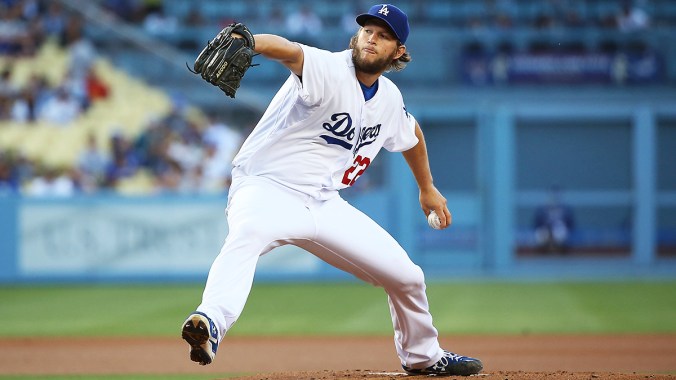
“Hey, Kershaw! Martina wants to know why you’re afraid to give us your position on fracking!”

“So many athletes are afraid to use their platform to do the right thing and speak what they feel, and that’s very depressing.”

Tennis legend Martina Navratilova to approving New York Times sports reporter Juliet Macur, as the former tennis great prepared for her keynote speech at a human rights event at the Department of State.

Wrong, Martina. There is no “platform.” You earned credibility and influence regarding social and political issues by intelligently and boldly standing up for your own rights and privileges, on issues that affected you directly and about which you had an important perspective and a legitimate reason to speak out. Female athletes. Discrimination. Gay rights. Feminism. You had credentials and authority in all of those areas, and using your status as a sports star to spark intelligent debate was responsible and fair.

Once you had established your credibility, analytical abilities and skill at articulating issues while taking informed positions on them, then you had earned added legitimacy separate from your athletic prowess and stardom. You’re a smart person: smart people’s informed opinions should be listened to and considered no matter what the topic. Many other athletes have expanded their legitimate authority and influence this way. Muhammad Ali. Kareem Abdul Jabbar. Ted Williams. Billy Jean King. Bill Bradley.

Athletic stardom, however, confers no more assumed expertise regarding issues unrelated to sports than being a paper-hanger or a busboy. The difference is that famous athletes, like famous singers and actors, are admired and idolized by many people, especially among the young, who are incapable of resisting the siren influence of their heroes. There is nothing good about this, and everything wrong about it. Tom Brady supports Donald Trump, and the only reasonable reaction to that is to conclude that Tim Brady is a moron. However, that’s not how blank-slate sports fans react to his endorsement. For too many of them, the sequence is pure cognitive dissonance: Continue reading

Is “The Goldwater Rule” Necessary?

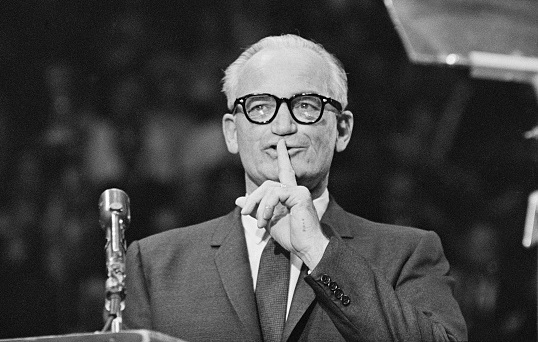
Barry Goldwater

From an  edict handed down last week by the head of the American Psychiatric Association:

“Since 1973, the American Psychiatric Association and its members have abided by a principle commonly known as “the Goldwater Rule,” which prohibits psychiatrists from offering opinions on someone they have not personally evaluated. The rule is so named because of its association with an incident that took place during the 1964 presidential election. During that election, Fact magazine published a survey in which they queried some 12,356 psychiatrists on whether candidate Sen. Barry Goldwater, the GOP nominee, was psychologically fit to be president. A total of 2,417 of those queried responded, with 1,189 saying that Goldwater was unfit to assume the presidency.

While there was no formal policy in place at the time that survey was published, the ethical implications of the Goldwater survey, in which some responding doctors even issued specific diagnoses without ever having examined him personally, became immediately clear. This large, very public ethical misstep by a significant number of psychiatrists violated the spirit of the ethical code that we live by as physicians, and could very well have eroded public confidence in psychiatry… I can understand the desire to get inside the mind of a Presidential candidate. I can also understand how a patient might feel if they saw their doctor offering an uninformed medical opinion on someone they have never examined. A patient who sees that might lose confidence in their doctor, and would likely feel stigmatized by language painting a candidate with a mental disorder (real or perceived) as “unfit” or “unworthy” to assume the Presidency.

Simply put, breaking the Goldwater Rule is irresponsible, potentially stigmatizing, and definitely unethical.”

Naturally, as he is significantly responsible for much that is going haywire in the culture—CNN experts using words like “dick” on the air, a Fox News star and a Wall Street Journal editor calling each other names on Twitter, the New York Times announcing that it no longer is even pretending to follow its own ethics code—this can be partially placed at the feet of Donald Trump, though Ann Althouse’s suspicions that it is really designed to protect Hillary Clinton cannot be discarded.

I agree that professional groups that use their collective weight and credibility to assume greater influence in political matters than their biases and relevant expertise warrant are abusing their positions. I agree that psychiatrists pronouncing public officials mentally unfit for office without the same kind of examination that they would demand with a patient is a dubious practice, ripe for abuse. Still, I wonder if the situation with Trump doesn’t pose a different problem. Continue reading