Three Strikes And You’re Untrustworthy: Why VA Secretary Robert McDonald Must Be Fired

McDonald

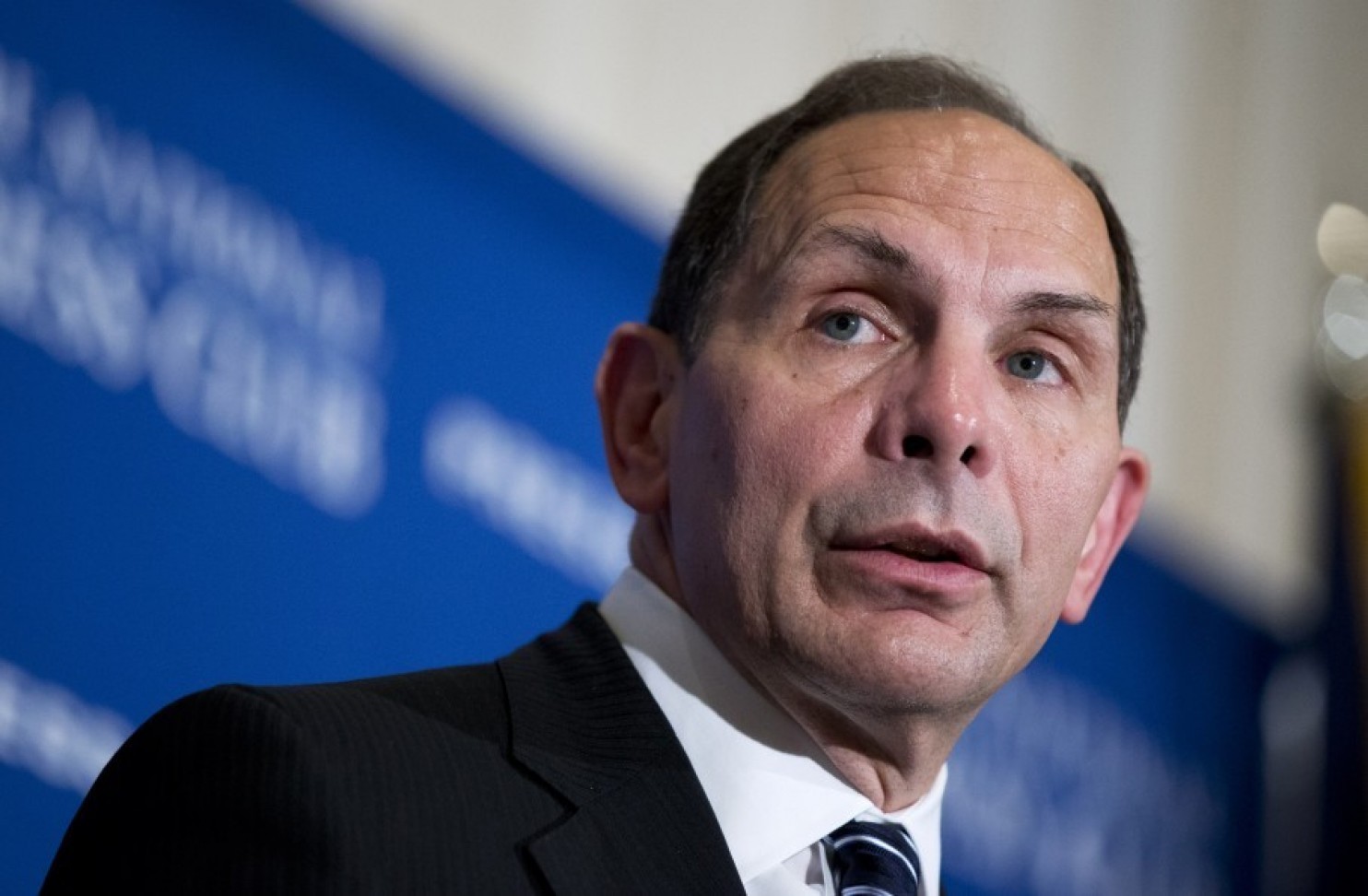
I was going to post this story as an Ethics Quiz when I first saw it yesterday at the Huffington Post.  The most recent head of the troubled Veteran’s Affairs Dept., Robert McDonald, falsely claimed in a videotaped comment that he served in the Army’s elite special forces. In fact, his military service of five years was in fact spent almost entirely with the 82nd Airborne Division during the late 1970s. The quiz question was going to be whether this alone required his dismissal.

My conclusion: assuming that he only did something like this only once, and it was not a Sen. Richard Blumenthal or a Brian Williams situation involving repeated self-glorifying falsehoods, I would have been willing to let this pass were he not in the position he is in: Secretary of Veterans Affairs. Veterans are justly sensitive on the topic of stolen valor and imaginary service. The last individual to hold McDonald’s job was asleep on the job and betrayed his constituency: they should not be asked to trust a successor who lies about his military service, even once. I understand that this is a tough verdict, and why others could reasonably argue that one casual remark to cheer a homeless veteran should not be a career catastrophe. In fact, as I write that, I’m thinking that I could be persuaded to adopt that position as well.

However, that is not all there is to this situation. For McDonald had already shown a tendency to play fast and loose with facts, perhaps influenced by his boss, who is similarly inclined, and the Vice -President, of course, when he isn’t harassing women. Continue reading

A Presidents Day Celebration (PART 3): When The Going Got Tough

 presidents.

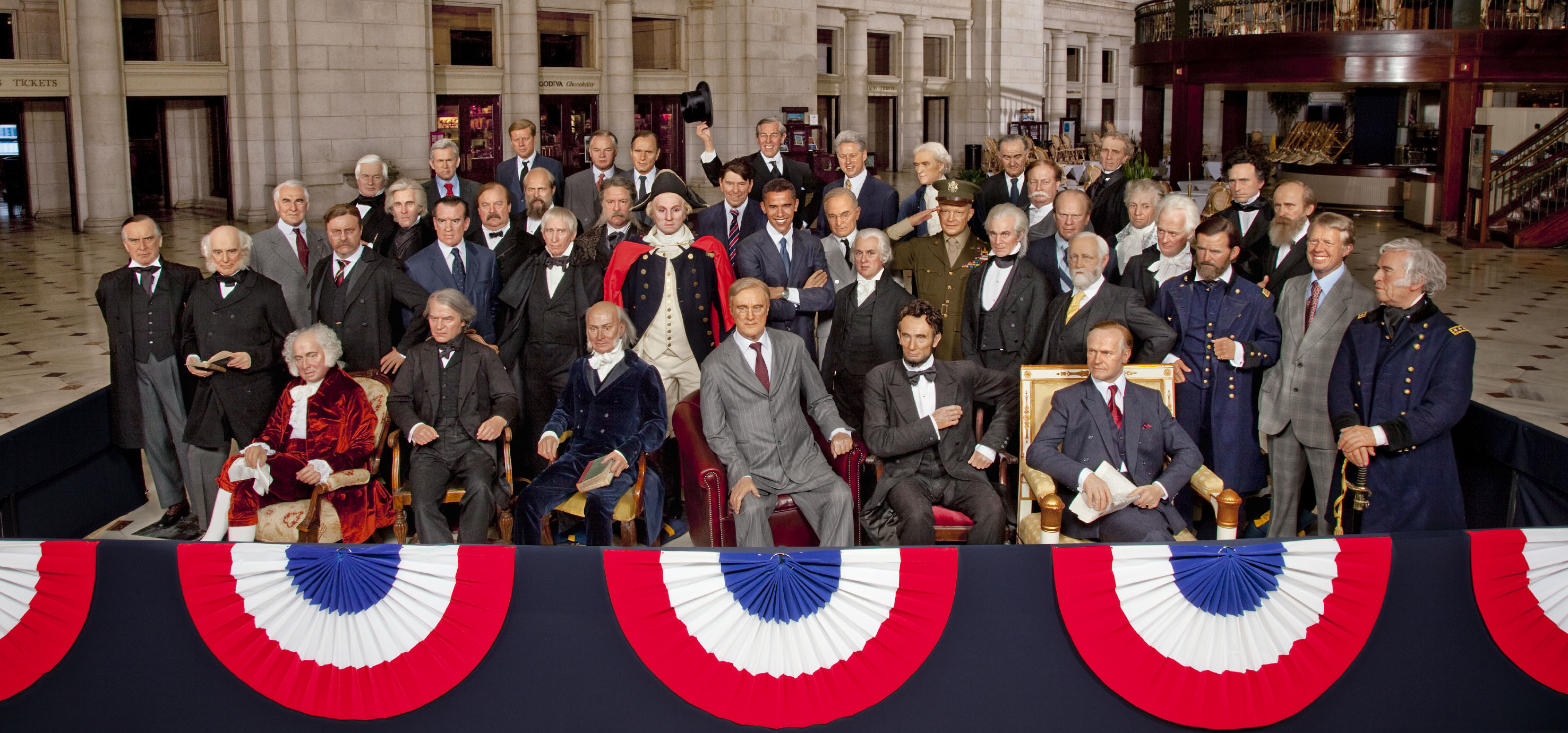
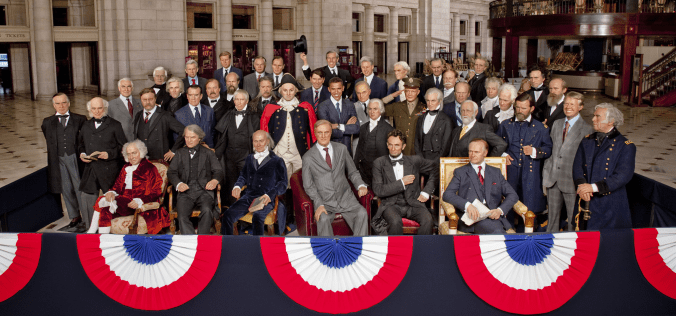
The Presidents really get interesting now, as a political leadership culture in the U.S. matures, the stakes of failure become greater, and technology, labor upheaval, expanding big business and greater influence on world affairs transforms the Presidency into truly the toughest job on earth.

Grover Cleveland

grover

Another one of my favorites, Cleveland was known for telling the truth ( he as called “Grover the Good”), but he participated in one of the most elaborate deceptions in Presidential history.

As explained in historian Matthew Algeo’s 2011 book, “The President Is a Sick Man,”  President Cleveland noticed an odd bump on the roof of his mouth in the summer of 1893, shortly after he took office for the second time. (Cleveland is the only President with split terms, the hapless Republican Benjamin Harrison winning an electoral college victory that gave him four years as the bland filling in a Cleveland sandwich.) The bump was diagnosed as a life-threatening malignant tumor, and the remedy was removal. Cleveland believed that news of his diagnosis would send Wall Street and the country  into a panic at a time when the economy was sliding into a depression anyway, and agreed to an ambitious and dangerous plan to have the surgery done in secret. The plan was for the President to announce he was taking a friend’s yacht on a four-day fishing trip from New York to his summer home in Cape Cod. Unknown to the press and the public was that the yacht had been transformed into a floating operating room, and a team of six surgeons were assembled and waiting.

The 90 minute procedure employed ether as the anesthesia, and the doctors removed the tumor, five teeth and a large part of the President’s upper left jawbone, all at sea. They also managed to extract the tumor through the President’s mouth while leaving no visible scar and without altering Cleveland’s walrus mustache. Talking on NPR in 2011, historian said,

“I talked to a couple of oral surgeons researching the book, and they still marvel at this operation: that they were able to do this on a moving boat; that they did it very quickly. A similar operation today would take several hours; they did it in 90 minutes.”

But the operation was a success. An artificial partial upper jaw made of rubber was installed to replace the missing bone, and Cleveland, who had the constitution of a moose, reappeared after four days looking hardy and most incredible of all, able to speak as clearly as ever. How did he heal so fast? Why wasn’t his speech effected? He endures doctors cutting out a large chuck of his mouth using 19th century surgical techniques and is back on the job in less than a week? No wonder nobody suspected the truth.

Then, two months later, Philadelphia Press reporter E.J. Edwards published a story about the surgery, thanks to one of the doctors anonymously breaching doctor-patient confidentiality. Cleveland, who in his first campaign for the White House had dealt with Republican accusations that he had fathered an illegitimate child by publicly admitting it, flatly denied Edwards’ story, and his aides  launched a campaign to discredit the reporter. Grover the Good never lies, thought the public, so Edwards ended up where Brian Williams is now. His career and credibility were ruined.

Nobody outside of the participants knew about the operation and the President’s fake jaw until twenty-four years later, after all the other principals were dead except three witnesses.  One of the surgeons decided to  publish an article to prove that E.J. Edwards had been telling the truth after all.

This is a great ethics problem. Was it ethical for Cleveland to keep his health issues from the public? In this case, yes, I’d say so. Was it unethical for the doctor to break his ethical duty? Of course. Was Edwards ethical to report the story? Sure.

The tough question is: Was Cleveland ethical to deny the story and undermine the reporter’s credibility? I think it was a valid utilitarian move, and barely ethical: it was better for the nation to distrust one reporter than the President, especially when his secret was one he responsibly withheld, and his doctor unethically revealed. Continue reading

Ethics Dunce: The Washington Post

Better yet, just THINK...

Better yet, just THINK…

Here is another reason Why Our Children Will Grow Up To Be Cheats And Liars: ethically obtuse thinking like that expressed by the Washington Post editors this morning.

The Jackie Robinson West Little League team was stripped of its national title for a very good reason: it had an unfair advantage over its competition, so its victory was corrupt. Its coach and administrators cheated, manipulating league boundaries to assemble a team fortified by “ringers.” The victory didn’t count because the victory was a sham. The team wasn’t playing by the rules. This is not a difficult concept, or shouldn’t be.

Yet the Post’s editors are aghast, writing, “The fact is they punished a group of children who did everything right, on and off the field — punished them for the sins of adults who did wrong and an organization that was willfully oblivious.”

Yup. That’s the way life works. That’s the way it has to work and has always worked, and the sooner children learn that lesson, the less likely they are to grow up as ethically muddled as the adults who write Post editorials. Continue reading

Comment of the Day: “The Eternal Ethics Conflict: Drawing Lines, Enforcing Them”

speed traps

The post generating texagg04‘s (latest) Comment of the Day dealt with the tricky and common ethics problem of enforcing reasonable rules strictly in the face of situations where compassion and sympathy pull us toward leniency, because the penalty for non-compliance seem out of proportion to the transgression. He correctly identified this as a problem involving the Ethics Incompleteness Theorem (or Principle), which is an ethics analysis concept used frequently here, and one of my favorites. The Theorem, as stated in the Ethics Alarms Concepts and Special Tools, a.k.a. “the Rule Book,” holds that…

The human language is not sufficiently precise to define a rule that will work in every instance. There are always anomalies on the periphery of every normative system, no matter how sound or well articulated. If one responds to an anomaly by trying to amend the rule or system to accommodate it, the integrity of the rule or system is disturbed, and perhaps ruined. Yet if one stubbornly applies the rule or system without amendment to the anomaly anyway, one may reach an absurd conclusion or an unjust result. The Ethics Incompleteness Principle suggests that when a system or rule doesn’t seem to work well when applied to an unexpected or unusual situation, the wise response is to abandon the system or rule—in that one anomalous case only— and use  basic ethics principles and analysis to find the best solution. Then return to the system and rules as they were, without altering them to make the treatment of the anomalous situation “consistent.”

No system or rule is going to work equally well with every possible scenario, which is why committing to a single ethical system is folly, and why it is important to keep basic ethical values in mind in case a pre-determined formula for determining what is right breaks down.

 Tex expands the discussion into such areas as test scores, speed limits, and rule-making itself.  Here is his masterful Comment of the Day on the post, The Eternal Ethics Conflict: Drawing Lines, Enforcing Them:
Continue reading

Comment of the Day: “Why Our Children Will Grow Up To Be Cheats and Liars: The Little League Champs Are Banned For Cheating, And Are Told That They Should Be Proud”

Well, one out of three isn't...no, actually, it IS bad...

Well, one out of three isn’t…no, actually, it IS bad…

johnburger2013 contributes the kind of Comment of the Day Ethics Alarms doesn’t see very often: a researched follow-up to the original post that raises separate ethics issues. My post was about the cheating involved in the Jackie Robinson West team’s championship; John’s explores how the Little League itself behaved unethically, and attempted to duck its duty. I often can’t research the stories covered here beyond the aspects of it that sparked the ethics commentary, and in some cases, like this one, the result is an incomplete picture. I am grateful to John and every other commenter who goes the extra mile that my futile attempts to cover the vast ethics landscape miss, skip over, or neglect.

Here is his Comment of the Day on the post “Why Our Children Will Grow Up To Be Cheats and Liars: The Little League Champs Are Banned For Cheating, And Are Told That They Should Be Proud” :

I am not sure that Little League International has all that integrity. LLI was perfectly content to encourage the feel good story of underprivileged kids from Chicago’s South Side making it all the way to the series final, only to lose to South Korea. These players were honored by the White House and had photo ops with the President and First Lady. In a sport that has lost interest from the Black community, here was a heart warming story of the little guy making it big.

However, LLI had been on notice that the boundary and residency requirements had been manipulated, or outright disregarded, to create a team of ringers vying for the title. LLI wanted the narrative so it closed its investigation, only then to have its decision to blow up in its face because a reporter kept asking questions. This has turned into a huge ethics problem for LLI. Continue reading

The Eternal Ethics Conflict: Drawing Lines, Enforcing Them

cross-the-line

Yesterday traffic caused me to arrive a bit later than usual at my monthly gig as the instructor in the legal ethics portion of the D.C. Bar’s mandatory orientation session for new admittees. It was after 9 AM (my segment starts at 9:20), and as I approached the glass doors to the lecture hall lobby, I saw a distraught women angrily berating one of the D.C. Bar staff. I knew instantly what was going on.

You see, the courts approving the program insist that every attendee be there at the start: the doors close at 9, and anyone arriving late, no matter what the reason, is out of luck. They can’t attend the session, can’t get credit for it, and have to return the following month. That rule is on the website and in all communications with the Bar, along with the warning that there are no exceptions, and no effective excuses. Every month, someone misses the deadline; every month, that person goes ballistic. This women, however, was remarkable.

She had flown to D.C. on the redeye, she said. Her cab was stuck in traffic, and when she arrived in the cavernous Reagan Building where the day-long course takes place, she had ten minutes to spare. Unfortunately, the Reagan Building eats people. I have wandered its halls lost many times. I keep expecting to encounter a bearded, Ben Gunn-like figure who grabs my pant leg and jabbers about how he’s been trapped by the bewildering signage, and has been living off of Cub Scouts since 1992. The woman made it to the right hall in just 12 minutes, which is impressive without a GPS. But she was still two minutes late. Continue reading

Why Our Children Will Grow Up To Be Cheats and Liars: The Little League Champs Are Banned For Cheating, And Are Told That They Should Be Proud Anyway

Littel League champs

When the Tom Brady/ Bill Belichick/New England Patriots cheating issue was at high pitch [Aside: Notice how we have heard nothing about this at all since the Super Bowl, which the Patriots won. This is why NBC thinks it will get away with not firing Brian Williams…both the news media and the public have the attention span of closed head injury victims, especially when it comes to liars, cheaters and betrayal. They call this phenomenon “America’s belief in redemption.” It is actually is a product of America’s crippling domination by chumps, dolts, suckers….and people who are liars and cheats themselves.], a friend of mine brushed it all off saying, “It’s a game.” Well, children learn a lot about ethics from games, and if they learn that adults think cheating is acceptable (never mind that a billion dollar business is hardly just a “game”), they will cheat in their games, and later in life.

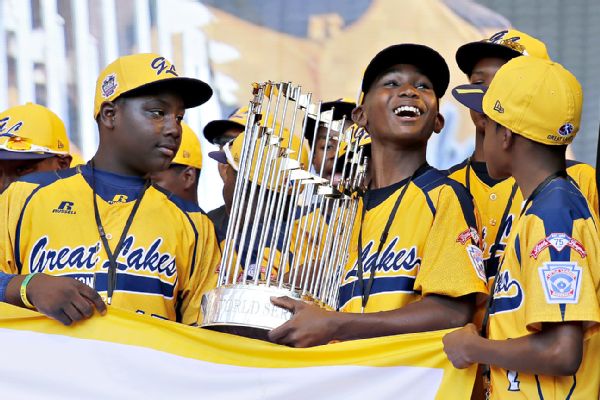
Today we learn that the inspiring 2014 Little League Champions, the Jackie Robinson West team that was the first all-African-American team to win the tournament, has been stripped of all of its wins, including those from its Great Lakes Regional and United States championships. As a result, the United States championship has been awarded to Mountain Ridge Little League from Las Vegas.

A Little League investigation revealed that the Jackie Robinson team, which was supposed to field a team exclusively from the Chicago South Side, secretly used an expanded boundary map. Team officials conspired with neighboring Little League districts  to build what was essentially an all-star team by acquiring players from well beyond the South Side. Continue reading

Some Final, Hard Words Before Kick-off

cteliving

I made this comment to the main post on the Super Bowl, and decided that the point is important enough to elaborate on a bit and post here.

I’ve  become depressed talking to people on Facebook and elsewhere about the post. They don’t even pretend to have a real argument. Some fall back on the same rationalizations I explored in the post: one guy on Facebook’s rejoinder consisted of writing, “why worry about this when Congress and the White House are full of liars.” And people “liked” that response, which makes no sense at all.  The rest of the determined Super Bowl fans say, “Yeah, you’re right, but I like football and don’t want to think about it.”  That just is not a rational, ethical response to learning that your support is perpetuating a corrupt system that is exploiting and hurting people. It isn’t.

The NFL is not on the same scale of evil as slavery (yeah, I know, but we need the slaves to keep our lifestyle, so I don’t want to think about it) or the Holocaust (Yeah, but I don’t know any Jews, and the country’s doing well, so I don’t want to think about it) or a daughter-molesting husband (Yeah, but he’s a good provider, and I love him, so I don’t want to think about it). Sure, this is a game, but the process of self-delusion, corruption and passive acceptance of evil is exactly the same. Tell me how it isn’t.

And you know, it takes a lot less sacrifice to stop making it profitable for the NFL to lie and pay young men unto dementia and suicide than it did to reject slavery in the South, or Nazism in Germany, or even for an abused wife to report her husband for raping their daughter…because it is just a game. You can live a very happy life, a full life, a fun life, without the NFL being part of it. It’s corrupting American society and you. Don’t you they see that?

I guess slavery and the Holocaust didn’t have cool commercials, so that’s something…

Watching The Super Bowl Is Unethical. You Know That, Right?

Super2015

I was going to call this post “Ten Reasons Why Watching The Super Bowl Is Unethical,” then “TOP Ten Reasons Why Watching The Super Bowl Is Unethical.” Ethical people should only need one good reason though, and while you can rationalize it away to slave your conscience and to avoid having to renege on that RSVP to tomorrow’s Super Bowl party, it is there, undeniable, and ugly.

So you don’t even have to argue that the fact that the most successful NFL team for more than a decade is also the one repeatedly caught cheating is irrelevant because “everybody does it,” or that the large number of felons, thugs and spouse abusers the teams employ (one ex-player—why, a Patriots’ ex player, in fact!—just went on trial for murder) doesn’t matter because the players aren’t really role models, or that the fact that the NFL corrupts and warps our universities by turning them into football’s minor leagues is overstated because such scandals as the University of North Carolina conspiring to let athletes take imaginary courses aren’t really the NFL’s fault. All you have to do is accept the fact that when you support the NFL, it’s TV ratings and the companies that profit from them, you are not merely killing people, you are cheering while you do it.

Disgusting.

What the hell’s the matter with you?

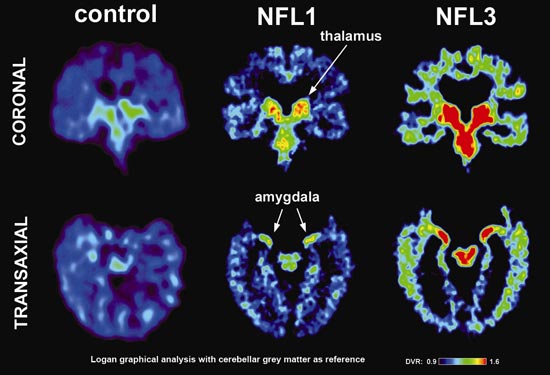
Yesterday I rewatched the 2013 PBS Frontline documentary, “League of Denial.” (That’s the link to the video; the transcript is here.) It was more horrifying the second time, especially in view of how the NFL has managed to stonewall, tap-dance and delay its way through another season without seriously admitting the extent of its head injury problem. One could even argue that the Ray Rice fiasco and other scandals helped the NFL by deflecting attention away from its biggest ethical deficit. Today, CNN, which is duly promoting the Super Bowl all weekend, reported on Roger Goodell’s “state of the NFL” press conference. It didn’t mention the concussion issue at all, just spousal abuse. It’s working, Roger!

As thoroughly and irrefutable shown by the documentary and the book it was based on, football causes dementia and death. The earlier you start playing it, the worse the effects are. The NFL has systematically waged a public relations war of denial and deception, taking carefully calculated half-measures that will not address the problem, relying on America’s love of the game to allow the industry to continue making billions by paying young men to maim themselves. In hearings before Congress, U.S. representatives compared the NFL to cigarette manufacturers denying that cigarettes were addictive and that they caused health problems. The comparison is fair, but once the truth was known about tobacco, the non-smoking public quickly realized that it shouldn’t be cheering lung cancer on. Cigarette ads on TV were banned; programs that children watched were pressured to avoid showing characters smoking. But then, nobody gets a visceral rush watching human beings slowly kill themselves by puffing away: is that the difference? As long as you get a kick out of the process of athletes turning themselves into future drug addicts, depressives, neglectful fathers, abusive husbands, drooling imbeciles and suicides, it’s okay to keep watching and cheering?

Keep telling yourself that. It’s intellectually lazy and ethical abdication, and that’s all it is. Watching the Super Bowl can’t be wrong because so many people do it, right? You know, since you’re here, what’s the matter with that argument.

You can also try the argument that the players are accepting the risk, so it’s OK for you to encourage them, in fact help pay them to liquify their brains for your amusement. That would be employing three more rationalizations on the Ethics Alarms Hit Parade: Continue reading

Accountability Check: No, Sarah Wasn’t “Sacrificed” And She Has Nobody To Blame But Herself

Yeah, that's all you need, Sarah...

Yeah, that’s all you need, Sarah…

When one woman who drives me crazy sets out to defend another one using ethics-crushing illogic, I cannot withhold my hand.

Or gorge.

The wimpiest pseudo-conservative op-ed columnsit who ever roamed the Earth, Kathleen Parker, has delivered a column titled “The Sacrifice of Sarah Palin.” Its thesis? “Blame for her general collapse beginning in 2008 can be placed in large part upon her own party, which used her and cast her aside.”

Well, Parker proves with her fatuous essay that blame can be placed on Republicans, but she doesn’t prove that it should be. Sarah’s reputation is on life support after delivering a speech at the Iowa Freedom Summit that included passages like these… Continue reading