Ethics Dunce: Buzz Bissinger

It took about an hour after the  Barry Bonds verdict for the first ethics-challenged national sports writer to write something outrageous about it. Not surprisingly, it was Buzz Bissinger, a the member in good standing of the Daily Beast’s stable of annoyingly hypocritical, biased or appallingly cynical writers, Bissinger belonging to the last category.

His post, which pronounced the Barry Bonds conviction “a travesty” in the title, contained one ethics howler after another, any of one of which would have justified an Ethics Dunce prize.

Here they are:

“It is true that the case of Barry Bonds does hit a new low, a new low in the waste of millions of dollars of taxpayers’ money, a new low in the witch hunt of a player who, because he was considered surly and arrogant and unlikable, is now having intimate details of his life revealed (such as testicle shrinkage), a new low in outrageous abuse of government power.” Continue reading

The Bonds Verdict: Fair Enough

The results of the Barry Bonds trial, which today concluded with the jury finding baseball’s all-time home run champion guilty of obstructing justice by misleading a grand jury investigating the distribution of illegal and banned steroid to professional athletes but unable to agree on the perjury charges, helps to balance the ethical scales. It should silence the shameless Bonds defenders who misused the “innocent until proven guilty” standard to maintain poor Bonds was being unfairly suspected of inflating his biceps, head, statistics and income through the marvels of chemistry, though it was blatant and obvious in dozens of ways. Now he has been proven guilty—not of everything, but for celebrity justice, in a trial where much of the most damaging evidence was withheld from the jury, enough—, so the claims of racism and unfair prosecution will ring even hollower now. Continue reading

Unethical Quote of the Week: Wrongly Imprisoned Victim John Thompson

“I don’t think training would have had anything to do with nothing really, to be honest with you, because you could have trained them and they would still do it. You need to punish them for doing it, then they won’t do it.”

John Thompson, who was wrongly and illegally convicted of murder in Louisiana and spent 14 years on death row because prosecutors withheld exculpatory blood evidence from his lawyers and his trial. His civil suit against the prosecutor’s office, run by Harry Connick, Sr. (yes, the singer’s father) for millions in punitive damages, on the theory that the prosecutors who framed him were inadequately trained, was overturned last week by the U.S. Supreme Court.

This statement apparently was made by Thompson last October, when the Supreme Court took the case, and I missed it. It surfaced again this morning in a Washington Post editorial calling for harsher punishment for prosecutors who violate the rights of accused suspects and send innocent people to prison or execution. The Post has never been more right, and the $14 million originally awarded to Thompson by an appalled jury for his ordeal is still inadequate compensation for the 18 years he spent behind bars because of a prosecutor’s dishonesty.

But the theory used to get Thompson his money—that the tragedy would have been prevented if Connick’s office hadn’t been negligent in training its lawyers in prosecutorial ethics—was a sham, and deserved to be rejected by the Court, no matter how much Thompson deserved the money, or indeed, ten time the money. Continue reading

U.S. Attorney General Ethics, Rule #1: Remember What Your Job Is

"I am acting based on the expressed instructions of my client, who is, unfortunately, a moron."

How does the nation’s highest ranking lawyer forget what a lawyer’s job is? If I had to guess, I would say it could happen when the U.S. Attorney general in question is thinking about politics more that the law, and has been under such continuous fire from the public and the media for repeated bungles that he no longer knows who he’s working for.

But that would just be speculation on my part.

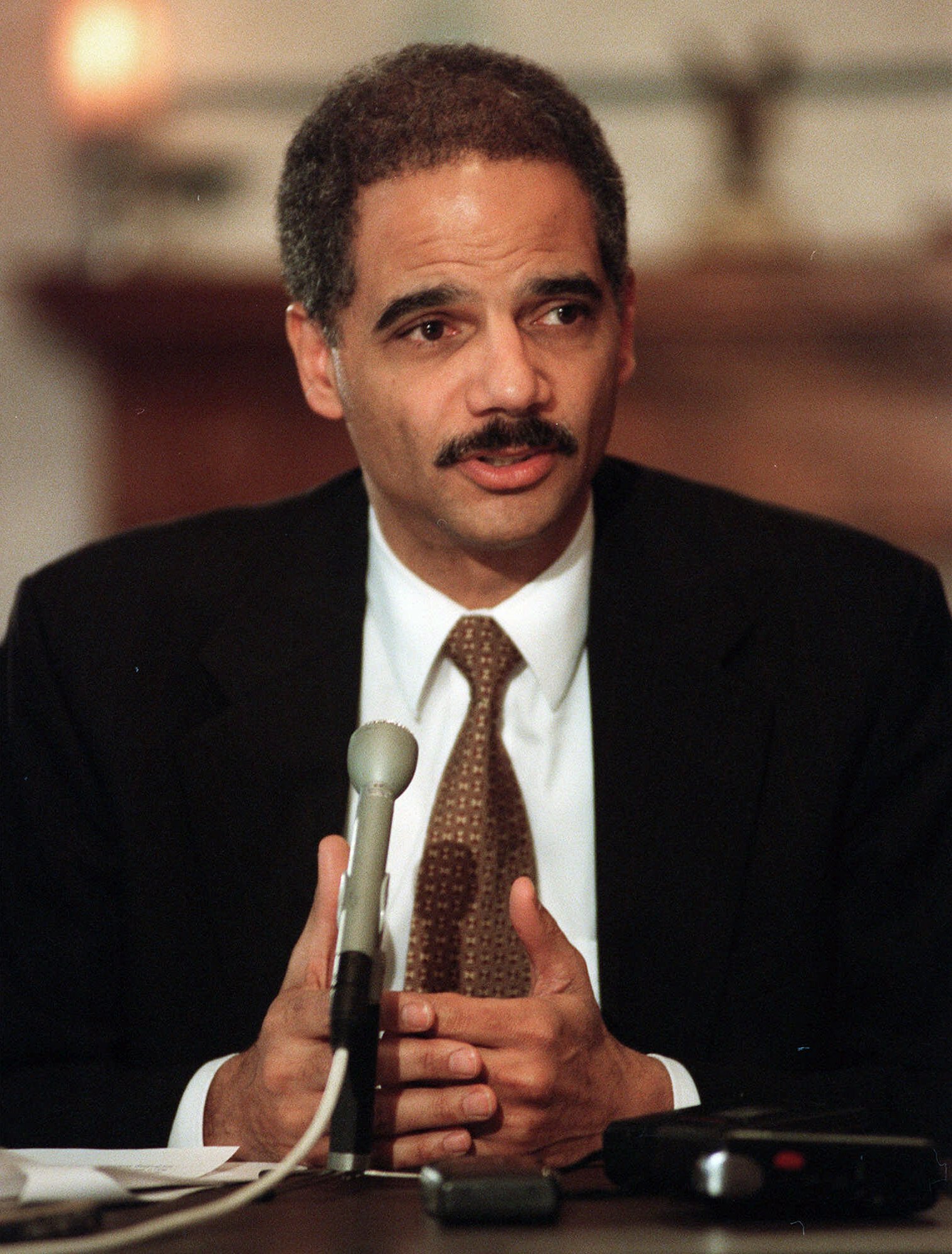
We know for certain, however, that U.S. Attorney General Eric Holder delivered a statement announcing that Khalid Sheikh Mohammed and his four co-conspirators would be tried by a military tribunal at Guantanamo, and not in civilian trials in the U.S. as the Obama Administration had preferred. In the middle of this statement, Holder says, Continue reading

Ethics Phooey: No Self-Serving Bias When I Really Need It

At least I'm finally home.

Last month I posted a list of the Top Ten Thought Fallacies That Undermine Our Ethics. This week, I really, really wanted to use one of them. But integrity beckoned. Damn integrity.

I just returned from a week-long speaking trip that took me to Palm Springs and Maui, and involved a total of about 38 hours travel time for a total of 3 hours of actual lecturing and instruction. It would have been about eight hours less and not have required me to be awake for 50 hours (and counting) straight if I had not managed to miss my flight to L.A. out of the Maui airport. Somehow, I got it in my mind that the flight was at 3:30 PM, when it was really at 12:30 PM. I had managed to check the time on the wrong page of my itinerary, and then never looked at my boarding pass. Only dumb luck got me the last seat on the last flight out of Maui on Sunday night. Continue reading

Outrageous Corporate Conduct 2011: Transocean’s Unconscionable Bonuses

"Sure, but other than THAT: great night at the theater, right?"

I believe that much of the time the corporate sector is unfairly treated by the media, politicians, and the public. Part of this conviction arises from my experience working at the U.S. Chamber of Commerce, directly under its current president when he was a rising young Turk. I dealt with corporate executives every day, and got to see the challenges of big business from their side. Most of the time, they struck me as genuinely concerned about workers, communities, fairness, while believing, of course, that an unfettered private sector was in the economic interest of everyone.

Increasingly, however, I see corporate behavior that is so arrogant, so transparently greedy, so contemptuous of the public’s intelligence, so blatantly, obnoxiously wrong that I wonder if it was all a dream. There was AIG, accepting billions from American taxpayers to save it from the consequences of its own fiduciary crimes, immediately spending some of it on lush retreats and parties for its executives. There were the leaders of Goldman Sachs, telling gape-jawed U.S. Senators that, no, they didn’t see anything unethical about selling their trusted clients investment products so awful that the company made money betting on their failure. There are the U.S. banks, hoarding their money and refusing to refinance mortgages that were unconscionable to begin with,  preferring to make the nation’s economic problems worse by foreclosing on families’ homes rather than making a good faith effort to undo a human and social catastrophe that was substantially of their own making.

Now comes the news that Transocean Ltd., owner of the Deepwater Horizon oil rig, has announced that it is giving millions of dollars in bonuses to its executives after “the best year in safety performance in our company’s history.”  Which seems perfectly reasonable, unless you want to make a big deal over that one little Gulf oil spill incident last April…you know, the one that began when a Transocean oil rig exploded, killing eleven people including nine Transocean employees. Continue reading

Ethics Quote of the Week: Michelle Marie Gopaul

"But I'm not a bad person!"

Everyone thinks I’m a bad person but I’m not a bad person.

—- Actress/model/child-stealer Michelle Marie Gopaul, pleading guilty in a Toronto court to one count of child abduction. Gopaul, 25, was arrested Dec. 31 after police recovered one-month-old Roma Patel. The baby disappeared four hours earlier at  a western Toronto production studio during a fake casting call set up by Gopaul to  attract a baby for her to steal.  The child”s parents had responded to an ad on Craigslist that offered $15,000 in compensation for allowing their baby to be used in a film. Continue reading

The Ethics of Nailing Barry Bonds

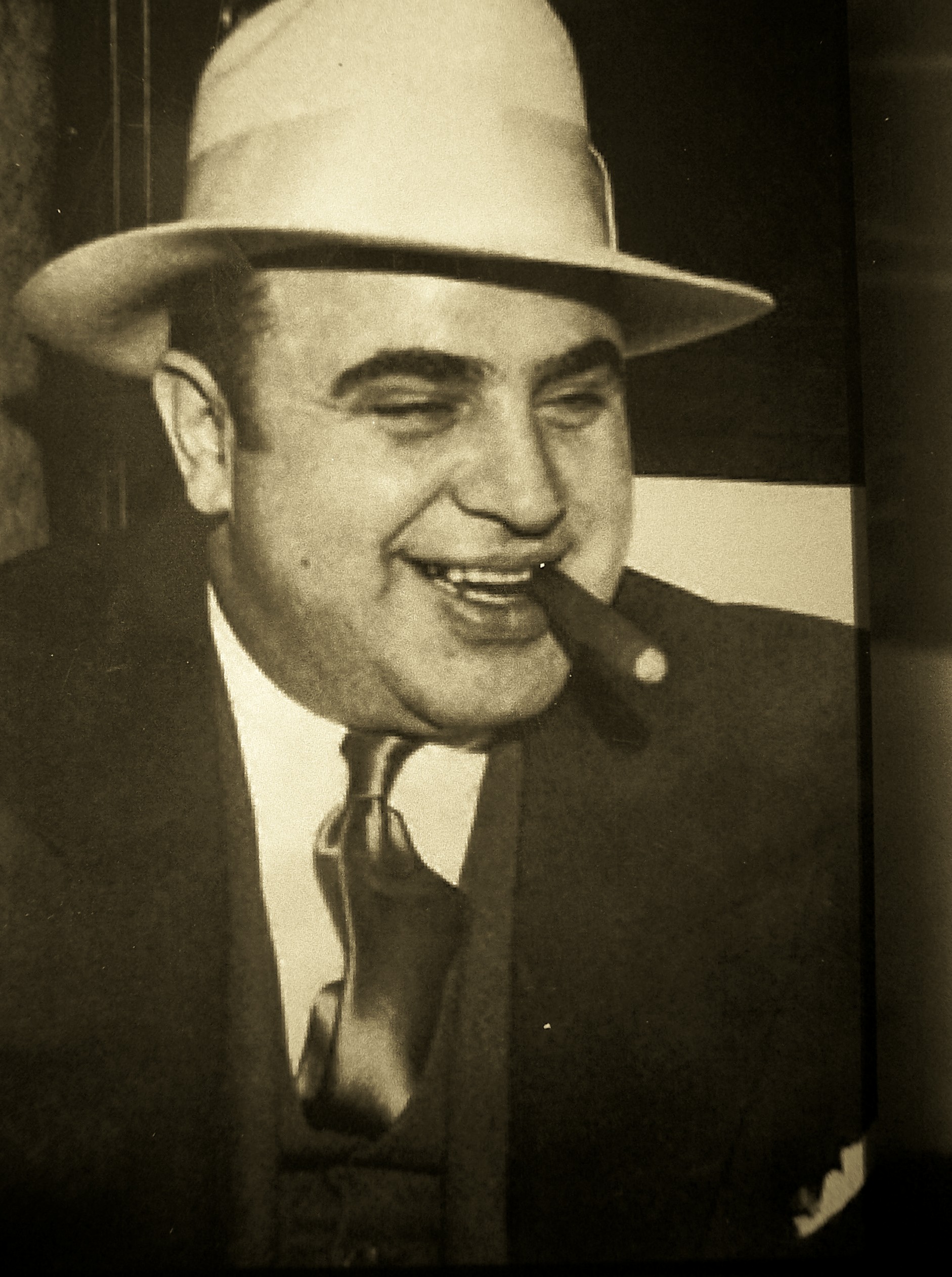
Is Barry Bonds getting the Al Capone treatment? Should we care?

Baseball’s all-time home run king Barry Bonds is finally on trial for perjury and obstruction of justice relating to his 2003 testimony before a grand jury that he never knowingly used steroids. It looks like he may get convicted too, even though the one man who could harm him most, his trainer and childhood pal Greg Anderson, once again has refused to testify and is in jail for contempt of court. (Many—including me— believe that Anderson has a promise of a pay-off from Bonds.)

Essentially everyone who isn’t actively trying to protect Bonds, completely ignorant of the facts of his career, or mentally handicapped knows he was lying and knew it at the time of the grand jury hearings. Barry has been both lucky and relentlessly dishonest, however, seemingly happy to spend the millions he made while cheating and permanently damaging his sport, and pleased with himself for retiring in possession of baseball’s most prestigious home run records, the most homers in a single season, and the most homers in a career.  That Bonds achieved these, and several of his Most Valuable Player awards, while enhanced with the surreptitiously induced body chemistry of a Bulgarian weight-lifter in the 1972 Olympics doesn’t seem to faze him at all. Meanwhile, critics are dredging up the old rationalizations to defend Bonds, none of which apply to his current fix. Continue reading

One More Reason To Defund NPR, or “Boy, Did I Ever Go Into The Wrong Profession!”

The primary reason to end funding for NPR and PBS is that the government shouldn’t be funding competitors of private broadcasting organizations.

The second reason is that anything public broadcasting does that is sufficiently popular and valuable  (“Sesame Street,” “The Prairie Home Companion,” “Car Talk,’ et al.) will be picked up by commercial stations, and those programs that are not should not be underwritten by taxpayer dollars.

The third: NPR’s audience is narrow and affluent, and doesn’t require a public subsidy, particularly when cutting down the budget deficit is a national priority.

Finally, NPR can’t be trusted with public funds. It claims to be objective, but isn’t; it is mismanaged, and isn’t appropriately frugal with taxpayer funds.

This comes under the final category. The salaries of the top NPR talent do not reflect restraint in expending precious resources.  Continue reading

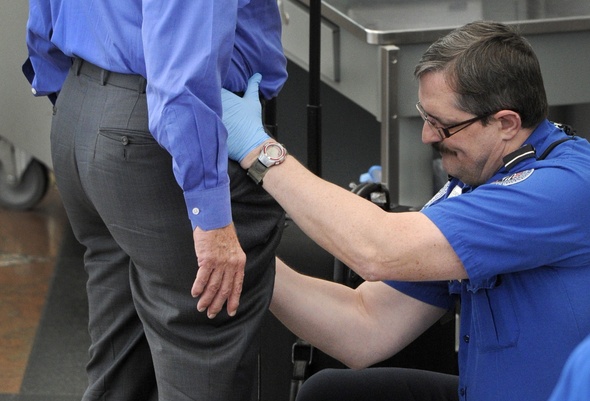
Final Ethics Verdict on TSA’s Feel-Up Pat-down

I was flying this week, and the security procedures were smoother than ever. Now I am certain that my molestation at check points last year was unethical, and have sufficient evidence to conclude that it was based on government incompetence and willful disregard for my comfort, dignity, and rights.  I am also wondering, more than ever, if the ardent, supposedly liberal defenders of the indefensible feel-up pat-downs have learned anything about the dangers of blind government obeisance and partisan loyalty. I hope so.

The saga so far: Continue reading