Unethical Quote of the Week: “Meg Lanker-Simons is Innocent” Facebook Page

“Meg Lanker-Simons is innocent we believe what she did was justified and deserves not to be held accountable for her accusations we stand behind you sister.”

—-The Facebook page dedicated to the plight of University of Wyoming student, progressive blogger and campus radio host Meg Lanker-Simons, who apparently sent an obscene and threatening message to herself online under the guise of an anonymous male conservative, one of her sworn foes. She has been charged with a misdemeanor by campus police.*

I confess, there were more flattering photos of Meg I could use, but she doesn't deserve them. What she deserves, really, would be for me to dress up in drag, take my own photo, and not only label it as meg, but then riff on how ugly she is in the picture, when it's really me. Meg would approve of that. She'd have to.

I confess, there were more flattering photos of Meg I could use, but she doesn’t deserve to have me use them. What she deserves, really, would be for me to dress up in drag, blacken my teeth and take my own photo, and then not only label it as Meg, but then riff on how ugly she is in the picture, when it’s really me. Meg would approve of that. She’d have to.

Let us stipulate that the title of the Facebook page may well be correct, as James Taranto persuasively argues: threatening yourself, even with rape, which is what Lanker-Simons did, is unlikely to be anything but protected speech.

Beyond that, however, this kind of stunt is low-wattage Tawana Brawleyism,  and thus ethically revolting. That 38 Facebook fans and the semi-literate clod who authored the quote above argue that it is “justified” shows that ethics rot has some new and virulent strains.
Continue reading

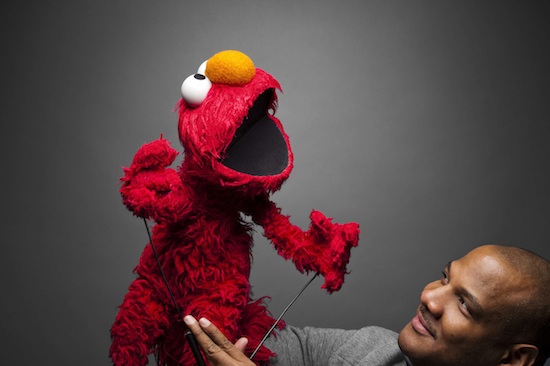
Elmo and the One Recant Rule

When we last left the sad saga of Kevin Clash, the Muppets puppeteer whose voice and hands give cute little Elmo his panache, the 23-year-old man who had accused Clash of having underage sex with him had recanted, agreeing with Clash’s defense that their relationship was consummated later, when both were consenting adults. I opined that this would do little to rescue Clash’s career, as the most innocent Muppet on Sesame Street could not survive being operated by a man who was now associated with gay sex, consensual of not. This likely result seemed unfair to Clash, but is nonetheless a responsible decision on the part of Clash’s employers, the Children’s Television Workshop, whose duty is to their mission and core audience, not to one unmasked Muppet.

Clash’s prospects have not improved. It was revealed last week that the recant was bought and paid for by Clash, who handed Sheldon Stephens $125,000 to deny his previous accusation and never to raise it again. Needless to say, a recant induced by monetary compensation is not a reliable one, and leaves as many questions open as the original claim, if not more. In a settlement, the accuser is paid to drop any legal action, but doesn’t agree to retract the original claim. What Clash did is called “buying testimony,” or ” a pay-off.” Continue reading

Ethics, Porn, and the Creepy Professor

The Ronald Ayers saga raises the intriguing, Weiner-esque ethical issue of whether a college professor being creepy is sufficient reason to fire him.

The former economics professor was fired by the University of Texas for viewing pornography on an office computer, which the University’s policies forbade. The chain of facts has the ring of Kafka: 1) a student claims he hears “sexual noises” emanating from Ayers’ office, which 2) is considered sufficient provocation (the professor denied the accusation that he was not “master of his domain” at work) for the school to search his computer, which 3) uncovers evidence that he looked at some pornographic sites, and 4) also that he searched for the term “teen,” which 5) the university deems sufficient to indicate that he was searching for child pornography, so 6) they fired him, after three decades and tenure on the faculty.

University records say Ayers at first denied the allegations that he viewed pornography, but when confronted with a printout of his computer records, admitted that it may have happened “at the end of a long work day.” Ayers later told administrators seeing the porn was for “academic research.”

Uh-huh… Continue reading

Ethics Dunces: Rush Limbaugh and the Spinners

No, Rush Limbaugh and the Spinners isn’t a new singing group. It is a chorus, however, of graceless, cynical or malicious commentators who are determined to re-cast the President’s well-chosen, non-partisan and healing words in Tucson into something they can use as ammunition in exactly the kind of destructive wars of rhetoric that Obama properly condemned. Continue reading

Schemes, Slander and Deception: The Most Unethical Maneuvers of Campaign 2010

Well, I have to admit they were creative. And despicable.

2010’s most unethical maneuvers ran the gamut from lying to zombie exploitation, from false identity to extortion. Unfortunately, most of the worst stunts were pulled by or on behalf of Democrats; I say unfortunately because I try awfully hard to keep these kinds of lists in partisan balance. But the Democrats and their progressive fans were especially slimy this time around, and it it figures. When the going gets tough, the tough get unethical, and it is the Democrats who are facing ballot box carnage. They have been pushing the envelope, to say the least, in their campaign tactics, and I think it probably made their situation more dire rather than less.

Here, in reverse order of ethical outrageousness, are the Ten Most Unethical Maneuvers of Campaign 2010: Continue reading

Stay Classy, Mr. President: It’s Part of Your Job

Appearing on PBS’s “Inside Washington,” this week, veteran Democratic media cheerleader Mark Shields reached the conclusion that other Beltway pundits on the Left and the Right had reached before him: Democrat  accusations that the U.S. Chamber of Commerce is pumping foreign contributions into domestic campaign ads, in violation of Federal law, are baseless, and worse.  “It was absolutely fallacious on their part,” said Shields. “And they made it up, the White House did.”

President Obama, in his campaign appearances, has continued to suggest that this illegal tactic is occurring. The facts the accusation is based on was revealed by White House advisor David Axelrod when he repeated the accusation to an incredulous Bob Shieffer on last Sunday’s “Face the Nation” on CBS. Shieffer asked Axelrod if he had any evidence this was true, and Axelrod’s replay was,”Well, do you have any evidence that it’s not, Bob?” He then called upon the Chamber to prove a completely unsubstantiated claim wrong. This is, of course, a small bore version of Adolf Hitler’s unethical “Big Lie” tactic. Hmmmm…where else have I heard this approach used recently? Oh, I remember: “If Barack Obama really is a U.S. citizen, why doesn’t he prove it?” One would think the White House and President Obama would find this tactic beneath them.

The sad fact is that in the past few weeks, almost nothing has been beneath the President’s dignity. Continue reading

Attack Ad Ethics: Rep. Alan Grayson, Sinking to Expectations

Rep. Alan Grayson (D) of Florida has his defenders, which means you can pretty much forget about fair play when you are dealing with any of them, too. The Florida Congressman is infamous for saying and repeating outrageous things about opponents and refusing to acknowledge that he was wrong or inappropriate. As I have written here often, some unethical conduct is so egregious that it precludes the possibility of it being an aberration or a mistake, and Grayson could be the poster boy for that principle. He has little regard for fairness, civility and truth, if defying any of these serves his purposes. Thus it is both unsurprising and comforting that the most unethical attack ad in this early campaign season come from him—comforting, because it proves the point. For Alan Grayson, unfair and dishonest attacks aren’t mistakes. They are a habit.

In a TV spot called “Draft Dodger, Grayson accuses his opponent of evading the Vietnam War draft, because “he doesn’t love this country.” Continue reading

The Unethical Character Assassination of Albert Gore, Jr.

Not one but two celebrities have recently had their public image and reputation battered by the publishing of police reports that they had been accused of sexual misconduct in alleged incidents that could not be confirmed sufficiently for the police to bring charges. One was New York Mets ace pitcher Johan Santana, who was already battling uncharacteristic ineffectiveness on the mound. The other was former Vice-President Al Gore, who also has more than enough problems in his life: such as a shattered marriage, a reeling climate change policy campaign, and the lingering memory that he received the most votes in a Presidential election yet somehow never got to live in the White House. Santana’s reputation will survive if he recovers the location on his fast ball. Al Gore, however, is genuinely and seriously harmed by the claims of a masseuse who says that Gore attempted to turn her professional massage into a forced sexual encounter. Continue reading