Uno’s, Doing Its Small Part To Keep Americans Ignorant

A live, non-talking lobster

Uno’s is a pizza chain that for some reasonadded seafood to its repertoire. For a couple years now it has been peddling lobster dishes on its menu, and the TV commercials feature a black humor ad featuring clueless lobsters chatting by a boiling lobster pot, not suspect that they’re next.

The problem facing Uno’s ad agency was that most Americans, not being from lobster country (as I am), think lobsters are red. They are not red until they are cooked, however; when they are alive and talking, lobsters are a dark, menacing, blackish green. In fact, live lobsters look like big bugs, and if you’re expecting bright red creatures, that what you might think the crustaceans are. So, faced with wanting talking lobsters that are also appetizing, what did Uno do? They made their live lobsters red, even though that will perpetuate the crustacean ignorance of the vast number of mal-educated citizens.

Sorry; it’s a small ethics foul, but a foul nonetheless. A lot of Americans think the Civil War was fought in the 20th Century, but that wouldn’t excuse a commercial showing the battle of Gettysburg including aircraft. Ignorance of any kind is to be avoided, and those who know the truth have an obligation to illuminate, not to keep people dumb and happy by feeding their confusions. Live lobsters aren’t red, and it’s wrong to keep badly educated non-New Englanders  thinking otherwise.

And they don’t talk, either.

Unethical and Unfair Advertising With No Laws or Rules Against It…So That Makes It OK, Right?

Justice Holmes warned about people like this.

From Wisconsin we have a perfect example of how new technology creates opportunities for the unethical to find new ways to exploit it, uninhibited by either basic fairness or formal ethics rules that were written before the technology was available.

The Wisconsin law firm Cannon & Dunphy purchased the names of the two named partners of their biggest competitor in personal injury law, the firm Habush, Habush & Rottier, for a sponsored link, meaning that  every search for “Habush” or “Rottier” produces an ad for Cannon & Dunphy at the top of all the search results.  incensed that their names were being used to promote their competitor, Robert L. Habush and Daniel A. Rottier sued, alleging a breach of privacy and a misuse of their publicity rights. Milwaukee County Circuit Judge Charles Kahn Jr. rejected the suit, holding that purchasing a competitor’s name as an advertising key word on the Internet is reasonable commercial use. Continue reading

Parental Responsibility, Child Exploitation, and Billboard Ethics

Here’s a rule of thumb: Don’t give the rights to reproduce your child’s photograph to a photographer or ad agency unless you are prepared to accept however it is used, and certain that your child will not be harmed or embarrassed as a result.

Is that so hard?

Tricia Fraser has sued Life Always and Majella Cares Heroic Media, an anti-abortion group, claiming it used her daughter’s picture in “a racist, controversial advertising campaign” that is “defamatory, unauthorized, and offensive,” posting the 4-year-old girl’s photo on a giant billboard by the Holland Tunnel and another in Florida.

Nice try. But there is nothing racist about the campaign, and nothing defamatory about using her daughter’s photo in it.  Continue reading

Comment of the Day: “Ethics Quiz: The Home as Billboard…”

Jeff Hibbert sets a record for pithy and concise with his comment on the Ethics Quiz about the company that will pay your mortgage if you’ll let them turn your home into a billboard. Besides, it made me laugh, and I needed a laugh.

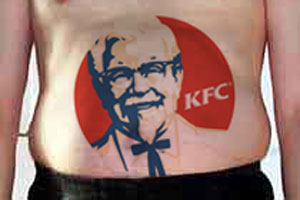
“Eventually, everything flat will have advertising on it. This is why I think a flat stomach is overrated.”


Ethics Quiz: The Home As Billboard—“Ick!” or Unethical?

The Ad firm Adzookie will make their monthly mortgage payments for people willing to turn their homes into billboards. According to the company’s  CEO, it has received over 1,000 applications from people willing to have their houses turned into something like the eye-sore in the photo.

Your Ethics Quiz: Is this unethical conduct by the company, or merely disgusting, provoking our “Ick!” reflex?

For the Unethical side, consider: Continue reading

The Fireman, the Cheater, and Media Muddling

Come on, Robert! It's less embarrssing than Joey's gonorrrhea poster!

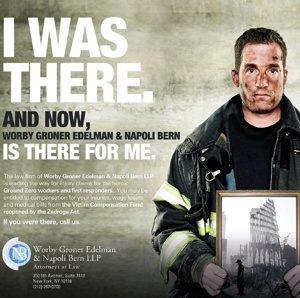
One of the reasons I launched The Ethics Scoreboard and later Ethics Alarms was that I felt  the media did not recognize ethics stories and failed to cover them. Well, more ethics stories are finding their way into the news, but true to the warning “Be careful what you wish for,” the reports usually botch them, and get the ethics lessons wrong. The saga of Enzo and the “Barefoot Contessa” was a particularly nauseating example, but there have been others recently. For example… Continue reading

Now THIS is a Euphemism…

"Hey, where'd you get that lovely paperweight?"

While we’re on the topic of euphemisms, I want to show you one of the most intriguing.

The purpose of euphemisms, as in the case of the two in the recent Ethics Alarms Quiz, is often to avoid legal consequences. The Bush Administration didn’t want to brazenly violate the treaties it has signed banning torture, so it came up with a description of torture that made it seem like something else. President Obama doesn’t want to be accused (though he is anyway) of joining a war without Senate consent, so his Administration is calling the Libyan adventure a “kinetic military action.”

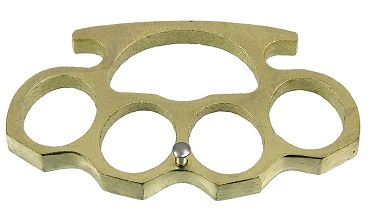
But they are both amateurs compared to the on-line marketers of brass knuckles, those  deadly metal devices one puts over one’s fingers to give an adversary the beating of his soon to be shortened life. Brass knuckles are illegal in many countries, and in most states here; their sale is also prohibited in various ways, and as weapons, they are subject to other regulations. The companies that sell them on-line, however, get around all this by calling them…

Paperweights! Continue reading

Unethical Quote of the Week: Detroit News Business Editor Sue Carney

"The new model is so ugly that...What's that? They give us HOW much ad money? Uh..hey, what a GREAT looking car!

“We made several changes to the online version of Scott’s review because we were uncomfortable with some of the language in the original. It should have been addressed during the editing process but wasn’t. … the changes did not fundamentally change the thrust of Scott’s piece … a car dealer raised a complaint and we took a look at the review, as we would do whenever a reader raises a flag. The changes were made to address the journalism of the piece, not the angst of a car dealer.”


Sue Carney, business editor of The Detroit News, lying her head off to rationalize a disgraceful instance of a newspaper changing its content—a car review— to serve the interest of an advertiser.

How often does an ethical news publication publish an article then go back after it has run and change the text, over the objection of the reporter who wrote it, not correcting an error but softening an opinion? Answer: never, by definition. Continue reading

Latest Political Correctness Bullying Victim: Kenneth Cole

If you can’t make a silly joke on Twitter, that on-line  jungle of the trivial, incoherent, moronic, witty and self-promotional 140 word blurb, where can you make it? Designer Kenneth Cold sent out a tongue-in-cheek bit of satirical self-promotion, tweeting:

“Millions are in uproar in #Cairo. Rumor is they heard our new spring collection is now available online at http://bit.ly/KCairo -KC.”

Horrors. Continue reading

The Comment of The Day: Yes, It’s About Tide Commercials, But Read It Anyway

Ethics Alarms reader Lianne Best weighs in on the Tide (with Acti-lift!) ads, with a valuable observation with far broader ethics significance. She aptly describes exactly how norms of appropriate conduct become corrupted and coarsened (or sometimes enlightened and improved!) over time:

“I hope I’m not too late to the Tide with Acti-Lift! party, but for those who say these ads are “just marketing” and don’t have any real impact … the first time I saw each of these ads, I was horrified. With each subsequent viewing I was less and less offended, until they became normal. Participating in unethical behavior starts with it becoming normal, so these seemingly innocuous commercials are actually pushing the snowball down the slippery slope. Those with influence, whoever they may be, must be cautious with its use.”