Another Bonkers Question To “Social Q’s”

Who are these people?

A mere summary won’t do the full craziness of this question to the NYT’s manners advice column full justice, so here’s the whole, ugly thing:

My husband’s brother, mid-60s, has always been single. Before his parents died, he lived with them. While attending a violent political rally that my husband and I opposed early in the pandemic, he contracted Covid, then infected his mother and behaved irresponsibly in managing her care. She died soon after. We have had no real relationship with him in years. Still, he emails suggestions of gifts he would like for birthdays and Christmas. We send them, and he responds with thank-you notes. When he asks what we would like, we respond that we don’t want any gifts. He sends them anyway, and we donate them to charity. We do not acknowledge them, which we normally would do. Recently, he expressed a desire for acknowledgment of his gifts. How should we handle this?

I’m not going to read columnist Phillip Galanes’s answer to this one because I declared him an irredeemable woke bigot quite a while ago. I’m insulted that he thinks any reader worthy of human association would be interested in such a family’s pathology. Shunning a family member is an extreme move that had better be justifiable; shunning him without letting him know he’s being shunned is not just cruel, it’s weird.

Considerations:

Continue reading

“The Ethicist” Weighs In On Mandatory Kitchen Remodeling

I was going to ignore this until the issue of giving money to homeless people came up on a thread about the “hero” who made sure the illegal immigrants sneaking into the U.S. didn’t risk dehydration in the process.

The ubiquitous “Name Withheld” asked Prof. Appiah whether it would be uethical to give a friend down on his income and luck the money to remodel his kitchen, which is in dire need or repair, but to make the gift conditional on the struggling friend only using the money for that purpose. Apparently NW’s partner wants to attach strings to the financial “gift,” and “Name Withheld” doesn’t. The couple have been periodically giving their struggling, single-dad friend donations to help him make ends meet for some time.

How hard is this? If you want to make certain your gift is a kitchen remodeling—who is “Name Withheld,” Betty Crocker?—you say: “I am giving you a new kitchen. Here’s the number of a good contractor; have him send the bills to me. Just keep the cost within X dollars.” If you give someone money, the money is the gift. Sure, you can say, “Now, I’m giving you this so you can remodel that dump of a kitchen,” but you can’t say, “If you use the money for anything else, then I’ll want it back.”

Continue reading

Intrusive Tipping Ethics

Just as enough monkeys typing on enough typewriters will eventually produce “King Lear,” it was inevitable that “Judge John Hodgeman,” who shares “the Ethicist’s” page in the New York Times Magazine, would eventually hit on a topic worthy of Ethics Alarms. The existence of his sub-section is one more demonstration that the Times doesn’t take ethics seriously, and the real “Ethicist,” Kwame Anthony Appiah, should demand that it be banished. Calling Hodgeman “judge” is itself misleading and dishonest: he isn’t one. He’s an alleged humorist and actor. I almost never bother to read his junk, but someone sent me this for comment.

The question posed to the fake judge was this:

My wife and I had dinner with another couple. The other gentleman (we’ll call him Steve) and I split the bill. When our cards came back, Steve asked me how much I was tipping. I was dumbfounded. “So the tips match,” he said. I asked my wife, and she agreed the tips did need to match. Who’s right?

This actually has happened to me several times; I also confess to being curious about what some dining companions tipped, especially when the service was of questionable quality. But ethically, it’s not a tough question.

The tips don’t have to match: each is a matter of personal choice. I may have thought the meal was great and the wait-person was charming; my companion may have other standards. The question asked by the “judge’s” correspondent seems like either a fishing expedition for a justification to tip less, or one to embarrass a companion into tipping more. Either motive is obnoxious.

And what was Hodgeman’s answer? I didn’t read it. I don’t care.

NOOOOOO! “The Ethicist” Just Endorsed The Golden Rationalization As Justification For Deception.

It isn’t quite head-exploding, because the New York Times “The Ethicist” column has seen its columnist—there have been five of them, I think—promote unethical conduct all too frequently over the years. But the current ethics advice maven, Kwame Anthony Appiah, is a real ethicist, unlike the others, and I expect better of him. Because of his credentials and assumed authority, his unethical advice this week is particularly damaging. And to clarify my statement I quote one of many memorable exchanges during the testimony of Miss Mona Lisa Vitto (Marissa Tomei) in the climax of “My Cousin Vinny”:

D.A. Jim Trotter (Lane Smith): Objection, Your Honor! Can we clarify to the court whether the witness is stating opinion or fact?

Judge Chamberlain Haller (Fred Gwynne) : [to Lisa] This is your opinion?

Mona Lisa Vito: It’s a fact.

The inquirer asked whether it was unethical for him to list a fake publisher on the title page of his self-published book that he created on Amazon, apparently a common practice that Amazon permits. He also asked whether it would be unethical to tell a bookstore owner who agreed to sell the book on consignment that the book was published by his made-up book company.

“The Ethicst” answers the first query this way:

Continue reading

“Dear Pronoun Problems”…Here Is How I Would Answer The Lament Of A Teacher Whose Attempt to “Create An Inclusive Environment” In Her Class Went Horribly Wrong

Slate, the pioneering web magazine that once had an interesting balance of commentary, jumped the woke shark long ago; I almost never bother with it any more. It carries an especially annoying Social Justice Warrior family advice column, “Care and Feeding,” whose writer, Doyin Richards, founder of the Anti-Racism Fight Club, is obsessed with “diversity, equity and inclusion.”

A teacher calling herself “Pronoun Problems” wrote in part,

On my first day, in an attempt to create an inclusive learning environment, I passed out an icebreaker worksheet that asked several questions, including preferred pronouns. This ended up backfiring. I live in a blue state, but in a suburban area with plenty of conservatives. It’s not uncommon to see a house with a Trump sign right next to a house with a Black Lives Matter sign. Consequently, while I had plenty of students who answered the question honestly, I also had lots of students who wrote their pronouns as “nor/mal” or “attack helicopter.” I feel like it started things off on the wrong foot. It gave me a negative first impression about some of the students, which I don’t think is a healthy mindset for a teacher. Worst of all, I’m afraid I ended up only creating a more hostile learning environment for my trans and non-binary students. The students didn’t necessarily see each other’s answers, but I basically gave some students a platform to express their transphobic views. After my contract ended, I got hired by a different school district, this time teaching eighth grade. I’m worried that if I give out the same icebreaker worksheet, even more of the students will write transphobic “joke” answers. At the same time, I’m glad I was able to learn the correct pronouns for my students and avoid misgendering them in class. How should I go about this in the future? Should I scold them or call them out? Or should I just grin and bear it for the sake of the students who take pronouns seriously?

The reply from Doyin is what you would expect (it begins, You absolutely did the right thing by creating the icebreaker activity; your only errors were not setting ground rules and not explaining why this is important…”). If you want to read it, it’s here.

My answer would be the following:

Continue reading

Ethics Quiz: Terms Of Affection And The Second Wife

Ever since I dropped my subscription to the Washington Post in disgust (yes, the Times is better), I have been neglecting Carolyn Hax, the most consistently ethical advice columnist in captivity. I stumbled upon her latest column today, and my wife vociferously disagreed with my reaction to a question posed to her. I decided to make it an Ethics Quiz.

“Resentful” wrote that her father was widowed five years ago and remarried. She’s resentful that he keeps calling his second wife “Love of my life” in front of his adult children and his grandchildren. The daughter has “minimized contact with him as a result.” He’s hurt, and she wants to know what to tell him. “Quit [dumping] on the memory of my mother in my presence and you’ll see us more than twice a year” is what I WANT to say.”

The Ethics Alarms Ethics Quiz of the Day is…

Is the daughter being fair to her father?

Continue reading

From The “Bias Makes You Stupid Files”: The “Work Friend” Misses The Point

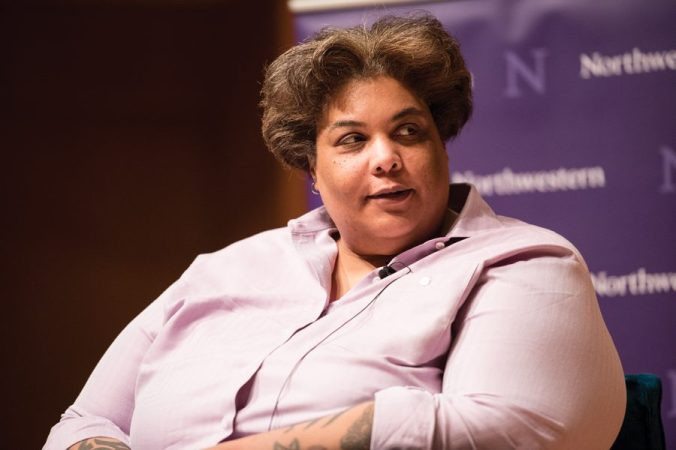
Roxane Gay is an impressive character. She’s a prolific writer of prose and fiction (including science fiction and comic books), a visiting professor at Yale as well as a professional feminist and LGBTQ advocate. She also contributes opinion essays to the New York Times, and as if she isn’t busy enough, is one of their advice columnists, writing the “Work Friend” Sunday column, which is almost always astute and wise in its advice regarding workplace politics and ethical dilemmas.

Not in this case, however. A female inquirer took offense when two male colleagues offered her unsolicited advice about improving her Zooming technique. She framed them as sexist attacks on a woman’s “appearance,” and Gay took the bait. Continue reading

Ugh. The Great Stupid Snags “The Ethicist”

Not only is Kwame Anthony Appiah the most trustworthy and competent of all those who have authored the New York Times Magazine’s “The Ethicist” advice column, he’s also the only one who could be called a true ethicist, as he teaches philosophy at N.Y.U. Thus it is with great disappointment and sadness that I must report that “The Ethicist” has fallen victim to the dreaded Woke Virus, which, has, in the Times’ own lexicon, been “raging” through the paper for quite some time, poisoning its judgment, and as bias does, making its employees stupid.

Given Appiah’s assignment, which is to hand out ethical advice regarding various dilemmas and conflicts posed by correspondents, I would have thought that both he and the Times would have insisted that he practice social distancing and wear a Hazmat suit when visiting the office—maybe even eschew reading the paper. I guess not.

In this week’s column, a reader presented her problem thusly:

Continue reading

Why Aren’t People Ashamed To Ask A Question Like This?

invasion-of-the-body-snatchers-1978--470-75

Kwame Anthony Appiah, aka. “The Ethicist,” received this question three weeks ago. He answered correctly and excessively nicely, as I would expect him to, but my concern is with the question and the questioner. “E.K.” asked,

My husband and I employ a local dog walker….She is an excellent dog walker: reliable, responsible and kind. A friend told me that throughout the fall and after the presidential election, she frequently posted rants on Facebook about liberals and immigrants, pro-Trump messages and falsehoods about how the election was stolen. We are disgusted by the postings and now wonder if we should use her again. On the one hand, we respect people’s right to their opinions and appreciate the good service she provided. On the other, we do not want our money to go to someone who supports viewpoints that we believe are hurtful and detrimental to our democracy.

This is why I’m not an advice columnist, I guess. Here is how I would have answered that question:

Continue reading

Morning Ethics Warm-Up, 8/13/2020: Kamala Harris Selection Hangover Edition [UPDATED]

Hi!

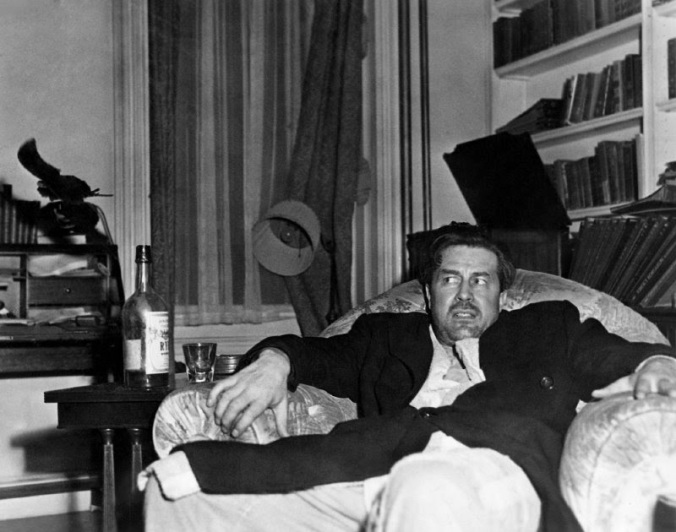
In the 1945 drama “The Lost Weekend,” Ray Milland (above) played alcoholic Don Birnam, and won  the Oscar for Best Actor. The film also won the Oscar for Best Picture. Have you ever seen it? The film is virtually never shown on TV. Milland is another one of the once major Hollywood stars who are almost completely forgotten today, a fascinating group that includes Claire Trevor, Fredric March, Irene Dunne, John Garfield, and Norma Shearer, among others. If their major works were in black and white, they weren’t lucky enough to star in a film regarded as a classic, and they didn’t have a popular TV show when their movie career waned, the culture just forgets about them….and loses as a result. How many non-film nerd Americans under the age of 40 could recognize any of those actors, never mind all of them?

1. Nothing to see here: move along! Yesterday it was reported that the Democratic Party purchased the Antifa.com domain, and that clicks on the link went directly to the Biden campaign site. I checked: it did. Then, by 5:30 pm, the Biden redirect was eliminated. Res ipsa loquitur!

UPDATE: I’m putting an official question mark on this one. It is true that the Antifa.com went to Biden’s site, but that could have been a partisan dirty trick.  Of course, if true, this is the kind of story that the mainstream media would bury. If it was a set-up, it’s the kind of story the right-leaning media would credulously report as proof of Democratic de facto embrace of violence.

Trustworthy, objective journalists would be nice…

2. The vise tightens...Yesterday I noted that colleges and universities were increasingly cancelling their acceptances of students based on revelations of their past social media posts. In one case, Liberty Woodley, 17, the 2020 valedictorian of her high school class in Cape Coral, Florida., had accepted an offer to attend the University of Florida. Then a self-righteous and vicious  actress and “influencer” named Skai Jackson last month asked her more than 500,000 Twitter followers to send her screenshots of  “hateful” social media posts, so she could wrck lives and inflict pain on strangers. Someone sent in one of Woodley’s old Instagram posts in which she wrote when she was 16.

“I really try so hard not to be a racist person, but I most definitely am, there’s no denying it,” it said. Based on that, her acceptance was revoked.

 In an interview with The Gainesville Sun,  Liberty explained that had written the post out of anger at a time when she was being constantly bullied by some black classmates. “I am not racist at all, and I am not full of hate,” she said.  Well, there’s a Catch-22 for you! Oprah Winfrey and others are haranguing whites to admit their inherent racism as a first step to addressing “systemic racism,” but if they do what is asked, it means they are hateful and must be cancelled.

What do you want to bet that Liberty will vote for all Democrats in November? Continue reading